Taxonomy
Common name: Cedar Waxwing
Order: Passeriformes
Family: Bombycillidae
Binomial: Bombycilla cedrorum
Introduction
If you have owned an orchard or spent time near fruit trees, especially in the winter, you may have heard high pitched calls going off as little winged bandits gorged themselves on every piece of fruit in sight. These unique looking birds are called Cedar Waxwings, a common species of bird in the Pacific Northwest. Their genus name Bombycilla means ‘silk tail’, in reference to their silky smooth looking plumage, and cedrorum means ‘of the cedars’ due to their habit of eating the fruits of cedars during the winter (Illinois Audobon Society, 2020). Let’s find out a bit more about these gregarious little birds and how they succeed out in the wild.
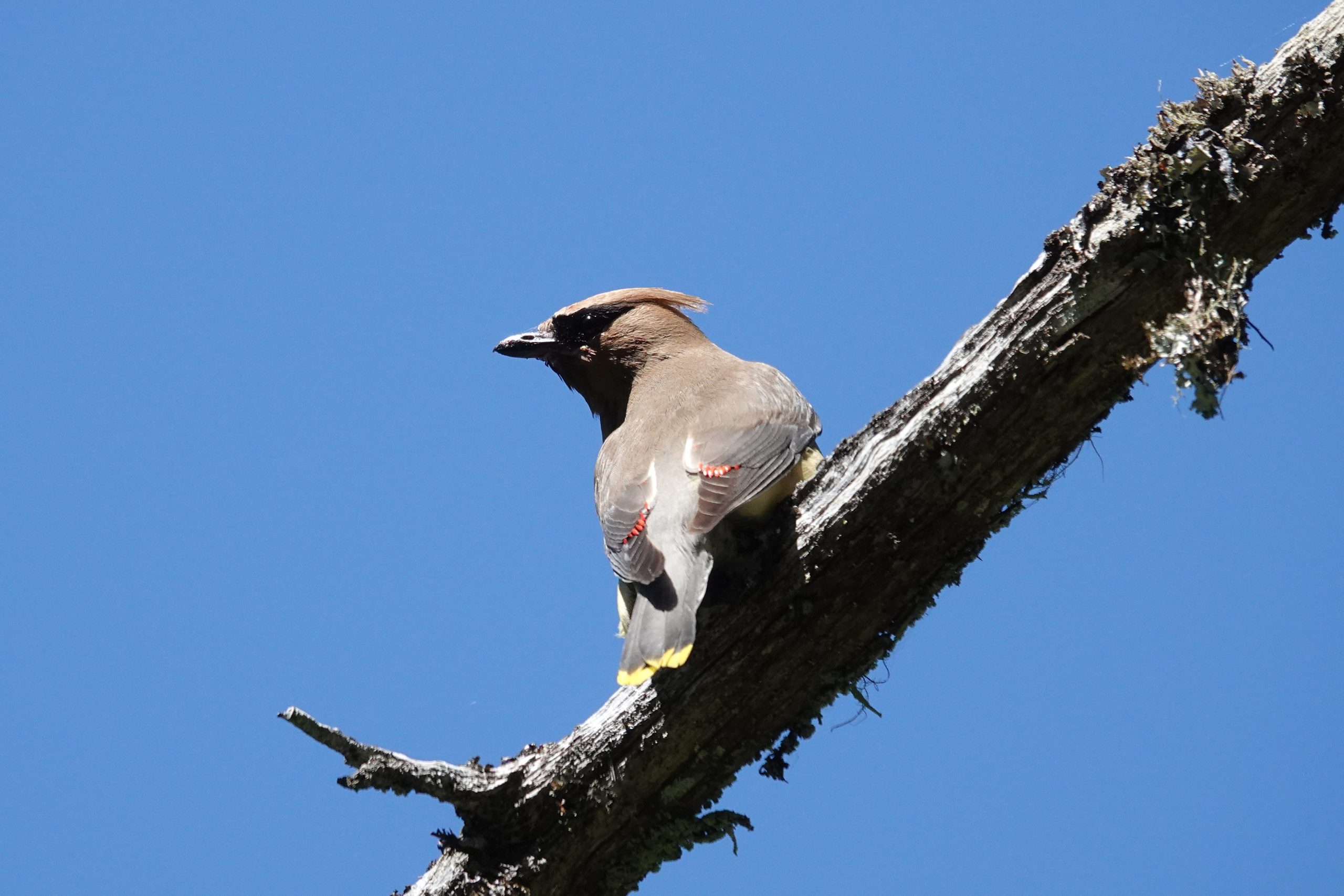
Cedar waxing on branch showing yellow tail feather tips and waxy red secondary tips. Photo credit Brody Pearson
Description
Cedar waxwings are small-medium birds, a little smaller than an American robin. They have a dull, peachy colored plumage to most of their upper body and shoulders, becoming yellow on the breast and turning to white lower down at the belly and vent. The most notable feature of their appearance is the silky crest of feathers on their crown and the black band that stretches above their beak to cover their eyes, almost like a mask.
Their plumage helps them stand out as there is only one other North American species that they could be confused with, the Bohemian waxwing, though that species is less common (Dunn, 2013). One key feature to differentiate these two species is that the Bohemian waxwing has rufous undertail coverts while the Cedar waxwing has white ones.
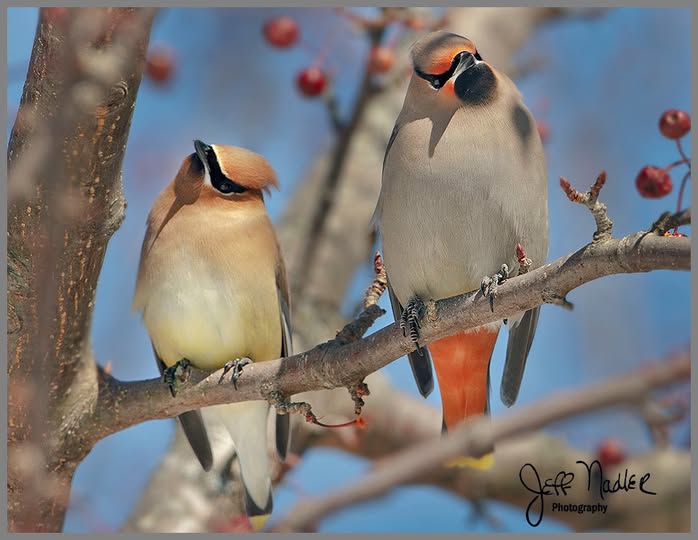
Comparison of Cedar waxwing (left) and Bohemian waxwing (right). Photo credit Jeff Nadler
One of the most unique features of these birds are the red waxy secretions at the tips of their secondary flight feathers which are actually an extension of the feather shaft (Mountjoy and Robertson, 1988). These bright red drops have a waxy appearance, akin to the classic sealing wax used to enclose documents and letters in antiquity, and develop as the bird ages, possibly functioning as markers for sexual maturity, status, and mate selection (Rice, 1997).
These bright red colors are produced from astaxanthin, which is a carotenoid pigment, that the birds gain from the fruits they eat. The number of feathers with waxen tips increase as the bird ages as well, with younger birds possessing zero to five waxy tips and adults having nine or more. For a bird that is highly social and lives in large groups, this can be a useful clue for assessing and choosing a mate (Miller, 2017).
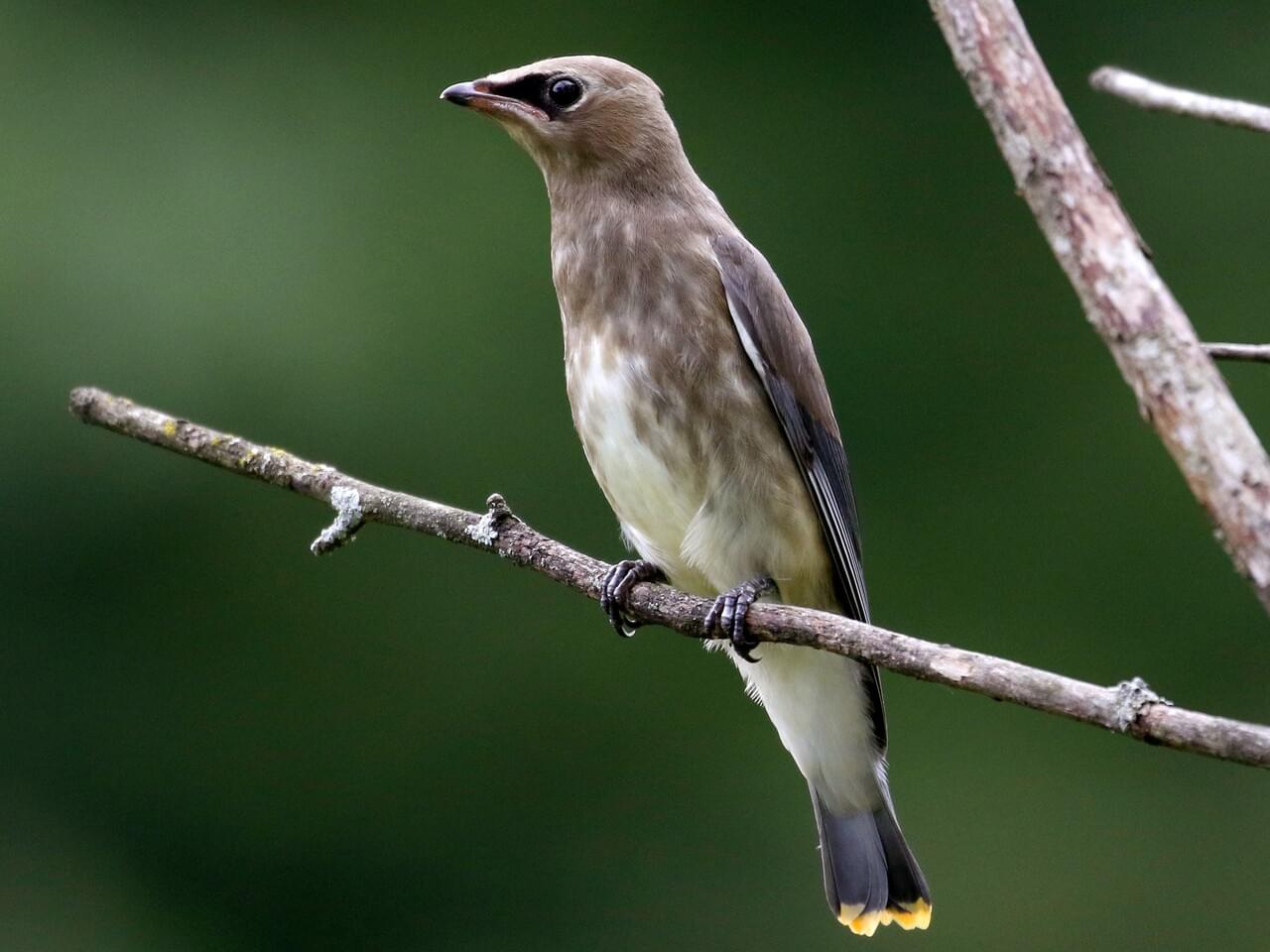
Juvenile Cedar waxwing. Photo credit Jay McGowan AllAboutBirds
Juvenile plumage is less colorful and more spotty, streaky, and drab as shown in the image above. It is difficult to separate sexes based on plumage, one of the scant features available to differentiate between male and female is the amount of black coloration at the chin. Males tend to have more black feathers on their chin as opposed to females (Dunn, 2013).
Calls
Their calls can be hard to distinguish since they don’t have a very large discography to pull from like other songbirds. Typically they make a small ‘seee seee‘ call while in flight, along with some chips and trills and tend to be quite vocal while in flight (All About Birds, n.d.). This small vocabulary and relatively quiet voice can make their calls difficult to discern. With a bit of ear training and familiarizing oneself with this species’ typical habitat and behavior, these calls can become familiar and more recognizable.
Seee calls. Audubon
Trills. Audubon
Chipping calls. Audubon
Distribution and Habitat
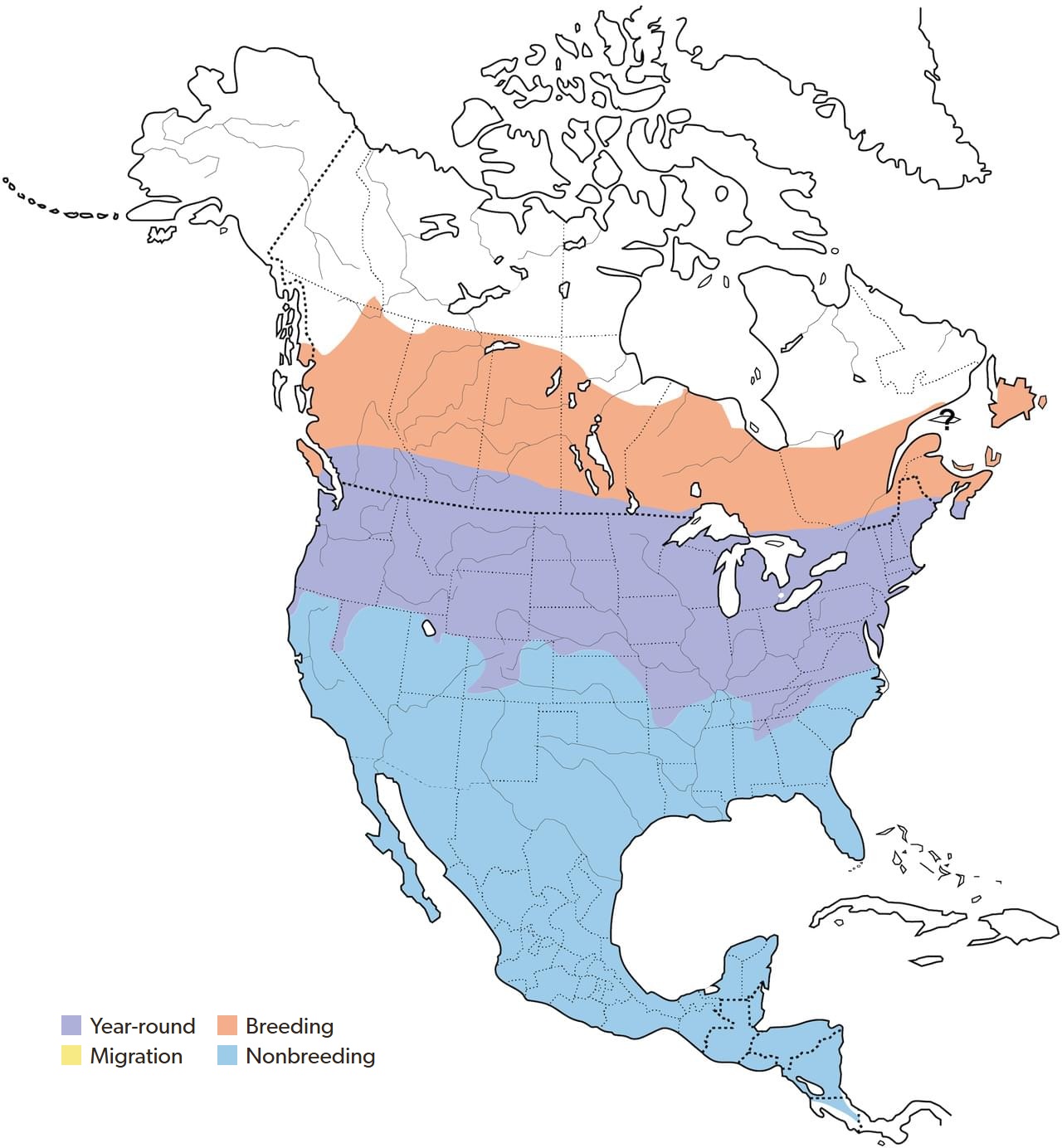
Figure 1 – Map of distribution for Cedar Waxwings. Credit AllAboutBirds
Cedar waxwings inhabit almost all of North and Central America, excluding the further northern reaches of Canada. They tend to inhabit mixed forest areas and open wooded areas, showing some preference for sites with running water nearby (Dunn, 2013). With urbanization increasing, they will also spend time in parks and near housing or other areas cultivated by humans which will often have trees and shrubs that produce fruit.
Since these birds are primarily fruit eaters, they tend to move from region to region, following fruit sources to feed on. Flocks can number from 30-100 during migration, typically to the south in Mexico, but some groups may stay year round in an area if food supplies are abundant enough (Audobon, n.d.). When they do migrate, it can be sporadic and hard to nail down a specific pattern as their breeding or wintering spots may change from year to year. They exhibit more of a nomadic style of migration, suddenly disappearing from an area where food sources have become depleted (Dunn, 2013).
Behaviour
Known for descending on orchards and natural fruit sources in mobs, these birds feed primarily on fruits which nets them the title of ‘frugivore’ (Avery and Duffiney, 2016). These winged wastrels are know for gathering on any kind of fruit trees or bushes and absolutely gorging themselves on all fruit in sight, which can be a nuisance for orchards and farmers.
This gluttony can lead to their downfall as well. There are documented cases of Waxwings dying from eating either poisonous berries, such as Nandina domestica, or from becoming overly intoxicated from consuming fruits that have begun to ferment which can also lead to mortality (Woldemeskel & Styer, 2010). Talk about a killer hangover.
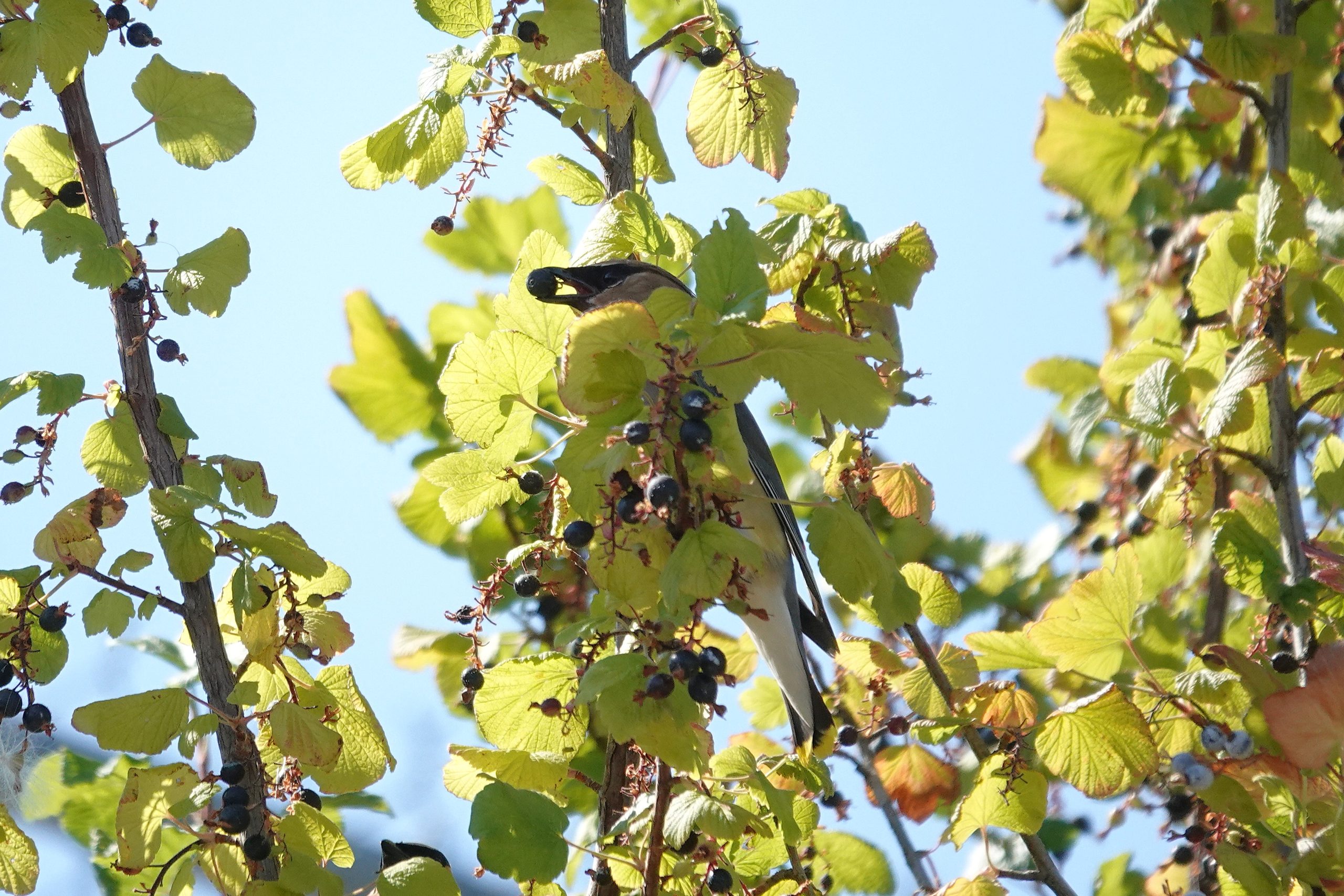
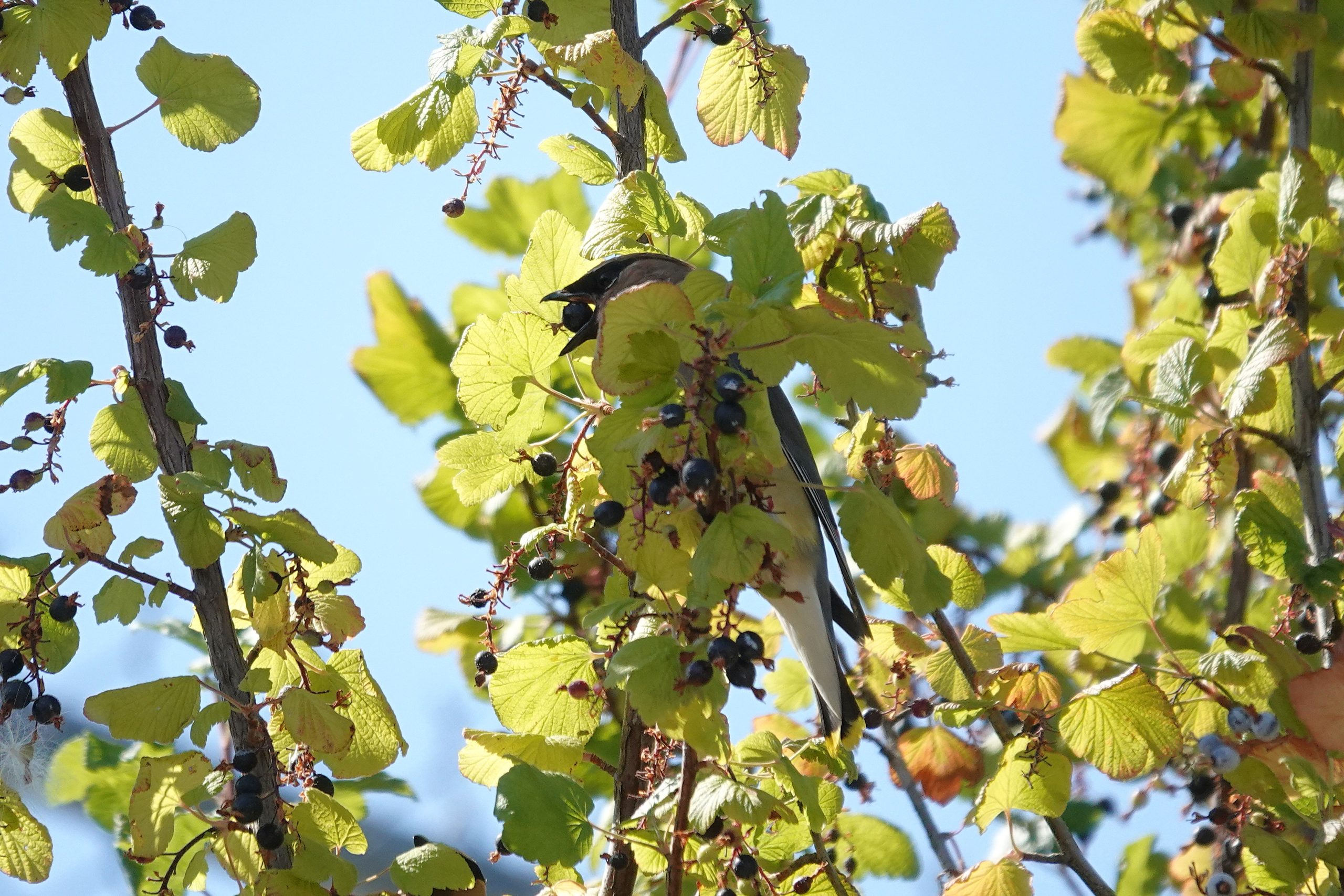
Cedar waxwings eating flowering currant berries (Ribes sanguineum). Photo credit Brody Pearson
While their diet consists mainly of fruit, which accounts for around 70-84% of their diet, they will also catch insects in flight. They are not as adept as some aerial insectivores at catching their prey, but can still perform the task with enough ability to bolster their diet with a source of protein (Reese, 2017). This is necessary, especially in summer, when there isn’t as much fruit growing and waxwings need to get a little extra food (All About Birds, n.d.). I have personally observed this behavior during summer where a group of cedar waxwings would frequent an artificial pond and fly from a nearby cedar hedge to catch insects in flight.
This diet of primarily fruits makes these birds unique and can also be helpful in preventing parasites from successfully using waxwings. There are indications that brown-headed cowbird (Molothrus ater) chicks that are introduced to waxwing nests as brood parasites are unable to survive since the diet of mainly fruit is not sufficient for their growth (Miller, 2017).
Mating and Nesting
Waxwings typically start seeking a mate in spring for the upcoming mating season and will remain monogamous through the breeding season. When a male is courting a female, they often perch near each other on a branch and will hop back and forth, posing and touching bills when they come close. Males are also known to take a piece of food, either a berry, bug, or even a flower petal, and pass these to the female. They may pass the food item back and forth several times during this dance before the female consumes it, wrapping up the courtship (Klein, 2003).
Video of cedar waxwings passing fruit. Credit Redfox901
Nesting takes place a little later, around June to August. True to their social behaviors, waxwings will nest in fairly dense colonies with several nests per tree being common. Females will select the nesting site and do most of the nest building, making over 2,000 trips to gather materials like hair, grass, moss, and other similar materials into her nest. The process can take several days, but can be made easier if the nest-building female can pilfer some materials from other birds’ nests in the area (All About Birds, n.d.).
Bird-Window Collisions
Window collisions pose a large threat to birds, being responsible for hundreds of millions of deaths per year, up to a billion in the U.S. alone (Brown et al., 2021). It is therefore a worthwhile effort to try to mitigate these avoidable deaths by learning what some of the causes are and what can be done to prevent more avoidable deaths. This was an area of research performed by Brown et al. at the University of Utah campus in Salt Lake City over the course of two years. This is a follow-up paper to one done on the same campus in the winters of 2017-2019 by a team headed by Brown.
The study gathered data on a variety of species, but for the purpose of this blog I will focus on the data gathered around the cedar waxwing collisions. The study notes that the presence of pear trees (Pyrus calleryana, an ornamental species of pear tree), which bear fruit that the waxwings eat in the winter, lead to an increase of collisions (Brown et al., 2019). This ended up putting the waxwing at the top of the list for window collisions, comprising 30 of 62 documented collisions over the study period (Brown et al., 2021).

Example of Feather Friendly product, comes in strips or sheets. Credit Feather Friendly
As a mitigating factor, a product called “Feather Friendly®” markers were placed on mirrored windows on a number of buildings, with some windows left free of the markers as a control. This product is a sheet of window tape that has dots or squares at regular intervals that can be applied to windows relatively easily. The study found that in the winter after applying this product to windows of one campus building, there was a 90% decrease in collisions as opposed to no change in collisions with untreated windows (Brown et al., 2021).
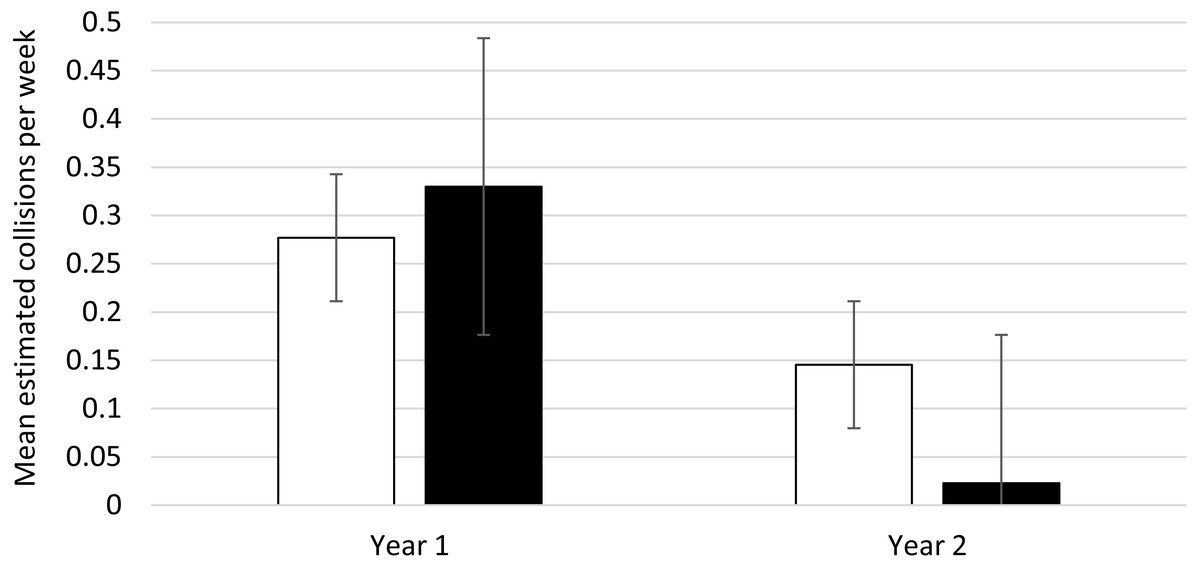
Figure 2 – Bar graph showing mean estimated collisions of birds with windows pre and post mitigation. White represents control and black represents treated areas.
Figure 2 shows an estimation of collisions between years with treated and non-treated windows. These results from the study show that adding dots or other markings to windows, reflective or transparent, can help in reducing bird collisions. While the cost can be substantial if one purchases products such as Feather Friendly window stickers, the study highlights how something as simple as a few dots on windows can lead to a large reduction in bird collisions.
Reference Section
Banner photo credit Brody Pearson
Andrini, B. 2020. Birder’s Notebook; Cedar Waxwing (CEDW). Illinois Audubon Society, 28 August 2020. https://illinoisaudubon.org/blog/2020/08/28/birders-notebook-cedar-waxwing-cedw/
Nadler, J. 2022. Photograph: Cedar waxwing vs. Bohemian waxwing side-by-side comparison. Facebook. https://www.facebook.com/groups/3015382321871572/posts/5488030127940100/
Cornell Lab of Ornithology. n.d. Cedar Waxwing (Bombycilla cedrorum): Overview. All About Birds. https://www.allaboutbirds.org/guide/Cedar_Waxwing/overview
Mountjoy, D. J., Robertson, R. J. 1988. Why Are Waxwings “Waxy”? Delayed Plumage Maturation in the Cedar Waxwing. The Auk 105(1):61–69. https://www.researchgate.net/publication/280307990_Why_Are_Waxwings_Waxy_Delayed_Plumage_Maturation_in_the_Cedar_Waxwing
Miller, M. L. 2017. Waxwings Really Have Wax Wings. Cool Green Science, The Nature Conservancy. https://blog.nature.org/2017/02/27/waxwings-really-have-wax-wings/
McGowan, J. 2020. Juvenile cedar waxwing photograph. Cornell Lab of Ornithology, All About Birds. https://www.allaboutbirds.org/guide/Cedar_Waxwing/photo-gallery/305836981
Dunn, D. 2013. Waxwings are Wild. Word Wiz. https://www.wordwiz72.com/waxwing.html
Audubon. n.d. Cedar waxwing sound recordings. https://www.audubon.org/field-guide/bird/cedar-waxwing
Cornell Lab of Ornithology. n.d. Cedar waxwing distribution map. All About Birds. https://www.allaboutbirds.org/guide/Cedar_Waxwing/overview
Avery, M. L., and A. G. Duffiney. 2016. Cedar Waxwings. Wildlife Damage Management Technical Series. USDA. https://digitalcommons.unl.edu/nwrcwdmts/9
Woldemeskel, M., and Styer, E. L. 2010. Feeding behavior-related toxicity due to Nandina domestica in Cedar Waxwings (Bombycilla cedrorum). Veterinary Medicine International 2010. https://pmc.ncbi.nlm.nih.gov/articles/PMC3005831/
Rice, R. 1997. The Moveable Feaster. Smithsonian’s National Zoo and Conservation Biology Institute. https://nationalzoo.si.edu/migratory-birds/news/moveable-feaster
Reese, J. G. 2017. Cedar Waxwings (Bombycilla cedrorum) Observed Feeding on Flying Insects. Maryland Birdlife 66(1):39–46. https://digitalcommons.usf.edu/maryland_birdlife/vol66/iss1/5
Klein, L. 2003. Bombycilla cedrorum. Animal Diversity Web, University of Michigan. https://animaldiversity.org/accounts/Bombycilla_cedrorum/
Redfox901. 2022. Cedar Waxwing Courtship Dance [Video]. YouTube. https://www.youtube.com/watch?v=HB_dlhA15GU
Brown, B. B., Santos, S., Ocampo-Peñuela, N. 2021. Bird-window collisions: Mitigation efficacy and risk factors across two years. PeerJ. https://peerj.com/articles/11867/
Brown, B. B., Kusakabe, E., Antonopoulos, A., Siddoway, S., Thompson, L. 2019. Winter bird-window collisions: Mitigation success, risk factors, and implementation challenges. PeerJ . https://peerj.com/articles/7620/
Photos of Feather Friendly products, https://featherfriendly.com/collections
Can size be used to accurately distinguish between cedar waxwings and Bohemian waxwings? The Bohemian waxwing looks larger than the cedar waxwing in the photo you provided that has them next to each other, but this could be because one of the birds has had greater access to food supplies.
Good observation WIllem! Yes, size is also a distinguishing factor between these two species. The Bohemian waxwing does tend to be larger than the cedar waxwing, which is easy to see when they are side-by-side like in the photo. This is possible when their breeding or migration range overlap, which is more into central and northern BC. Thank you for your comment!
Hi Brody,
I enjoy reading your post it was very informative! I had no idea that the waxy tips red color was produced by astaxanthin. I wonder if these birds had fruit restricted from their diet, would the waxy tips still be red?
That’s a good question Pearl!
From what I can find, there isn’t a lot of information about different colors to the waxy tips, or if controlling a waxwing’s diet could change that color. There are studies and evidence of the tail feather tips color changing from yellow to orange due to eating fruits from an invasive species of honeysuckle that has orange fruits. This kind of question could be interesting to study further, maybe catching some waxwings and rearing them on specific diets to see what happens.
Great comment!