When I was rehabbing birds this summer, the most common bird that showed up was the American robin. Whether it was abandoned babies, cat bites, or window strikes I was taking care of them all. I used to get disappointed whenever I would see something land in the tree, just for it to be a boring robin. But after weeks taking care of robins, watching them gobble up their food, wiggle their tails before they poo, and stare at me with their beady eyes, I have come to appreciate their charm. I hope by the end of this blog, you too will have gained a liking for these abundant fellows.
Systematics: What’s in a Name?
The American robin (Turdus migratorius) is in the order Passeriformes that consists of perching and songbirds. They belong to the family Turdidae, which despite its resemblance to a word for bodily waste, is derived from the Latin word turdus, meaning “thrush” (Lederer, 2022). Turdidae includes the birds known as thrushes and allies. Some notable species in this family include the Mountain Bluebird, Townsend’s Solitaire, Swainson’s Thrush, and even the Eurasian Blackbird immortalized by the 1968 song “Blackbird” by The Beatles (Cornell Lab of Ornithology, n.d.). But enough about their cool cousins, we are here to discuss the one and only, drum roll please… AMERICAN ROBIN!
Identification: Appearance, Flight & Song
American robins are described as medium-sized, plump-bodied, long-legged birds. They’re the largest thrush in all of North America and serve as a key reference for comparing the size and shape of other birds (Cornell Lab of Ornithology, n.d.). You’ll often hear birders say, “It was about robin-sized.” American robins typically weigh around 77-85 g, have a length of 20-28 cm and a wingspan ranging from 31-40 cm (Cornell Lab of Ornithology, n.d.). Now these numbers don’t mean a lot unless you’re holding one, so let’s discuss their appearance.
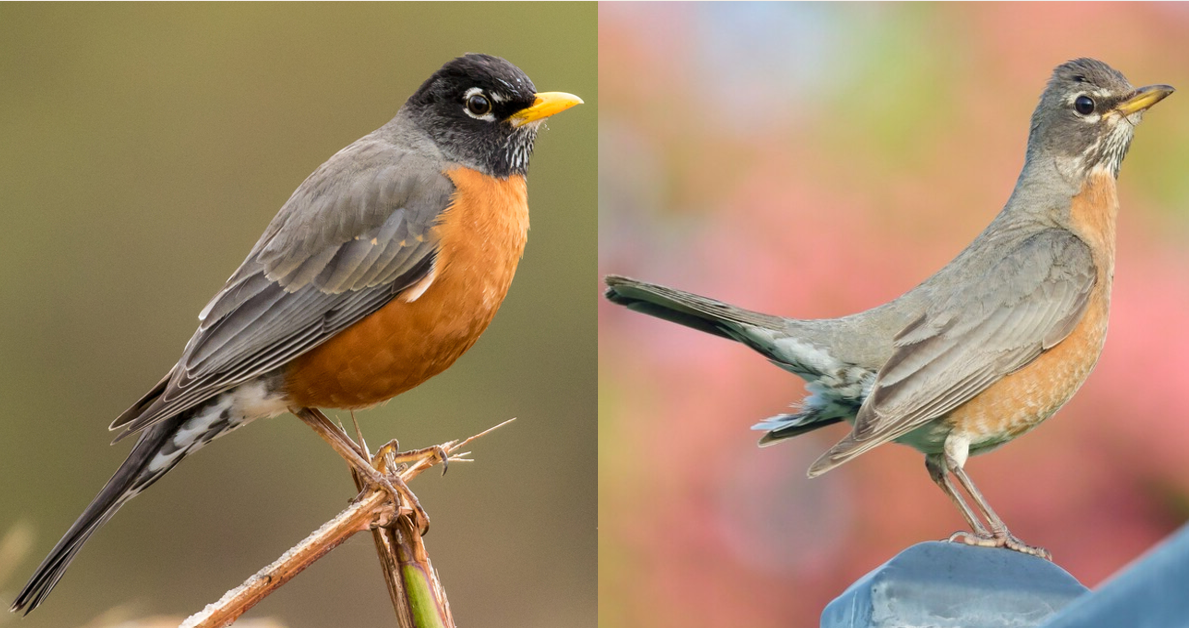
Adult robins have a grey-brown back, a burnt orange breast, a yellow bill, and small white spots and streaks around their eyes and chin. Males and females are similar in size but differ when it comes to plumage; males have darker heads and richer colours (Cornell Lab of Ornithology, n.d.).
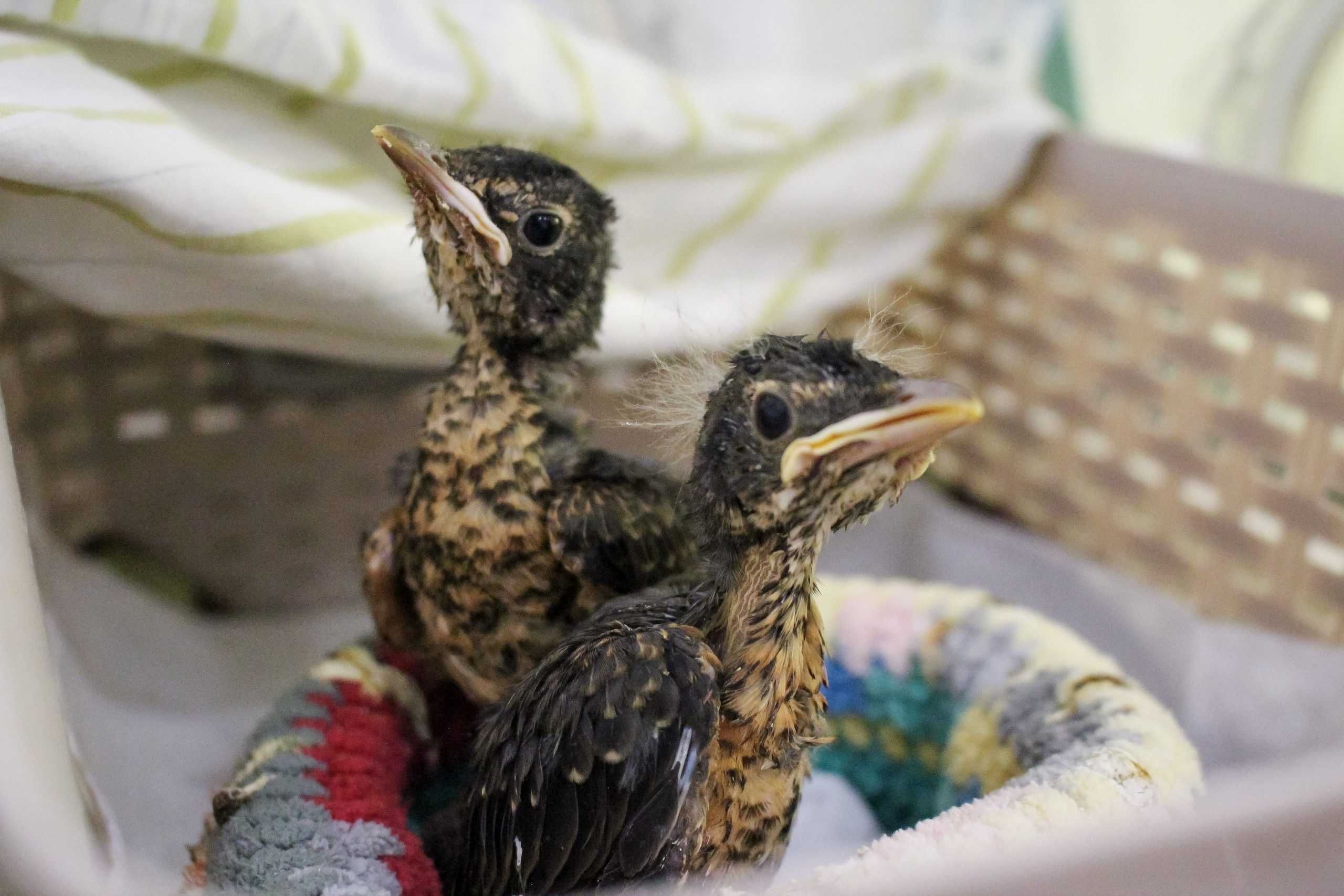
Juveniles are tricky and can be confused for other thrush species. They are heavily spotted on their breast, similar to the Swainson’s thrush. However, juvenile American robins sport a mottled back and an orange tinge on the breast always peeks through (Cornell Lab of Ornithology, n.d.).
In the air, look for pointed wings, a rounded square-tipped tail, and a white patch under their tail and lower belly (National Audubon Society, n.d.). When flying they have fast wingbeats mixed with short glides while their wings are tucked.
The American robin’s song can be described as the repeated phrase “cheerily, cheer up, cheer up, cheerily, cheer up”.
Similar Species
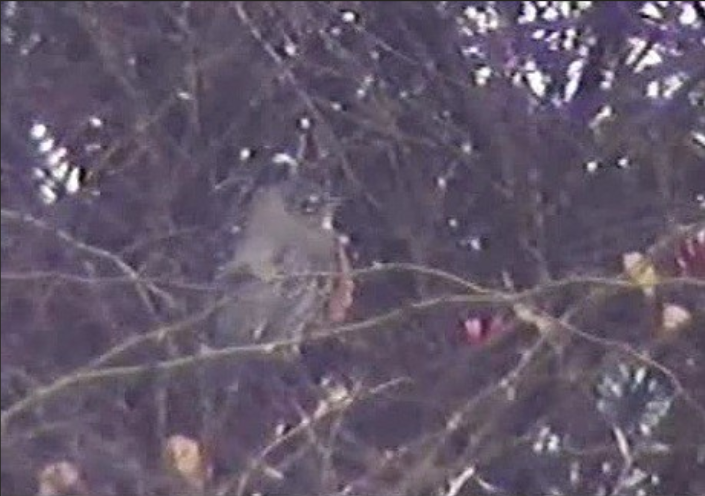
Now based on my wonderful description you should have no trouble identifying an American robin, but there is a similar species inhabiting Vancouver Island that you may want to be aware of. The varied thrush is grey-brown, and burnt orange bird like the American robin, but a black breastband, and orange eyebrows and wing bars set them apart from each other (Cornell Lab of Ornithology, n.d.).
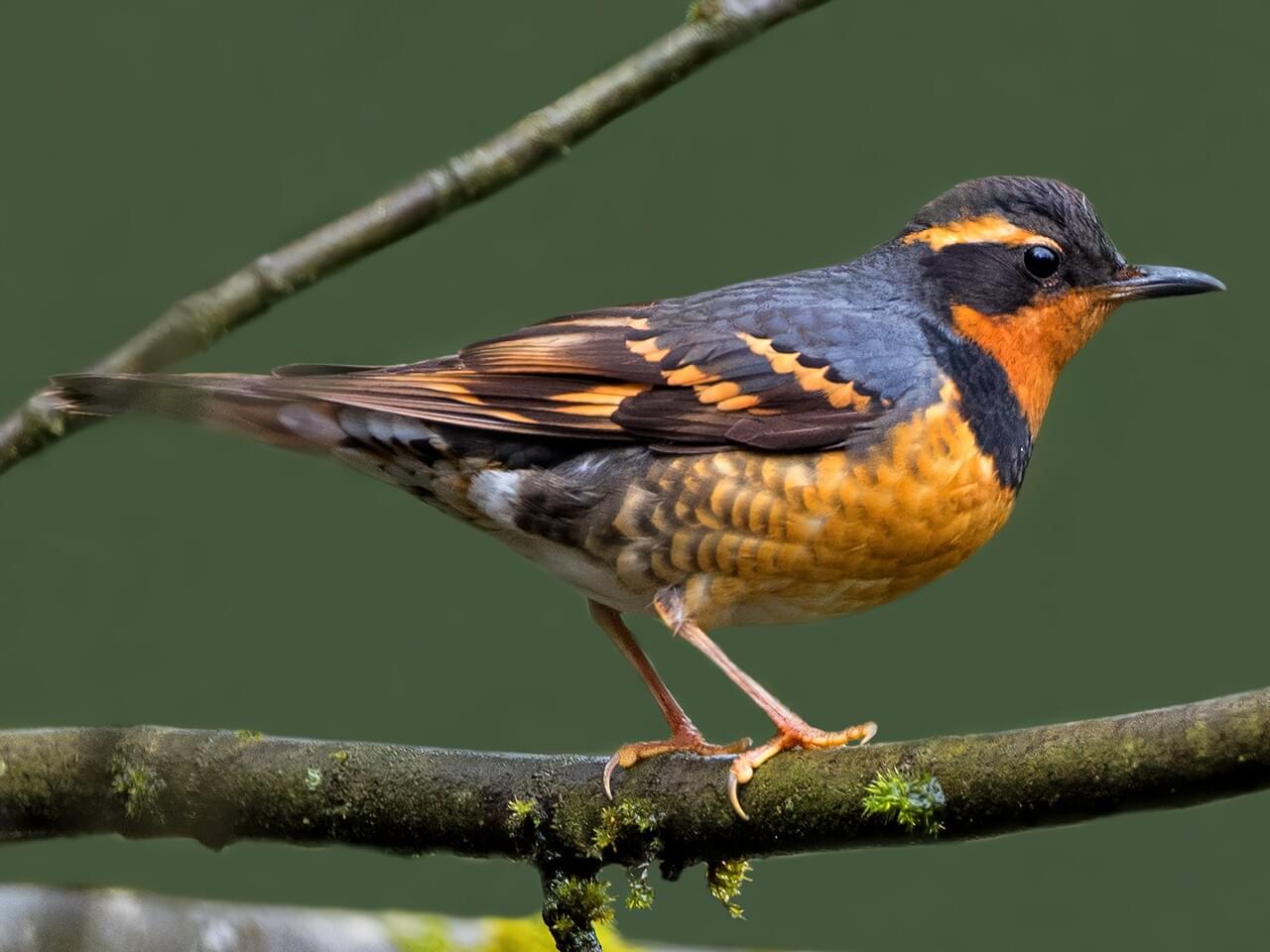
To put your identification skills to the test, try to identify the images below as an American robin or as a varied thrush.
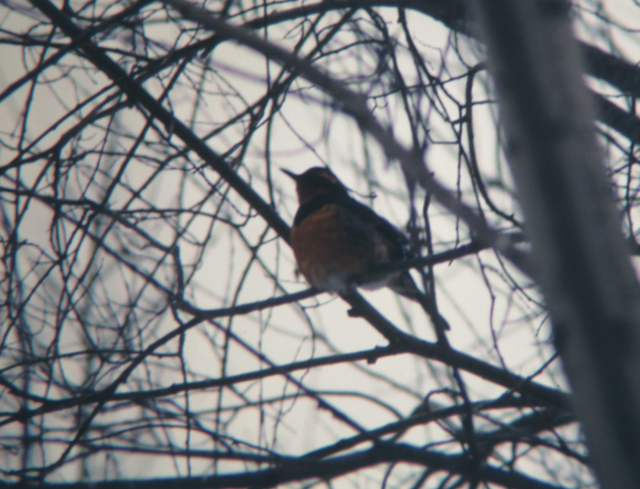
Click to reveal answer
Varied thrush! Check out the black breastband.
Click to reveal answer
American robin! Do you see the white around the eyes?
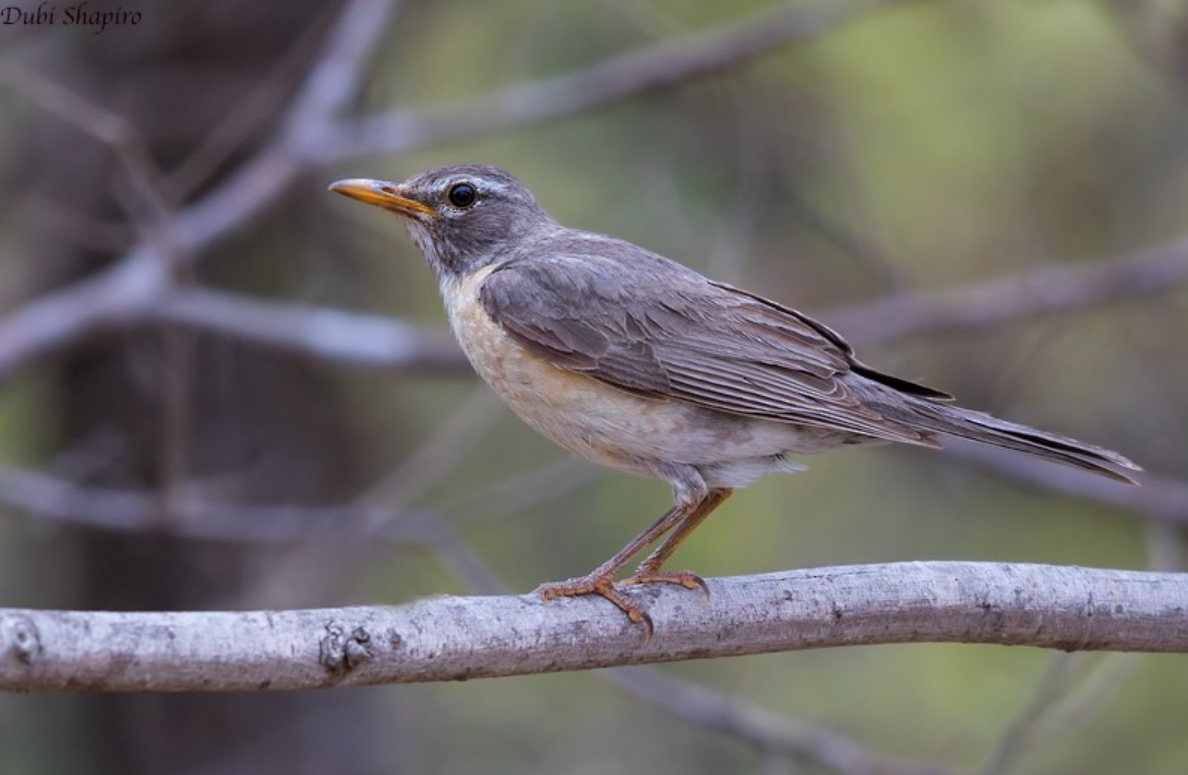
How about this one?
Click to reveal answer
If you said American robin, you’re correct! But this isn’t your typical American robin, it’s one of its seven sub-species (Cornell Lab of Ornithology, n.d.).
The photo above shows the San Lucas American Robin (Turdus migratorius confinis). This sub-species is endemic to Baja California Sur, Mexico, so unless it took a very wrong turn, you’ll likely never see it in Canada! The other sub-species are generally indistinguishable to the eye. I’ll spare you the details… For the academics out there, we have the Northwestern American robin (Turdus migratorius caurinus) along Vancouver Island (Lepage, n.d.).
Distribution & Migration
The American robin has a widespread distribution ranging from Canada to the United States and Mexico (Cornell Lab of Ornithology, n.d.). For many, robins are a symbol of the arrival of spring. However, this is not entirely true; some populations remain in their breeding areas as year-round residents, while other migrate seasonally (A-Z Animals, n.d.; Cornell Lab of Ornithology, n.d.).
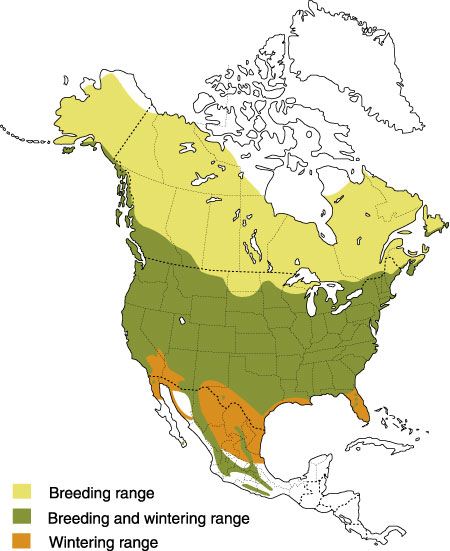
Migration depends on the location of the population. Northern populations migrate south for winter, while many robins in the southern United States and Mexico do not migrate (Hinterland Who’s Who, n.d.). On Vancouver Island, robins can be seen year-round, although their numbers may fluctuate seasonally.
Habitat
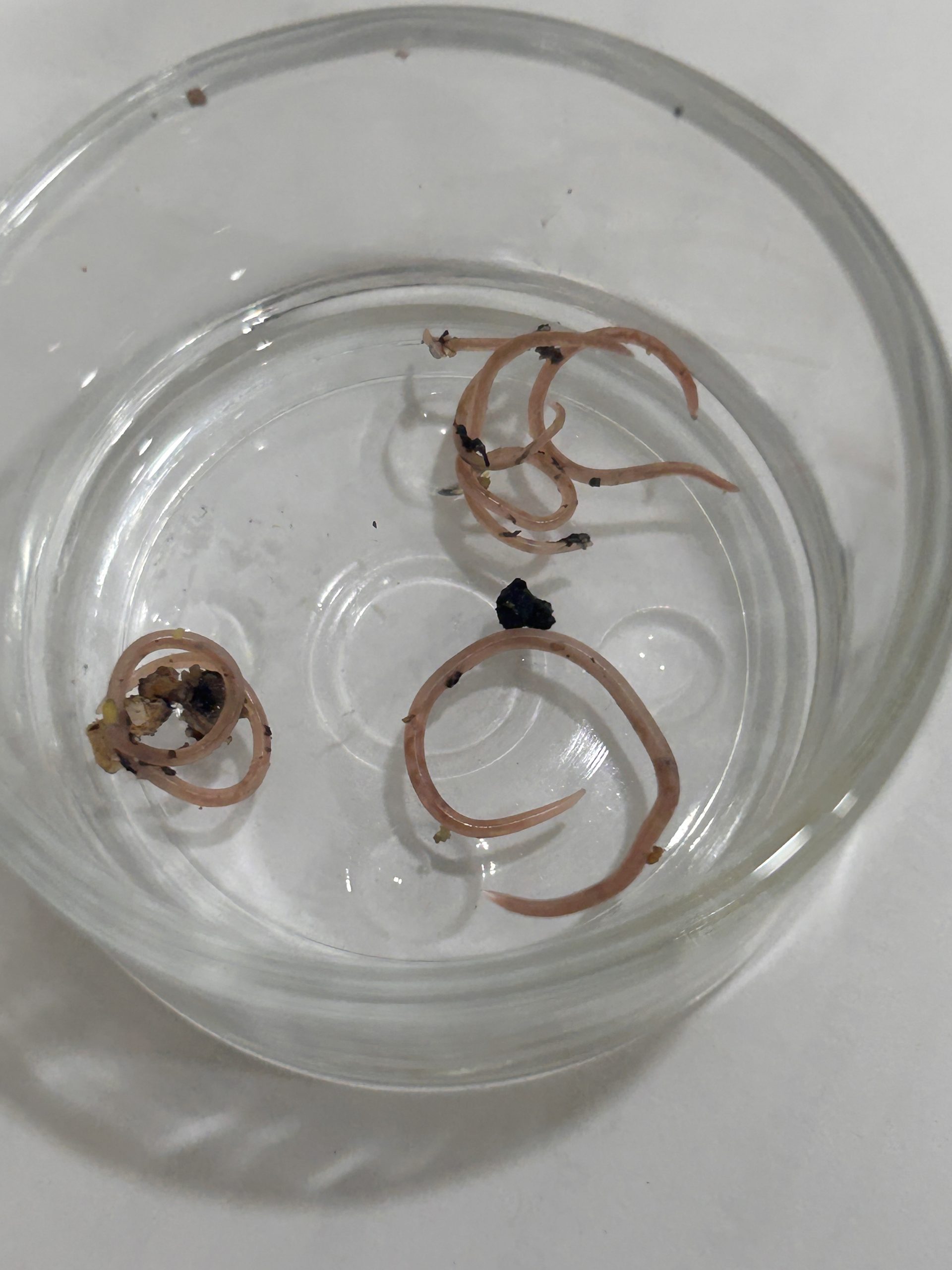
The American robin can be found in many different habitats. During the breeding season, they occupy forests with suitable cover for nesting. During migration they touchdown in open fields and lawns. And during the non-breeding season, they can be spotted in dense thickets of berry-bearing trees (Cornell Lab of Ornithology, n.d.). A study by Paszkowski (1982) suggests American robin’s success in its wide range of habitats is explained by its versatile foraging behaviour. In other words, robins aren’t picky and go where food is abundant. Based on my own rehab experience, I can say they really will eat anything, even their own recently “evacuated” intestinal worms!
Eating Habits
Have you ever seen an American robin run across a field, abruptly stop to stand tall and alert, then run off in a seemingly unpredictable direction? This behaviour, which may be interpreted as snooty and snobbish by birders and photographers alike, is quintessential American robin hunting behaviour (Wauer, 1999). When stopped, the robin enhances its view of the ground by cocking its head. If it spots a yummy meal, it suddenly sprints forward to grab its prey (Wauer, 1999).
What do robins prey upon? Earthworms! Earthworms make up a significant part of a robin’s diet. One study found that 15% of their diet is earthworms (Heppner, 1965). But like I mentioned before, they’re versatile foragers, so they’ll eat more than just worms.
In the spring and summer seasons, earthworms and other invertebrates are plentiful, but the robin’s diet preferences change in the sparse winter months. They fill up on berries when their usual prey is hard to come by (Wauer, 1999). During this time, robins can sometimes unknowingly feed on fermented berries, causing unusual behaviour.
“They fall to the ground and lie on their side, occasionally feebly fluttering, apparently as happy as any drunkard in his cups.” – Floyd Brallier, (Wauer, 1999).
Some may even pass out, but by the time the next day rolls around, most recover and hopefully have learned their lesson.
Defense & Aggression: Don’t mess with Robins
You may have heard this call before:
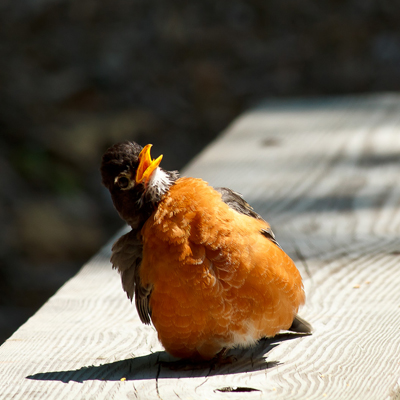
This is the sound of an angry robin in the midst of a territorial defense behaviour. American robins are so well known for this behaviour that it is categorized into four actions (Wauer, 1999).
- Attack-run: the bird runs at its opponent.
- Tail-lift: the bird lowers its head and lifts its tail.
- Crouch: always precedes the attack.
- Pushing: the bird takes short runs at its opponent to scare it away.
Aggressive defensive behaviour can be seen towards hawks, owls, cats, dogs, or anything they find threatening including other robins. When nests are threatened, robins will mob the intruder by diving, striking, and loudly clicking at the danger. Some go so far as murder by multiple vicious strikes (Wauer, 1999).
Robins VS Wildfires
In Canada alone, there are roughly 8,000 wildfires annually, burning around 2.5 million hectares per year (Canadian Red Cross, n.d.). Wildfire risk is widespread across Canada, and is increasing as climate change contributes to larger, hotter, and more destructive wildfires (Canadian Climate Institute, 2026). As wildfires continue to pose a risk in the future, it is important to understand their effects on animal behaviour. Recent research by Cornelius et al. (2026) set out to answer the question of how animals respond to wildfire smoke. They studied the movement behaviour of American robins using satellite-based telemetry to examine their responses to fine particulate matter during wildfire season in Oregon, United States. Different animal species adopt varying strategies in response to wildfire smoke. These responses can be broken down into a framework called Stay, Shift, Go:
- Stay – resist changing behaviour.
- Shift – modify behaviour to reduce exposure.
- Go – relocate to places with cleaner air.
Whether an animal decides to Stay, Shift, or Go depends on many factors, including life history, distance from the fire, smoke intensity, and life stage (Cornelius et al., 2026). For example, nesting birds that have invested time and energy into raising offspring may choose not to flee and stay longer instead.
The researchers hypothesized that American robins would exhibit the Go strategy to evade smoke exposure. They expected to observe the birds making long-distance movements to areas with lower smoke concentrations. They captured and banded 21 adult American robins, collected various measurements, and attached GPS tags to their legs. They then monitored the daily movements of the robins throughout the wildfire season.
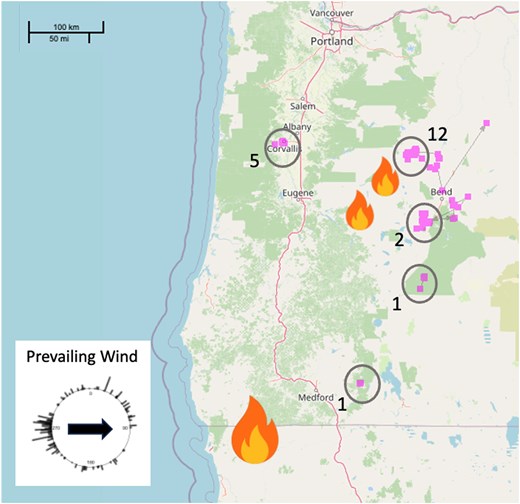
The researchers found that American robins did not make many long-distance movements to escape wildfire smoke, as predicted by the Go strategy (Fig. 1). Instead, they found that robins reduced their exposure to smoke by flying shorter distances. They suggest that this behaviour may help conserve energy and reduce inhalation exposure. Fitness-related trade-offs, such as starvation and predation risk when relocating may outweigh full evasion of wildfire smoke (Cornelius et al., 2026). The researchers also observed that robins were more likely to orient themselves into the wind as smoke intensity increased, bring robins into lighter smoke conditions and better air quality. Overall, these findings suggest that American robins use the Shift strategy to limit their exposure to wildfire smoke and modify their behavioural responses as air quality worsens.
Conservation Status: DDT Danger!
In the past, DDT, a broad-spectrum insecticide, was commonly used for agricultural practices (Gill et al., 2003). It is now known to reduce productivity and thin eggshells of many bird species causing massive population decline. American robins were one of the first declining bird populations to be noticed by scientists in the 1950’s.
“We spray our elms and the following springs are silent of robin songs. Not because we sprayed the robins directly but because the poison traveled step by step through the now familiar elm leaf, earthworm robin cycle.” – Rachel Carson, Silent Spring
Although it is banned today, high concentrations of DDT and its metabolites still persist in soils like that of fruit orchards in the Okanagan Valley, although studies note little to no effect of reproductive success of robins in these areas anymore (Gill et al., 2003). As of today, the American robin global breeding population is estimated at 370 million by Partners in Flight. According to IUCN Red List of Threaten Species, American robin conservation status is of least concern.
Fun Facts
- Early settlers named American robins after the European robin because they both have a warm coloured breast (A-Z Animals, n.d.).
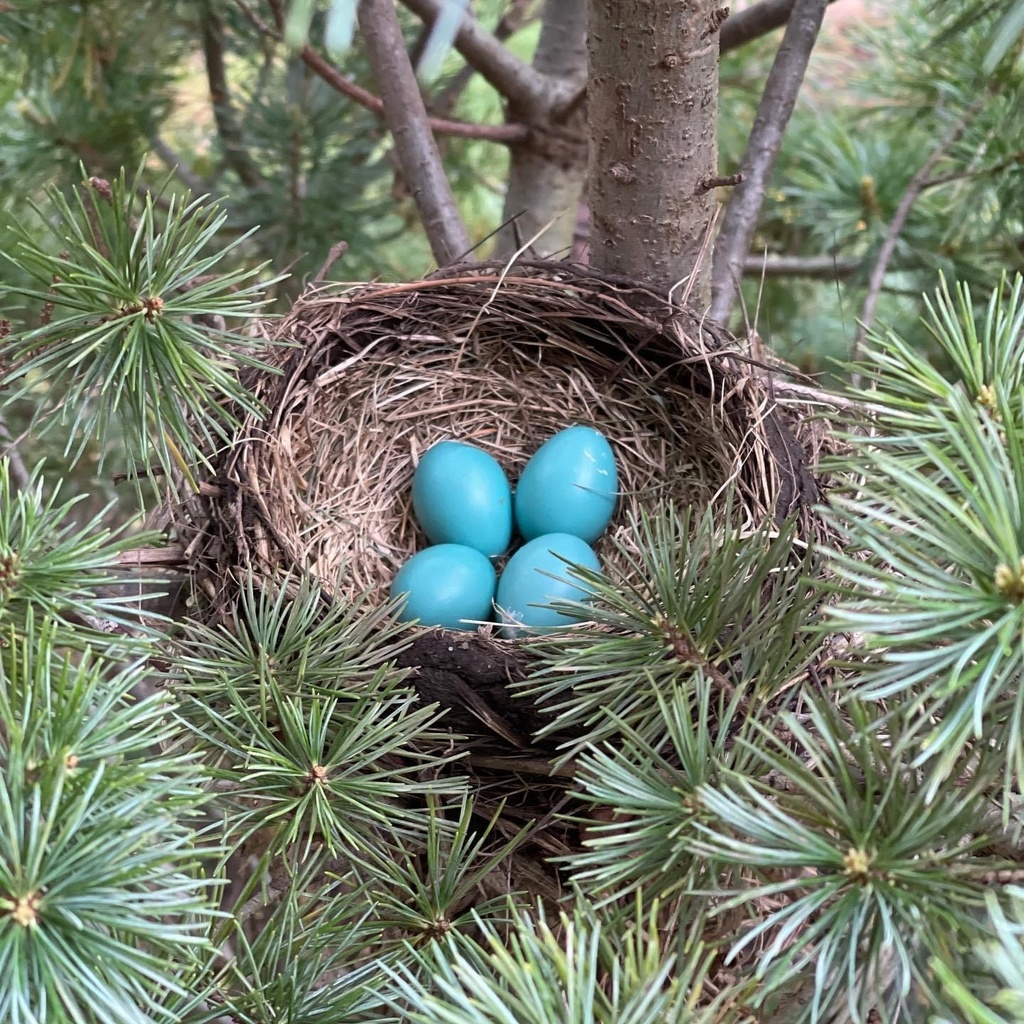
- Robin eggs are blue and have a shade “Robin’s egg blue” named after them. The blue pigment is due to biliverdin a product of heme breakdown (Halepas et al., 2017).
- The longevity record for the American robin is 13 years and 11 months old (A-Z Animals, n.d). By the way we wouldn’t know this without bird banding efforts 😉
Closing Thoughts
I hope you’ve now come to appreciate the American robin. For it is more then a snobbish, boring, and as some go as far to say “turd” bird. Not only are they charming, they are protective, adaptable, and a little bit silly. I hope the next time you see the American robin, it brings a smile to your face.
References
A-Z Animals. (n.d.). American robin. https://a-z-animals.com/animals/american-robin/
Canadian Climate Institute. (2026, October 7). Fact sheet: Climate change and wildfires. https://climateinstitute.ca/news/fact-sheet-wildfires/
Canadian Red Cross. (n.d.). Wildfires: Information & facts. https://www.redcross.ca/how-we-help/emergencies-and-disasters-in-canada/types-of-emergencies/wildfires/wildfires-information-facts
Cornell Lab of Ornithology. (n.d.). American robin. All About Birds. https://www.allaboutbirds.org/guide/American_Robin/overview
Cornelius, J. M., Sanderfoot, O. V., Tingley, M. W., Glynn, K. J., Zahor, D. L., & Jahn, A. E. (2026). Introducing a stay, shift, go framework for behavioral responses to wildfire smoke: American robin (Turdus migratorius) locomotory behavior changes as particle pollution intensifies. Integrative and Comparative Biology, 66. https://doi.org/10.1093/icb/icag080
Gill, H., Wilson, L. K., Cheng, K. M., & Elliott, J. E. (2003). An assessment of DDT and other chlorinated compounds and the reproductive success of American robins (Turdus migratorius) breeding in fruit orchards. Ecotoxicology, 12(1–4), 113–123. https://doi.org/10.1023/A:1022553315896
Halepas, S., Hamchand, R., Lindeyer, S. E. D., & Brückner, C. (2017). Isolation of biliverdin IXα, as its dimethyl ester, from emu eggshells. Journal of Chemical Education, 94(10), 1533–1537. https://doi.org/10.1021/acs.jchemed.7b00449
Heppner, F. (1965). Sensory mechanisms and environmental clues used by the American robin in locating earthworms. The Condor, 67(3), 247–256. https://www.jstor.org/stable/1365403
Hinterland Who’s Who. (n.d.). American robin. https://www.hww.ca/wildlife/birds/american-robin/
Lederer, R. (2022). The Turdidae, true thrushes. Ornithology. https://ornithology.com/the-turdidae-true-thrushes/
Lepage, D. (n.d.). American robin (caurinus). Avibase—The World Bird Database. https://avibase.bsc-eoc.org/species.jsp?avibaseid=1A11910FE5D6D716
National Audubon Society. (n.d.). American robin. Audubon. https://www.audubon.org/field-guide/bird/american-robin
Paszkowski, C. A. (1982). Vegetation, ground, and frugivorous foraging of the American robin. The Auk, 99(4), 701–709. https://www.jstor.org/stable/4086176
Wauer, R. H. (1999). American robin behavior. In The American robin (pp. 35–70). University of Texas Press. https://doi.org/10.7560/791237
Cute article, very informative!
You mentioned that robins can unknowingly ingest fermented berries and feel the effects of ethanol. Have they ever been observed actively seeking them out, or eating them regularly?