Gulls are a familiar sight to many people who grew up near the coastline. However, even for those of us who grew up in landlocked areas, gulls still managed to make their presence known. Although species such as the American Herring Gull often get a bad reputation for stealing French fries on the pier, defecating on shiny cars, or being labeled as trash eaters, these birds are much more than just a nuisance. Not only are they an important part of the environments they inhabit, but by examining what they consume throughout their lives, researchers can gain valuable insight into how human pollutants may be affecting other species.
Overview: What makes Them like No Other?
(Scientific Name: Larus smithsonianus)
Identification: Gulls are notorious for being tricky to identify here is some things that make American Herring Gulls distinct.
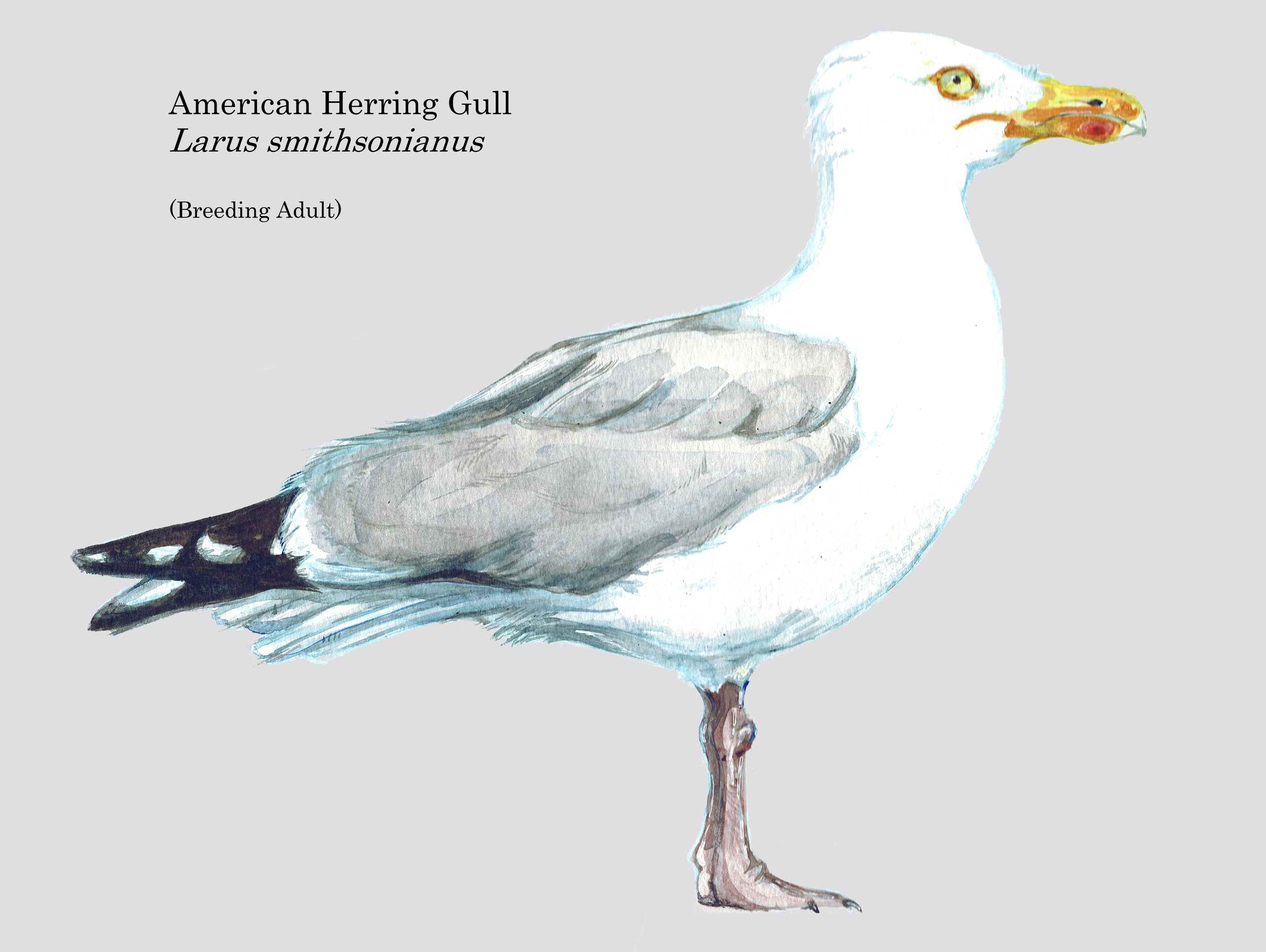
Breeding Adults: The American Herring Gull is a mid-sized gull. In breeding plumage, it has a white head and underside, while the back and wings are pale gray in colour. Its bill is yellow with a distinctive red spot near the tip of the lower mandible. The wing tips are black with white spots, and the legs are a pale pink colour. Adults also have yellow eyes. There are no notable differences in appearance between males and females
Non-Breeding Adults: Notable gray and brown streaking on the head.
Juvenile: Young gulls have darker features including a patchy gray body, dark eyes and bill.
(American Herring Gull | Audubon Field Guide; American Herring Gull Identification, All About Birds, Cornell Lab of Ornithology;Eastern Canada Common Gulls Identification Guide 2019)
Habitat and Range: Canada-Mexico
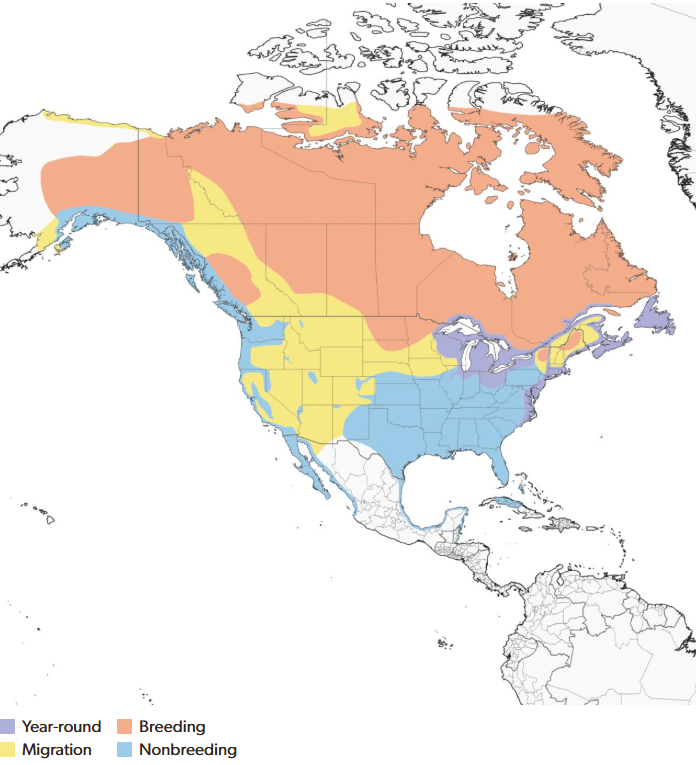
American herring gulls, have a wide range which contain numerous habitat types, including urban environments, costal regions, fresh water lakes & rivers, and agricultural lands. (American Herring Gull | Audubon Field Guide; American Herring Gull Identification, All About Birds, Cornell Lab of Ornithology)
Distribution:
American Herring gull are distributed across much of North America. However they have larger presence on the eastern side of the continent. (American Herring Gull | Audubon Field Guide; American Herring Gull Identification, All About Birds, Cornell Lab of Ornithology)
Conservation Status: (Least Concerned)
Although the current population of herring gull is still numerous (3.9 million American & European herring gull before taxonomic split in 2024), as with many gull and shorebirds species, we have seen a significant long term decline in their population. The main cause for the American herring gull’s current decline is due to human activity. (All About Birds, Cornell Lab of Ornithology; Anderson, John G.T, et al: 2016)
Diet: Opportunistic
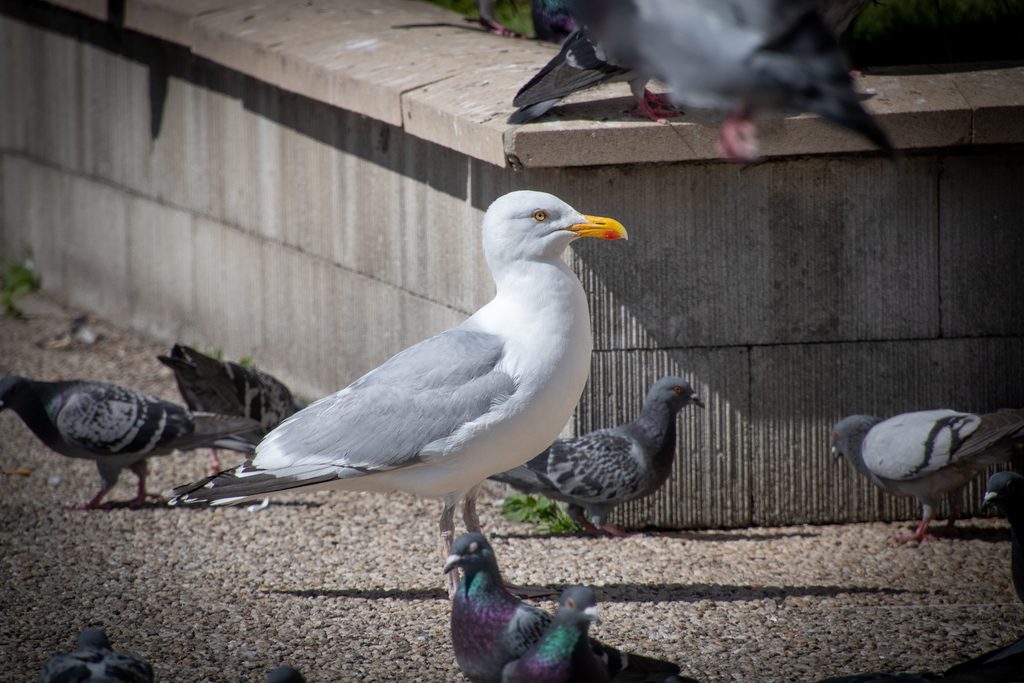
These birds are not picky eaters in the slightest and have adapted to eat a whole range of food. Due to there range and variety of habitat and climate they call home, these birds will eat things ranging from seafood, trash and even cannibalism? Yes, aside from the typical seafood affair containing, crabs, mussels, fish etc. These birds have adapted to eating human leftover, earthworms, carrion (animal remains and carcasses) and even herring gull eggs and chicks. It has been document that male American herring gulls will prey on neighboring seabird colonies consuming unsuspecting chicks. (American Herring Gull | Audubon Field Guide; American Herring Gull Identification, All About Birds, Cornell Lab of Ornithology)
Behavior: Social & intelligent
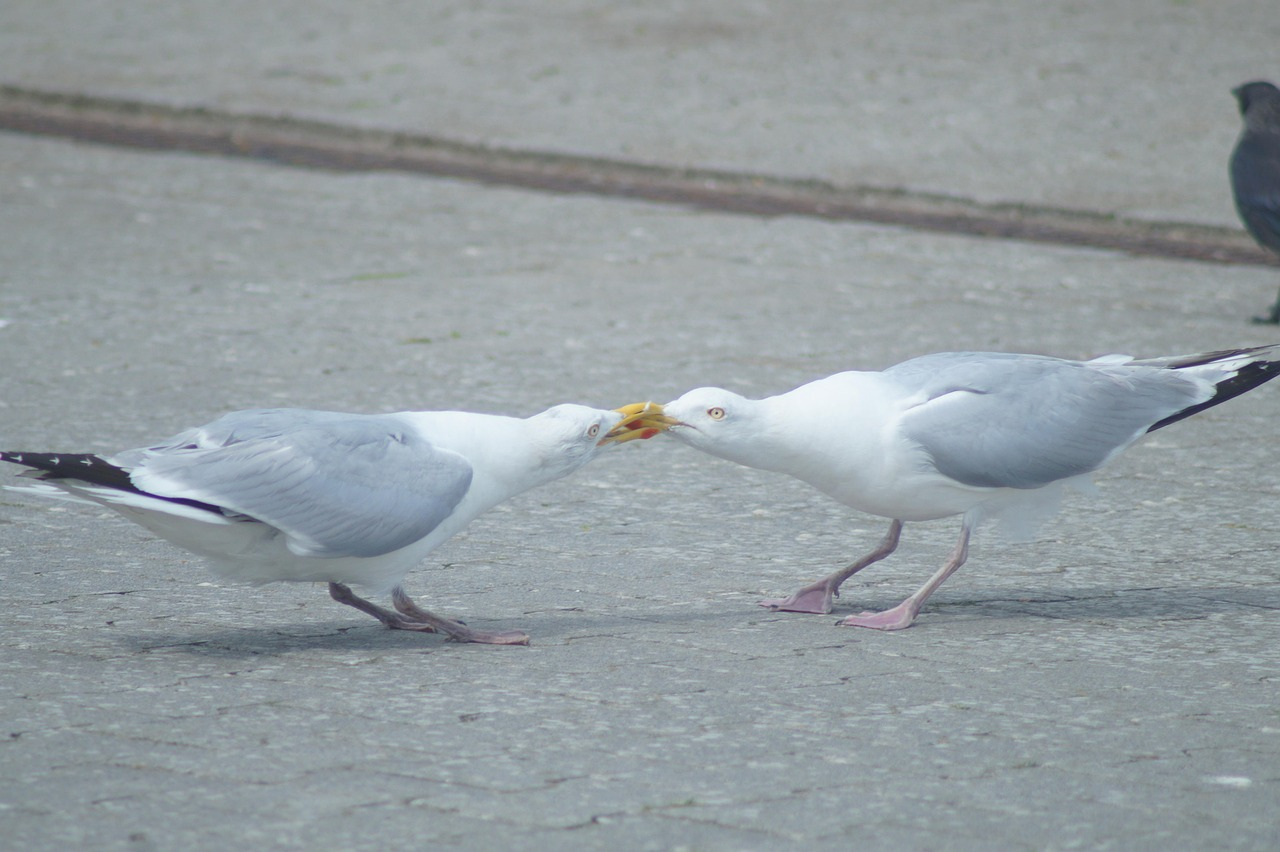
American herring gull will pair bond but live in a greater colony. Like many gulls, American herring gulls are ground nesters. A risk that comes with raising your chicks on the ground out in the opening can lead to easy predation by other predators. As such by living in groups the risk of your chick being consumed reduces…(just be careful of who your neighbors are). These birds are smart, in order to access the tasty mussels they feed on they have learned to fly high in the air and allow gravity to do the work for them.
Fun-Fact: “Worm Charming” is the practice of birds such as American herring gulls tapping their feet to create vibrations to hopefully attract worms as a tasty treat. (Sneaky gulls stomp their feet to trick earthworms into becoming snacks | CB)
Highlighted Research: What Makes These Birds Awesome?
Junk Food: Research Into Herring Gulls Diet and Pollutants
Introduction: As the general public becomes more conscious about the impact we have on the planet, new research on American herring gulls diets, give us insight on to how pollutants are effecting this species and the surrounding ecosystems.
As mentioned, American herring gulls are not picky eaters in the slightest. Although being open to consuming a variety of food allows these birds to be flexible. As our impact becomes more and more apparent, and the never-ending and ever-growing buffet we call landfills keeps growing (Plaza, Pablo I, et al: 2017). Researchers have noticed that the things we throw away have encouraged changes in some animals’ feeding behaviors (Plaza, Pablo I, et al:2017). When species like the American herring gull feed off organic waste such as discarded meat, fruits, and vegetables, it can lead to a short-term population burst. Which further pushing these colonies closer to these abundant food sources (Plaza, Pablo I: 2017). However, it is not without consequences for these gulls. Due to contaminates mixed in with food waste in landfills, such as metal scraps, paint, glass, biohazards, etc. It can reduce the health of adult herring gulls reduce hatch rates and decrease the health of young birds (Plaza, Pablo I, et al: 2017).
Understanding the role humans play in American herring gulls’ lives is not only important for our understanding of these birds. But also, helps us determine are greater influence on other species and entire environments. Studies on American herring gulls utilize the collection of plasma, serum, blood, and eggs, as well as conducting postmortem examinations (Brady, Sydney: 2024; Jardine, Alexander M: 2021). American herring gulls are extremely sensitive to pollutants in their environments due to the high trophic level they feed on (i.e they are higher up on the food chain) Higgs Sofia, et al: 2025). As such when feeding on things in the food web, any pollutants that may be present, are likely to accumulate within these species. As such by looking how American gull are doing in a giving environment, they can be used a biology indicator for how those habitats are fairing.
The Great Lakes basin is located in Canada and the United States. American herring gulls remain year-round here; as such, we can measure the prevalence of pollution by taking blood samples of chicks (Brady, Sydney: 2024). During the early stages of a herring gull’s life, they are fed by their parents. To feed their young, the parents don’t travel far and opt to forage prey in and around the local lakes and rivers (Brady, Sydney: 2024). To determine the concentration and types of pollution in these environments, we can examine American herring gull chicks; any pollution present may be reflected in their blood due to their parents foraging for them from contaminated sources. Raisin River is a river that flows from southern Michigan into Lake Erie. A binational agreement between the USA and Canada called the Lakes Water Quality Agreement (GLWQA) was created to clean fresh waterways from contaminants caused by previous industrial manufacturing, transporting, sediment dredging, and agriculture runoff (Brady, Sydney: 2024). Plans were put in place to clean the Raisin River; however, after 30 years of cleaning and over a billion dollars spent. Samples collected from American herring gull chicks revealed the elevated presence of chemical pollutants namely polychlorinated biphenyls (PCBs) and polyfluoroalkyl substances (PFAS) (Brady, Sydney: 2024). Even now, after extensive cleaning efforts evidence collected from these chicks show that chemical pollutants remain. Although, restrictions, and catch limits have remained due to known pollution within these waters. Evidence provided by studies done on American Herring gull further shed light on the persistence of these chemicals even after 30 years (Brady, Sydney: 2024).
On the coast of North America, American herring gulls, like many shorebirds, forage for food that is available to them. Things that might be found on this bird’s menu of choice includes fish, mussels, crabs and much more (Jardine, Alexander M: 2021). When people think of plastic pollution some images that first come to mind include seals tangled in nets or sea turtles unintentionally snacking on floating plastic. For seabirds however, a large concern regarding plastic, is due to microplastic. Small chunks of plastic which have a habit of creeping up the food chain (Jardine, Alexander M: 2021). By looking at the digestive tracts of herring gulls, we can see just how pervasive plastic and other man-made debris truly are. In a study looking at the contents of American herring gulls’ digestive tracks, the collected individual showed that up to 73% of individuals contained some form of made-made debris, and of the tested group, 48% contained some amount of plastic (Jardine, Alexander M: 2021).
So, why should I care whether a “seagull” eats a half-eaten burger at the local dump or a plump starfish off the beach?
Well, by examining what these gulls eat and how those food choices affect them, researchers gain valuable insight into the health of the environments these birds inhabit. Landfill-feeding gulls can help us understand how human waste influences wildlife populations and reproductive success (Plaza, Pablo I: 2017). Great Lakes colonies reveal how legacy contaminants such as PCBs continue to persist even after decades of environmental restoration (Plaza, Pablo I: 2017). Meanwhile, studies of coastal gulls show how plastics continue to move through food webs and accumulate within marine ecosystems (Plaza, Pablo I: 2017).
All in all, due to their expansive range, habitat flexibility, and sensitivity to environmental contaminants, American herring gulls serve as excellent indicators of environmental health. While many people view them as noisy French-fry thieves or unwanted pests, these birds provide scientists with valuable information about the changing world around us. The next time you’re at a local pier and a herring gull steals your lunch, remember that you’re looking at far more than just a scavenger. You’re looking at a species helping us understand the impacts we continue to have on our environment and the wildlife that shares it with us.
References
General Information
American Herring Gull | Audubon Field Guide
American Herring Gull Identification, All About Birds, Cornell Lab of Ornithology
Eastern Canada Common Gulls Identification Guide 2019
Sneaky gulls stomp their feet to trick earthworms into becoming snacks | CBC.ca
Peer-Reviewed Articles
How are garbage dumps impacting vertebrate demography, health, and conservation? – ScienceDirect
Plastic exposure in relation to breeding stage and diet in an urbanized gull species – ScienceDirect
Media Credits (In order of appearance)
- Image By: Alexandra Goguen (permission granted)
- Range Map By: All About Birds
- Illustration By: Keva Millar
- YouTube Video By: Missus Gadget
- Image By: Dendoktoor (royalty-free)
- Image By: Africaandasia (royalthy-free)