Order: Passeriformes
Family: Parulidae
Genus: Setophaga
Species: S. coronata
Sometimes referred to as “butter butts,” yellow-rumped warblers add a wonderful bit of colour and song to their environments. They are one of the most common warblers in BC and are a welcome sight when birding, especially when they are in their spectacular eye-catching breeding plumage (Martell, 2015).
Identification
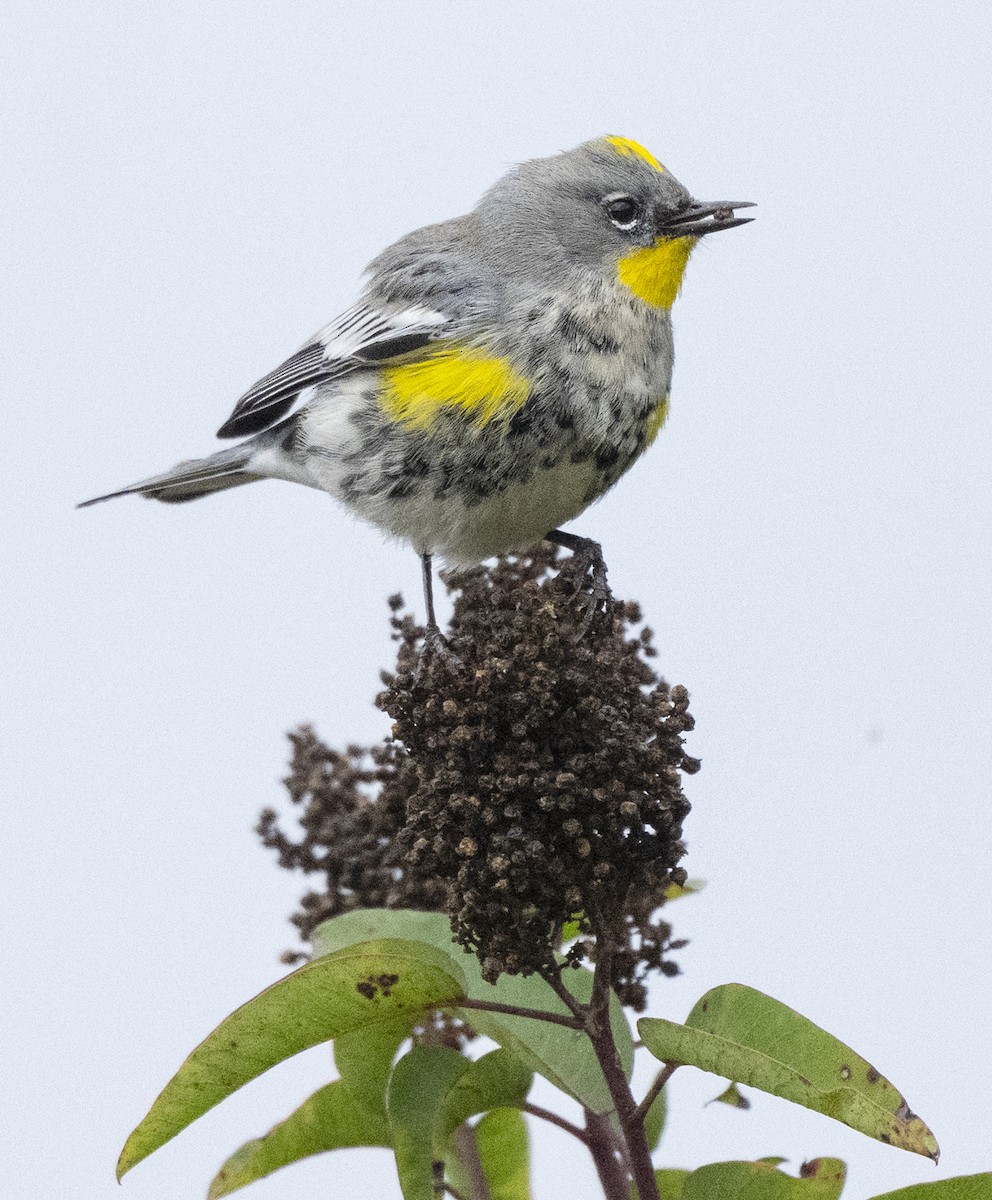
Once considered to be different species, the yellow-rumped warbler now consists of different subspecies, the Audubon’s and Myrtle Warblers. As the name would suggest, yellow-rumped warblers have a yellow patch on their rump, in addition to other yellow markings found on their head and on their sides. The greatest distinction between the Audubon’s and Myrtle warblers is that the former has a yellow throat while the latter has a white throat. Their breeding plumage is striking, with bright yellow and white contrasting against dark grays and black. Non-breeding plumage is more drab, with some brown colouration. Both males and females have breeding and non-breeding plumage, though female plumage is typically a bit more drab than male plumage.
Audubon’s (male)
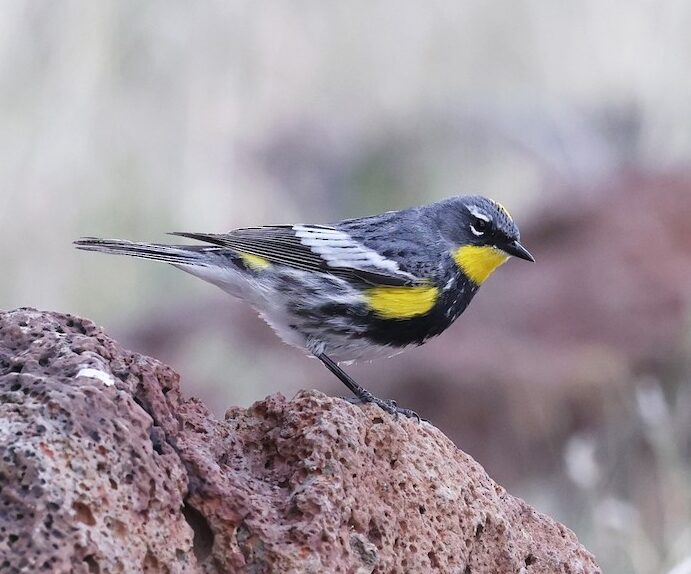
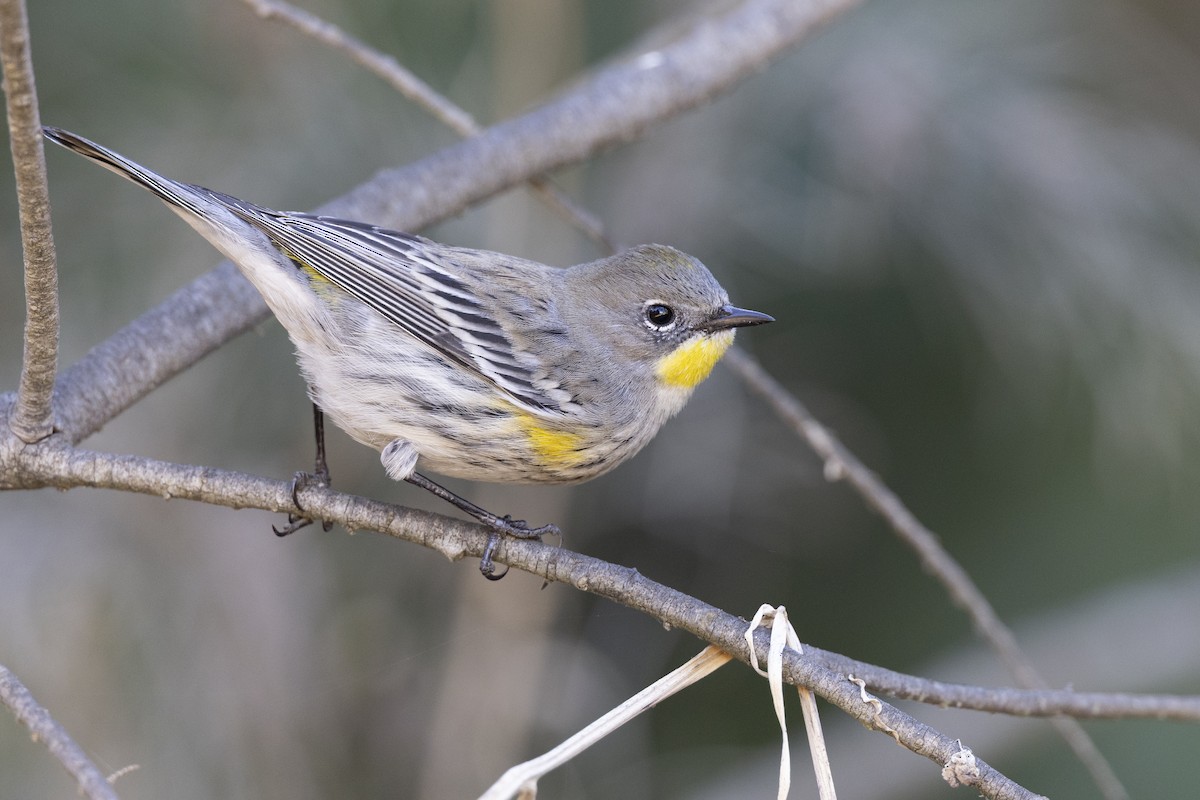
Myrtle (male)
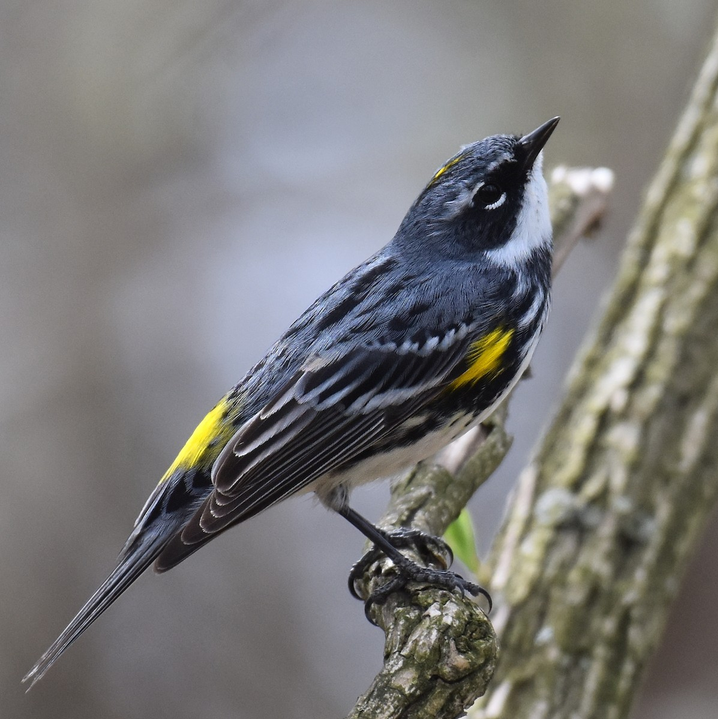
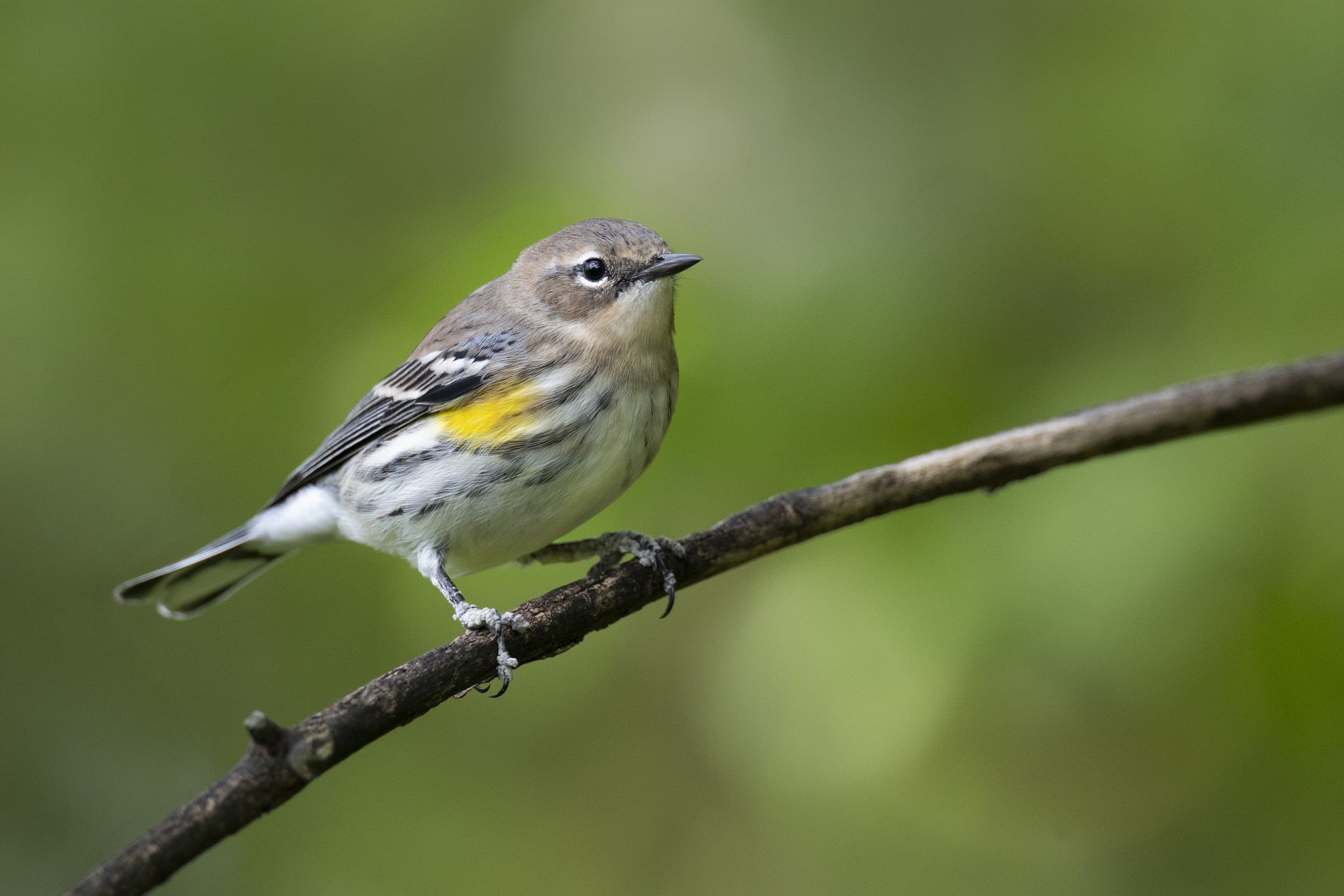
Songs and Calls
Songs and calls can vary between and within subspecies, but follow similar trends. Songs are a two-part series of repeated notes, speeding up at the end.
Distribution and Habitat
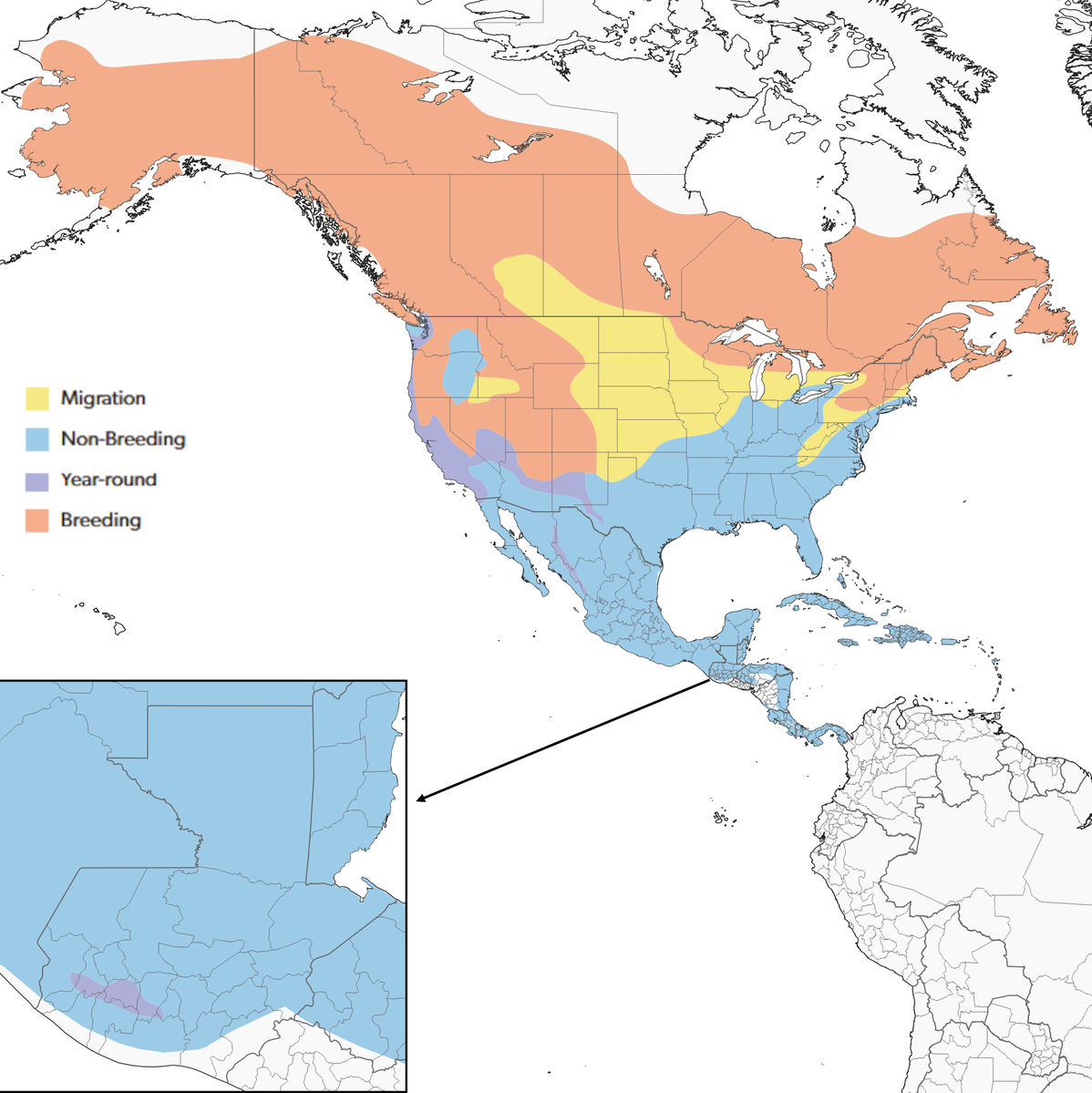
Yellow-rumped warblers are found all across North America, with the Myrtle subspecies typically in the east and Audubon’s in the west. Myrtle warblers can be found from Eastern Canada all the way down to the Central America, whereas Audubon’s warblers have a similar range but are found on the western side of the continent (Martell, 2015; Cornell University [CU], n.d.). The subspecies do meet and breed in a hybrid zone found in BC and Alberta, producing offspring with hybrid plumage, though with some degree of reproductive isolation between the subspecies (Brelsford & Irwin, 2009). Yellow-rumped warblers can be found in a variety of different habitats, though they prefer forests with coniferous trees in summer and move to more open habitats in the winter (Martell, 2015; CU, n.d.). Coniferous forests are important, as it is where they breed and nest (Martell, 2015; CU, n.d.).
Diet and Behaviour
These warblers eat many insects during summer by either waiting and catching passing bugs or by searching through bark on trees (CU, n.d.). During migration and winter, they mainly eat fruits, particularly bayberry and wax myrtle berries (CU, n.d.; Cannings et al. 2020). The ability to eat these berries is unique among warblers, and contributes to them being able to migrate further north than other warblers (CU, n.d.). They also eat seeds and will occasionally visit bird feeders, enjoying sunflower seeds, peanut butter, and more (CU, n.d.). They can form large single species or mixed species flocks, often migrating with chipping sparrows and western bluebirds (CU, n.d.; Cannings et al. 2020). During mating season males will court females by raising their wings, raising their crown feathers, and hop around, calling (CU, n.d.). Females build and care for their nests on conifer branches, laying 1-6 eggs (CU, n.d.; Cannings et al. 2020). Nests can be made of plant material, mammal hair, and lichen, lined with hair and feathers that can curl up over the eggs (CU, n.d.). When the eggs hatch, the male and female both help feed their young (Cannings et al. 2020).
Population and Conservation
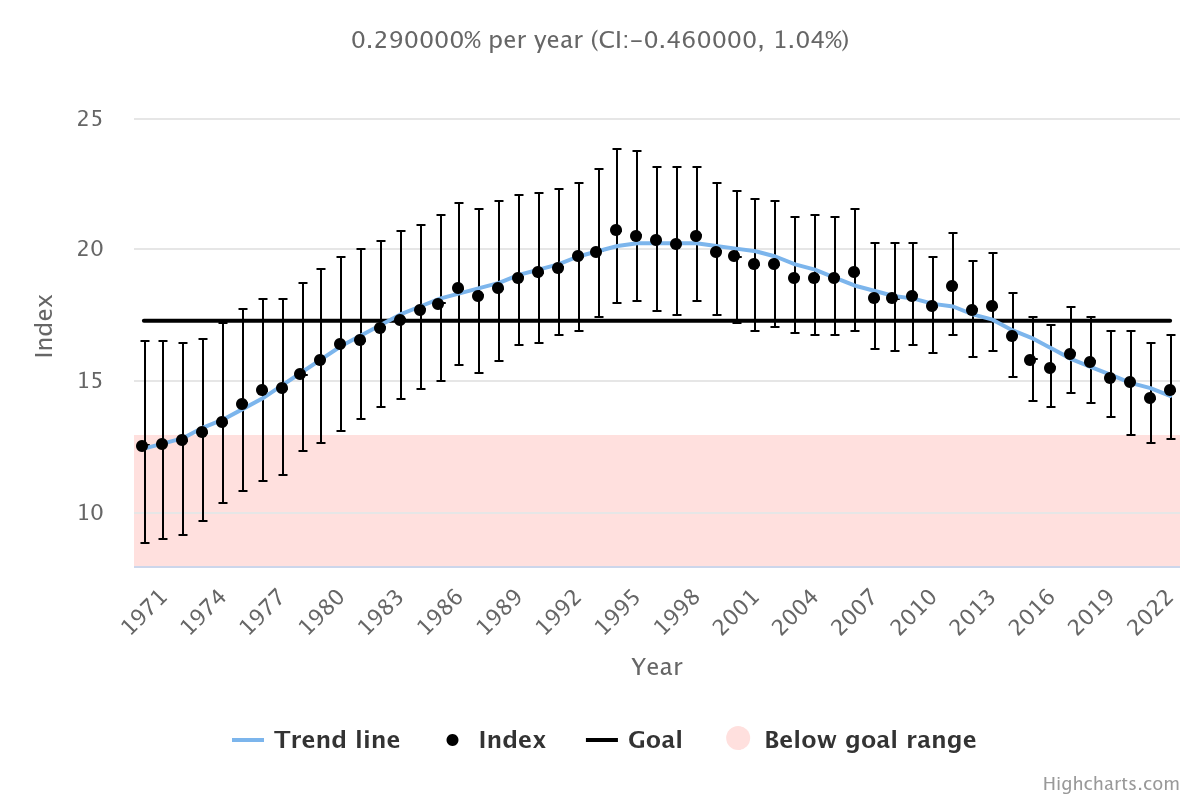
A 2024 estimate places the global population of yellow-rumped warblers somewhere around 170 000 000 and the number in Canada annually at 160 000 000 (Environment and Climate Change Canada [ECCC] et al., 2024). Fortunately, the yellow-rumped warbler is currently listed as a species of least concern by the International Union for Conservation of Nature (International Union for Conservation of Nature and Natural Resources, 2026). The 2024 State of Canada’s Birds report shows that the population has been on a decline since the late 90’s, though still within the goal range (ECCC et al., 2024) (see graph below). Outside of Canada, a 2017 study conducted in western United States showed a more concerning trend for Audubon’s yellow-rumped warblers, finding a nearly 5% decline each year (Rockwell et al. 2017). Despite the general declining trends, southern Ontario and Quebec populations remain steady (ECCC et al., 2024).
Research
An area of research involving yellow-rumped warblers is analyzing methylmercury (MeHg) levels in the species to understand the effects MeHg has on birds. MeHg is a pollutant released by human activity that contaminates aquatic and terrestrial environments, harming wildlife (Driscoll et al., 2013). This includes songbirds, which have been found to have high levels of mercury in more recent times (Seewagen, 2018).
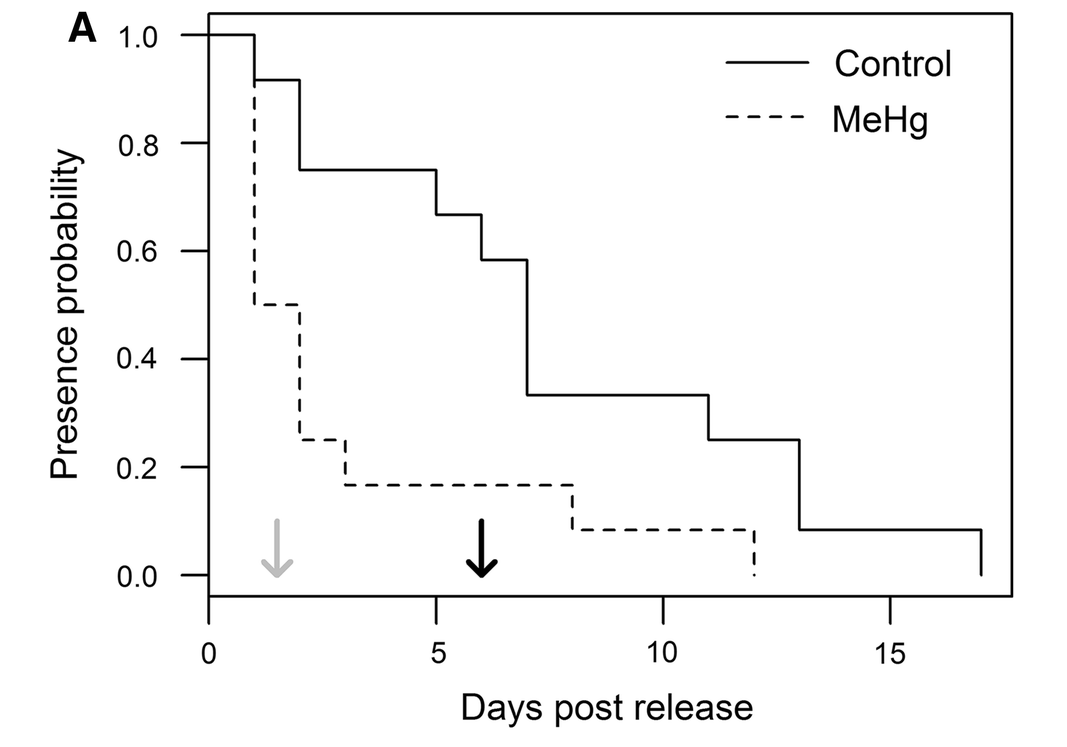
How MeHg affects migration is a significant point of study, as high mercury levels are suspected to potentially affect navigation, stopover behaviour, and more (Seewagen, 2018). MeHg can act a neurotoxin with the potential to harm navigational regions of the brain, such as the hippocampus (Seewagen, 2018). MeHg has previously been found to impair the function of the hippocampus in homing pigeons, impacting their navigational ability (Moye et al., 2016). It is possible that songbird species could experience the same effects, though it seems there is insufficient information to come to a conclusion (Seewagen et al., 2019). The effects of MeHg have also been studied in relation to the stopover behaviour of yellow-rumped warblers. A 2019 study found that while there seemed to be no difference in the feeding habits and flight direction of mercury-exposed warblers, they departed from a stopover site sooner than ordinary birds after being released (Seewagen et al., 2019) (see graph on the right).
Mercury exposure was also found to disrupt metabolism in yellow-rumped warblers. A 2022 study found that methylmercury treatments led to reduced muscle enzyme activity, disruption of fatty acid catabolism, and more (Seewagen et al., 2022).
Research into the effects of mercury in birds is ongoing, and hopefully will provide further answers as to what is happening and how we can help save affected or at risk birds.
You have reached the end, thank you for reading my blog!
Citations
Brelsford, A., & Irwin, D. E. (2009). Incipient Speciation despite Little Assortative Mating: The Yellow-Rumped Warbler Hybrid Zone. Evolution, 63(12), 3050–3060. http://www.jstor.org/stable/27743464
Cannings, R. Aversa, T. & Opperman, H. Yellow-rumped Warbler. (2020). Birds of British Columbia and the Pacific Northwest: A Complete Guide. 2nd ed. Heritage House Publishing.
Cornell University. Yellow-rumped Warbler. All About Birds. https://www.allaboutbirds.org/guide/Yellow-rumped_Warbler/overview
Driscoll, C. T., Mason, R. P., Chan, H. M., Jacob, D. J., & Pirrone, N. (2013). Mercury as a Global Pollutant: Sources, Pathways, and Effects. Environmental Science & Technology, 47(10), 4967–4983. https://doi-org.ezproxy.viu.ca/10.1021/es305071v
Environment and Climate Change Canada & Birds Canada. (2024). Yellow-rumped Warbler. NatureCounts. https://doi.org/10.71842/cvfq-s576
International Union for Conservation of Nature and Natural Resources (2026). Audubon’s Warbler. The IUCN Red List of Threatened Species. https://www.iucnredlist.org/species/103798482/139143829
International Union for Conservation of Nature and Natural Resources (2026). Myrtle Warbler. The IUCN Red List of Threatened Species. https://www.iucnredlist.org/species/103798425/139138664
Martell, A. (2015). Yellow-rumped Warbler. The Atlas of the Breeding Birds of British Columbia. https://www.birdatlas.bc.ca/accounts/speciesaccount.jsp?sp=YRWA&lang=en
Moye, J., Perez, C., & Pritsos, C. (2016). Effects of Parental and Direct Methylmercury Exposure on Flight Activity in Young Homing Pigeons (Columba livia). Environment and Pollution, 5(1), 23-30. http://dx.doi.org/10.5539/ep.v5n1p23
Rockwell, S. M., Alexander, J. D., Stephens, J. L., Frey, R. I., & Ralph, C. J. (2017). Spatial variation in songbird demographic trends from a regional network of banding stations in the Pacific Northwest. The Condor, 119(4), 732–744. https://www.jstor.org/stable/90015995
Seewagen, C. L. (2018). The threat of global mercury pollution to bird migration: potential mechanisms and current evidence. Ecotoxicology, 29, 1254-1267. https://doi-org.ezproxy.viu.ca/10.1007/s10646-018-1971-z
Seewagen, C. L., Ma, Y., Morbey, Y. E., & Guglielmo, C. G. (2019). Stopover departure behavior and flight orientation of spring-migrant Yellow-rumped Warblers (Setophaga coronata) experimentally exposed to methylmercury. Journal of Ornithology, 160, 617-624. https://doi-org.ezproxy.viu.ca/10.1007/s10336-019-01641-2
Seewagen, C. L., Elowe, C. R., Gerson, A. R., Groom, D. J. E., Ma, Y., Yildirim, M., & Guglielmo, C. G. (2022). Short-term mercury exposure disrupts muscular and hepatic lipid metabolism in a migrant songbird. Scientific Reports, 12. https://doi.org/10.1038/s41598-022-15680-y
I didn’t know that the subspecies of yellow rumped warbler used to be considered different species! Do the hybrids have yellow and white on the throat, then? Or is it a paler yellow? It’s also really interesting how MeHg can affect migration, as well as have so many other systemic effects. I wonder why the birds carrying it leave stopover sites earlier. It’d be interesting to find out with more research!