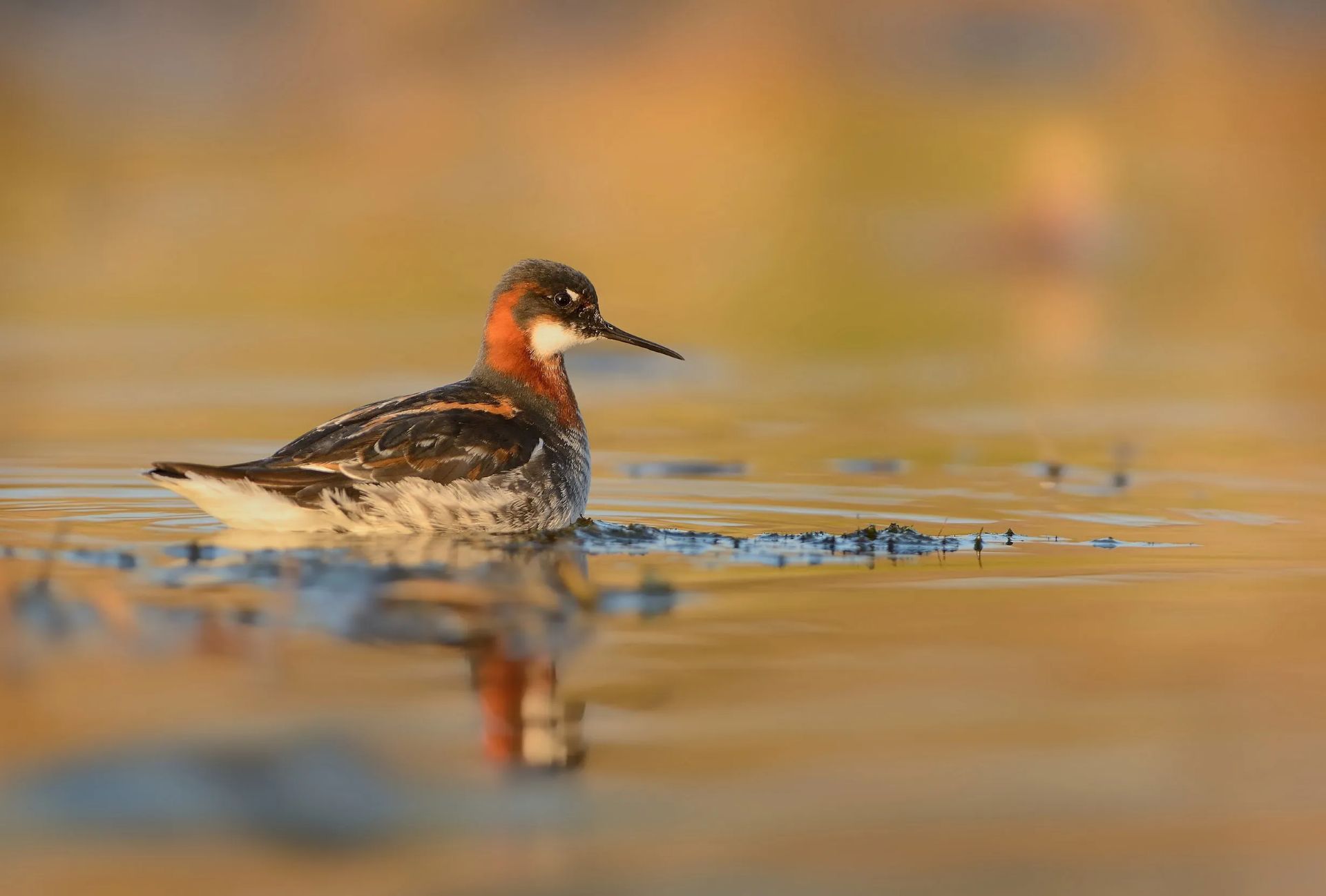
Female Red-necked Phalarope in breeding plumage. https://www.rspb.org.uk/birds-and-wildlife/red-necked-phalarope
Description
The Red-necked phalarope (RNP) is a small shorebird belonging to the family Scolopacidae, often known as the “sandpiper family” which makes up many of the recognizable shorebirds we know and love. Much like the other shorebirds they have long legs, a compact torpedo-shaped body and a bill that is long an slender.
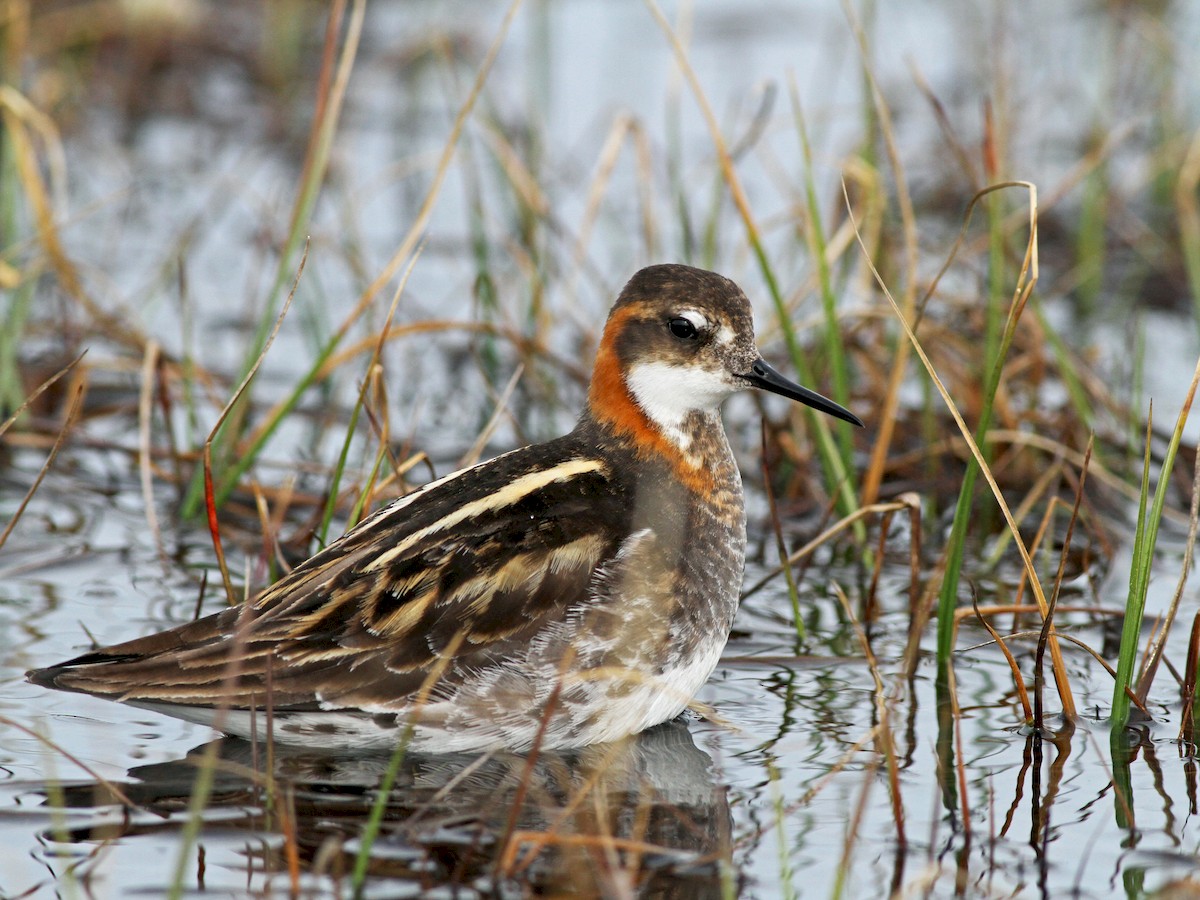
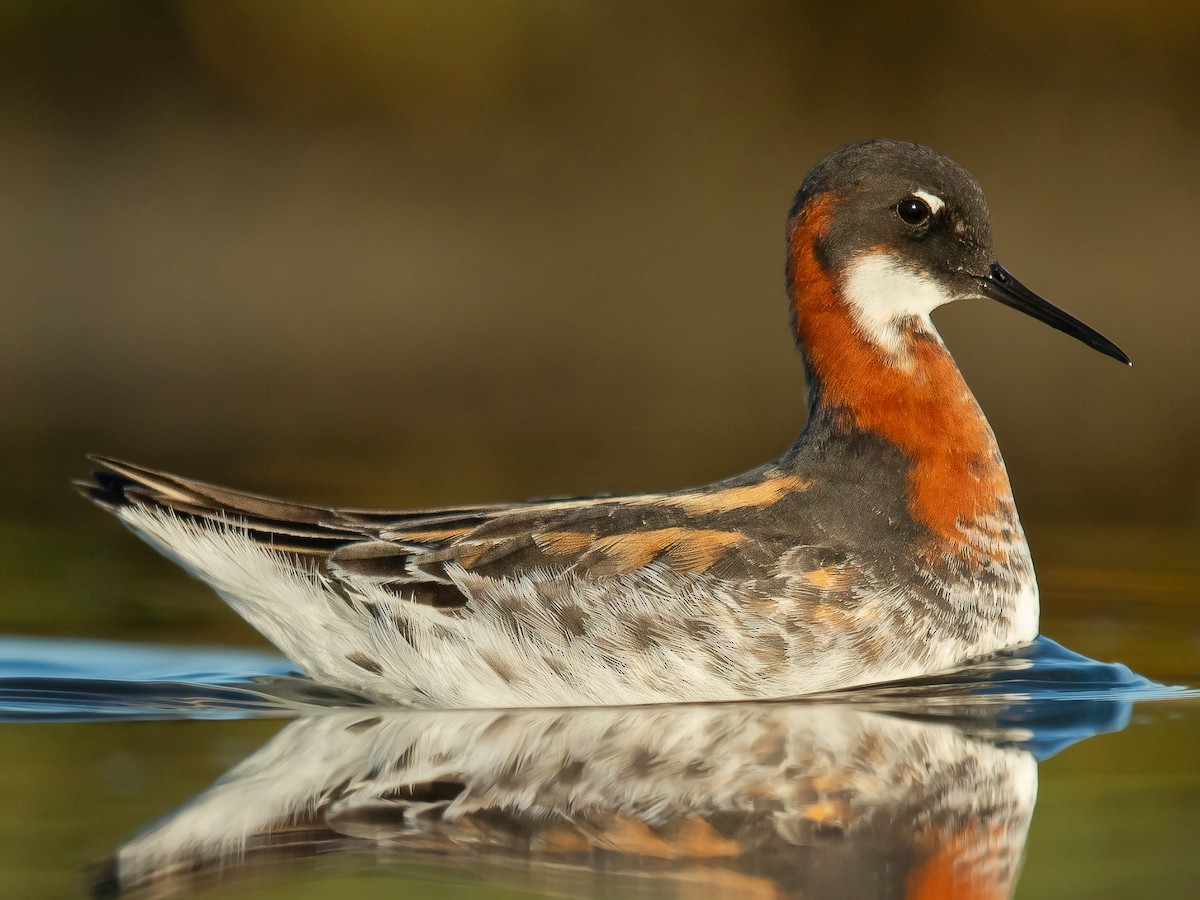
A male (Left) and female (Right) Red-Necked Phalaropes (Cornell Lab of Ornithology, n.d.)
If you spot the RNP in its breeding period from May to August, it will be in its vibrant breeding plumage, characterized by a dark slate back, a crisp white throat, and a bold, chestnut-red stripe wrapping around the neck with females showing off the brightest coloration, a trait that is less common in the bird community (above). Its non-breeding plumage from roughly September to April, is a clean white below, soft grey above, and marked by a distinct dark patch behind each eye resembling a smudge of eyeliner (Below).
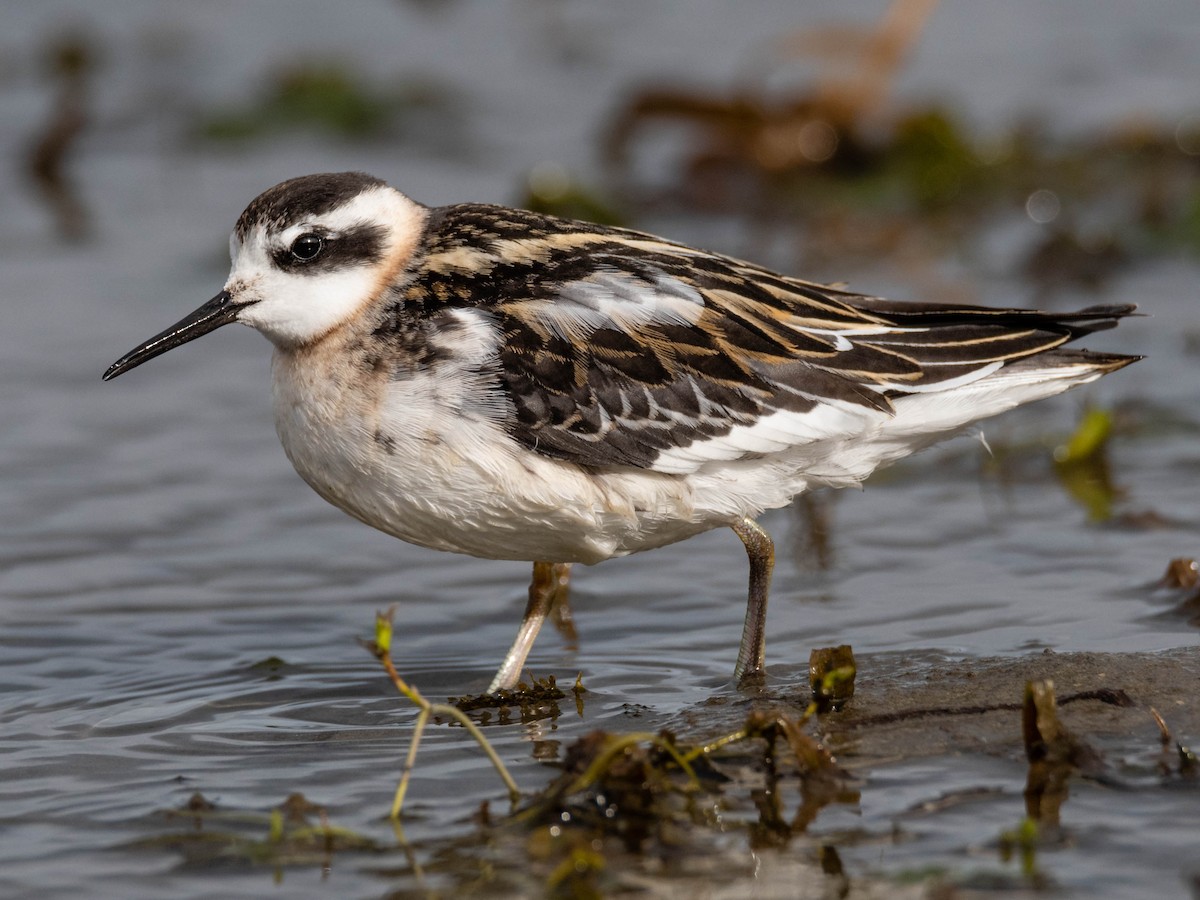
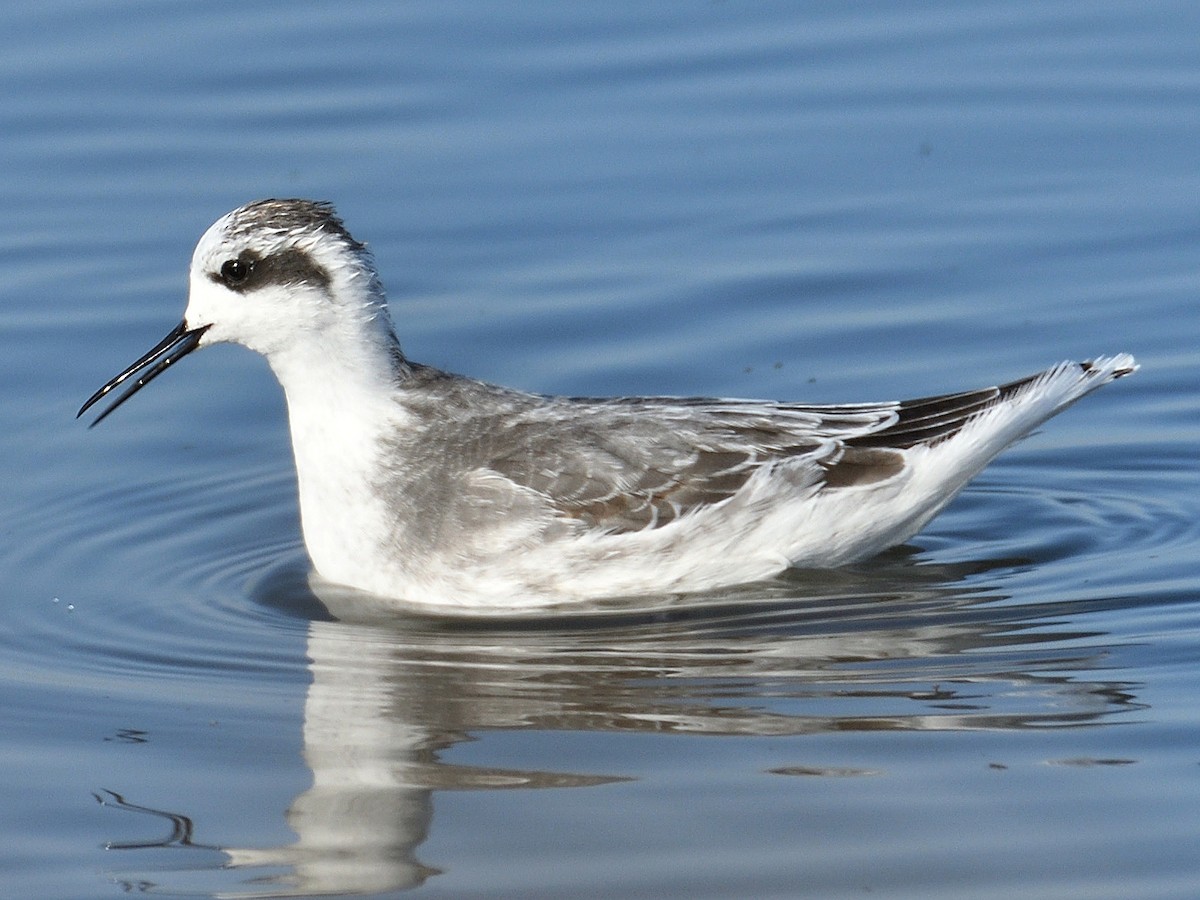
A Red-Necked Phalaropes in non-breeding plumage (Cornell Lab of Ornithology, n.d.)
A shorebird away from the shore?
Unlike most shorebirds, its anatomy is tailored for life on the water: it possesses flattened, lobed toes that act like miniature paddles for swimming, alongside dense, water-resistant plumage that traps air and keeps it buoyantly afloat (Rubega et al., 2020). These seafaring traits run so deep that coastal communities historically tied them to ocean squalls; in Newfoundland, fishermen dubbed them “gale birds” because these normally pelagic swimmers were only driven near shore ahead of harsh Atlantic storms (Peters & Burleigh, 1951). But this begs the question: why did a shorebird abandon the shore to spend up to nine months bobbing on open swells? To eat, of course!
Feeding behavior
While most shorebirds wade through the mud, red-necked phalaropes turn dinner into a high-speed spin cycle. When foraging on coastal bays, Arctic pools, or salty desert lakes, these buoyant little birds swim in frantic, dizzying circles, spinning up to sixty times a minute. This isn’t just playful splashing; it’s an ingenious hunting strategy. Their rapid foot-pedaling creates whirlpools below their bodies that act like underwater elevators, pulling suspended snacks up from deeper water right to the surface (Prakash et al., 2008).
And what’s on the menu? While people often assume they gorge on brine shrimp, studies suggest they favor bingeing on alkali brine flies, larvae, pupae, and adults by the shore (Jehl, 1986). Out on the open ocean, they switch to feasting on floating swarms of tiny copepods and zooplankton. Once dinner reaches the top of the vortex, they don’t even have to tilt their heads back to swallow. Instead, using a principle known as surface tension transport, they are able to draw prey-filled water droplets straight up into their mouths with a combination of surface tension a tapered beak, and a in empressive evolution advancement in physics.(Rubega & Obst, 1993). It is essentially fast-food dining powered by pure physics.
Distribution and Migration
The red-necked phalarope has a circumpolar distribution across arctic and subarctic areas throughout Alaska, Canada, Iceland, Scandinavia, and northern Russia (Rubega et al., 2020). Following summer breeding, they undertake journeys averaging 6,000 to 11,000 kilometers one-way, with annual round-trips regularly exceeding 20,000 kilometers (van Bemmelen et al., 2019).
Remarkably, western Palearctic breeders often cross the Atlantic and North America to reach Pacific wintering grounds rather than moving south into closer Atlantic waters (Smith et al., 2014). The species winters almost entirely at sea, spending up to nine continuous months in pelagic habitats (Rubega et al., 2020). Their non-breeding distribution centers over rich marine upwelling zones, notably the Humboldt Current off South America and the Arabian Sea, where oceanographic convergences concentrate abundant zooplankton prey (van Bemmelen et al., 2019).
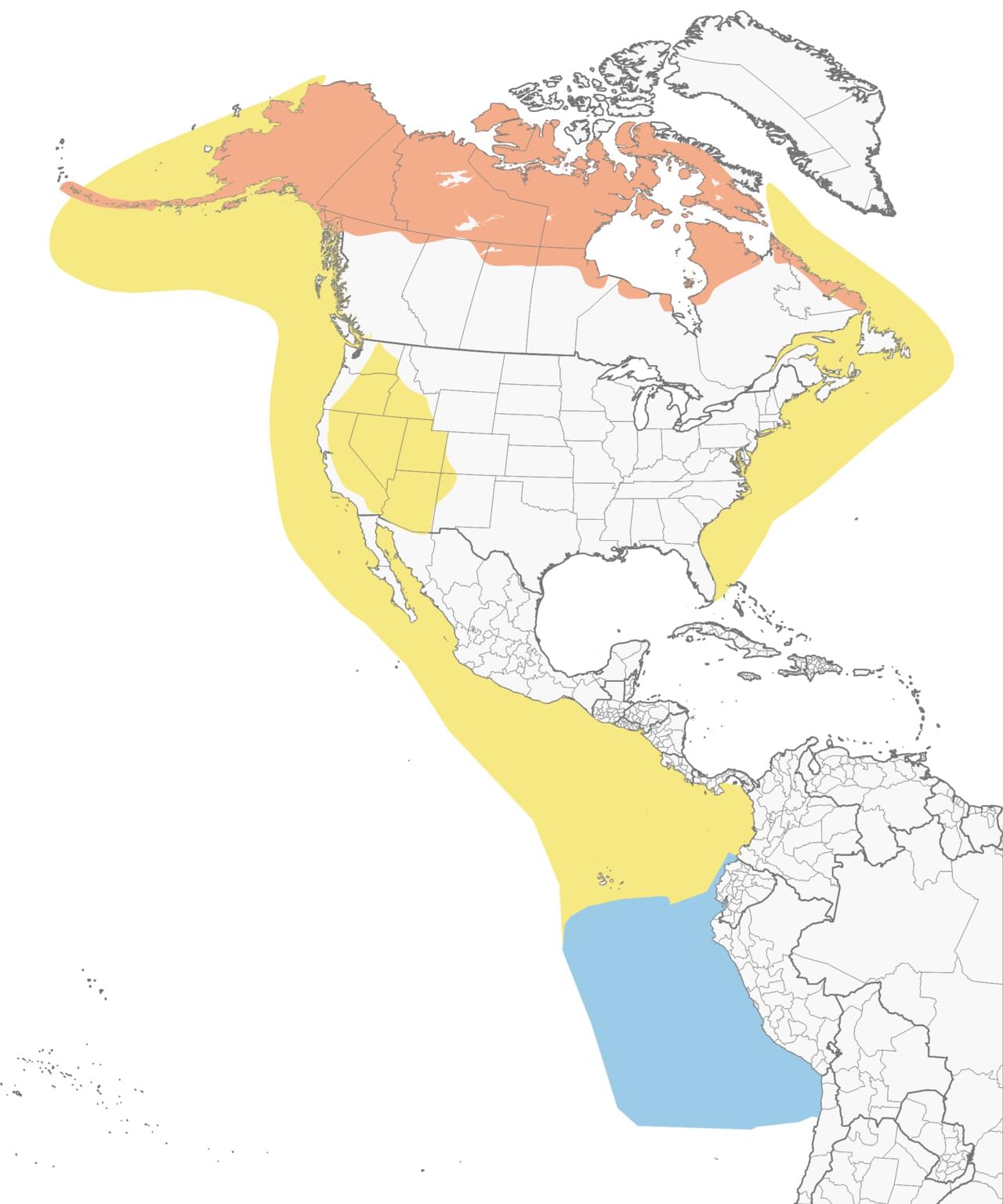
Range of Red-Necked Phalaropes (Cornell Lab of Ornithology, n.d.)
The red-necked phalarope has a circumpolar distribution across arctic and subarctic areas throughout Alaska, Canada, Iceland, Scandinavia, and northern Russia (Rubega et al., 2020). Following summer breeding, they undertake journeys averaging 6,000 to 11,000 kilometers one-way, with annual round-trips regularly exceeding 20,000 kilometers (van Bemmelen et al., 2019).
Remarkably, western Palearctic breeders often cross the Atlantic and North America to reach Pacific wintering grounds rather than moving south into closer Atlantic waters (Smith et al., 2014). The species winters almost entirely at sea, spending up to nine continuous months in pelagic habitats (Rubega et al., 2020). Their non-breeding distribution centers over rich marine upwelling zones, notably the Humboldt Current off South America and the Arabian Sea, where oceanographic convergences concentrate abundant zooplankton prey (van Bemmelen et al., 2019).
breeding role reversal
The female red-necked phalarope who unlike most birds, is more boldly and brightly colored is the first to arrive and acts to select a nesting site. She claims her prime location in a sheltered, buggy tundra pool bordered by mossy mounds or grasses. Right beside the water, she picks a dry grassy tussock for a simple scrape to serve as their hidden nursery. She then acts to
Once she lays her eggs, mom is officially off the clock. Practicing bird-world polyandry, she immediately abandons the nest without looking back. She is off to either chase down another available bachelor to start a second clutch for the season or kick back and begin her early migration south.
Left to incubate the egg, dad takes over full-time parenting. Dressed in a more drab and muddy, camouflaged browns, he blends seamlessly into the tundra hidden from predatory gulls . He warms the eggs solo for nearly three weeks, then shepherds the fluffy chicks until they can feed and survive on their own. Luckily these chicks are precocial, meaning as soon as they are hatched, they are covered in warm down, alert and mobile. They nest and immediately start feeding for themselves. talk about a self sufficient kid!
References
COSEWIC. (2014). COSEWIC assessment and status report on the Red-necked Phalarope Phalaropus lobatus in Canada. Committee on the Status of Endangered Wildlife in Canada. https://www.canada.ca/en/environment-climate-change/services/species-risk-public-registry/cosewic-assessments-status-reports/red-necked-phalarope-2014.html
Cornell Lab of Ornithology. (n.d.). Red-necked Phalarope range map [Map]. All About Birds. https://www.allaboutbirds.org/guide/Red-necked_Phalarope/maps-range
Prakash, M., Quéré, D., & Bush, J. W. M. (2008). Surface tension transport of prey by feeding shorebirds: The capillary ratchet. Science, 320(5878), 931–934. https://doi.org/10.1126/science.1156023
Peters, H. S., & Burleigh, T. D. (1951). The birds of Newfoundland. Department of Natural Resources, St. John’s.
Rubega, M. A., Schamel, D., & Tracy, D. M. (2020). Red-necked Phalarope (Phalaropus lobatus), version 1.0. In S. M. Billerman (Ed.), Birds of the World. Cornell Lab of Ornithology. https://doi.org/10.2173/bow.renpha.01
Rubega, M. A., & Obst, B. S. (1993). Surface-tension feeding in phalaropes: Discovery of a novel feeding mechanism. The Auk, 110(2), 169–178. https://digitalcommons.usf.edu/auk/vol110/iss2/1/ Cited by: 82
Schamel, D., Tracy, D. M., & Lank, D. B. (2004). Male mate choice, male availability and egg production as limitations on polyandry in the red-necked phalarope. Animal Behaviour, 67(5), 847–853.doi:10.1016/j.anbehav.2003.04.014
Smith, M., Bolton, M., Okill, D. J., Summers, R. W., Ellis, P., Liechti, F., & Wilson, J. D. (2014). Geolocator tagging reveals Pacific migration of Red-necked Phalarope Phalaropus lobatus breeding in Scotland. Ibis, 156(4), 870–873. https://doi.org/10.1111/ibi.12196
van Bemmelen, R. S. A., Kolbeinsson, Y., Ramos, R., et al. (2019). A Migratory Divide Among Red-Necked Phalaropes in the Western Palearctic Reveals Contrasting Migration and Wintering Movement Strategies. Frontiers in Ecology and Evolution, 7. https://doi.org/10.3389/fevo.2019.00086