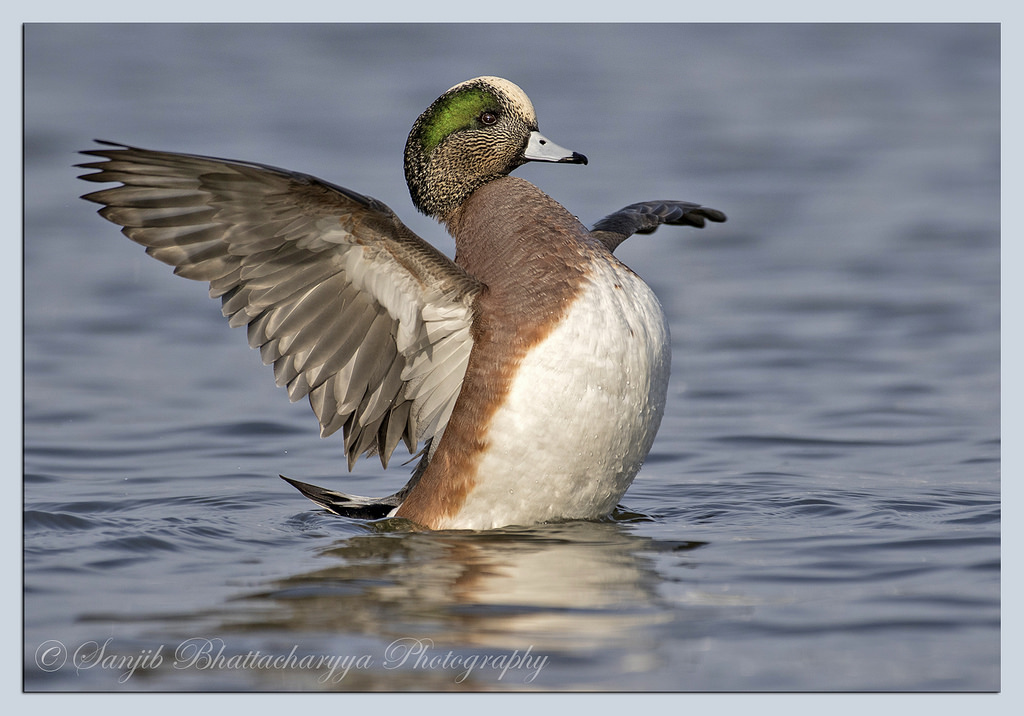
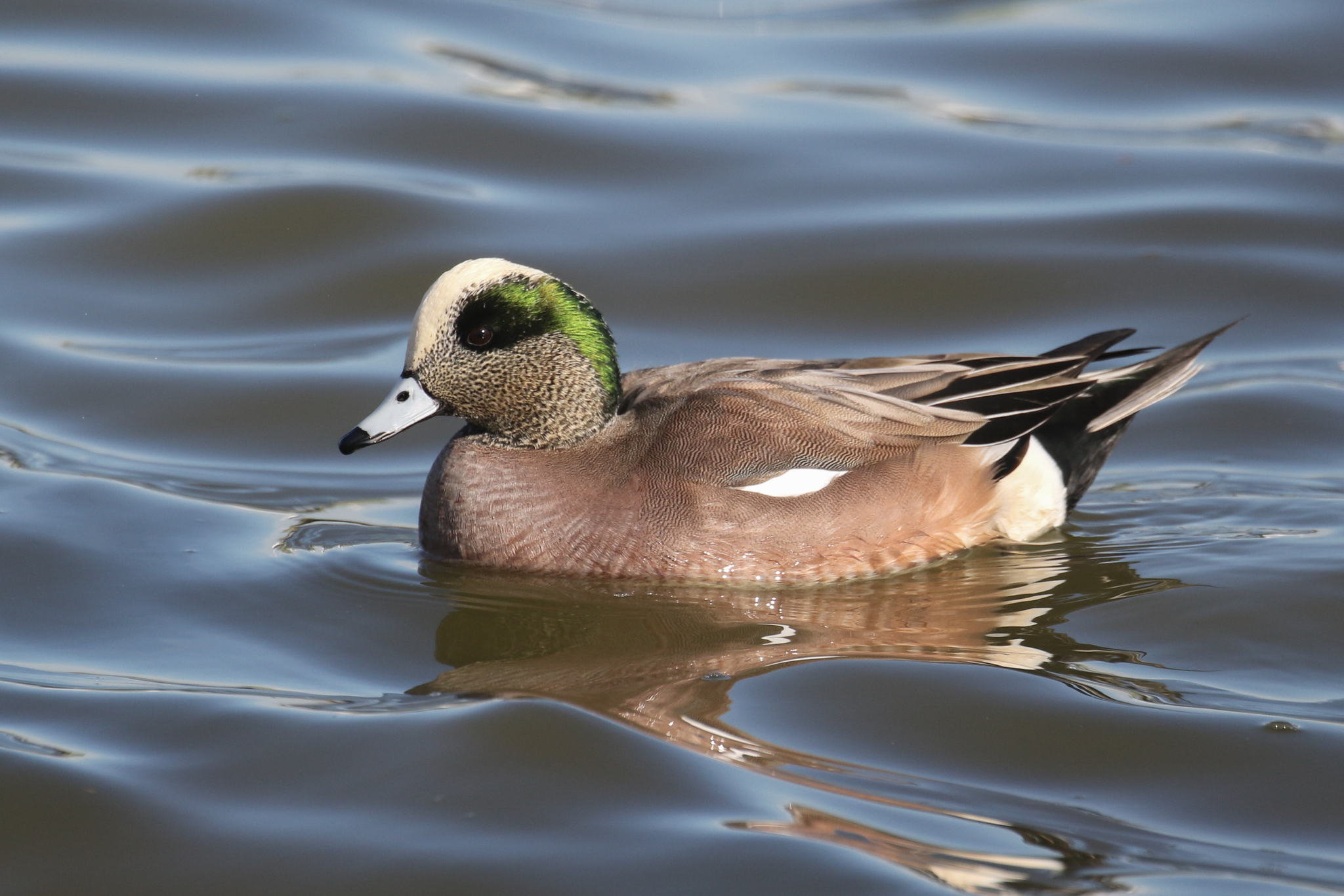
Adult male American Wigeon
Photographed by Sanjib Bhattacharyya
Mareca americana
The American Wigeon is a migratory duck that belongs to the Order Anseriformes and the Anatidae Family. It is part of the North American dabbling ducks. Dabbling ducks obtain their food by tipping forward in shallow water rather than diving for their food. Due to this, wetlands offer a perfect space for American Wigeons to forage for food meanwhile Boreal Forests offer them a nesting ground. What do changes in these habitats mean for dabbling ducks? Could this cause a decline in their population? In this blog we tackle the challenges the American Wigeon faces
American Wigeons, What are they?
American Wigeons are Ducks meaning they have a few physical characteristics that make them easily identifiable from other birds. Some of the ducks’ most prominent features are the classic duck waddle gait, their webbed feet, broad flat bills, boat shaped bodies, and a dense covering of feathers. These characteristics are essential for their everyday functions. (EBSCO)
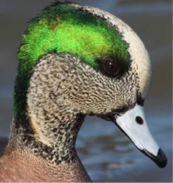
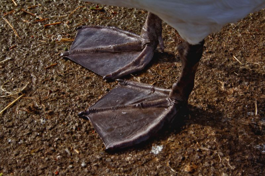
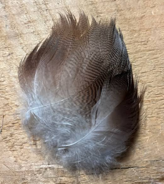
Series of photos showing off prominent duck features
Photo of Broad Flat Bill is provided by Ducks.org. Webbed Feet photo provided by Mark Robinson of a Song Swan. Dense Feathers photo attained on Eflytyer. Swimming Photo taken by Polinova
American Wigeon Ducks Eating and Swimming
Video by Dans Cool Videos
Their webbed feet help them swim since they are semi aquatic, meaning they spend parts of their life in aquatic settings and other parts on land. Their flat broad bills help them obtain food from the shallow waters and their boat-shaped bodies help them swim and stay buoyant while looking for food. The dense covering of feathers on their bodies has water repellant properties and oils that help keep them dry and warm while they swim.
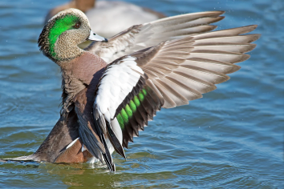
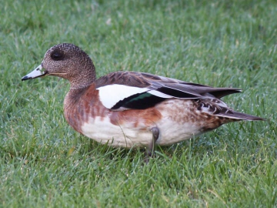
Identifying Features of the American Wigeons
The American Wigeon expresses sexual dimorphism meaning there is distinct visual differences between males and females of the species.
Male Features ~ Brow/grey head with a thick green stripe behind the eye and a white cap, in some lights the green stripe can look bronzy. During nonbreeding season males have a brownish gray head with a dark patch around the eye. They have a prominent white patch on the upper wing as well as white under the wings and have green secondary feathers or green iridescent speculum. (All About Birds)
Female Features ~ Brown bodies with brownish/grey head. Has a dark smudge around the eye as well as nonbreeding males. Unlike the nonbreeding male the females do not have white patches on the upper wings with green secondary feathers. Instead, their secondary feathers as well as the feathers of juveniles are dark brown and are boarded by a thin white wing stripe. (All About Birds)
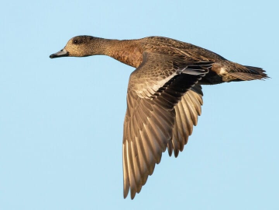
Female American Wigeon at flight
Photographed by Paul Fenwick
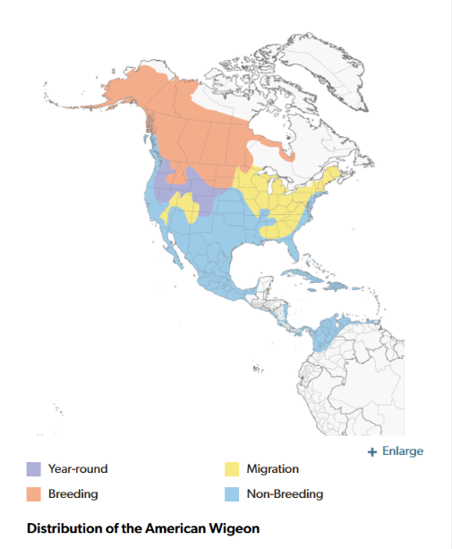
Mapped distribution of the American Wigeon
Map by Cornell Labs
The distribution for the American Wigeon is mainly North America. They have one of the most northerly breeding distributions amongst the dabbling ducks. The highest breeding densities are observed in the tundra and boreal forests which are known for their cold-climate biomes. They are also known to breed in Northeastern British Columbia and Northern and Central Alberta. The wintering populations are densest in the Pacific Northwest and the Central Valley of California but can span all the way to Mexico and parts of South America. (Cornell Lab Birds of the World)
Habitats
American Wigeons can often be found in larger marshes during the summer and are not very common in small pounds. During the winter and while migrating they are common in estuaries, fresh and saltwater marshes as well as inland lakes and pounds. They are sometimes found wintering on larger deeper lakes. During the nesting season they are found in boreal forests and tundras. Their wintering months are from October to March, meanwhile their nesting months are from May to July. (Audubon)
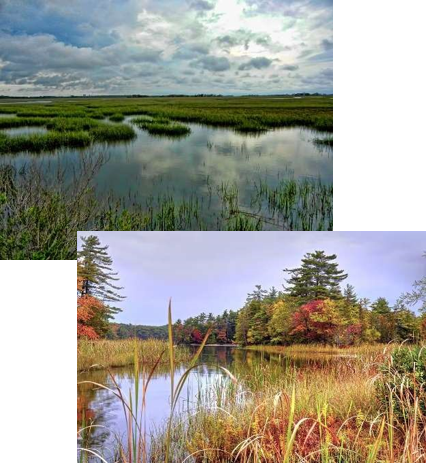
Salt Marsh and Wetlands in Autumn
Photos by Trish Hartman and ehrlif
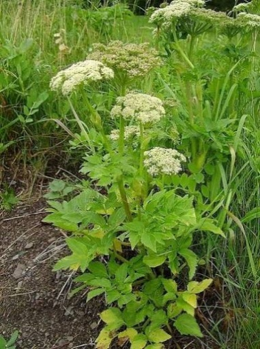
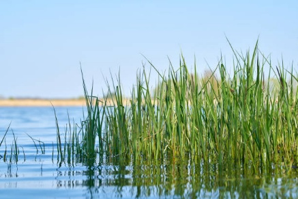
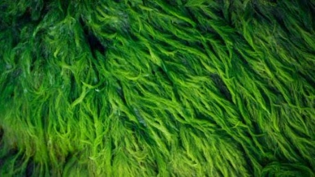
Celery, Sedge, and Algae
Photographed by
André-Philippe D. Picard, Heiko119, and Olga Maksimava
Diet
The American Wigeons primary diet consists of both aquatic and land plants. On land they graze on grass offshoots, seeds, and grains. They sometimes feed on small insects or snails. The aquatic plants they feed on consist of algae, pondweeds, wild celery, eelgrass, and sedges. They are sometimes seen in deeper waters around diving ducks. This is because they are kleptoparasites meaning they steal aquatic vegetation diving ducks bring from deeper water. They are one of the only ducks known to exhibit this behavior. This could be due to shortages of food or a behavior that evolved separately.
Breeding/Nesting
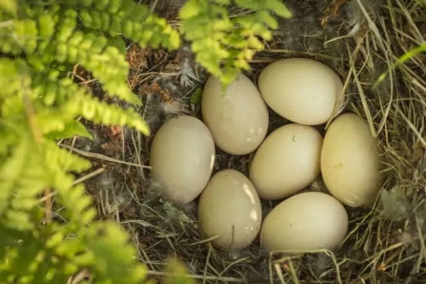
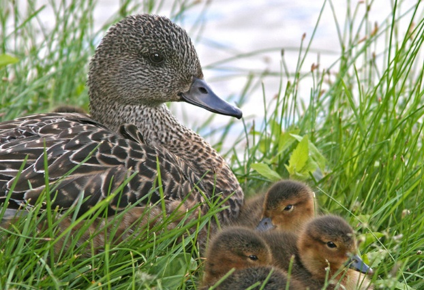
Courtship in American Wigeons starts in their wintering grounds before they migrate to their nesting habitats. Males who exhibit full breeding plumage tend to breed earlier than males who are not in full breeding plumage. Females exhibit mate preference meaning they choose the mate they believe show the best qualities. Amongst these qualities are mate attentiveness, performance of areal chase displays of males to females, dominance, and aggression. Females nest on dryland but near water. Nest are concealed by tall vegetation. Females typically lay 8-11 eggs and incubate them for about 23-24 days. Since they tend to nest later in the season than some other dabbling ducks, they tend to be a little more adaptable however they are still facing some major challenges when it comes to climate changes that have been occurring over time.(Audubon)
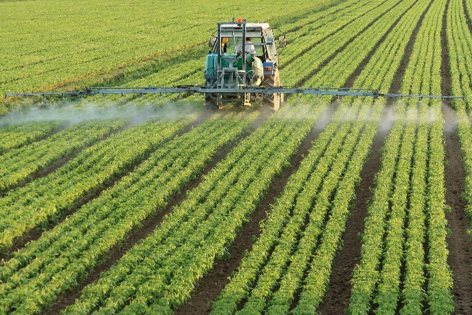
Industrial Farming
Photographed by Pixaby
However, a decrease in farmland is not the only challenge this duck faces. The American Wigeon has “weak density dependence” meaning that if their habitats get overcrowded it takes them a long time to naturally balance themselves out. This is even more important if they already don’t have that many habitats to occupy. While north habitats seem to have a greater number of ponds available it has been noted that the total number of American Wigeons actually decreases despite having more stable habitats. These ducks, despite being more adaptable than other dabbling ducks when it comes to breeding, are highly sensitive to changing weather conditions which adds yet another challenge. (Sæther et al., 2008)
Changes in Their Habitat
In recent years, the American Wigeon has been experiencing some negative impacts due to changes in their habitats, breeding and migration. Farming practices have increased exponentially to meet the growing demand of the human population however this causes quite a stain on these amazing ducks. The farming grounds that used to be their home are no longer available, leaving them and other fauna to find different homes. The American wigeon showed a decline in breeding productivity due to the more intensive farming practices that are being implemented. Research notes that the amount of juvenile American Wigeons surviving till late summer has declined within the last 60 years due to farming practices. (Weegman et al., 2024)
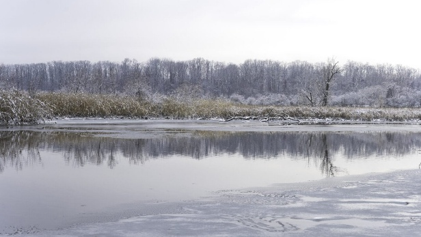
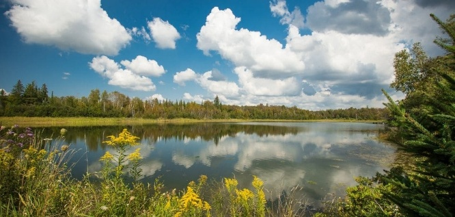
Wetlands in Winter and Ontario Wetlands
Photographed by Pierce Johnston and Viv Lynch
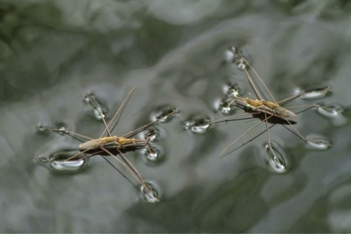
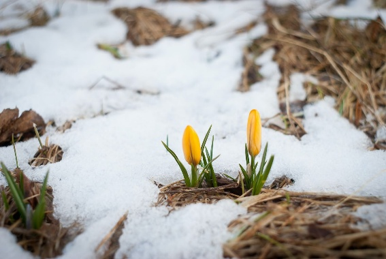
Changes in Breeding
American Wigeons have had a slight decline within the last few years due to changes in spring temperatures. While they are more adaptable since they tend to be more flexible breeders and nest later in the season than other ducks these weather changes are still negatively impacting them. Early snowmelts showed a slight decline in the Wigeon population. The major risk with this is if they nest later in the season and there is an earlier spring their population will face major losses since the new ducklings will have missed the peak supply of aquatic bugs, one of their main food sources. Trends with climate change have shown that this is the way climate is shifting and with in the next 60 years this might be a serious issue they face. (Drever et al., 2011
Timing mismatches that happen due to changes in spring temperatures also affect adult Wigeons. Resources in their refuge stopover might not support or match their needs. Though American Wigeons did not show as much variation in their migration within this research it was noted that other similar ducks experienced these negative effects. If weather conditions continue to shift the more adaptable ducks like the American Wigeon may suffer similar consequences to those being faced now by the less adaptable ducks. If the breeding adult ducks are experiencing hardships before they even, make it to their breeding grounds this could create a decline in how many new American wigeons are produced yearly. (Andersson et al., 2022)
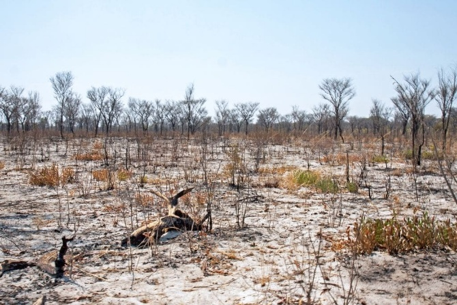
Desiccated land
Photographed by Sloot
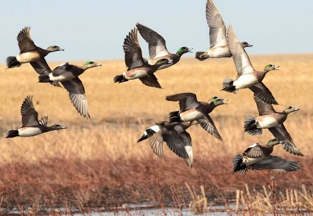
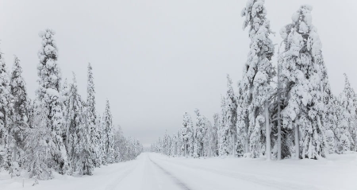


Changes in weather have been causing American Wigeon migration patterns quite a drastic delay. Research notes that they have been experiencing an average delay in their migration of 12.5 days per decade. American Wigeons use “extreme events” as cues to start their migration from their wintering grounds. They typically wait for an intense combination of freezing cold temperatures and heavy rain. If the winters are becoming more and more mild the migration cue is not being triggered until later in the season. Other ducks migrate earlier due to different events, but this means the American Wigeons have a slimmer picking of resources. (Frei et al., 2024)
Overview
The American Wigeon is an amazing duck that has unique physical features. The breeding males are easily distinguishable and females have details that make them identifiable. These ducks are quite resilient and adaptable. This resilience and adaptability, however, could prove to not be enough in the future as there have been some changes already noted that have been causing population declines. If the conservation efforts made aren’t sufficient enough and climate continues to change at the rate it has been these ducks could face the consequences.
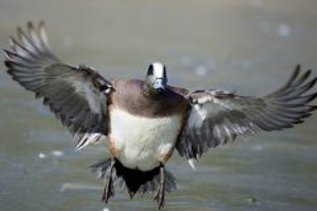
Adult male American Wigeon landing in water
Photographed by Greg Lasley
Works Cited
American wigeon. Audubon. (2026, October 13). https://www.audubon.org/field-guide/bird/american-wigeon
Andersson, K., Davis, C. A., Harris, G., & Haukos, D. A. (2022). Changes in waterfowl migration phenologies in central North America: Implications for future waterfowl conservation. PLOS ONE, 17(5). https://doi.org/10.1371/journal.pone.0266785
Brockmann, H. J., & Barnard, C. J. (1979). Kleptoparasitism in birds. Animal Behaviour, 27, 487–514. https://doi.org/10.1016/0003-3472(79)90185-4
Cornell Lab. (n.d.). American wigeon life history, all about birds, Cornell Lab of Ornithology. All About Birds. https://www.allaboutbirds.org/guide/American_Wigeon/lifehistory
Drever, M. C., Clark, R. G., Derksen, C., Slattery, S. M., Toose, P., & Nudds, T. D. (2011). Population vulnerability to climate change linked to timing of breeding in boreal ducks. Global Change Biology, 18(2), 480–492. https://doi.org/10.1111/j.1365-2486.2011.02541.x
Frei, B., Cox, A. R., Morales, A. C., & Roy, C. (2024). Community‐science reveals delayed fall migration of waterfowl and spatiotemporal effects of a changing climate. Journal of Animal Ecology, 93(4), 377–392. https://doi.org/10.1111/1365-2656.14055
Mini, A. E., Harrington, E. R., Rucker, E., Dugger, B. D., & Mowbray, T. B. (2020, March 4). American wigeon (Mareca Americana), version 1.0. Birds of the World. https://birdsoftheworld.org/bow/species/amewig/cur/introduction
Smith, D. G. (n.d.). Ducks: Zoology: Research starters: Ebscohost. EBSCO. https://www.ebsco.com/research-starters/zoology/ducks/
Sæther, B., Lillegård, M., Grøtan, V., Drever, M. C., Engen, S., Nudds, T. D., & Podruzny, K. M. (2008). Geographical gradients in the population dynamics of North American Prairie Ducks. Journal of Animal Ecology, 77(5), 869–882. https://doi.org/10.1111/j.1365-2656.2008.01424.x
Weegman, M. D., Devries, J. H., Clark, R. G., Howerter, D. W., Gibson, D., Donnelly, J. P., & Arnold, T. W. (2024). Ecological and anthropogenic drivers of waterfowl productivity are synchronous across species, space, and Time. Ecological Applications, 34(4). https://doi.org/10.1002/eap.2979
Wishart, R. A. (1983). Pairing chronology and mate selection in the American wigeon (anas americana). Canadian Journal of Zoology, 61(8), 1733–1743. https://doi.org/10.1139/z83-224
Images and Media
https://www.youtube.com/watch?v=RUOdMCWN7Zw
https://macaulaylibrary.org/asset/51350921
https://www.ducks.org/hunting/waterfowl-id/american-wigeon
https://eflytyer.com/product/natural-american-wigeon-flank/
https://en.wikipedia.org/wiki/American_wigeon
https://en.wikipedia.org/wiki/Webbed_foot
https://www.allaboutbirds.org/news/celebrate-july-4th-with-our-all-american-slideshow
https://macaulaylibrary.org/asset/43619381
https://macaulaylibrary.org/asset/186272621
https://macaulaylibrary.org/asset/51351051
https://www.allaboutbirds.org/guide/American_Wigeon/maps-range
https://www.flickr.com/photos/21078769@N00/8164559528/
https://www.istockphoto.com/photo/autumn-wetlands-gm462755669-32462546
r-riverbed-683405308?dd_referrer=https%3A%2F%2Fwww.google.com%2F
https://commons.wikimedia.org/wiki/File:Angelica_lucida_complet.JPG
https://www.istockphoto.com/photo/grass-on-the-shore-of-a-lake-gm1154129860-313704339
https://www.flickr.com/photos/donaldsducks/2617608248
https://phys.org/news/2025-01-industrial-scale-farming-flawed-ecologically.html
https://ecojustice.ca/file/fighting-to-protect-important-wetlands-duffins-creek
https://www.terminix.com/blog/science-nature/bugs-found-in-water
https://www.treehugger.com/what-is-snowmelt-and-why-is-it-important-5181470
https://earth.org/solutions-to-biodiversity-loss/
https://www.ducks.org/hunting/waterfowl-id/american-wigeon
https://eden.cce.cornell.edu/natural-hazards/winter-storms/
https://www.chesapeakebay.net/discover/field-guide/entry/american-wigeon