Some people may regard the House Sparrow as a common or relatively uninteresting bird when compared to other more grandiose species such as raptors or birds with more elaborate colour patterns. However, I believe that many people are unaware of the traits that make House Sparrows unique, such as their evolutionary development and approximate 10,000-year commensal relationship with humans. A commensal relationship is where one organism lives near and exploits another organism to receive some benefit, while the other organism is unaffected. This coupled with data showing that they are now recently disappearing from some cities has caused me to research and share lesser-known information about this common, but interesting bird.

Figure 1: Breeding Male House Sparrow. Photo by Drew Weber/Macaulay Library at the Cornell Lab of Ornithology, New York, April 8, 2018. https://www.allaboutbirds.org/guide/House_Sparrow/id .
Meet the House Sparrow
The House Sparrow, formally known as Passer domesticus, belongs to the family Passeridae (Old World Sparrows) and is one of the most abundant birds on the planet with an extremely extensive geographic range. Their range is so extensive, that they have been reported living in the deserts of California and urban environments above the Arctic Circle. Note that in both extremes, they are almost exclusively found near humans (Hanson et al., 2020).
Figure 2: Video showing the expansion of House Sparrow populations throughout history. Video by Haley E Hanson, Noreen S Mathews, and Jaime E Zolik. https://elifesciences.org/articles/52803 .
House Sparrows exhibit sexual dimorphism (sexes that look different) for both size and colour, with males commonly being larger than females. Both breeding and non-breeding males have a grey chest with a conspicuous white spot behind the eye, along with a silvery cheek. Non-breeding males lack a black breast and have a yellowish bill, while breeding males have a dark breast, bill, and post-ocular stripes. Females on the other hand are much duller in colour and lack the black head markings found in males and instead have a plain drab crown. The bill and chest of a female House Sparrow are greyer-brown than those of males and females lack the silvery cheek (Sibley, 2016).
Like other bird species, the female plumage closely resembles the plumage of juvenile forms. The most distinct morphological trait to distinguish between male and female House Sparrows is the presence of a large black throat badge found in males (Hanson et al., 2020). Researchers currently speculate that the size of the badge may play a role in mate choice for females, with larger badges being seen as more desirable to females (Hanson et al., 2020).


Figure 3: Male (top) and female (bottom) House Sparrow. Note the conspicuous throat badge on the male. Top photo by Evan Lipton/Macaulay Library at the Cornell Lab of Ornithology, Massachusetts, April 16, 2015. https://www.allaboutbirds.org/guide/House_Sparrow/photo-gallery/305880301. Bottom photo by Adam Jackson/Macaulay Library at the Cornell Lab of Ornithology, Michigan, April 20, 2016. https://www.allaboutbirds.org/guide/House_Sparrow/photo-gallery/305880301
Apart from Italy, which is occupied by the Italian sparrow, House Sparrows are native to most of Europe, Asia, and North Africa. As mentioned previously, it is estimated that House Sparrows became commensal and, in some cases, reliant on humans approximately 10,000 years ago. For example, it was reported that House Sparrows were able to rapidly colonize Northern and Eastern Europe and parts of Central Asia during the 1800s due to the rapid advancements in urbanization and agriculture (Hanson et al., 2020).
Anthropogenic development (creation and influence by humans) is considered the main reason for the successful colonization of House Sparrows across the globe, however, there have been many recorded instances of deliberate introduction by humans into new regions. This was first recorded in 1851, with the successful introduction of House Sparrows into New York City (Hanson et al., 2020). The current hypothesis for deliberate introduction of House Sparrows into new regions is attributed to cultural practices and their failed use as pest control. This of course does not account for the accidental introductions, primarily via ship-assisted dispersal (Hanson et al., 2020).
The diet of House Sparrows varies greatly depending on their age. Nestling House Sparrows (sparrows not yet old enough to leave the nest) have been documented being fed an insect-based diet and then grains once they have reached the fledging stage (when young birds leave the nest and learn to fly). As adults, House Sparrows readily exploit anthropogenic areas for scraps, grains, and other accessible opportunistic food sources provided by humans. Although these opportunistic food sources can be beneficial in many instances, primarily where resources are scarce, they also pose a health risk to House Sparrows due to contamination with toxins and spoilage (Hanson et al., 2020).
House Sparrows are known to build nests in locations with cavities already in place, which includes anthropogenic structures such as roofs and walls, most commonly. Males will choose a nesting location and guard a small immediate vicinity around the nest, which is behaviour unlike many other songbirds. They will then attract females via vocal and physical displays, as well as the overall nest location (Hanson et al., 2020). Males and females typically remain as pairs for the duration of the breeding season; however, they have been observed remaining together for multiple seasons in some cases.
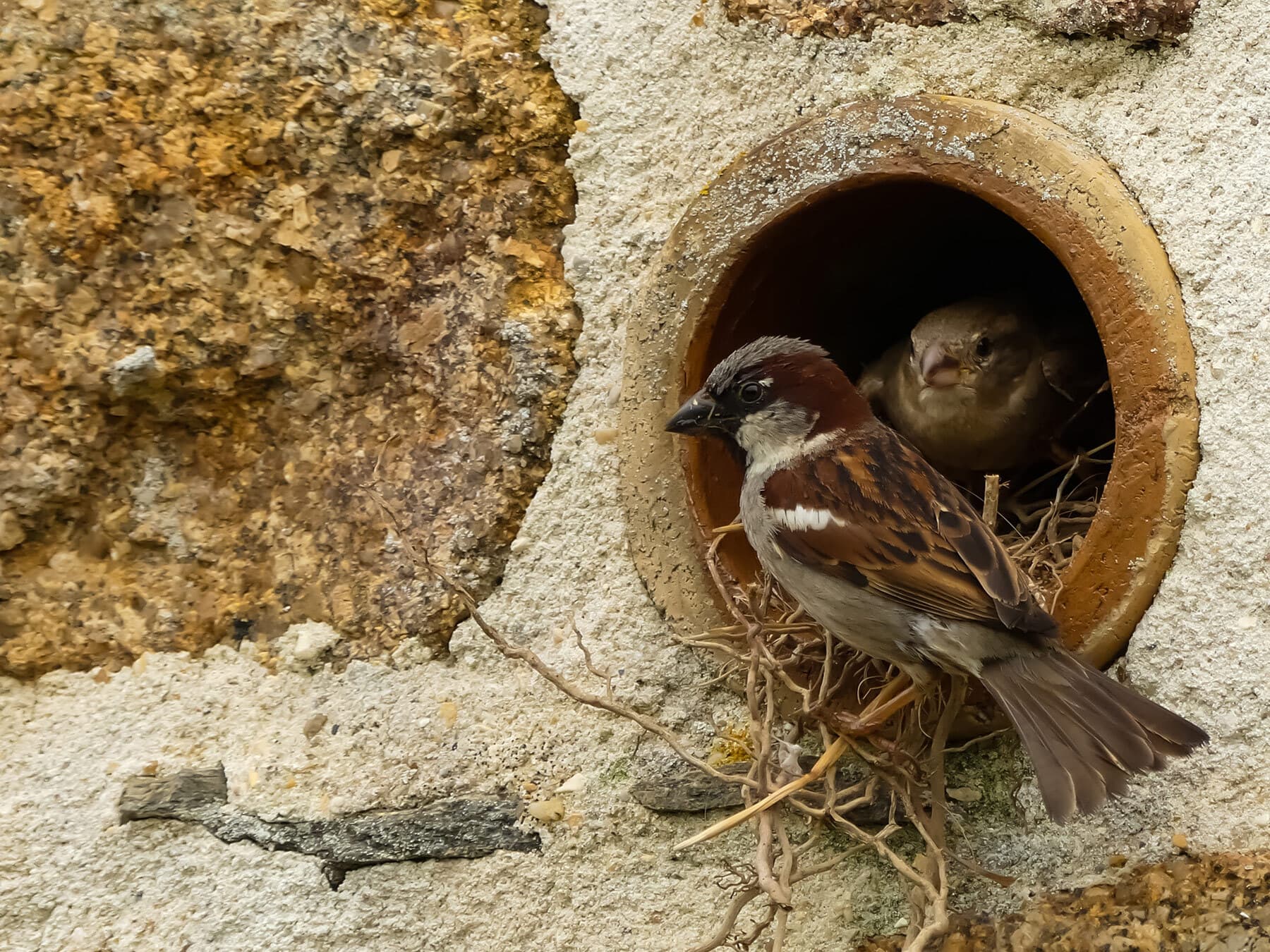
Figure 4: House Sparrow pairs often nest in anthropogenic structures. This photo depicts House Sparrows nesting in a pipe in a wall. Image from bird fact.com, https://www.birdfact.com/articles/house-sparrow-nesting .
The clutch size (number of eggs in a nest) ranges typically from 1-8 eggs (Cornell Lab of Ornithology, n.d.). Although House Sparrows are considered socially monogamous, resource scarcity and harsh environmental conditions can result in some chicks being fathered by a different male, known as extra-pair paternity.
In British Columbia, House Sparrows are considered an invasive species (Province of British Columbia, 2022) and conservationists are mainly concerned with their ability to outcompete native cavity nesting birds by destroying nests and killing their young (Cornell Lab of Ornithology, n.d.).
House Sparrow song: Mostly used by males to attract females. Recorded by Brad Walker/Macaulay Library, New York, February 03, 2019. https://www.allaboutbirds.org/guide/House_Sparrow/sounds .
How did the House Sparrow transform from a “wild-bird” to a “city-bird”?
But how did House Sparrows develop such an established and, in some cases, dependent relationship with humans? As previously mentioned, House Sparrow human-commensalism is thought to have developed because of agricultural advancement and settlement expansion. This hypothesis is further supported by the fact that some House Sparrow populations are known to have gone locally extinct without human presence (Hanson et al., 2020).
Scientists considered a known subspecies of sparrow, Bactrianus Sparrow, and compared their evolutionary and morphological traits to that of House Sparrows in an attempt to understand how House Sparrows developed human-commensalism. Bactrianus Sparrows were chosen to represent House Sparrows before their development of commensalism. Evolutionary modelling suggests that their lineage split from that of House Sparrows ~11000 years ago, while the expansion of House Sparrows occurred ~6000 years ago. This modelling is consistent with the theory that House Sparrows experienced rapid expansion due to the rapid development of agriculture and settlements (Ravinet et al., 2018).
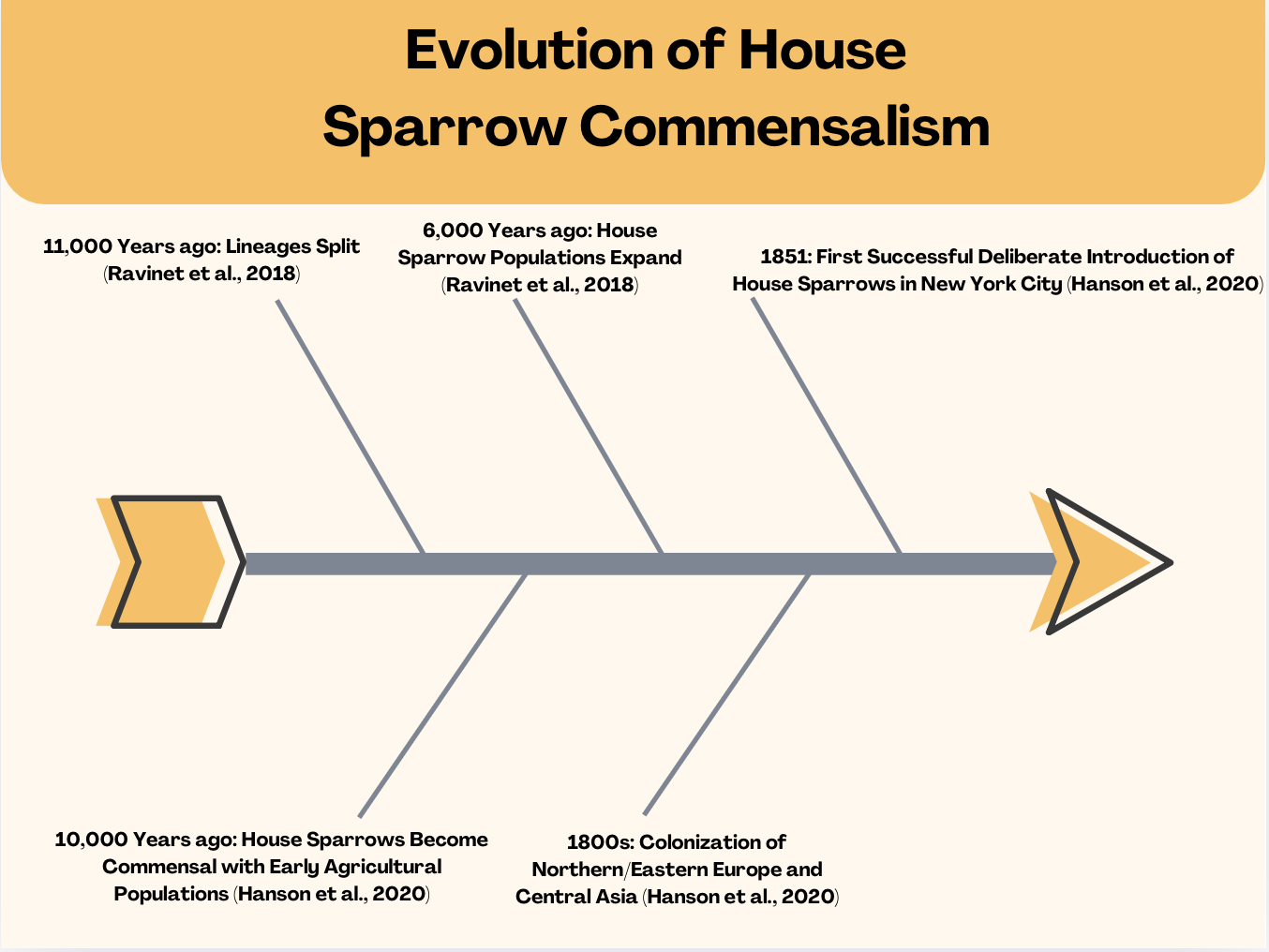
Figure 5: Timeline of the evolution of House Sparrow commensalism and the expansion of their geographic range (Original Media).
Ecological and morphological distinctions from House Sparrows were also considered, for example, Bactrianus Sparrows migrate and are not associated with human settlements. Their beak morphology is also less robust than that of House Sparrows and is thought to be a result of their diet of natural grass seeds, whereas House Sparrows feed on tougher seeds from domesticated crops (Riyahi et al., 2013).
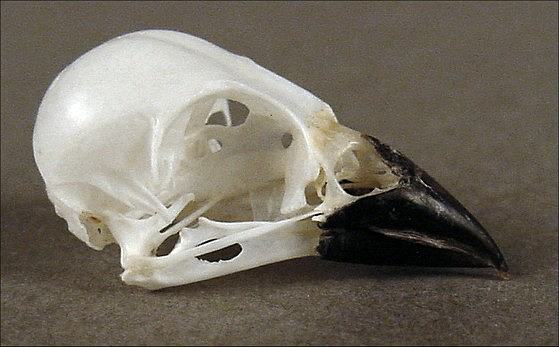
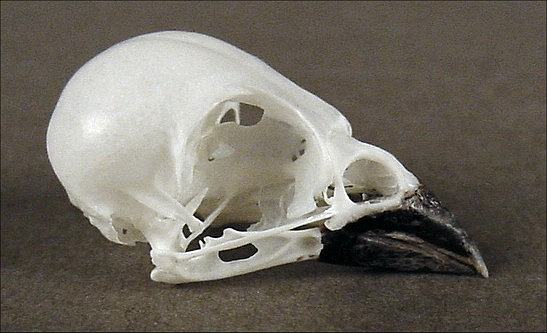
Figure 6: House Sparrow skull (top) and Eurasian Tree Sparrow skull (bottom). Notice the more developed and robust bill in the House Sparrow skull, along with the thinner craniofacial bones found in the tree sparrow skull. Note: See additional information for tree sparrow choice. Photos sourced from skullsite.com. https://skullsite.com/skullpage/passer-domesticus-house-sparrow/.
Researchers sequenced the genome of 120 birds from three Eurasian species, including three independent populations of Bactrianus Sparrows. Researchers looked for genes that could have provided House Sparrows with the adaptations necessary to exploit anthropogenic environments. A region of the genome showed signs of positive selection in House Sparrows, meaning that there was a mutation that helped House Sparrows survive longer to pass on their genes. This type of positive selection was not seen in Bactrianus Sparrows.
This region contained the genes COL11A and AMY2A. COL11A is known to regulate development of craniofacial and skull bones, while AMY2A is part of the amylase (enzyme that breaks down starch) gene family and is linked to adaptations of animals with high-starch diets, such as humans or dogs (Ravinet et al., 2018).
Researchers hypothesized that the positive selection of the COL11A gene in House Sparrows is one possible factor that allows their skulls and beak to become more robust and sturdy. This is significant because it could have helped House Sparrows consume hardened cereal grains produced by human agriculture processes.
The AMY2A gene complements this hypothesis, as the ability to readily digest large amounts of starch would allow House Sparrows to readily exploit large amounts of food produced by humans, which could have contributed to their rapid expansion. It is important to note, however, that since researchers used Bactrianus Sparrows as a model for House Sparrows before their evolutionary divergence, this data cannot serve as direct evidence for why House Sparrows evolved a commensal relationship with humans and can instead be considered indirect at best.
Why are our House Sparrow roommates moving out?
Even though agricultural and anthropogenic development has allowed House Sparrows to rapidly expand across the planet and provide them with large food sources that they are readily able to exploit, recent studies have demonstrated that House Sparrow populations have declined over the past few decades in urban areas.
One study by Mohring et al. 2021, found that House Sparrow population declines have been reported in many European cities, reporting an 89% decrease in the number of documented House Sparrows over 15 years in the city of Paris (Mohring et al., 2021). Another study found similar trends in data collected in North America (Berigan et al. 2020).
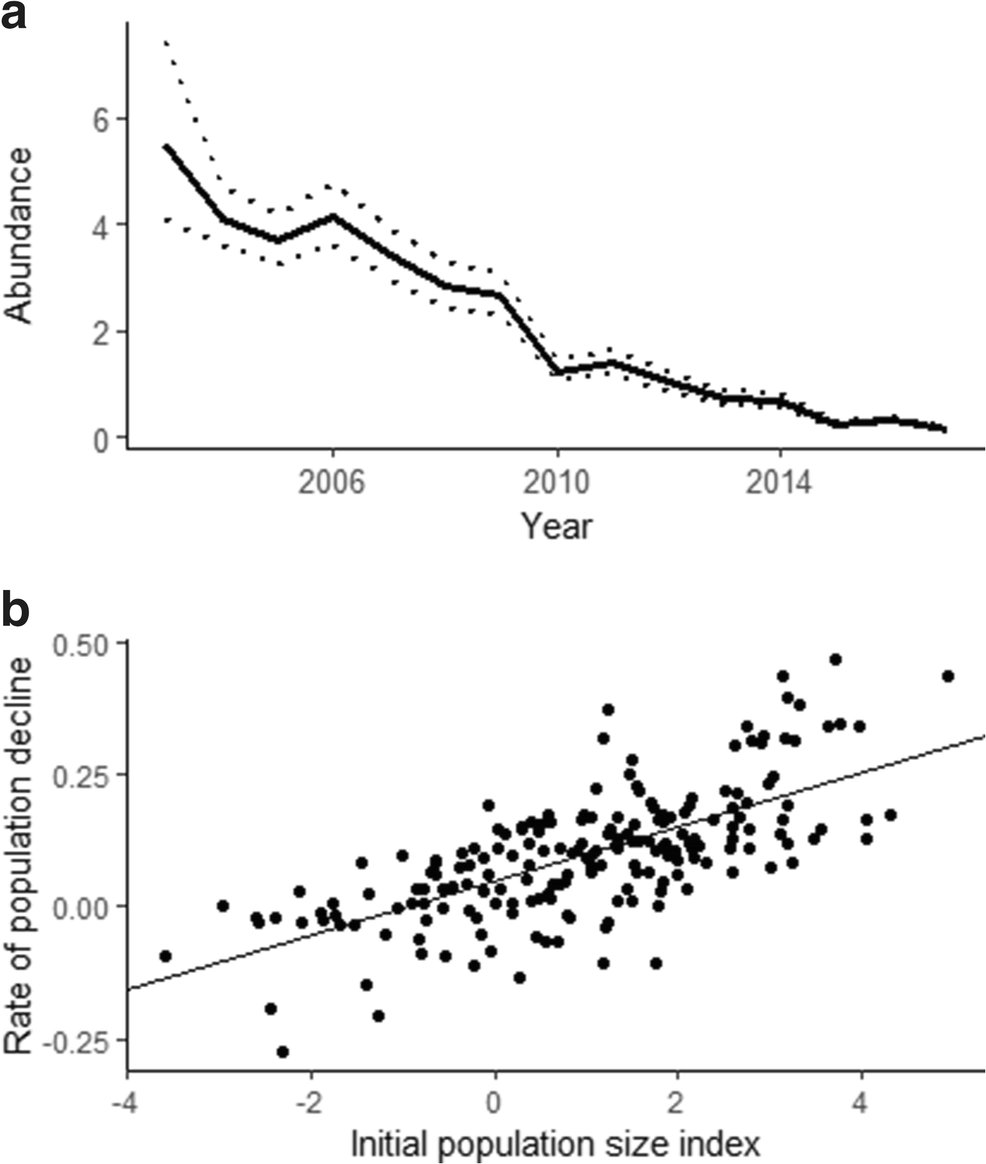
Figure 7: Abundance and rate of population decline graphs of House Sparrows in Paris. Mohring, B., Henry, P.-Y., Jiguet, F., Malher, F., Angelier, F. (2021).
Researchers examined the effects of predation on House Sparrow populations by hawks as a possible cause of decline. They found that hawk population sizes increased during the same study period in which House Sparrow population sizes were seen to decrease (Mohring et al., 2021). Specifically, it was found that an increase in the number of sparrowhawks in Paris was correlated with the decrease in population size of House Sparrows (Mohring et al., 2021). Berigan also noted the same trend.
It is important to note, however, that data analyzed by Berigan et al. found no direct link between hawk presence at the measured sites and House Sparrow population size. One caveat, is that sparrowhawks first bred in Paris in 2008, which is after the significant decline of House Sparrow populations began, suggesting increases in predation are not the sole reason for their decline.
Air pollution was proposed as another possible reason for the decline of House Sparrow populations; however, it was found that air quality did not worsen and the weather did not change over 15-year study period, so neither is likely to explain the decline (Mohring et al., 2021).
Researchers also investigated if increased artificial light at night (ALAN) due to an increased use of LEDs in cities had any effect on the reproductive success of House Sparrows. They wanted to determine if changes in photoperiod (the amount of light that an organism receives per day) due to ALAN during the House Sparrow breeding period had any significant effect on the active periods of House Sparrows and if this affected breeding performance.
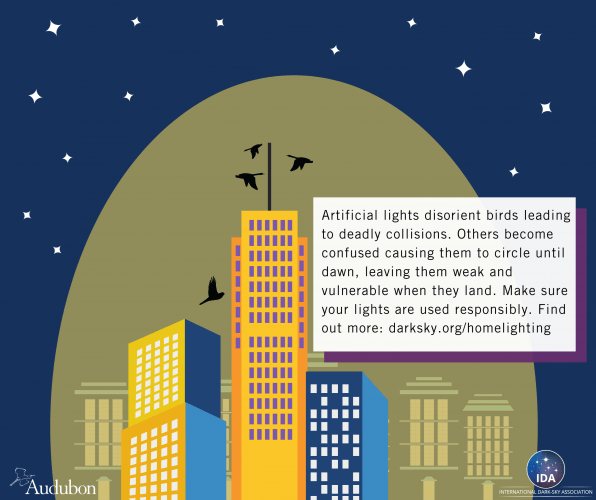
Figure 8: PSA Regarding ALAN Use and Bird Ecology. Graphic by Gulf Coast Bird Observatory. https://www.gcbo.org/resources/light-pollution/ .
Laying date, clutch size, hatching and fledging success were monitored in a group of captive experimental birds that were not limited in their food supply. The main effect was that birds were found to be active earlier in the morning, with no significant impact of ALAN on reproductive performance or any of the aforementioned variables (Beaugeard et al., 2024).
Knowledge Gaps
Although several factors were evaluated to address the decline in House Sparrow populations, it is still currently unresolved. The increase in hawk numbers on House Sparrows was found to be correlated with the decline of House Sparrow population size but has not been shown to directly cause it. It is also worth noting that the decline is most likely the result of several factors acting alone and together.
Most of the studies conducted and data collected in regard to House Sparrow population decline took place in Europe. evaluated current data and trends in North America and found similarities, but there is less active research and data available. You the reader can help with the lack of data by contributing citizen science through platforms such as the eBird app. Has there been a decline in House Sparrow populations where you live? Hopefully, after reading this, you are now at least aware of their decline and might be able to contribute citizen science data related to House Sparrows, because more research in North America could reveal differences in mechanisms of current trends compared to Europe. To download the Merlin Bird ID and eBird app, access this link: https://www.merlinbirds.org/download/. Finally, if you could investigate hawk predation, ALAN, air quality, or something else to help further this research, what would it be and why?
References
Beaugeard, E., Brischoux, F., & Angelier, F. (2024). Light pollution affects activity differentially across breeding stages in an urban exploiter: An experiment in the house sparrow (Passer domesticus). Environmental Pollution, 351, Article 124055. https://doi.org/10.1016/j.envpol.2024.124055
Berigan, L. A., Greig, E. I., & Bonter, D. N. (2020). Urban house sparrow (Passer domesticus) populations decline in North America. The Wilson Journal of Ornithology, 132(2), 248–258. https://doi.org/10.1676/1559-4491-132.2.248
Cornell Lab of Ornithology. (n.d.). House sparrow. All About Birds. https://www.allaboutbirds.org/guide/House_Sparrow/overview
Hanson, H. E., Mathews, N. S., Hauber, M. E., & Martin, L. B. (2020). The house sparrow in the service of basic and applied biology. eLife, 9, Article e52803. https://doi.org/10.7554/eLife.52803
Mohring, B., Henry, P.-Y., Jiguet, F., Malher, F., Angelier, F. (2021). Investigating temporal and spatial correlates of the sharp decline of an urban exploiter bird in a large European city. Urban Ecosystems, 24, 501–513. https://doi.org/10.1007/s11252-020-01052-9
Province of British Columbia. (2022, August 18). Invasive birds. https://www2.gov.bc.ca/gov/content/environment/plants-animals-ecosystems/invasive-species/priority-species/birds
Ravinet, M., Elgvin, T. O., Trier, C., Aliabadian, M., Gavrilov, A., & Sætre, G.-P. (2018). Signatures of human-commensalism in the house sparrow genome. Proceedings of the Royal Society B: Biological Sciences, 285(1884), Article 20181246. https://doi.org/10.1098/rspb.2018.1246
Riyahi, S., Hammer, Ø., Arbabi, T., Sánchez, A., Roselaar, C. S., Aliabadian, M., & Sætre, G.-P. (2013). Beak and skull shapes of human commensal and non-commensal house sparrows Passer domesticus. BMC Evolutionary Biology, 13, Article 200. https://doi.org/10.1186/1471-2148-13-200
Additional information
Figure 1: Breeding Male House Sparrow. Photo by Drew Weber/Macaulay Library at the Cornell Lab of Ornithology, New York, April 8, 2018. https://www.allaboutbirds.org/guide/House_Sparrow/id .
Figure 2: Video by Haley E Hanson, Noreen S Mathews, and Jaime E Zolik. https://elifesciences.org/articles/52803
Figure 3: Top photo by Evan Lipton/Macaulay Library at the Cornell Lab of Ornithology, Massachusetts, April 16, 2015. https://www.allaboutbirds.org/guide/House_Sparrow/photo-gallery/305880301. Bottom photo by Adam Jackson/Macaulay Library at the Cornell Lab of Ornithology, Michigan, April 20, 2016. https://www.allaboutbirds.org/guide/House_Sparrow/photo-gallery/305880301
Figure 4: Image from bird fact.com, https://www.birdfact.com/articles/house-sparrow-nesting
Figure 5: Original Media
Figure 6: I was not able to find a satisfactory image for Bactrianus Sparrow skulls that adequately displayed the anatomical differences I wanted to demonstrate. A Eurasian tree sparrow skull was chosen as a suitable replacement, because this bird is also not commensal in humans. Both photos sourced from skullsite.com. https://skullsite.com/skullpage/passer-domesticus-house-sparrow/.
Figure 7: Mohring, B., Henry, P.-Y., Jiguet, F., Malher, F., Angelier, F. (2021). Investigating temporal and spatial correlates of the sharp decline of an urban exploiter bird in a large European city. Urban Ecosystems, 24, 501–513. https://doi.org/10.1007/s11252-020-01052-9
Figure 8: PSA Regarding ALAN Use and Bird Ecology. Graphic by Gulf Coast Bird Observatory. https://www.gcbo.org/resources/light-pollution/ .
House Sparrow Song: Recorded by Brad Walker/Macaulay Library, New York, February 03, 2019. https://www.allaboutbirds.org/guide/House_Sparrow/sounds