Research Reports
Vancouver Island Support Services Directory
Based on research findings from our MAiD Cafés, we have co-created the Vancouver Island Support Services Directory. This is a free website designed to help people find local health and social support services, programs, and resources across Vancouver Island. The directory can be browsed by region or service type. If you need to share information using a non-digital format, search results can also be downloaded as a PDF for easy printing and sharing.
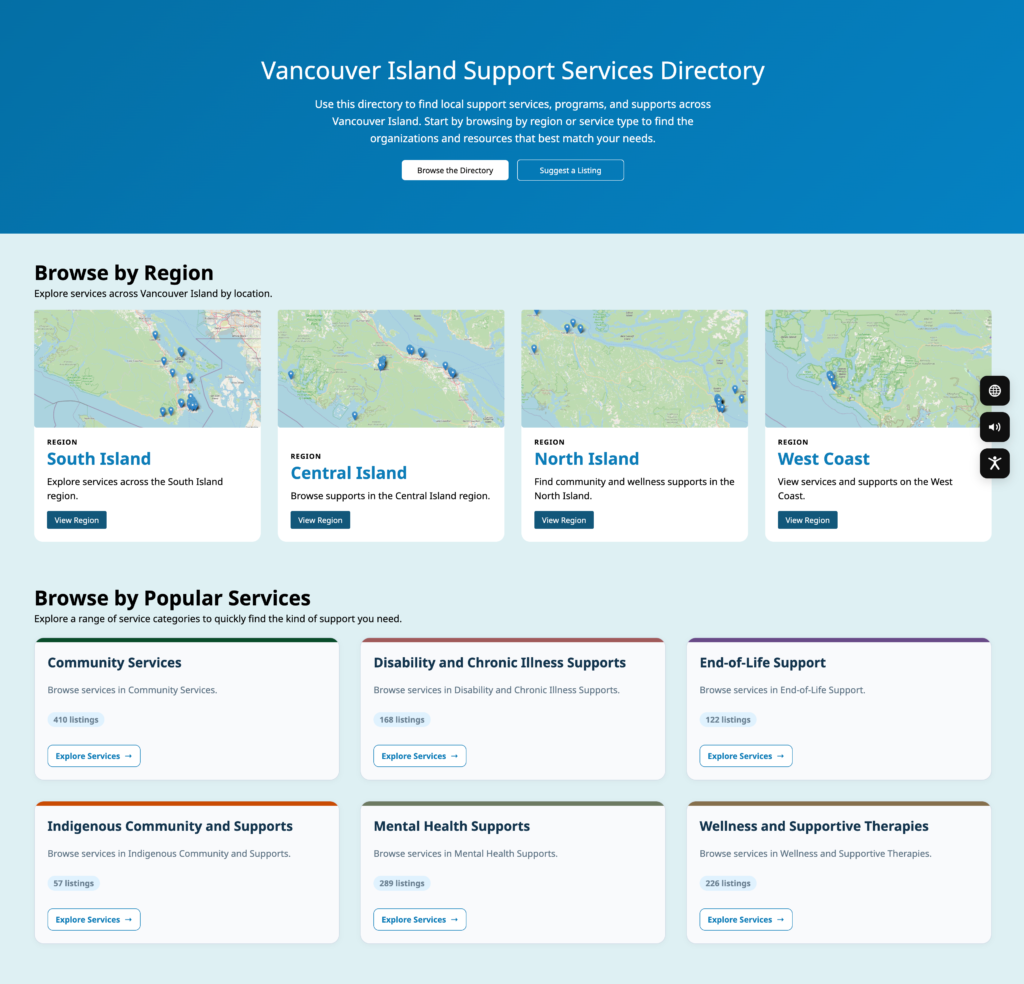
As this is the directory’s early launch period, we are continuing to refine and expand its content. We apologize for any errors or omissions you may come across and would greatly appreciate your help in improving the directory. If you know of a service we’ve missed, please use the Suggest a Listing form. If you notice information about a resource that needs updating, select See More on the listing and use the Suggest an Edit option. We also welcome suggestions for additional types of resources that would make the directory even more useful.
visupportservices.ca/directory
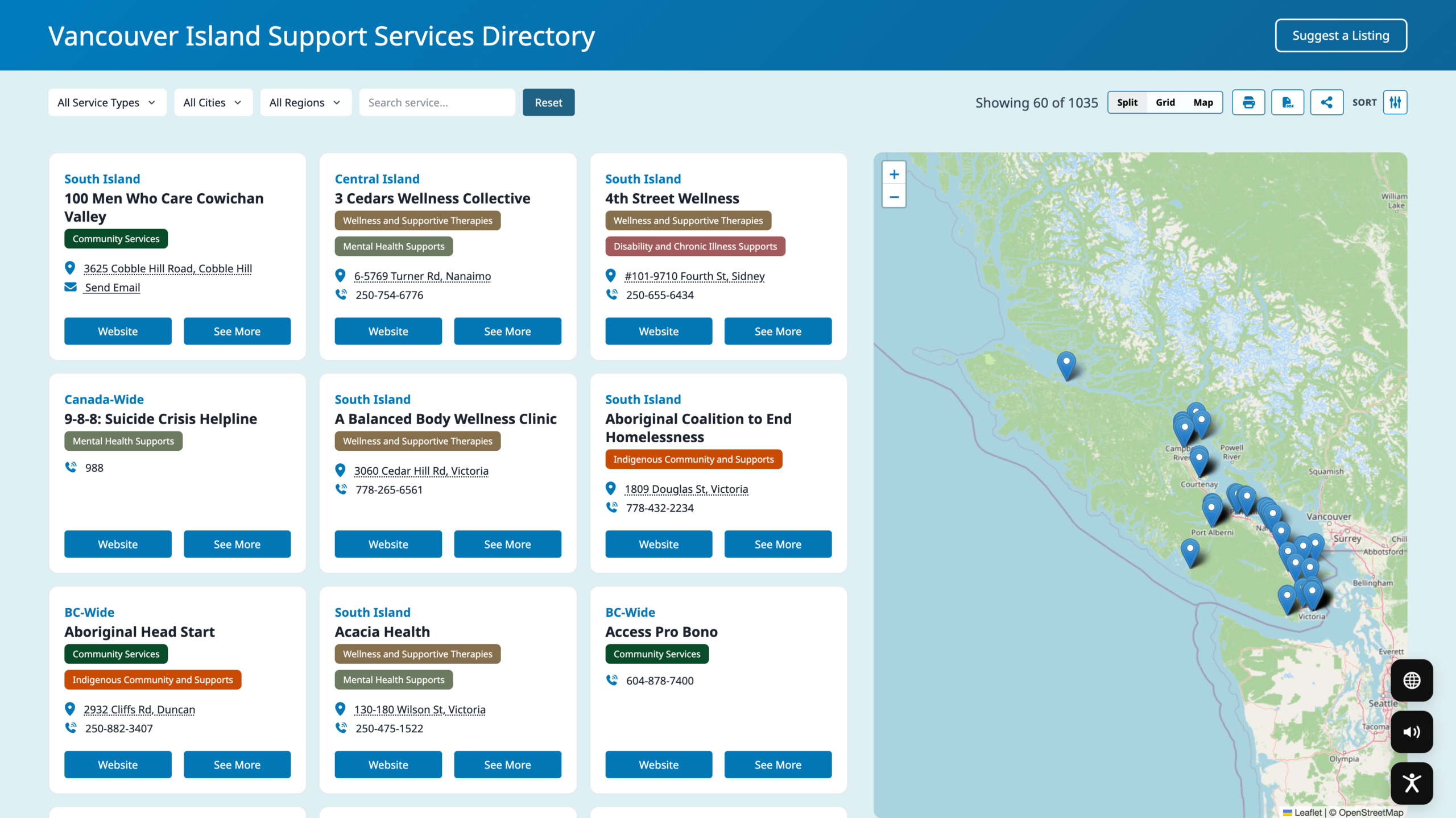
Please feel free to share the directory with anyone who may benefit. If you have any questions, feedback, or suggestions, we’d be happy to hear from you.
Co-creating the Vancouver Island Support Services Directory
This poster outlines the process undertaken to co-create the Vancouver Island Support Services Directory.
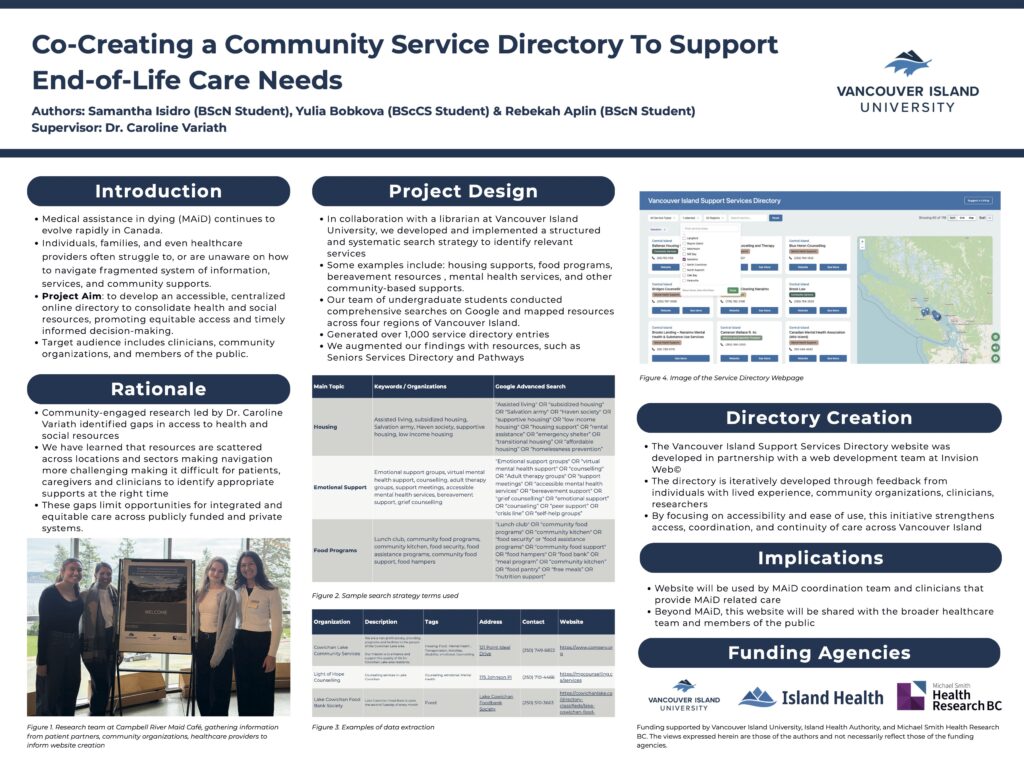
It was presented by student team members at Vancouver Island University’s CREATE Conference, where it received the People’s Choice Poster Award.

MAiD Survey Island Health
Variath, C., Proznick, A., & Robertson, D. (2024). Report: MAiD survey Island Health. CAMAP. https://camapcanada.ca/for_clinicians/research/
Background: Since 2016, Island Health has consistently overseen the highest rate of Medical Assistance in Dying (MAiD) cases in British Columbia. In 2021, Bill C-7 expanded eligibility to individuals whose deaths are not reasonably foreseeable, but who still meet the original criteria set out in Bill C-14, with additional safeguards known as Track-2 MAiD. These cases are typically more complex, placing a greater workload on healthcare providers. Additionally, Island Health has seen a steady rise in MAiD requests each year, further increasing demands on the healthcare teams involved. To effectively support these providers, it is crucial to understand their experiences with the MAiD process. Of equal importance is ensuring that those requesting MAiD, as well as their families, continue to receive high-quality care and support throughout the process. To this end, Island Health and VIU partnered in surveying participants involved in MAiD.
Study Objectives: 1) To identify gaps in the support and resources available to healthcare providers while navigating MAiD requests and provisions. 2) To evaluate the quality of care and psychosocial supports for persons requesting MAiD and their family members.
Methods: Once ethics and operational approvals were received, MAiD healthcare providers, patients and their families who volunteered and consented to participate in the study filled out an online survey. The survey elicited both quantitative and qualitative (open-ended) responses. A descriptive approach was used to analyze the survey responses and report the data.
Findings: The surveys were completed by 72 healthcare providers and 55 family members and patients. Overall, patients and family members appreciated the MAiD team members, and clinicians found MAiD-related work meaningful. Key findings include: 1) challenges to access and involvement in MAID; 2) gaps in patient and family support with the MAiD process; and 3) clinician-identified recommendations for improving MAiD services.
Implications: The findings helped establish system-level changes to better support patients, family members, and healthcare providers through the MAiD process. Enhancing the delivery process may also help recruit and retain more clinicians for the MAiD program, especially in areas with high demand like Island Health.