Who’s that little duck?
The Green-winged Teal (Anas crecca) is among one of the smallest ducks found across North America (Kilmas et al., 2019). This alone is a very useful tip for identification; though as with many ducks, it can still easily be confused with other species (i.e. mallard and co.) when in non-breeding, female, or juvenile plumage to those unfamiliar with what to look for (All About Birds, n.d.).
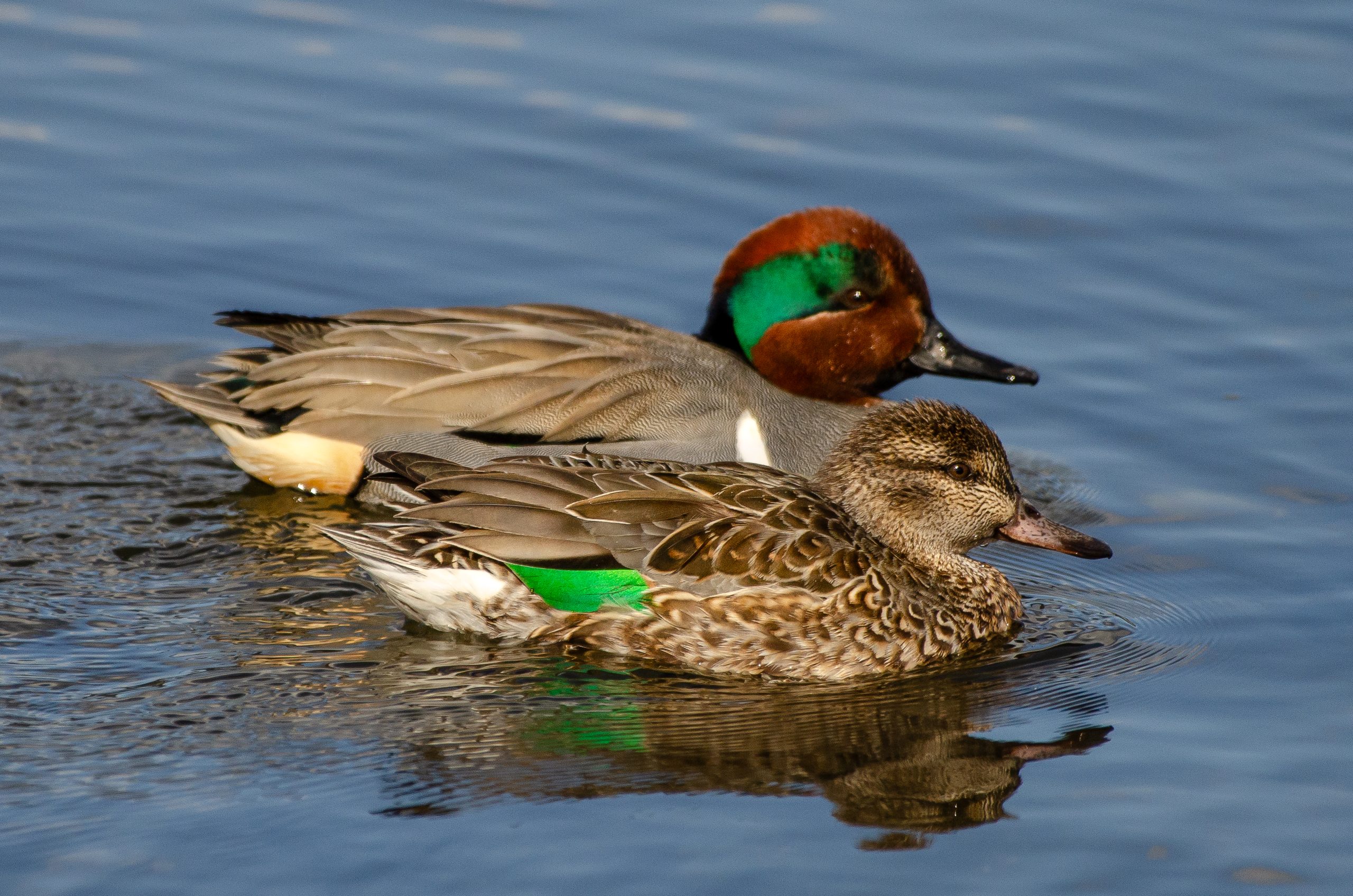
All plumages of this duck share a characteristic “green wing”, where among their wing feathers, specifically the secondaries, a vibrant patch of green can be observed when in flight, as well as when resting – given the proper positioning. Mature males in breeding plumage exhibit a gray body with a striking cinnamon-coloured head and a patch of green from the eye to the side of their necks. Juvenile and female ducks are known to have a cream-coloured stripe near the tail region of their plumage, allowing them to be differentiated from other species, though not as easily as with males in breeding plumage (All About Birds, n. d.).
Imagine, if you will, that you have a toonie and a dime. Crazy – I know. The size of these two coins is a good frame of reference for how much smaller the average Green-winged Teal should be compared to the average Mallard, which most are likely more familiar with (Photo from Noah Kumada, 2026).

Teal sounds to study and relax to
The courtship call of the Green-winged teal is described as a clear whistling call with intermittent chittering, or sometimes as a shrill, repeated quack. Another often-observed vocalization is a series of 5-15 consecutive quacks over a span of approximately 5 seconds. This set of quacks is currently assumed to allow for checking potential nest sites by drawing the attention of any potential predators (All About Birds, n.d.).
The many shades of teal
There exist between two to three known subspecies of Green-winged Teal: Eurasian (crecca), American (carolinensis), and depending on your sources, Aleutian (nimia) (Atlas of the Breeding Birds of British Columbia, n.d.). Most modern resources seem to tend towards a two-taxa system, where the Eurasian and Aleutian groups are lumped together due to both morphology and genetic similarities, though certain sources will still list the Aleutian population as its own proper subspecies (Winker et al., 2013).
The subspecies most likely to be observed across Canada is the American subspecies, Anas crecca carolinensis. This subspecies can be discerned from the other two by the lack of a vertical, white shoulder stripe seen in the Eurasian and Aleutian groups. Instead, the American variant dons a white, horizontal strip across its back (All About Birds, n.d.).
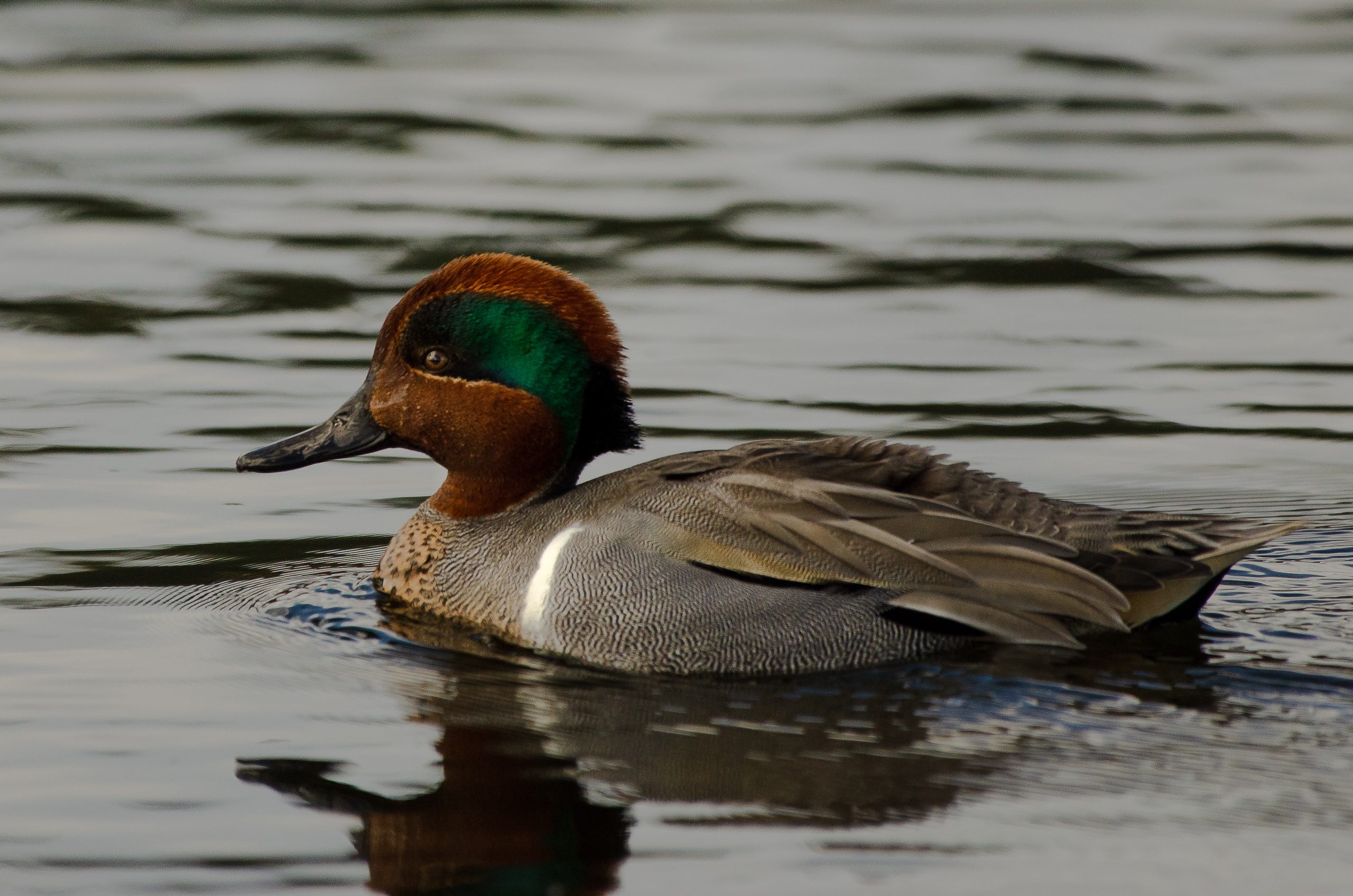
Note the white stripe on its back.
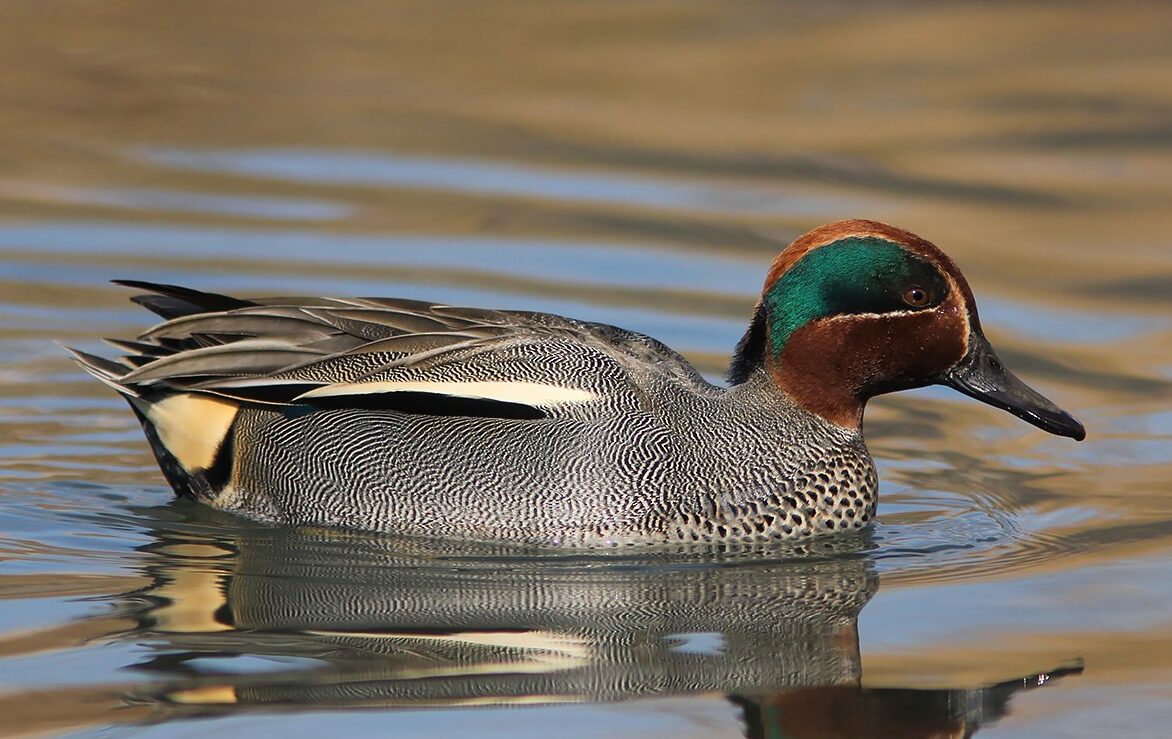
Note the white stripe along its shoulder.
Also note that the Eurasian and Aleutian groups are morphologically identical.
Unlike the other two groups, the Aleutian population exhibits unique migratory behaviours – it doesn’t migrate at all! It instead moves from ponds and lakes during the summer to the beaches of the Aleutian Islands on which they reside (All About Birds, n.d.).
As mentioned in the previous sections, as suggested by both similarities in plumage and genetics, the Eurasian and Aleutian subspecies of the Green-winged Teal are considerably more closely related to each other than to the American Green-winged Teal. However, there have historically been intergrade / hybrid individuals between the Aleutian subspecies and both other groups, likely due to overlap in the migratory groups’ migration routes with the Aleutian Island habitats. This of course, only fuels the debate as to whether the Aleutian population deserves full-fledged subspecies status or not (Winker et al., 2013).
Foraging, Feeding, and Mating
Green-winged Teals are considered dabbling ducks, meaning that they primarily feed near the water’s surface rather than foraging by diving. They mainly feed on aquatic invertebrates and seeds; namely things like midges, crustaceans, sedge fruit and pondweeds (allaboutbirds.org). A great deal of their time is spent foraging for these food sources – a 2007 study by Arzel et al. found that during the early spring months, these teals spent up to 85% of their day (over a full 24-hour period) foraging!
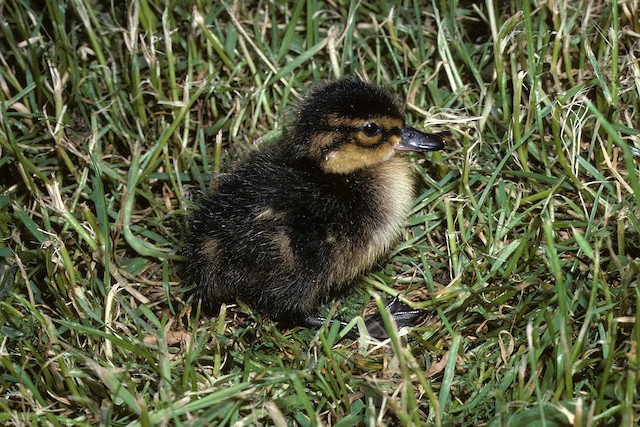
During the breeding season, nests are constructed within areas of dense vegetation. The average clutch size for Green-winged Teals is around ten to twelve eggs, laid over multiple days at a rate of approximately 1 egg per day. After the eggs are laid, incubation lasts for around twenty days, at which point the males abandon the females and the nest. Males then undergo a molt, losing their breeding plumage (Ducks Unlimited Canada, n.d.). Even a few hours after hatching, chicks can swim, walk, and even forage for themselves – though they still receive parental care from their mother in through their infancy (All About Birds, n.d.).
Where the teals at?
Within the context of North America and the carolinensis subspecies, Green-winged Teals overwinter along the coast of the Pacific Northwest and the Southern two-thirds of the United States, while their breeding range includes the majority of Canada as well as some of the northernmost American states. The crecca subspecies tends to breed across northern Eurasia and overwinters throughout southern Asia (Birds of the World, n.d.).
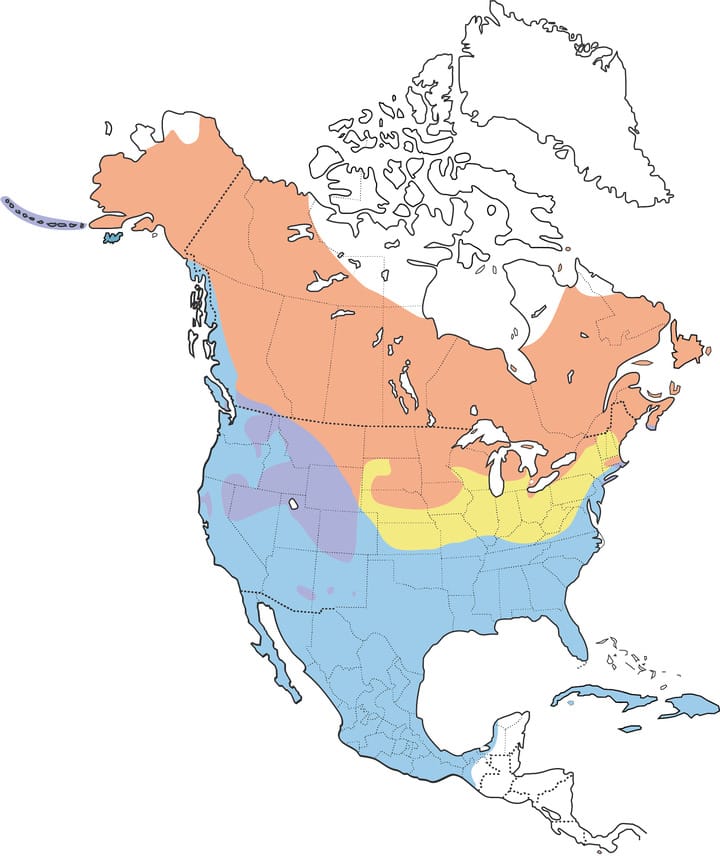
As far as specific habitats, the Green-winged Teal prefers shallow bodies of water with dense vegetation. It is also known to inhabit mudflats, creeks, and marshes, as long as they fulfill its requirement for dense vegetation, as well as the macroinvertebrates and plants on which it feeds (Ducks Unlimited Canada, n.d.).
Conservation Status
In Canada, the Green-winged Teal is currently listed as a species of least concern (NatureCounts, n.d.). This rank is a surprising one when taking into consideration that Green-winged Teals are the second-most harvested species of duck within both America and Europe, second only to the mallard! This has led to some curiosity from some researchers, as unlike the Mallard, there are not any captive populations of Green-winged Teals being released to sustain this demand (Devineau et al., 2010). Current population estimates from Environment and Climate Change Canada are listed at around 2.8 million individuals across Canada, compared to a global estimate of 6.7 million (NatureCounts, n.d.).
Teals as Bioindicators
In 2025, Chen et al. decided to use the Green-winged Teal as a bioindicator for a study on whether artificial wetlands resulted in higher microplastic counts in nearby animals than their natural counterparts. Taking place at a rice paddy in Taipei, Taiwan, the study’s methodology involved researchers first cleaning a platform upon which teals were known to rest in the morning, hiding in a nearby bunker and watching the teals return from foraging, then collecting fecal samples after the teals had been sitting on the platform for a few hours (Who says research isn’t exciting?). This procedure was then repeated at 29 more artificial wetland sites and 29 natural wetland sites.
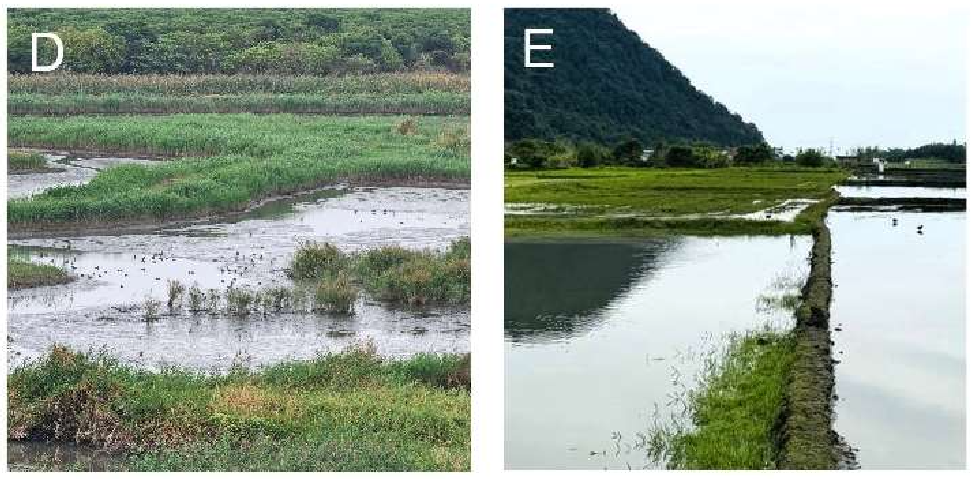
After analysis of the fecal samples through mesh filtration and spectrophotometry, the study found 24 different polymer components overall, with a mean of 7.55 types of polymer components per sample at the manmade site compared to a mean of 5.30 types of polymer components per sample at the naturally occurring wetland. Given the sample size, this was determined to be significant, and implied that manmade wetlands do indeed result in more microplastic particles in waterfowl than their naturally occurring counterparts.
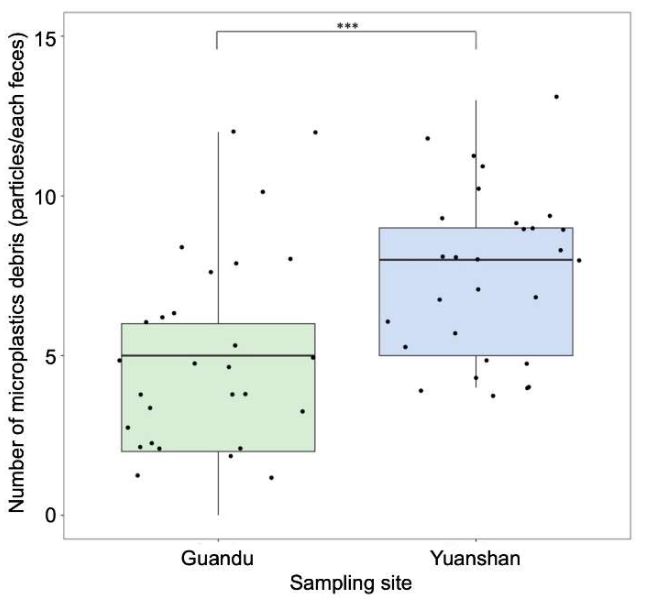
Boxplot from Chen et al, 2025 representing the median and interquartile ranges of the number of microplastic polymer components found in samples from both the naturally occurring and manmade wetlands. Site D on the left, site E on the right.
Though not the most exciting technique, the study makes a point of the versatility of fecal sampling; being both nonlethal and non-invasive compared to other methods of monitoring gut contents. This is especially useful considering that Taiwan’s Green-winged Teal population is on the decline – a fact mentioned to be considered by Chen et al. while designing their study. The study also mentions that Green-winged Teals were specifically chosen for this research as their feeding strategy of dipping their beaks into the water maximizes the amount of microplastics that they would consume. Thanks for your service, Teals!
Hope you’re not eating right now!
Another study, this time conducted in Iran by Youssefi et al., 2014 involved necropsies on the gastrointestinal tracts of 136 teals with the goal of determining which helminth (flatworm) parasites are present within their local waterfowl populations. The total infection rate was determined to be 70.5% of all examined individuals! Below are pictures of the four main parasites found in their samples.
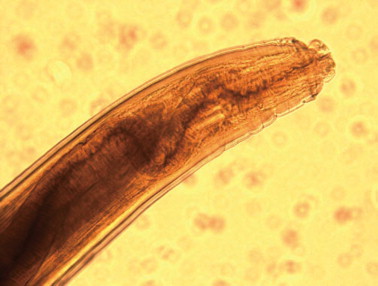
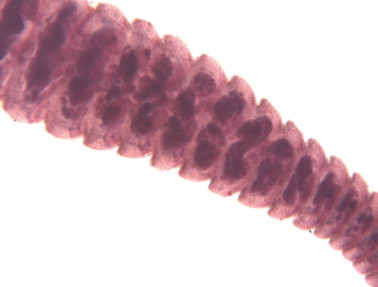
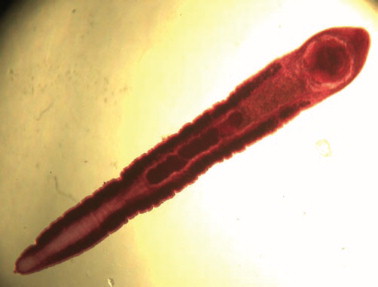
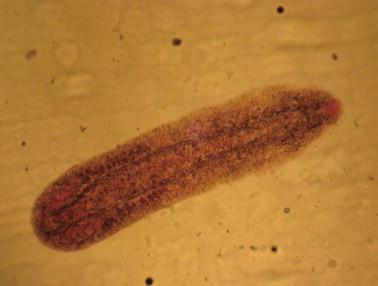
Notably, none of the helminths found in this study overlapped with those found in previous studies involving Green-winged Teals in the same region. Multiple species from this study were the first records within Iran. Because of this, the Youseffi et al. draw attention to the importance of repeat studies being done on parasite community composition within waterfowl due to their ability to carry parasites over such great distances – seasonal and locational differences are a huge factor in such studies.
Closing Thoughts
Despite being visually similar to many other ducks when in their non-breeding plumage, there’s so much more than meets the eye to the Green-winged Teal! Canada’s smallest dabbling duck is a wonderful reminder that great things really do come in small packages. Next time you’re out and see a group of ducks, I invite you to take a second look when you otherwise might not have and see if you can spot any of these green goobers going about their day.
Thanks for reading, and feel free to leave a comment below! 😊
-Noah
Literature cited
Arzel, C., Elmberg, J., & Guillemain, M. (2007). A flyway perspective of foraging activity in Eurasian Green-winged Teal, Anas crecca crecca. Can. J. of Zool., 85(1), 81-91. https://ezproxy.viu.ca/login?url=https://www.proquest.com/scholarly-journals/flyway-perspective-foraging-activity-eurasian/docview/220518069/se-2
Birds Canada. (n.d). Green-winged Teal. Atlas of the Breeding Birds of British Columbia. Retrieved October 12th, 2026 from: https://www.birdatlas.bc.ca/accounts/speciesaccount.jsp?sp=GWTE&lang=en
Birds Canada. (n.d.). Green-winged Teal. NatureCounts. Retrieved October 12th, 2026 from: https://naturecounts.ca/nc/socb-epoc/species.jsp?sp=gnwtea
Chen, W., Hsu, C., Yang, W., Huang, C., Liou, S. Y. H., Chiang, K., & Yuan, H. (2025). Green-Winged Teals (Anas crecca) inhabiting artificial wetlands are likely to ingest higher levels of microplastics compared to those in natural wetlands. Taiwania, 70(3), 521-529. https://doi.org/10.6165/tai.2025.70.521
Cornell Lab of Ornithology. (n.d.). Green-winged Teal. All About Birds. Retrieved October 12th, 2026 from: https://www.allaboutbirds.org/guide/Green-winged_Teal/overview
Cornell Lab of Ornithology. (n.d.). Green-winged Teal. Birds of the World. Retrieved October 12th, 2026 from: https://birdsoftheworld.org/bow/species/gnwtea/cur/introduction
Devineau, O., Guillemain, M., Johnson, A. R. & Lebreton, J. (2010), A comparison of green-winged teal Anas crecca survival and harvest between Europe and North America. Wildl. Biol., 16(1), 12-24. https://doi-org.ezproxy.viu.ca/10.2981/08-071
Ducks Unlimited Canada. (n.d.). Green-winged Teal. Ducks Unlimited Canada. Retrieved October 12th, 2026 from: https://www.ducks.ca/species/green-winged-teal/
Klimas, S. T., Osborn, J. M., Osborne, C. D., Lancaster, J. D., Jacques, C. N., Yetter, A. P., & Heath M. Hagy. 2020. Body condition of spring-migrating Green-winged Teal (Anas crecca). Can. J. of Zool., 98(2): 96-104. https://doi.org/10.1139/cjz-2019-0155
Winkler, K., McCracken, K. G., Gibson, D. D., & Peters, J. L. (2013). Heteropatric speciation in a duck, Anas crecca. Mol. Eco., 22(23), 5922-5935. https://doi-org.ezproxy.viu.ca/10.1111/mec.12525
Youssefi, R. M., Hosseini, S. H., Tabarestani, A. H. A., Ardeshir, H. A., Jafarzade, F., & Rahimi, M. T. (2014). Gastrointestinal helminthes of green-winged teal (Anas crecca) from North Iran. Asian Pac. J. Trop. Biomed., 4(1), 143-147. https://doi.org/10.12980/APJTB.4.2014C1205