Order: Passeriformes
Family: Troglodytidae
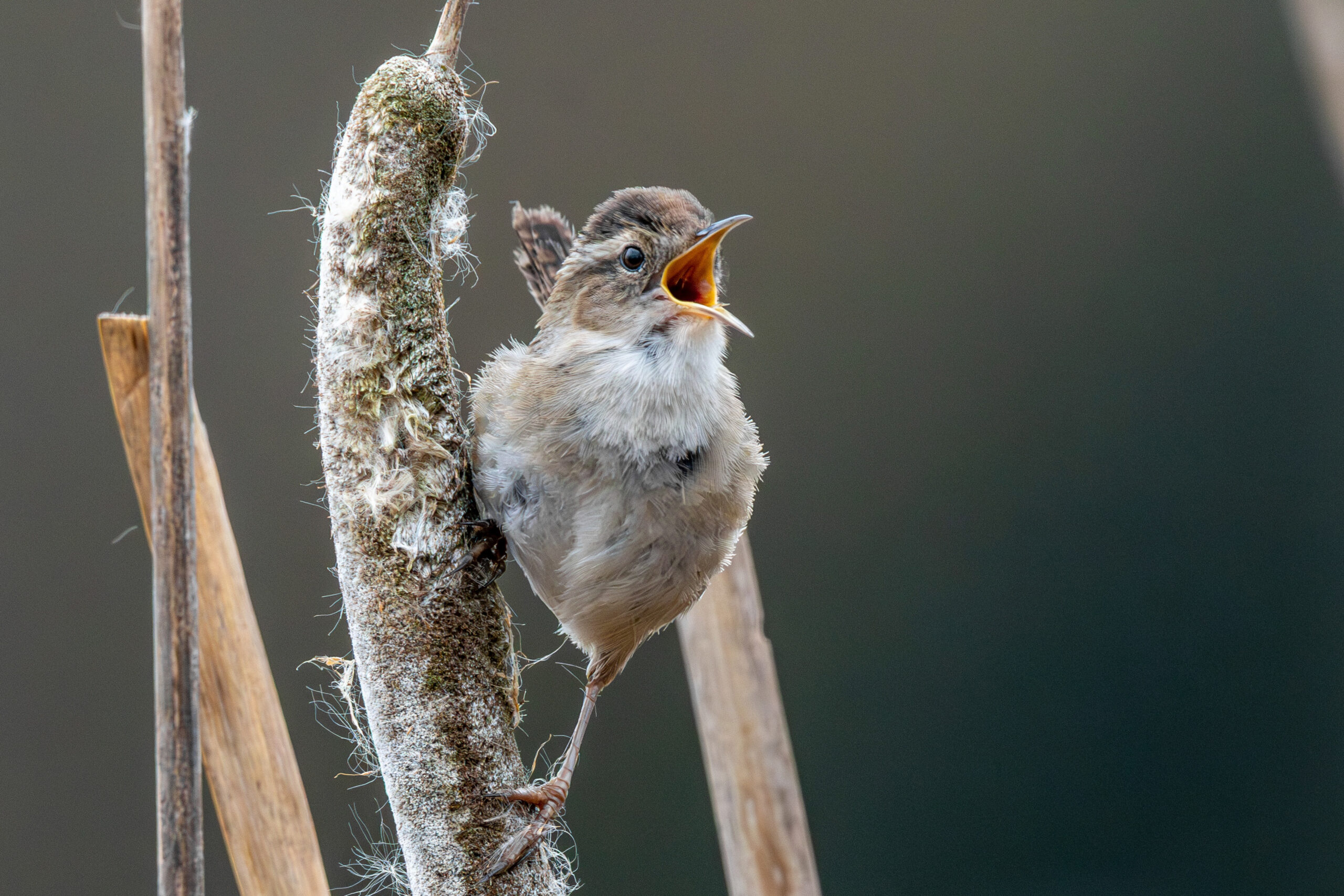
Small? Yes. Innocent? Debatable. Absolutely full of nonsense and a little unhinged? You bet.
The marsh wren (Cistothorus palustris) might look like just another little brown bird, but don’t let that innocent appearance fool you. There’s a lot more to this tiny turkey than meets the eye. From its surprisingly loud song to its elaborate nesting habits, we’re here to uncover what makes this little bird so much more interesting than it has any right to be. So, let’s wade into the reeds and find out what makes the marsh wren such a menace.
DESCRIPTION AND IDENTIFICATION
A Little Brown Bird… or Is It?
Some of you might be wondering, “How am I supposed to tell these guys apart when every local wren looks like a little brown bird?” Trust me, it’s not quite as impossible as telling a house finch from a purple finch (if you know, you know).
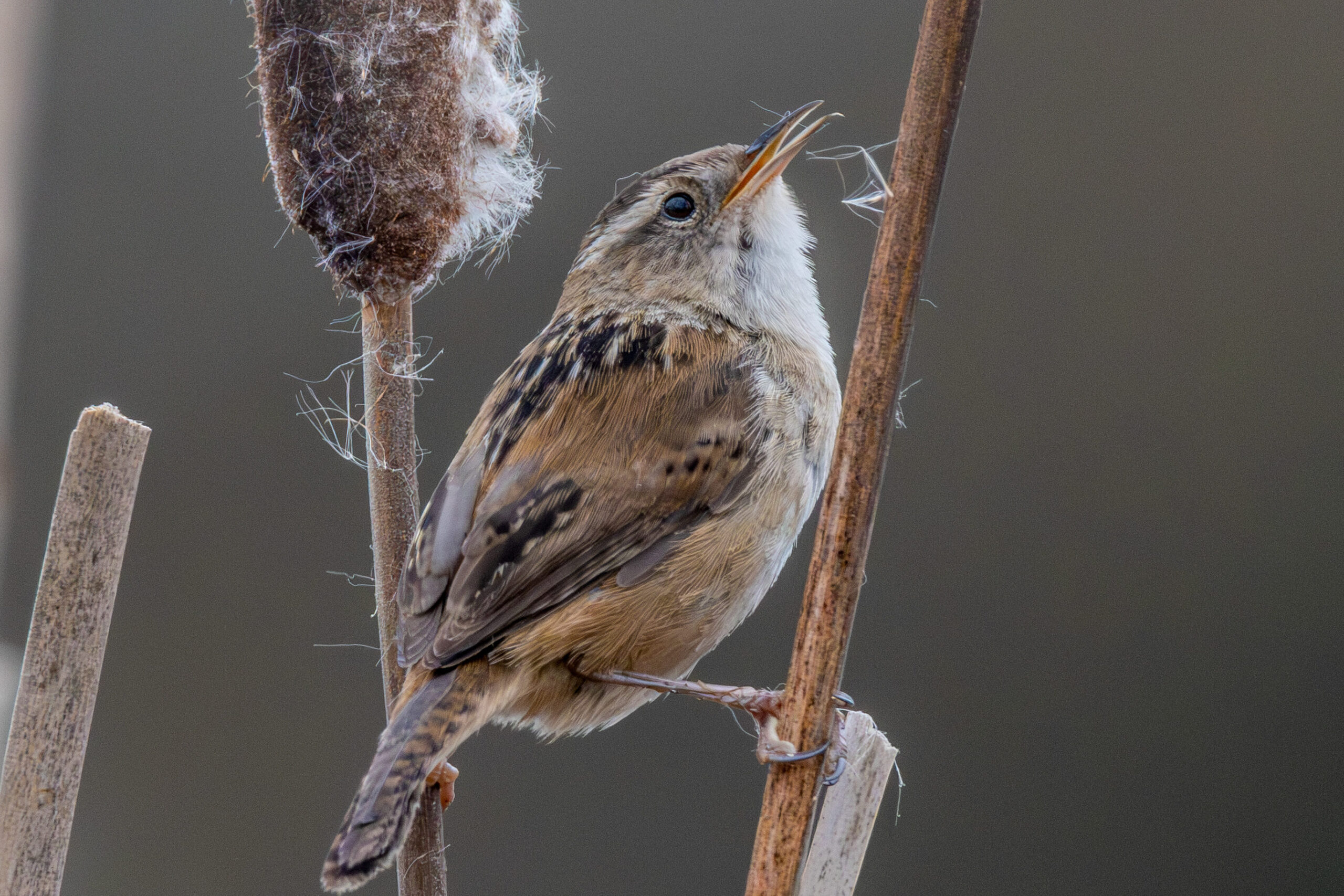
One useful feature to look for is the supercilium— a term for the stripe above a bird’s eye, also known as an eyebrow. Unlike the pacific wren and northern house wren, the marsh wren has a noticeable pale eyebrow. Bewick’s wren also has a prominent white eyebrow, but the marsh wren’s most reliable giveaway is the bold black-and-white streaking down its back.
Marsh wrens are small, plump birds with brown upperparts, pale underparts, short wings, and a relatively short tail that they often hold upright. Their compact shape helps them move through thick vegetation. They may not be flashy in colour, but their streaked backs are certainly worth a second glance.
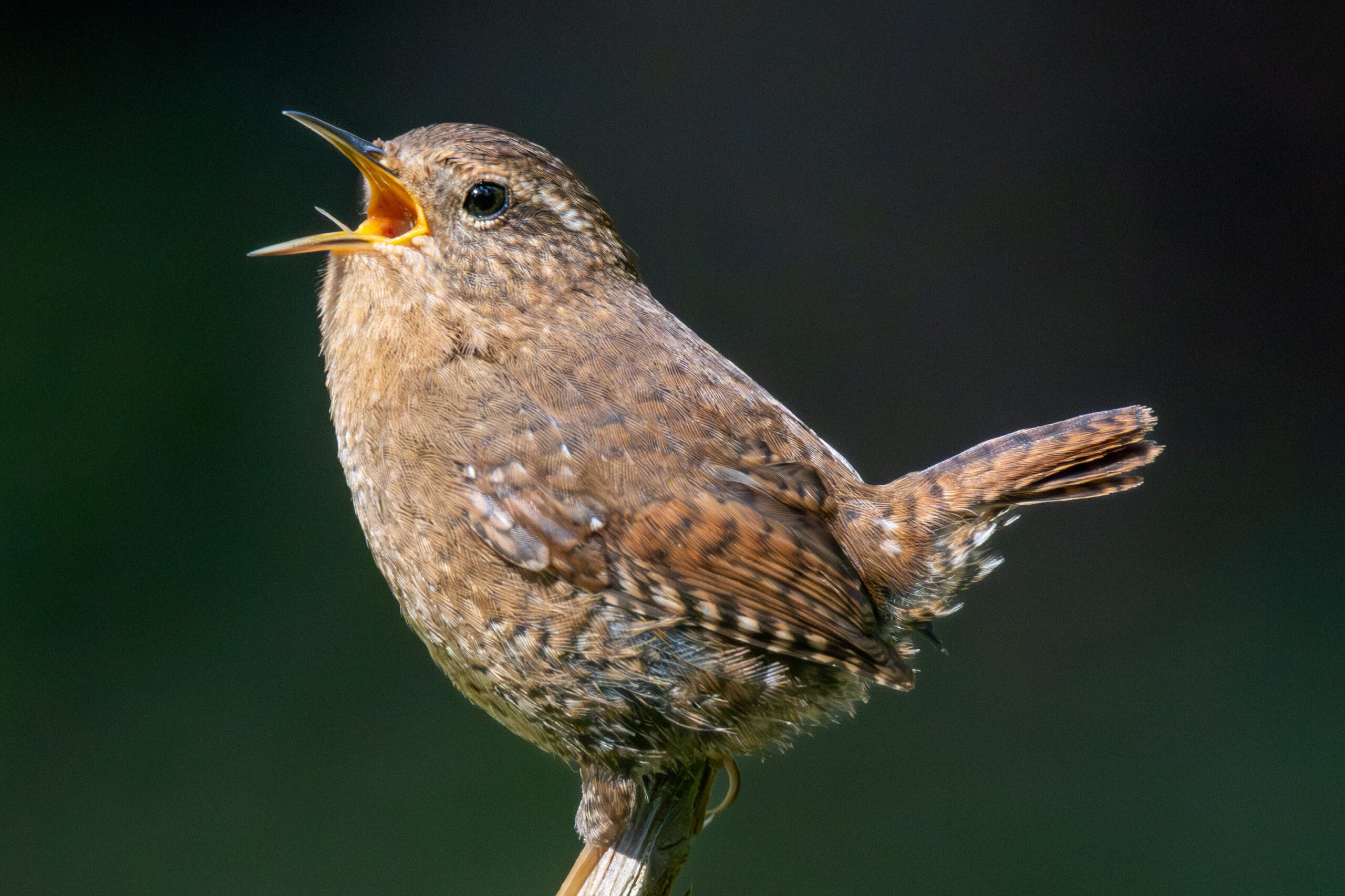
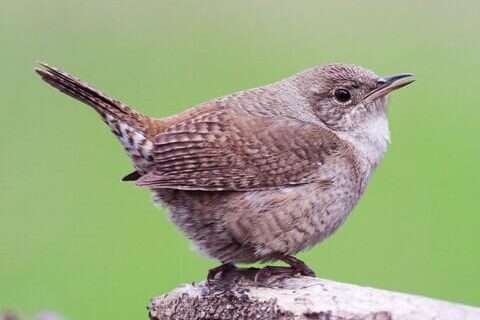
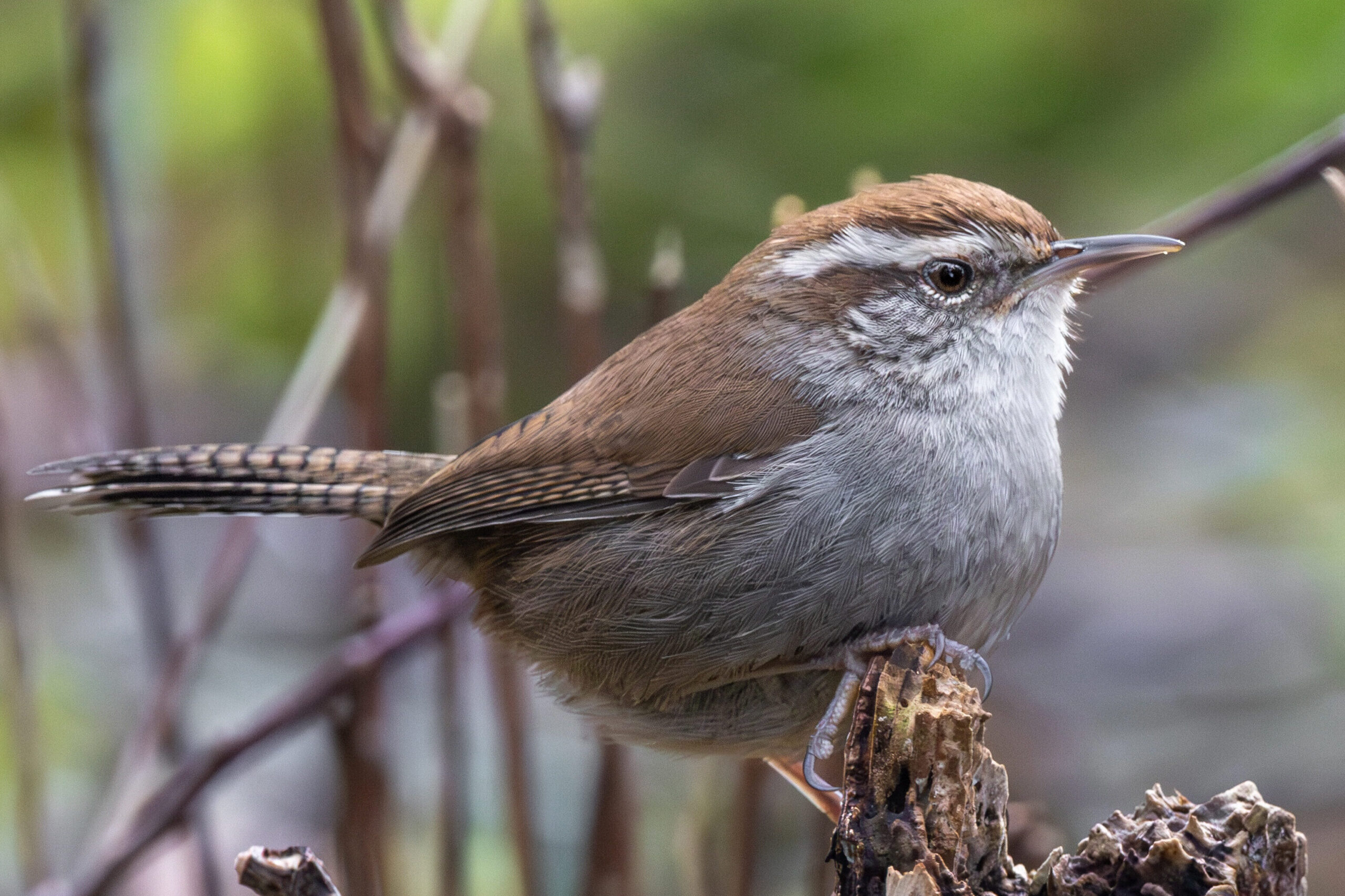
These four wrens can look similar at first glance, but differences in their facial and body markings can help you tell them apart. Top left going clock-wise: Pacific Wren, Northern House Wren, Marsh Wren, Bewick’s Wren. (Credit: Grace Le, Andy Witchger)
BEHAVIOUR AND DIET
Small Bird, Big Voice and Appetite
Marsh wrens may be small, but they certainly aren’t quiet. They are often heard before they are seen. Describing a marsh wren’s song in words feels a little ridiculous until you actually hear it. It’s often bubbly and gurgly, with rattling notes, with buzzy trills and mechanical-sounding chatter. Males frequently climb up onto taller vegetation to sing, then disappear back into the reeds. Their songs are usually used in territorial behaviour and courtships, they can even sing for hours at a time!
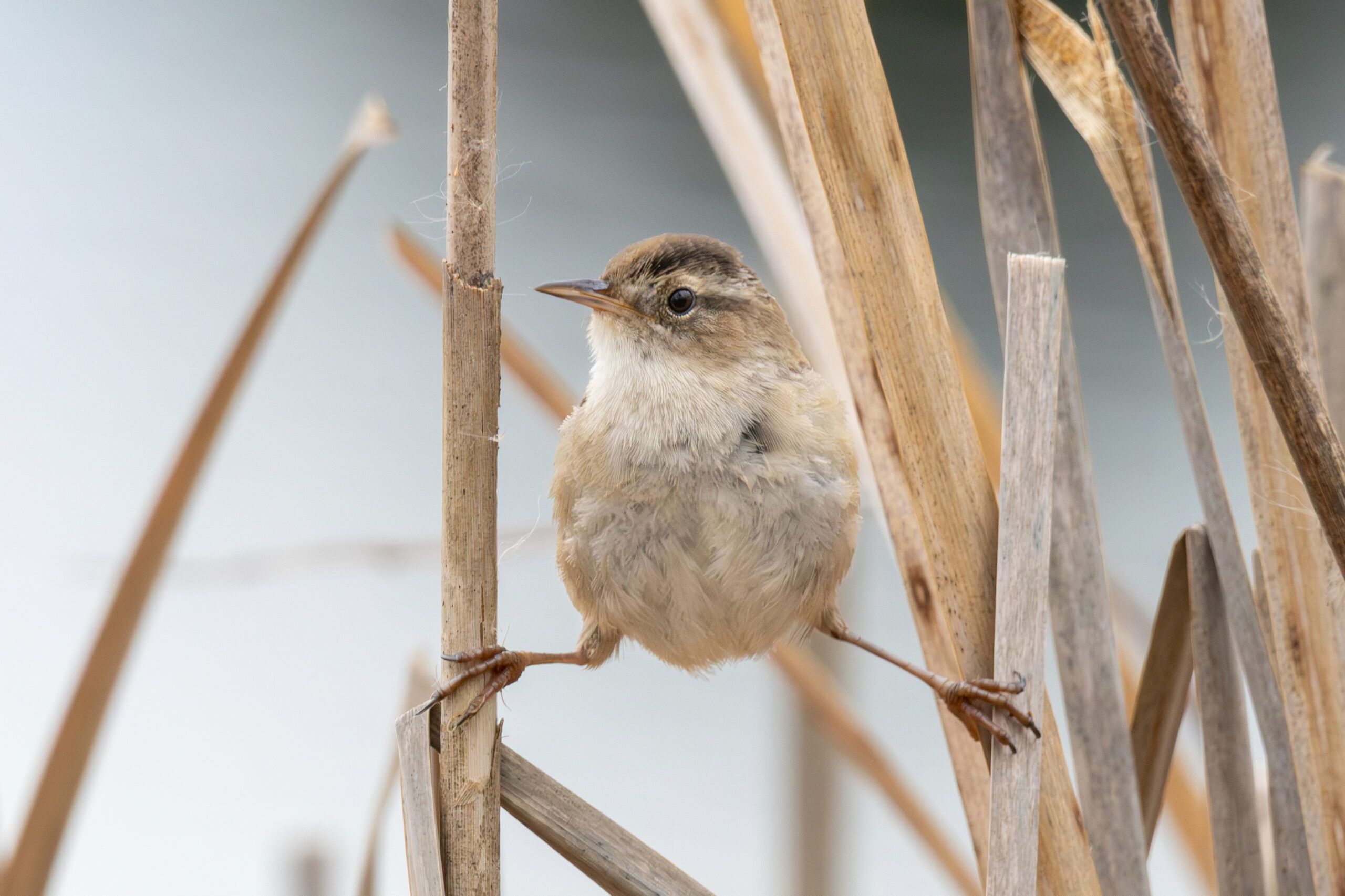
All that screaming takes energy, and even a marsh wren has to stop for a snack. Their diet mainly consists of small invertebrates, including insects and spiders. They forage by moving through dense marsh plants by hopping between stems, gripping individual plants with their feet, and searching roots and under leaves for prey, tending to stick near water. They may occasionally catch insects in flight (All About Birds, n.d.).
RANGE AND DISTRIBUTION
Where the Marsh Wren Calls Home
Marsh wrens occur across much of North American, including parts of southern Canada and a large portion of the United States. Their distribution is closely tied to the availability of suitable wetlands, so they aren’t spread evenly across the landscape. The quality of marsh habitat can influence where these birds occur as they favour marshes with dense vegetation.
In British Columbia, marsh wrens occur in wetlands across the province including areas of Vancouver Island. They are partial migrants, meaning that some populations move south during colder months while others may remain all-year round. Their winter habitat can include coastal salt marsh and other wetlands with dense vegetation (BC Breeding Bird Atlas, n.d).
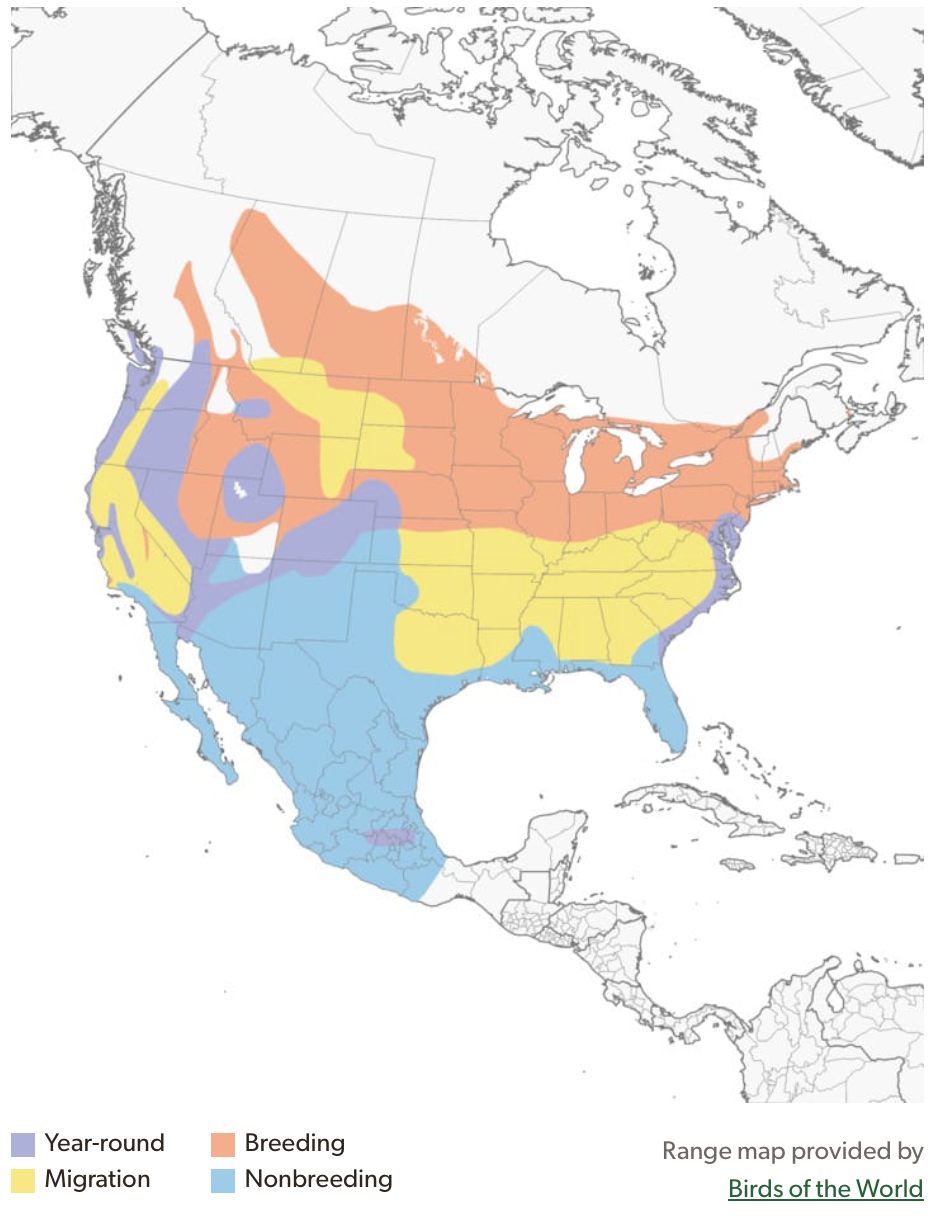
Range of marsh wrens. (Credit: Birds of the World)
HABITAT
Amongst the Cattails
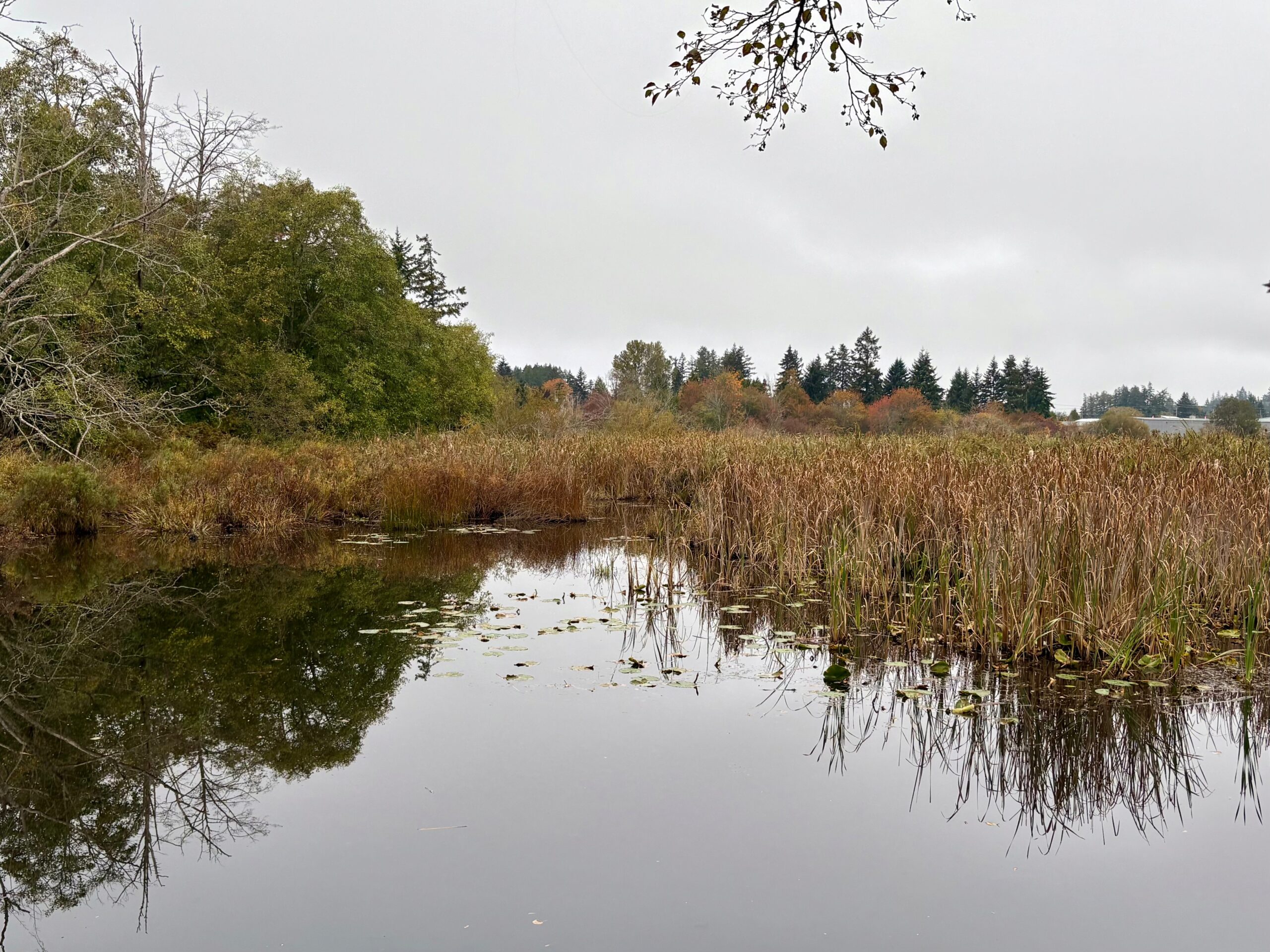
As their name suggests, marsh wrens are closely associated with wetlands. They inhabit freshwater, brackish, and salt marshes across their range, favouring areas with dense vegetation such as cattails, sedges, and bulrushes (Audubon, n.d.). These plants provide plenty of cover, giving marsh wrens places to hide from predators, move through the marsh, and build their nests.
The structure of a wetland is particularly important. Dense vegetation provides upright stems and sheltered spaces that marsh wrens rely on, while water levels influence how much suitable habitat is available. In a study of marsh wren nesting and habitat selection, it was found that more nests were successful in areas with denser vegetation and deeper water (Leonard and Picman, 1987). It was also found that they prefer taller vegetation which could be important for nesting and fledgling stages (Schwarzer et al., 2022). When wetlands are drained, developed, or otherwise altered, the vegetation and conditions these birds depend on can change or disappear. For a bird that spends much of its life skulking through marsh plants, a healthy wetland is more than just a nice place to live, it is essential to its survival.
BREEDING AND NESTING
Housing Market is just as bad for Marsh Wrens
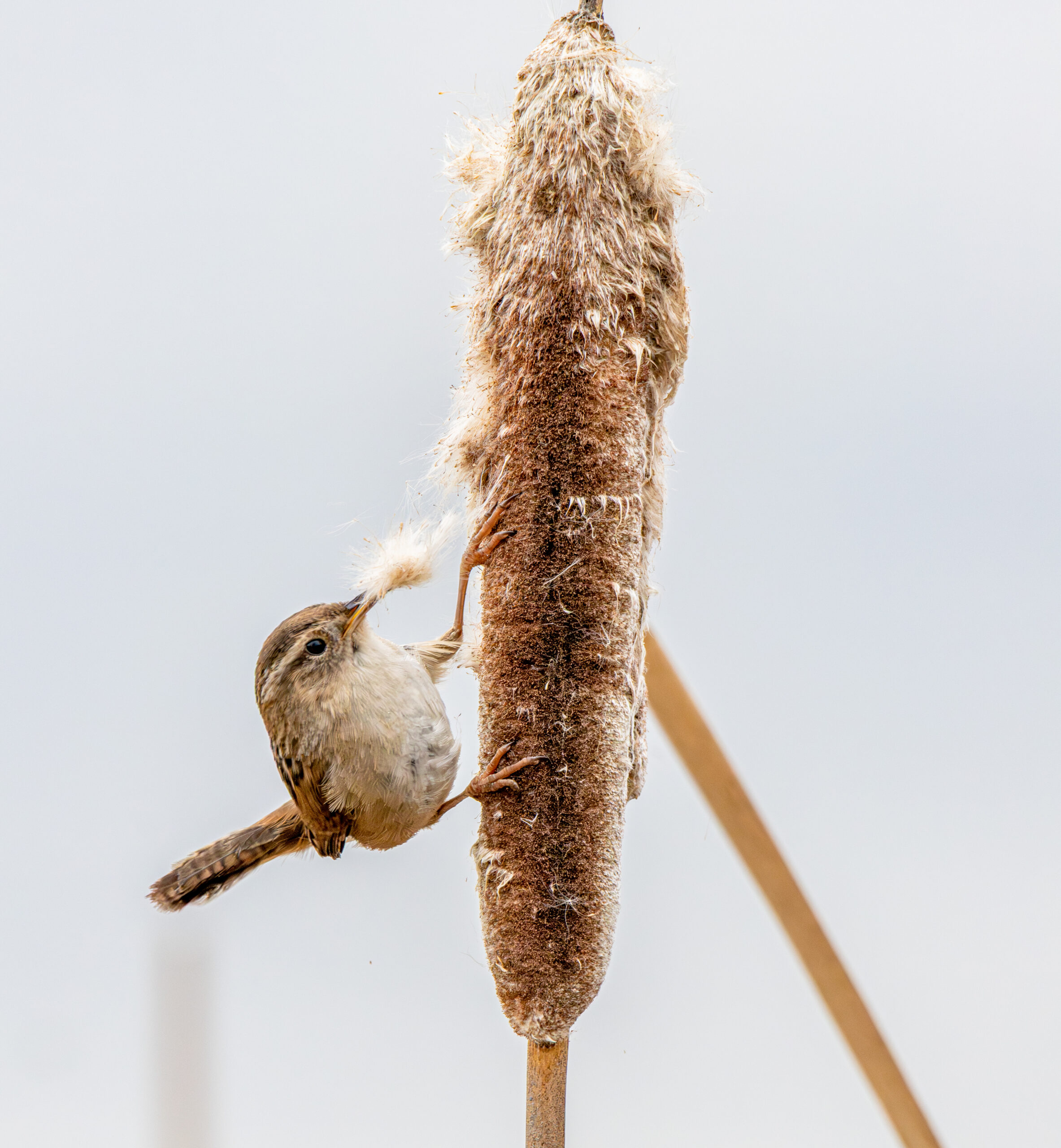
During the breeding season, males construct multiple dome-shaped nests using grasses, cattails, sedges, and other plant material. The nests are woven around upright vegetation and a few feet off the ground, and typically has a small entrance (Audubon, n.d). Male may build several nests even though only one is ultimately selected by a female for breeding. These extra structures are often called dummy nests because they aren’t used as the main breeding nest. Unused nests may be used for shelter in other seasons (Audubon, n.d). It is thought that males build at least 6 nests per female (All About Birds, n.d). Once a female arrives, the male courts her with songs and displays, and she selects a nest for breeding. A typical clutch can range from 3-10 eggs but typically is 4-6. Marsh wrens can be polygynous, meaning a male may mate with more than one female (All About Birds, n.d.).
Marsh wren collecting cattail fluff. (Credit: Grace Le)
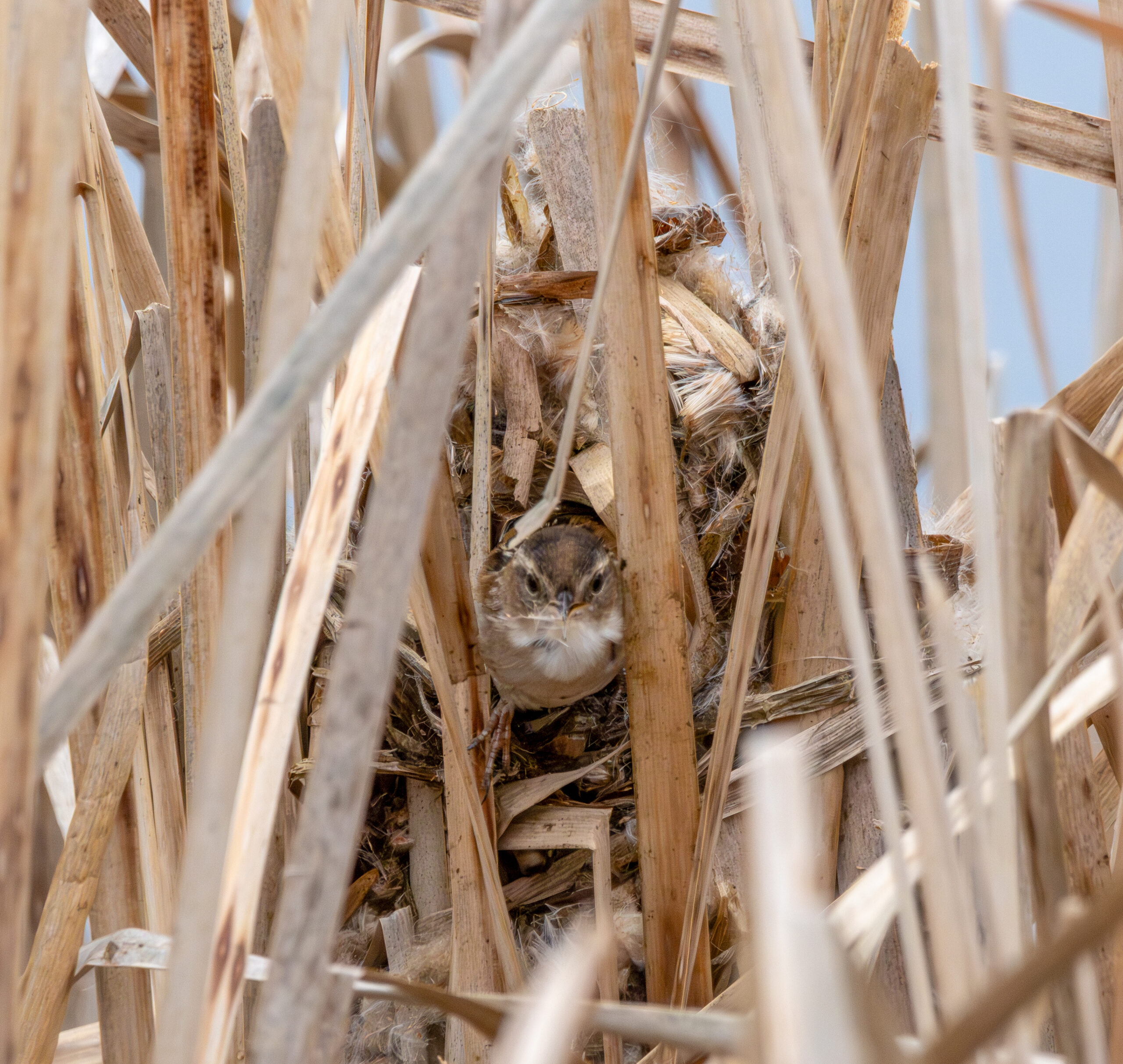
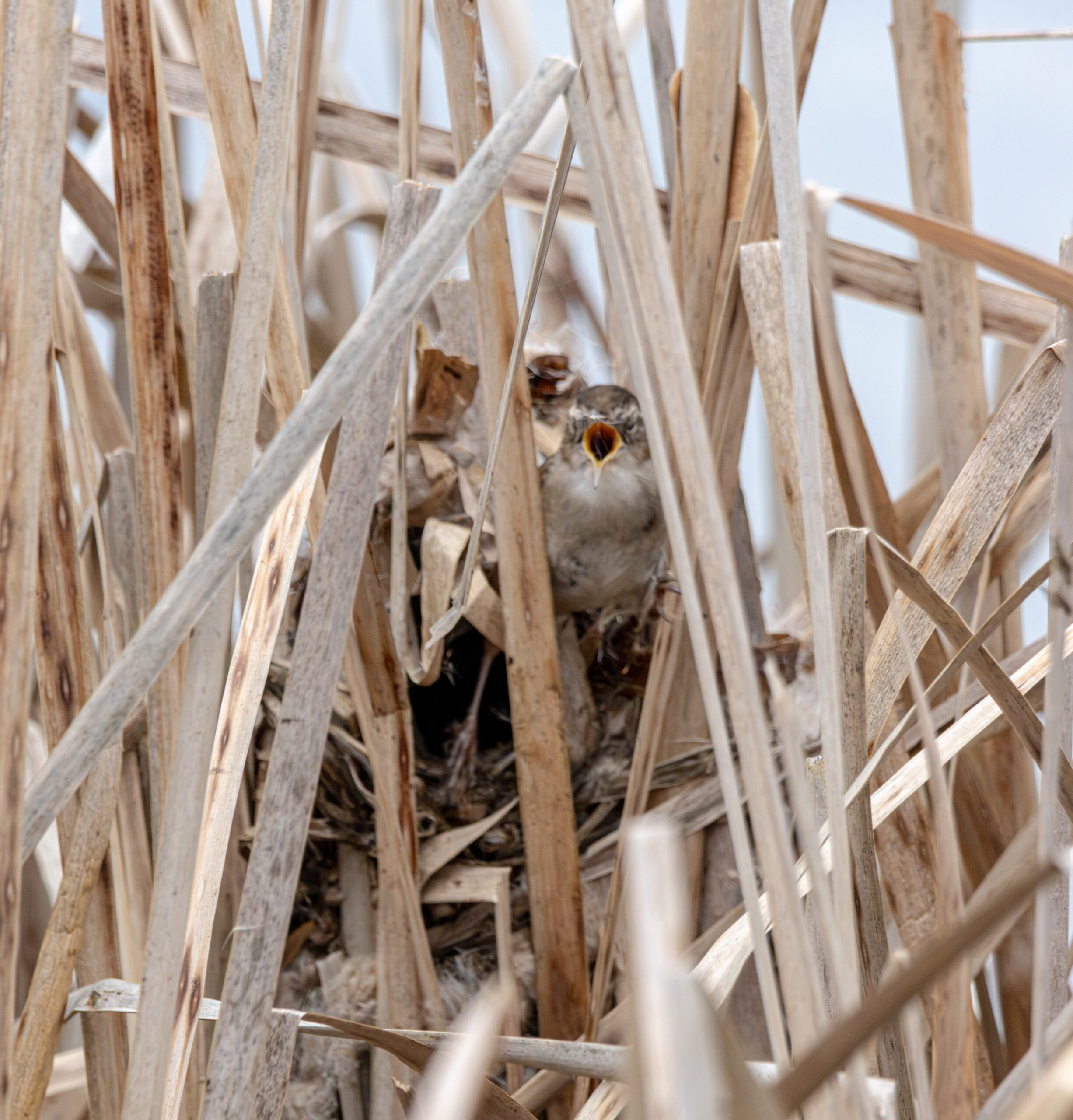
Marsh wrens can be aggressive toward other birds nesting in the same marsh. Research examined the spatial separation of marsh wrens and yellow-headed blackbirds and found evidence that interactions between the species helped explain their distribution within breeding habitat (Leonard and Picman, 1987).
Their behaviour is a reminder that wetlands aren’t just peaceful places where birds coexist. They are busy ecosystems in which animals compete for nesting space, food, and access to mates. For such a small bird, the marsh wren take nesting seriously and can have a surprisingly large impact on its neighbours. (More on this in “Research”!)
CONSERVATON
Bring Back the Marsh
Marsh wrens are globally classified as a species of Least Concern (LC). Their populations increased by approximately 130% between 1966 and 2015, according to the North American Breeding Bird Survey (All About Birds, n.d.). However, a widespread species can still face local conservation pressures, particularly when its habitat is lost or degraded.
Wetlands provide important breeding and feeding habitat for marsh wrens and many other species. When marshes are drained, altered, or degraded, birds that depend on particular vegetation and water conditions can lose suitable places to nest. These changes can reduce the amount of suitable nesting habitat or alter the structure of vegetation that marsh wrens rely on (Tozer et al., 2020). Therefore protecting wetlands benefits more than the birds that are easiest to spot. It also helps species that spend much of their lives hidden in reeds, including marsh wrens.
RESEARCH
A Terrible Neighbour
Marsh wrens might be tiny, but their behaviour toward other birds can be surprisingly brutal. They don’t just compete with their neighbours for nesting space — they can also destroy their eggs and attack nestlings. This behaviour is known as nest destruction, and researchers have investigated whether it helps marsh wrens compete with other marsh-nesting birds.
A study on this behaviour was conducted in 1977 by Jaroslav Picman. In Destruction of eggs by the Long-billed Marsh Wren, Picman experimentally presented marsh wrens with different nests containing eggs or nestlings. The results were striking: marsh wrens of both sexes, as well as juveniles, attacked eggs in different types of nests, including nests belonging to their own species. They also attacked nestlings of red-winged blackbirds and other marsh wrens (Picman, 1977).
But why would a bird destroy another bird’s eggs? Picman proposed that this behaviour could be a form of interference competition. By destroying eggs or young, marsh wrens may reduce competition from other species and exclude them from certain areas of a marsh. In other words, instead of simply defending their own space, they may actively make it harder for their neighbours to reproduce there. However, this is a proposed explanation for the behaviour rather than proof that every attack happens for that reason.
More recent research shows that this behaviour is still relevant to ecology. Newsome and Hunter (2022) studied nest predation affecting seaside sparrows (Ammospiza maritima) in coastal Georgia. Using nest monitoring and video recordings, they found that Marsh Wrens contributed to nest predation. The researchers recorded wrens destroying seaside sparrow eggs while the females were away from their nests. In one observed instance, a wren ate the egg yolk and removed the egg from the nest.
This study focused on the factors affecting nest predation rather than specifically testing why marsh wrens destroy eggs. Nevertheless, it provides recent evidence that marsh wrens can affect the breeding success of other marsh birds. It also shows that nest predation is not always caused by mammals we might expect.
So, is the marsh wren a tiny villain? Not exactly. Behaviour that seems cruel from our perspective may have evolved because it gives an animal some competitive advantage. The exact reasons for nest destruction may vary and more research is needed to fully understand the behaviour. Still, between their loud songs, elaborate nests, and occasional attacks on their neighbours’ eggs, marsh wrens prove that being small doesn’t necessarily mean being harmless.
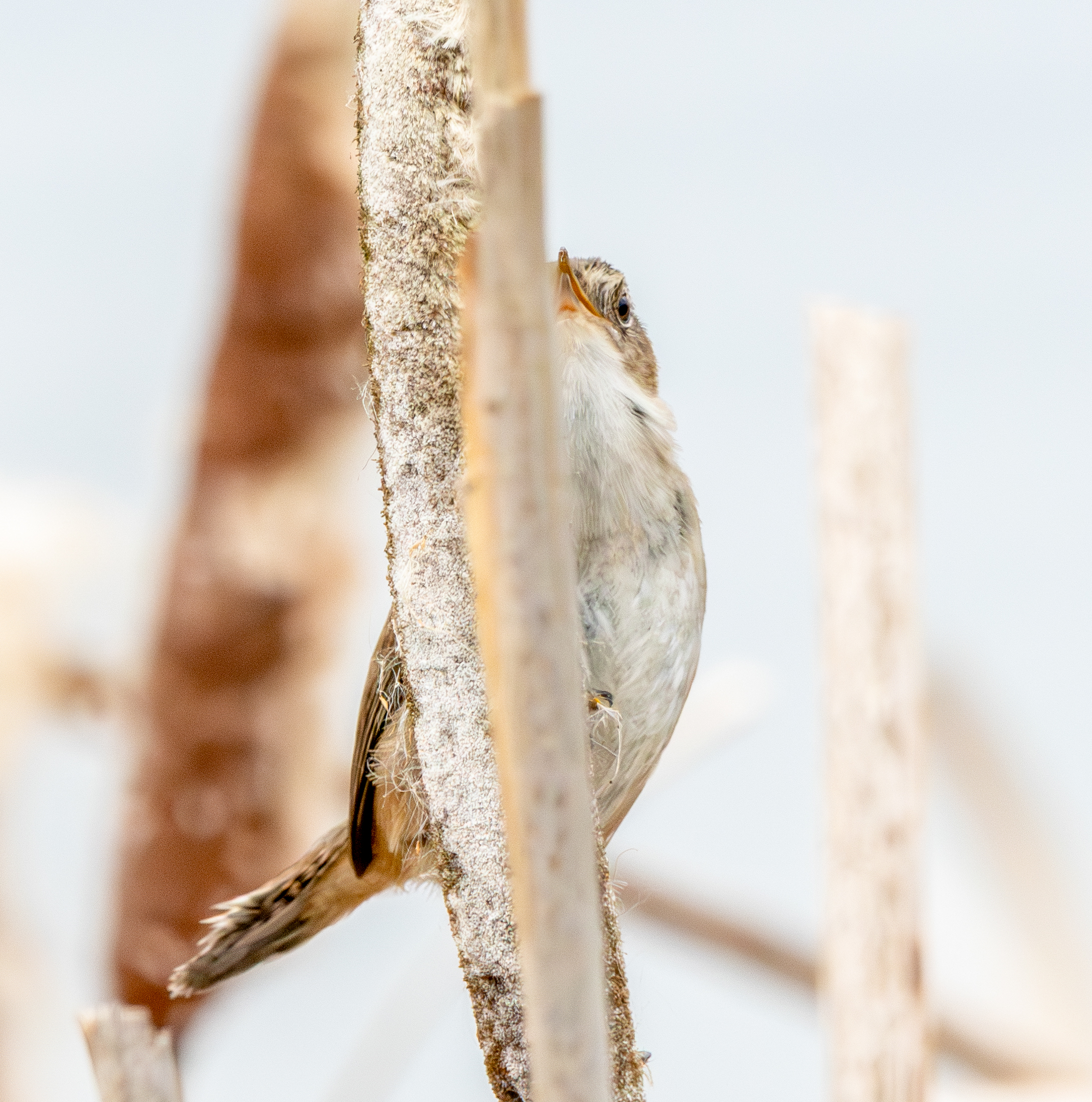
So, Still just a little brown bird?
The marsh wren may be small, brown, and frustratingly difficult to see, but it is far from boring. Its distinctive song, foraging, nesting behaviour and dependence on healthy wetlands make it a fascinating bird to learn about.
So next time you’re walking past a marsh, take a moment to listen. You might not see the bird responsible for all that noise but somewhere amongst the cattails, is a tiny little marsh gremlin. Hopefully, their cuteness makes up for the atrocities they commit.
Fun Facts
- Marsh wrens will be taxonomically split, becoming western and eastern marsh wren. Western marsh wrens have harsher and more variable songs whereas eastern marsh wrens are more vibrant with a rusty colour.
- The highest observed number of dummy nests built by a male is 22.
- You may see Eric rocking a marsh wren hat.
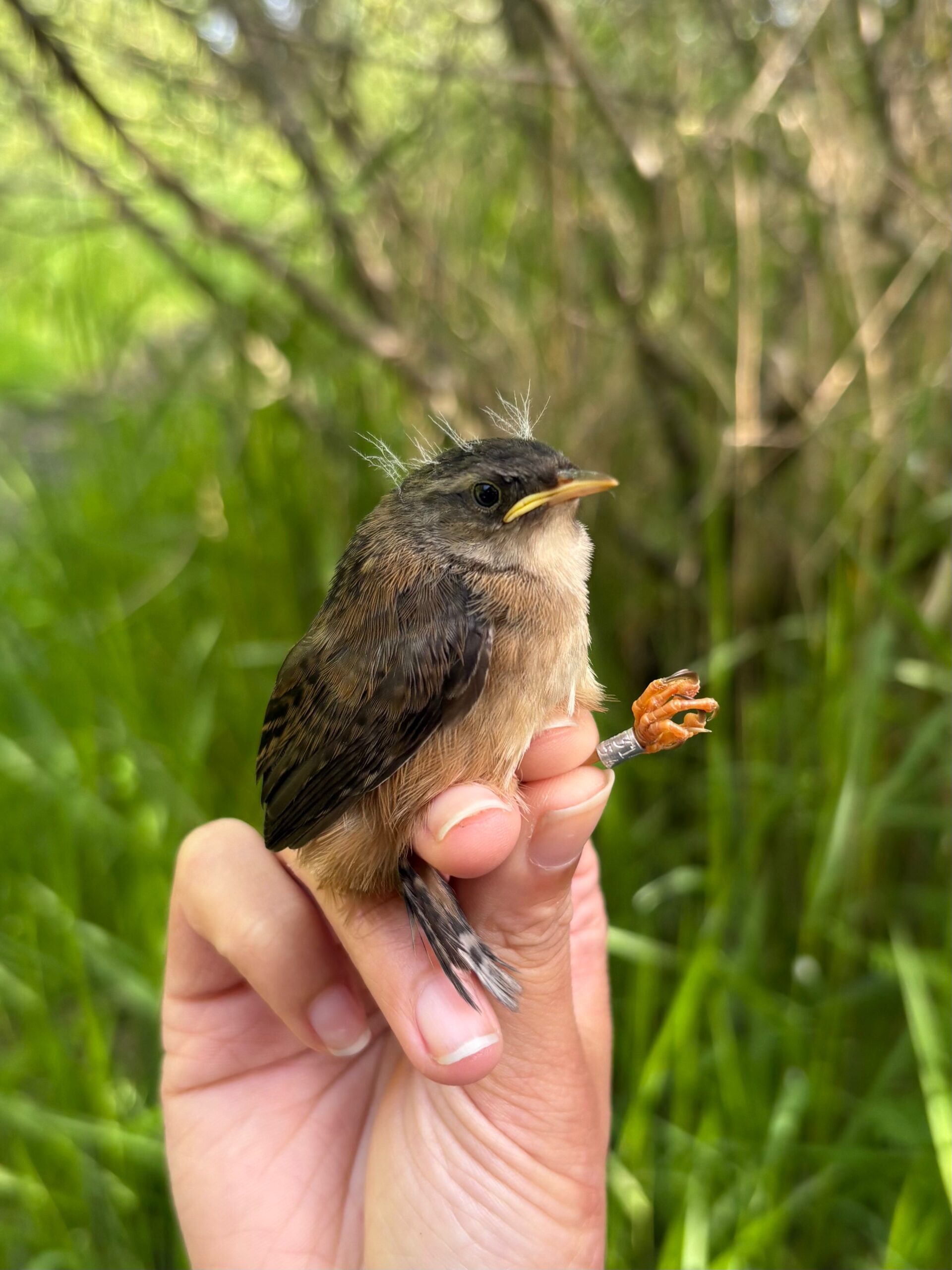
Grumpy baby marsh wren. (Credit: Grace Le)
References
BC breeding bird atlas. (2026). Birdatlas.Bc.Ca. https://www.birdatlas.bc.ca/
Leonard, M., & Picman, J. (1987). Nesting Mortality and Habitat Selection by Marsh Wrens. The Auk, 104(3). https://digitalcommons.usf.edu/auk/vol104/iss3/17?utm_source=digitalcommons.usf.edu%2Fauk%2Fvol104%2Fiss3%2F17&utm_medium=PDF&utm_campaign=PDFCoverPages
Marsh Wren. (n.d.). Audubon. https://www.audubon.org/field-guide/bird/marsh-wren
Marsh wren identification, all about birds, Cornell Lab of Ornithology. (n.d.). Www.Allaboutbirds.Org. Retrieved October 16, 2026, from https://www.allaboutbirds.org/guide/Marsh_Wren/id
Marsh wren life history, all about birds, Cornell Lab of Ornithology. (2020). Allaboutbirds.Org. https://www.allaboutbirds.org/guide/Marsh_Wren/lifehistory
Marsh wren overview, all about birds, Cornell Lab of Ornithology. (n.d.). Www.Allaboutbirds.Org. Retrieved October 16, 2026, from https://www.allaboutbirds.org/guide/Marsh_Wren/overview
McCafferty, A. (2026, May 19). Marsh Wren (Cistothoris Palustris) song [Audio recording]. Xeno Canto. https://xeno-canto.org/1139414
Newsome, C. D, & Hunter, E. A. (2022). Habitat edges influence the distribution of nest predators for seaside sparrows, but not nest placement or success. Ornithological Applications, 124(3). https://academic.oup.com/condor/article/124/3/duac023/6605164
Picman, J. (1977). Destruction of eggs by the long-billed marsh wren (telmatodytes palustris palustris). Canadian Journal of Zoology, 55(11), 1914–1920. https://doi.org/10.1139/z77-245
Schwarzer, A. C., Cox, W. A., & Tornwall, B. (2022). Habitat selection of nesting and fledgling salt marsh songbirds in northeast Florida. The Journal of Wildlife Management, 86(6). https://doi.org/10.1002/jwmg.22260
Tozer, D. C., Stewart, R. L. M., Steele, O., & Gloutney, M. (2020). Species‐habitat relationships and priority areas for marsh‐breeding birds in Ontario. The Journal of Wildlife Management, 84(4), 786–801. https://doi.org/10.1002/jwmg.21840
Witchger, A (2017). Northern House Wren [Photograph]. Macaulay Library. https://macaulaylibrary.org/asset/56695131