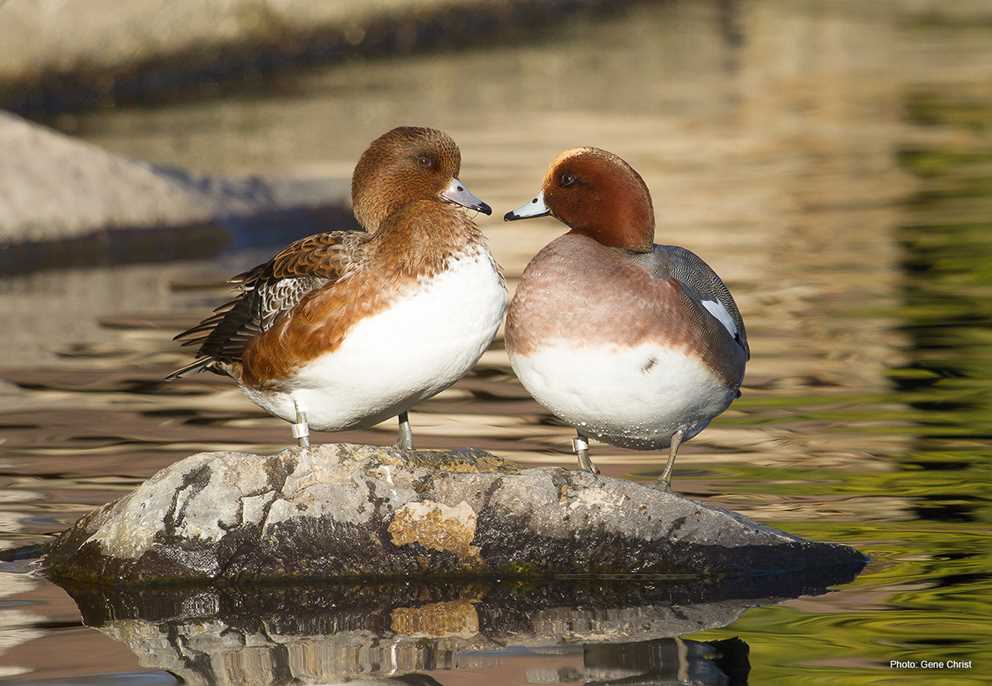
A rare visitor!
The Eurasian wigeon is a dabbling duck endemic to the Palearctic region, but can sometimes be found in North America as well. While not absurdly uncommon, one should still consider themselves lucky to spot them around here! They are often seen singularly in flocks of the more common American wigeon.
These birds have a tendency to get quite lost! The furthest from home Eurasian wigeon was spotted in Central Mexico in January of 2021. Undoubtedly, the tourist got caught up with a group of American Wigeons. Another Eurasian wigeon was spotted among Australian Wood Ducks in western Austraulia in January of 2015. These experienced journeymen are outliers, but don’t underestimate these bird’s migrating abilities.
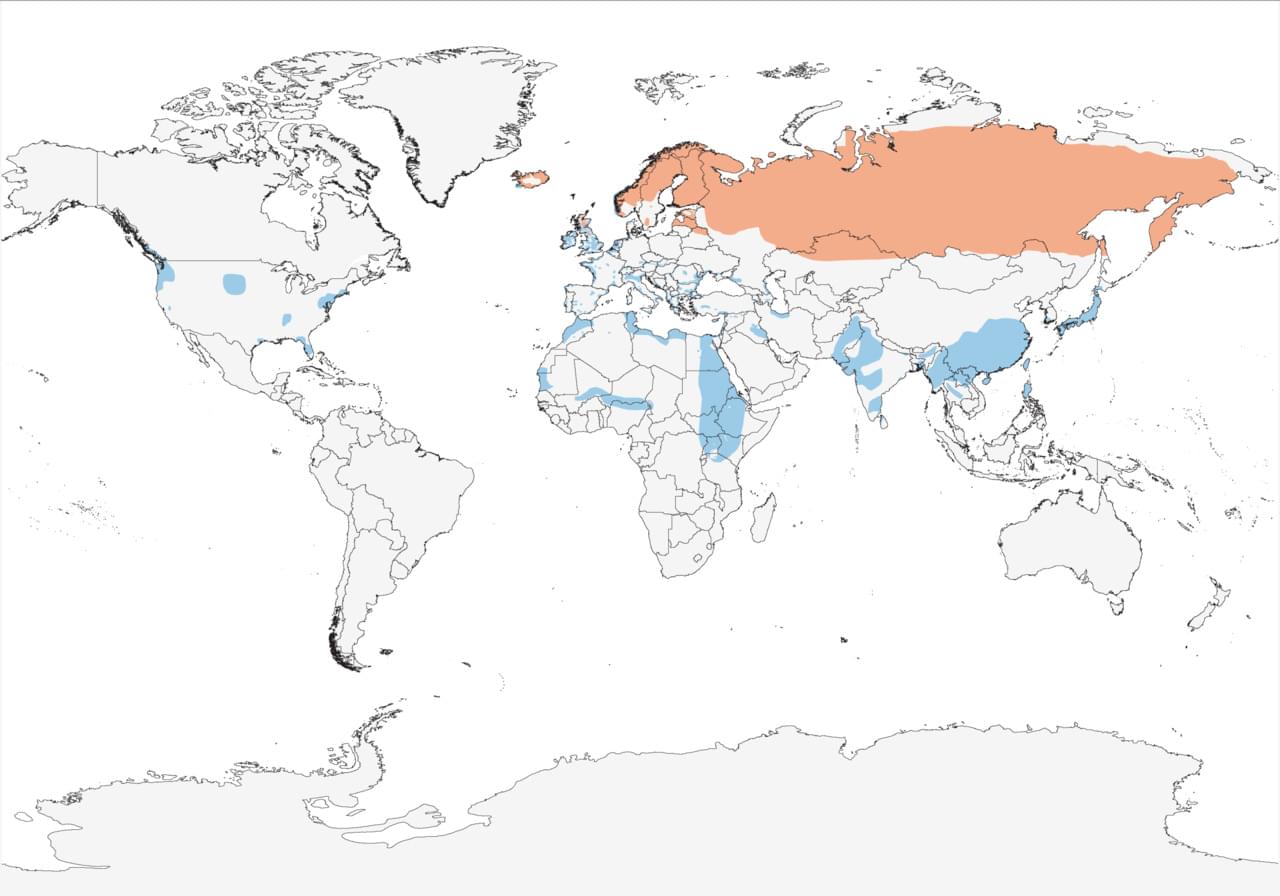
Locale and conservation.
Eurasian Wigeons are highly migratory, settling in northern Europe for the warmer months, and flying as far as south Asia and northern Africa during migration. They tend to breed in the farthest northern areas of Eurasia, but visit much of the Old World during non-breeding months. Their most important breeding spot is in the Netherlands.
As of right now, Eurasian wigeons are designated to be of least concern status by the IUCN, and are considered quite abundant in population. The biggest threat to their species would be the loss of their natural wetland habitats.
That being said, wigeons are game birds, and the hunting of them is difficult to regulate due to how migratory they are. Population estimations for these birds are considered by all to be rather inconsistent and shoddy at best. Regardless of their conservation status, studies report that Eurasian wigeon populations have been on a slight decline since the early 2000’s.
By any other name, a duck would still smell like a duck.

The scientific name for the Eurasian wigeon is Mareca penelope. Mareca is the genus of ducks belonging to Anatidae that includes wigeons and gadwalls. These birds were named after Penelope of Ithica, wife of Odysseus from well known Greek fable the Odyssey. According to myth, Penelope was thrown into the sea as an infant, and rescued and fed by a flock of ducks!
‘Gr. penelops type of duck with purple stripes which was said to have rescued and fed Penelope after her parents had thrown her into the sea”
What’s for dinner?
Dabbling ducks don’t dive for dinner, instead they tip their bottoms up and plunge their heads into the water, scrounging around for any tasty morsels. Like most dabbling ducks, they have a vegetation heavy diet, and feed mainly on grass leaves, seeds, roots and stems- so don’t count on them to keep an infant fed. And it’s quite likely that the ducks of legend were not truly Eurasian wigeons, since they much prefer shallow freshwater marshes and lakes, and are only found in more brackish and saltier waters when in coastal North America.
These ducks are ground dwellers, and tend to make their nests close to the water, preferably under cover of trees or thick vegetation. They lay their clutches of cream-coloured eggs in batches of 7-8. These ducks are perennially monogamous, and mate for life. However, the female duck is solely in charge of rearing young, and the drakes provide little support or presence while the female broods and cares for the chicks.
If it walks like a duck…
If it walks like a duck and talks like a duck, it must be a duck, right? You may or may not be surprised to learn that most ducks don’t make stereotypical quacking noises. The Eurasian wigeon doesn’t wenk-wenk like you’d expect a mallard to, instead, the male’s call is made up of a distinctive, airy whistle that ascends and descend in tone. The females make low, throaty growls when their nests are disturbed. Even the term ‘wigeon’ comes from the French, ‘vigeon’ which means ‘whistling duck.’
Plumage and sister species.
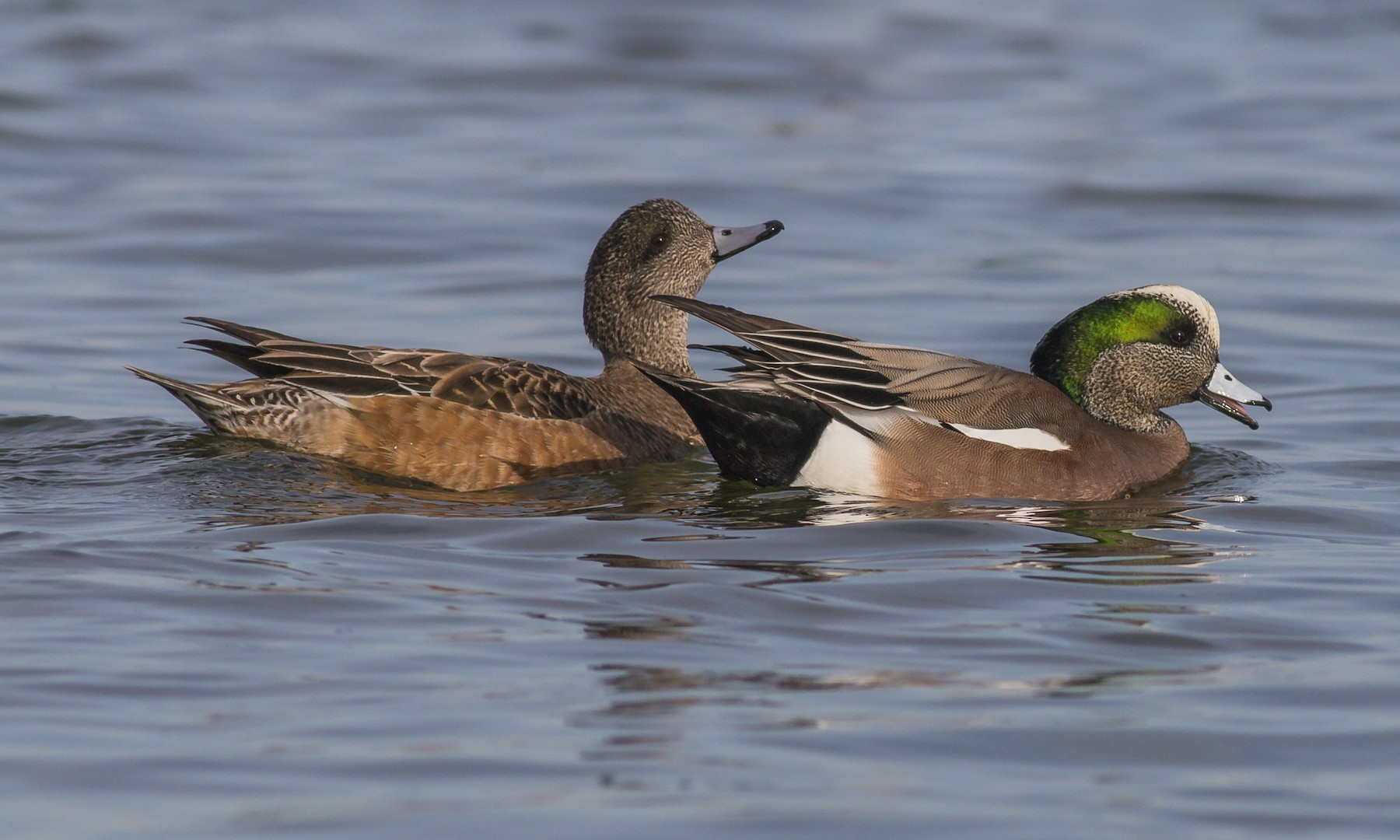
If you’ve spotted a Eurasian wigeon in North America, chances are you’ve caught it flocking together with its sister species, the American Wigeon. The two species can be differentiated not only by the cost of their healthcare, but by their distinct plumage. Both birds share a general size and shape, as well as a small blue-grey bill with a black mark at its tip.
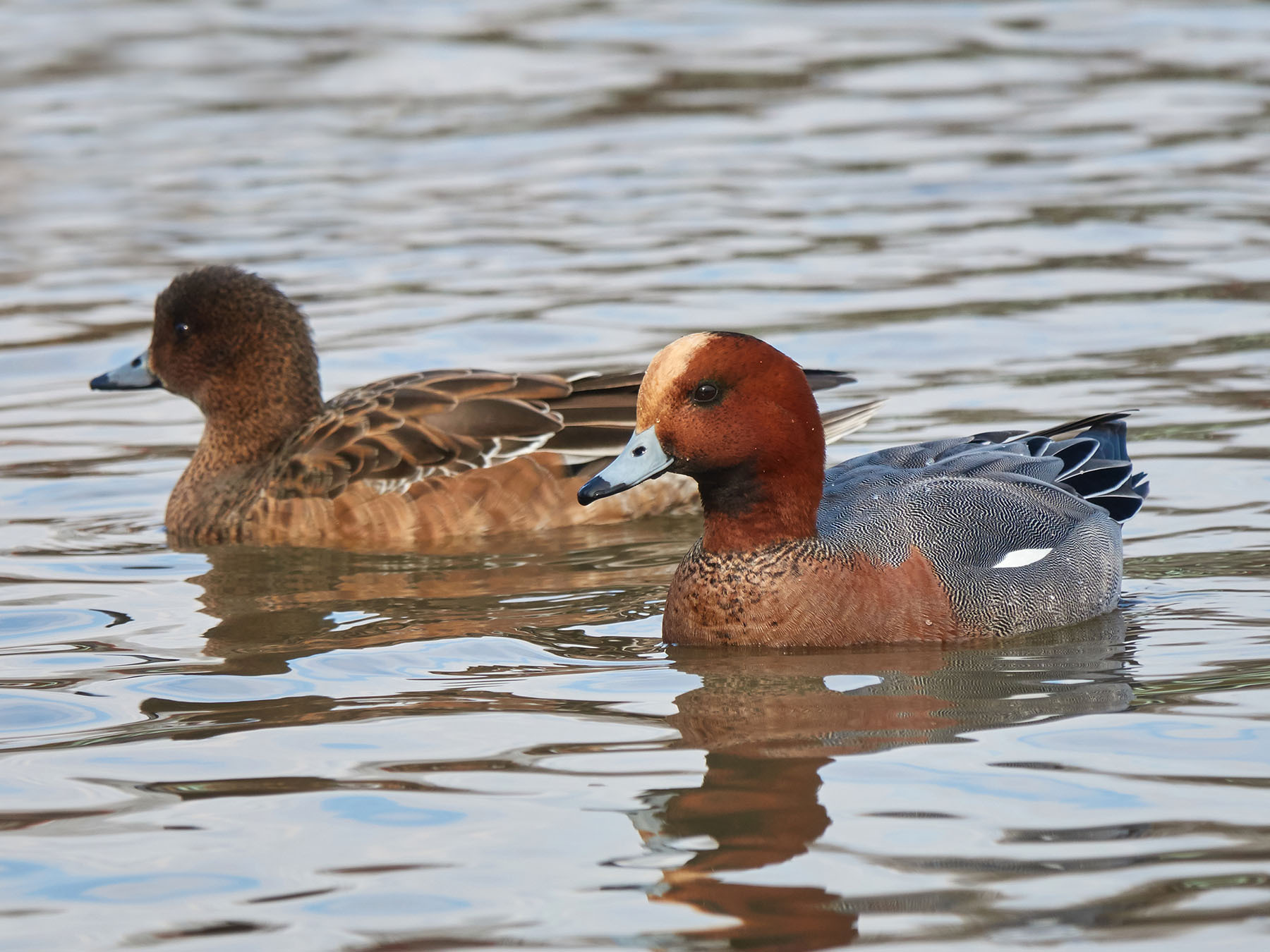
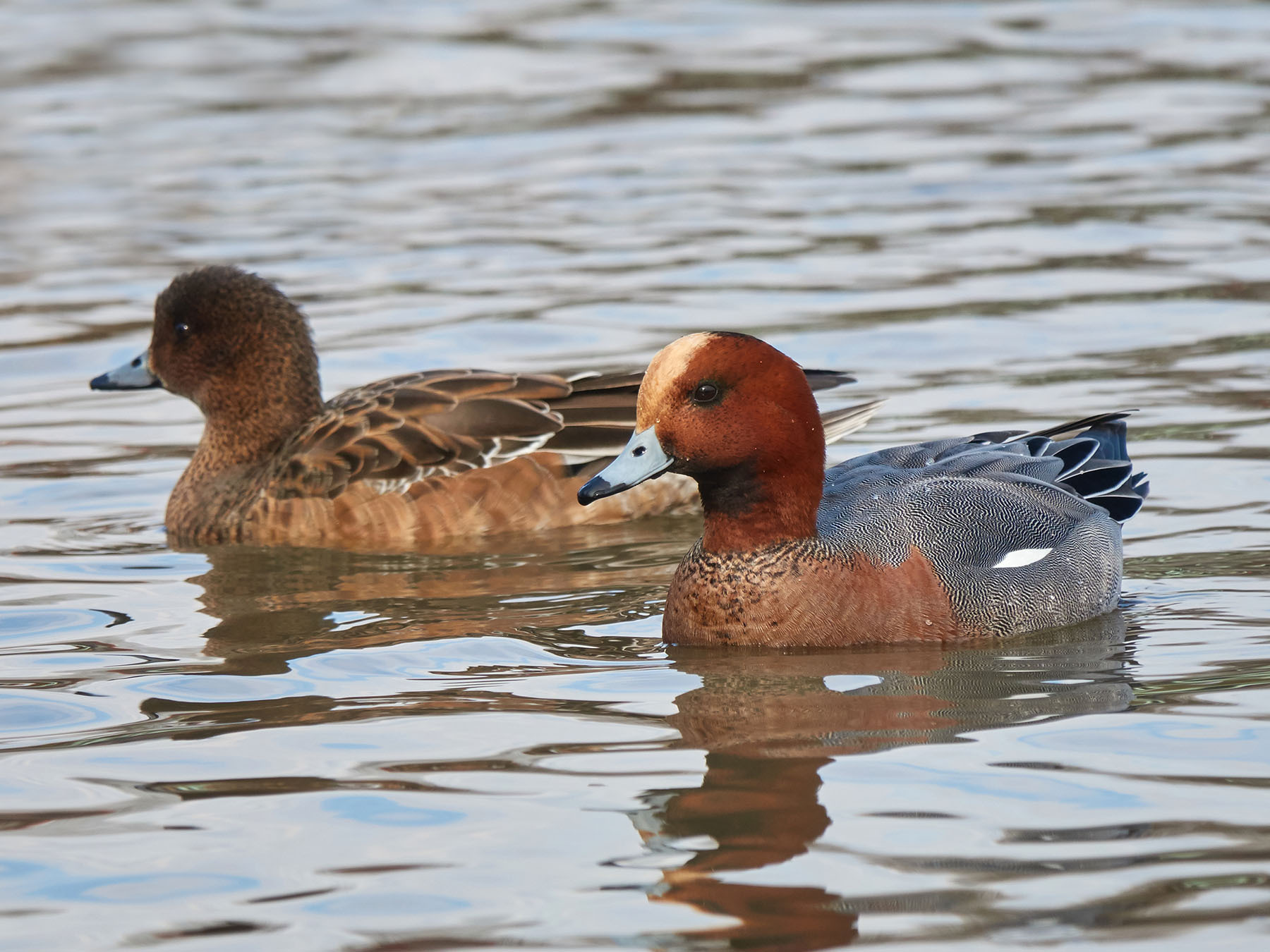
The male Eurasian wigeon has a warm, rufous head and chest, with a buffy cream forehead. Its flank is mostly a tessellated grey, with a sharp transition into black tail feathers and wingtips. The males have white coverts and dark green secondaries on their outer wing.
The male American wigeon has a more pinkish-brown body, and the head is a mottled black and white that looks like a fuzzy grey, sharply interrupted by a metallic green eye stripe, and a white or buffy forehead. The American wigeon’s underwing also contrasts with white armpits and grey primaries, but the Eurasian wigeon’s underwing is purely grey.
Differentiating female ducks is always a bit more difficult, but entirely possible. Female American wigeons have more contrast to them, with a greyish head and an almost orange flank, whereas the Eurasian wigeon has a warmer head, and a greyer flank with less contrast. Female Eurasian Wigeons also lack white on their coverts, whereas female American Wigeons do not.
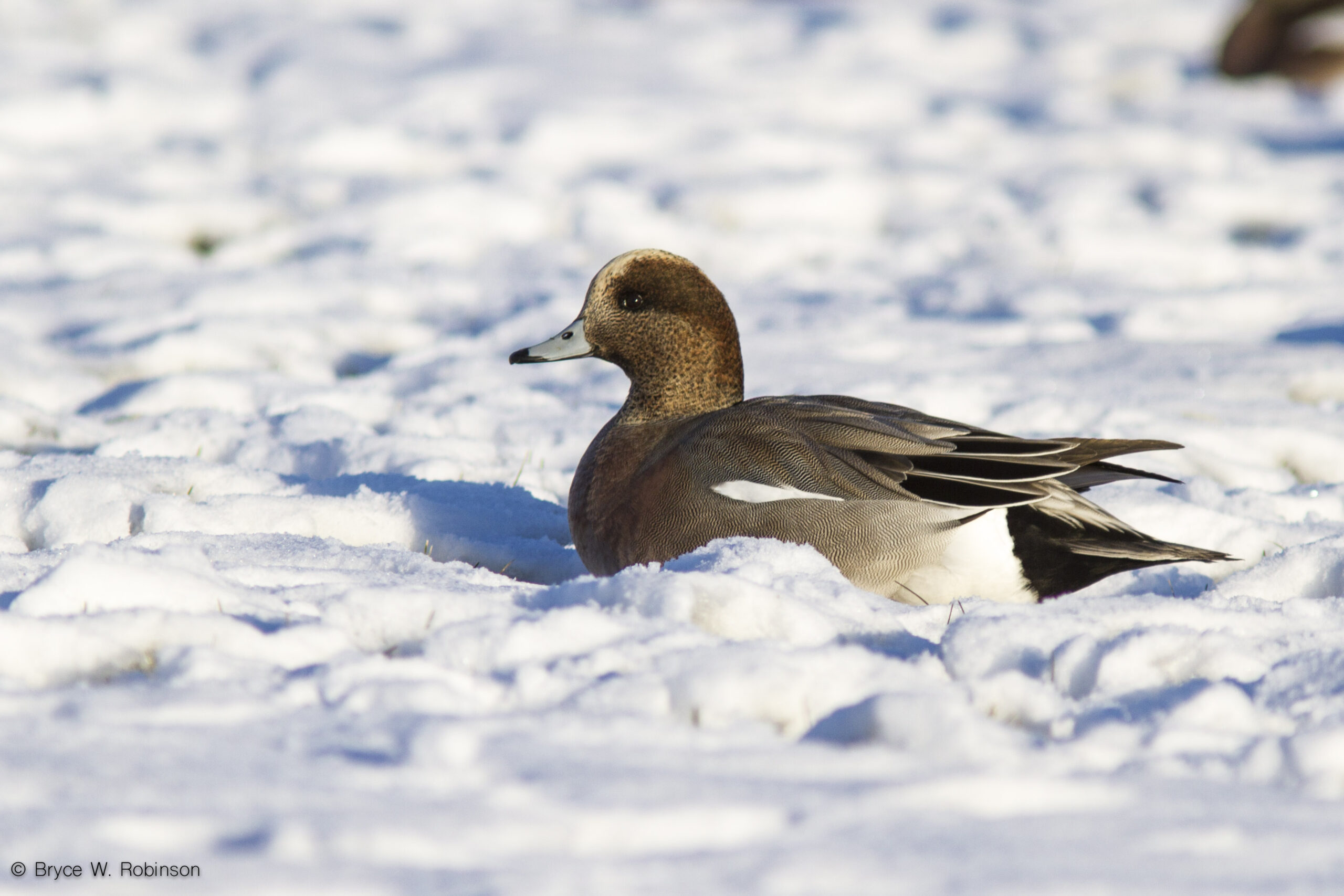
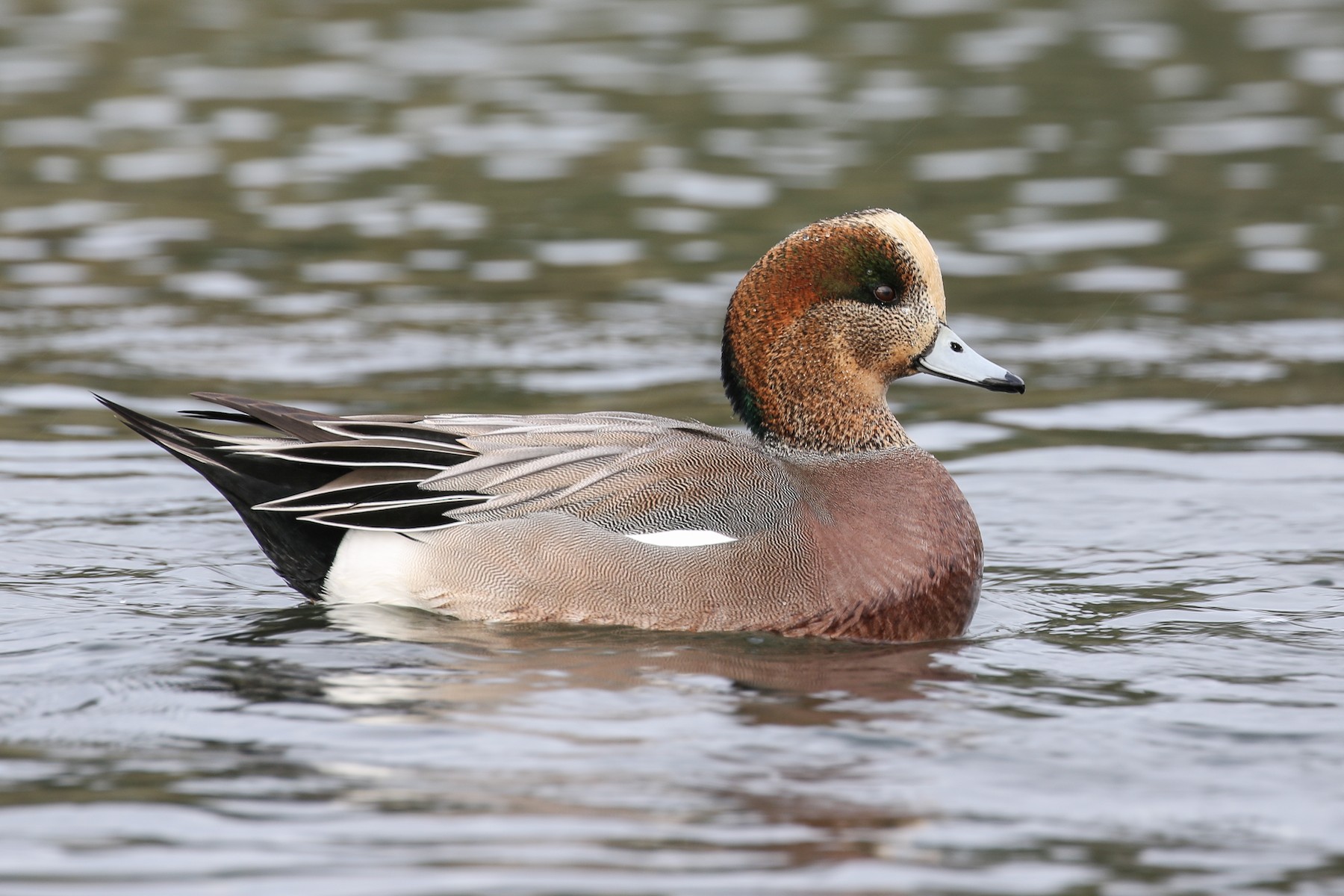
American and Eurasian wigeons are known to hybridize both in captivity and in the wild. Their inter-species affairs usually show their unique colours in hybrid male plumage, resulting in a duck that looks mostly like a patchy brown and grey Eurasian wigeon- but with a faint-to-bold application of that metallic green eyeshadow. Instead of the adoption of a variable green eye stripe, the warm buffy forehead may instead extend itself to envelop more of the duck’s head, wrapping around similarly to the American wigeon’s greyer head
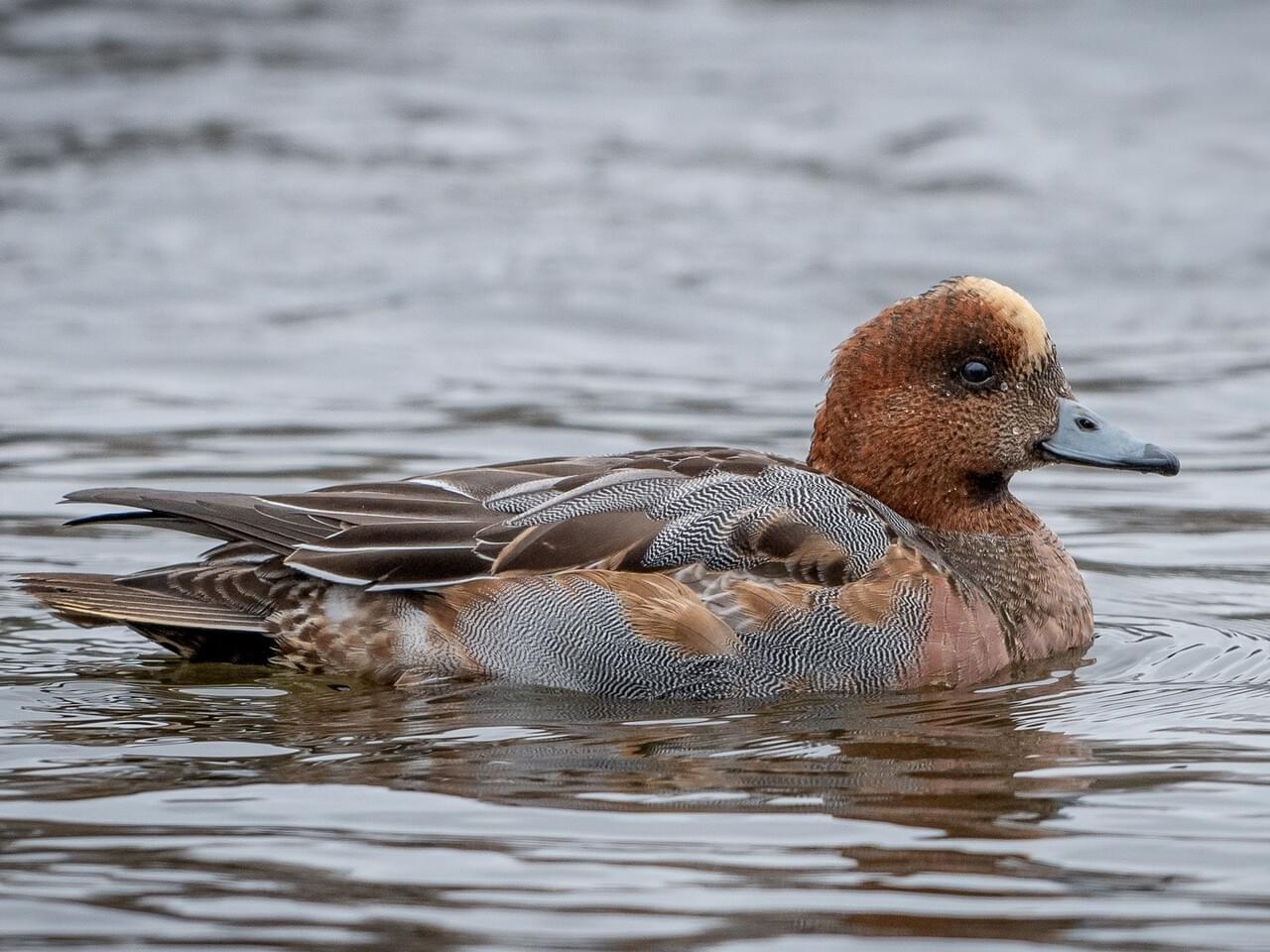
Most ducks also exhibit eclipse plumage. Ducks are known to shed all of their flight feathers at once, and during this process their body feathers molt to be more similar to their female counterpart’s colourings. This helps them showcase less flashy colours to help them camouflage from predators while they’re vulnerable and landlocked. A Eurasian wigeon in eclipse plumage can be differentiated from a female Eurasian wigeon by the buffy forehead that they keep through their molt.
Are we there yet?
Because these birds are so strongly migratory, it makes them perfect candidates to study how they get to where they need to be. Many studies have been performed on their migration patterns to gain more insight into their general behaviour and flight paths. Migration is a complex topic, with many factors and variables that can change yearly. Insight into how these birds move around, where they fly through, where they settle, and where they refuel- are all greatly important factors when it comes to protecting important habitats. Not only for Eurasian wigeon, but for plenty of other migrating waterfowl. By deepening our understanding of these behaviors, we can more accurately manage and conserve areas that are important to our global ecosystem.
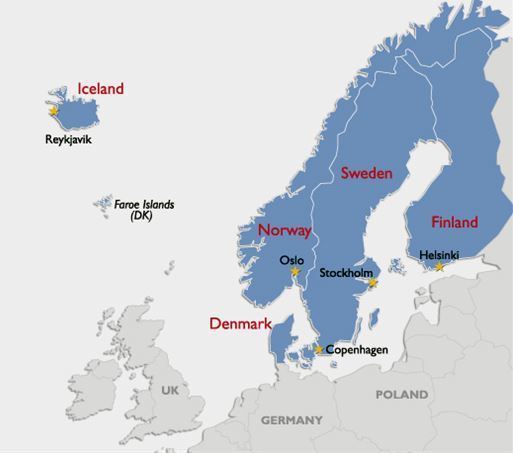
Different groups of wigeons seem to have different preferences for weather, some deciding to winter in France and Britain, whereas some spend their winters in southern Spain and around the Caspian sea. These northern birds flock to Fennoscandia (the Scandinavian peninsula, Finland, etc,) and north-western Russia to breed, whereas their more central friends migrate to west and central Siberia.
Both central and northern Eurasian wigeon are thought to follow known, distinct flyways during migration. The East Atlantic flyway covers northern and eastern Europe. The Mediterranean flyway covers southern Europe. The two flyways are separate, but partly overlap in Russia and Africa. When spring comes to thaw, central birds are seen to migrate east and northeast, whereas the northern birds scatter east, north, and west. The northern wigeons are also observed taking less direct routes, making more detours and stopovers before continuing on. The central wigeons overall migrate longer distances per day, but this could also be just a result of their overwinter location. Most interestingly, in a previously unknown looping migratory pathway was discovered, taken by some northern wigeons. The migration loop circles through Fennoscandia, the birds spending their winters in Finland and summering in Sweden and Norway. Note these northern birds have no issue migrating over the Baltic sea, but central wigeons have not been observed doing so.
As previously discussed, drakes undergo a moult in which they lose all their flight feathers at once. Males who were to undergo this process were found to migrate further during the summer than females, who tended to be nest-bound, in order to find more secure spots to moult. This process reduces migratory connectivity among males- meaning it’s not as easy or reliable to predict where the next location they might migrate to will be, nor is it easy to tell where they were residing beforehand, either. This makes conservation of important ecological areas more difficult, but having this insight will help us better our ability to manage and understand these important habitats.
Areas with shallow water and less vegetation coverage were favoured as stopover sites. These wetlands tend to have high insect abundance and availability during the early spring, which makes them a convenient pit stops for weary travelers. Vegetation that is too dense can also interfere with a dabbling duck’s ability to forage, so less crowded water allows them to forage more efficiently. These factors make patchy wetlands ideal spots for spring-migrating wigeons, and conservation of these habitats is essential to keeping global migratory waterfowl numbers in the green.
Resources and acknowledgments.
Ramírez-Albores, J. E., Bautista-Trejo, R., & Rosas, H. C. (2021). First occurrence of eurasian wigeon (mareca penelope L.) in central méxico. Western North American Naturalist, 81(3), 453-456. https://doi.org/10.3398/064.081.0314
George, L. (2015). First australian record of eurasian wigeon (anas penelope). The Western Australian Naturalist, 29(4), 247-249. https://doi.org/10.5962/p.297256 **
Holopainen, S., Piironen, A., Ellis, M. B., Fox, A. D., Hove Sørensen, I., Van Toor, M. L., Waldenström, J., Warrender, H., & Laaksonen, T. (2026). GPS tracking reveals new insights into the complexity of eurasian wigeon (mareca penelope) migration along the east atlantic flyway. Ornis Fennica, 103(2), 68-86. https://doi.org/10.51812/of.154800
van Toor, M. L., Kharitonov, S., Švažas, S., Dagys, M., Kleyheeg, E., Müskens, G., Ottosson, U., Žydelis, R., & Waldenström, J. (2021). Migration distance affects how closely eurasian wigeons follow spring phenology during migration. Movement Ecology, 9(1), 61-61. https://doi.org/10.1186/s40462-021-00296-0 **
Bouchaala, L., Elafri, A., Charchar, N., Boukhemza, M., & Houhamdi, M. (2017). Wintering behaviour and spatial ecology of Eurasian wigeon anas penelope in a coastal mediterranean wetland complex (guerbes-sanhadja) of northeastern Algeria. Avian Biology Research, 10(2), 84-91. https://doi.org/10.3184/175815617X14878495604643 **
Eurasian wigeon overview, all about birds, Cornell Lab of Ornithology. Available at: https://www.allaboutbirds.org/guide/Eurasian_Wigeon (Accessed: October 2026).
Unlimited, D. Eurasian wigeon: Ducks unlimited, View State Page. Available at: https://www.ducks.org/hunting/waterfowl-id/eurasian-wigeon (Accessed: October 2026).
Sibley, D. (2022) Sibley Birds west: Field guide to birds of western north america. New York, NY: Alfred A. Knopf.