Deep in the marsh, the water is still; murky, waterlogged, and filled with cattails that sway gently in the wind. Crickets chirp and startle, though it’s the damselflies that flit around most. They twist and turn, snatching smaller bugs midair. For a fleeting moment, there’s no bigger predator than them… until a brilliant blur of blue changes that. With long, pointed wings, a torpedo-shaped body, and a tail forked like a snake’s tongue, the first damselfly is plucked from the air. The culprit’s back catches the sunlight, scattering an array of deep blues, ocean greens, and hints of lilac purple. Showing off moves like an aerial gymnast, making the damselflies look like a novice and a snack for the road, a tree swallow has entered the marsh.
A CASE OF MISTAKEN IDENTITY: HOW TO RECOGNIZE A TREE SWALLOW
Tachycineta bicolor, commonly known as the tree swallow, got its scientific name for being both an agile flyer and two-coloured (McCormick 2025). It can be hard to pick them out from other swallows unless you’re looking for a few key identifying features. When they’re fully grown, their back is a steely blue — iridescent and able to reflect other colours like green or purple — transitioning into a graphite tone for their flight and tail feathers.
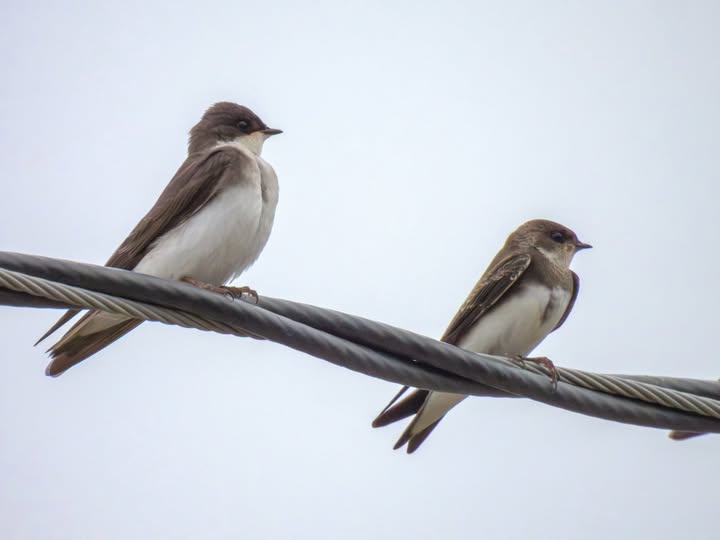
A great way to distinguish a tree swallow is by their pure white underside (throat, chest, belly) that’s completely unmarked. The only exception is when some juveniles (and the occasional female) have a slight barring across their chest. This can make juveniles almost identical to bank swallows; however, bank swallows have much sharper, much more contrasting barring, as observed in Figure 1 (Cornell Lab c2026).
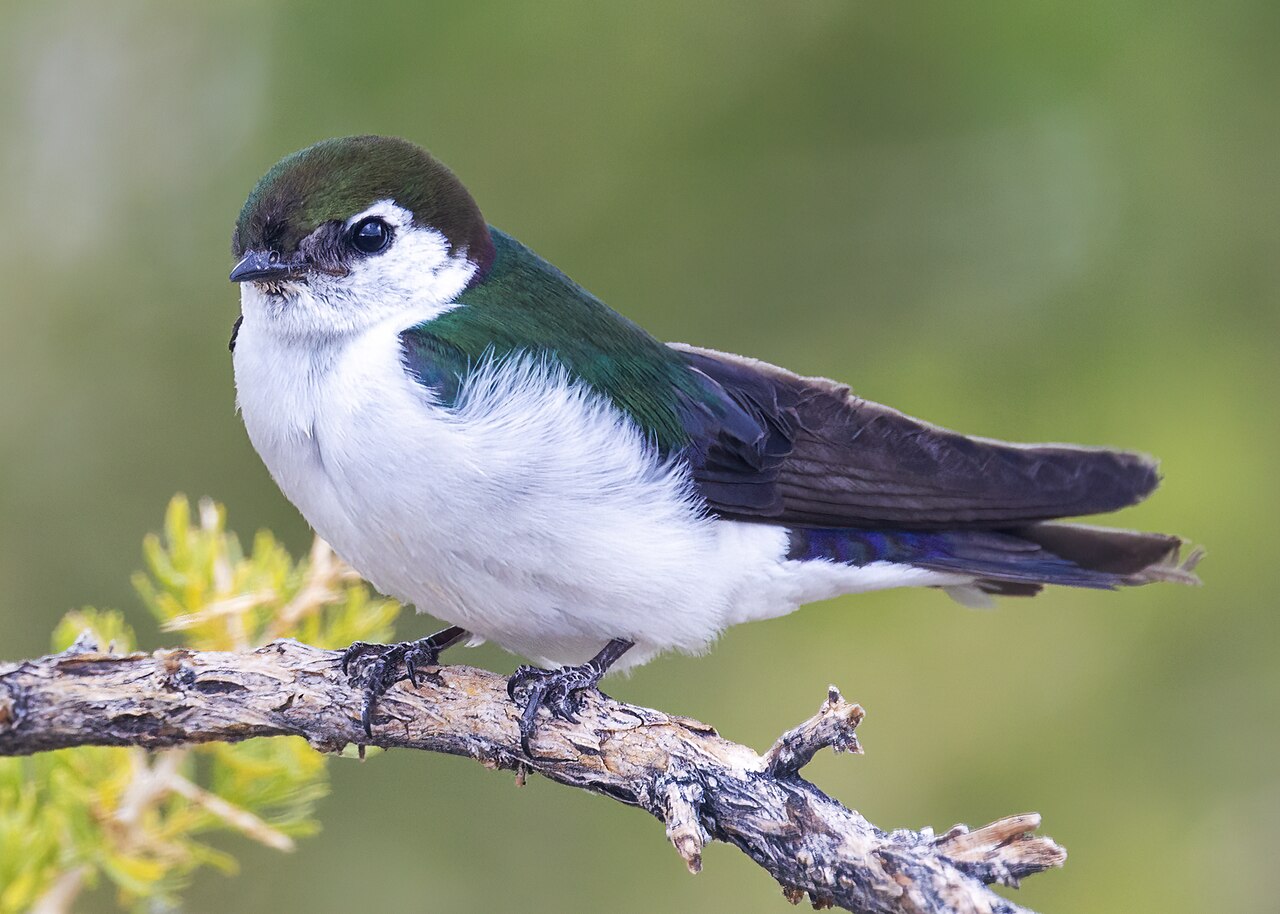
Violet-green swallows are another species often misidentified. That being said, tree swallows have no white around the eye or rump; instead they have a black mask (like a little bandit), eye-to-bill!
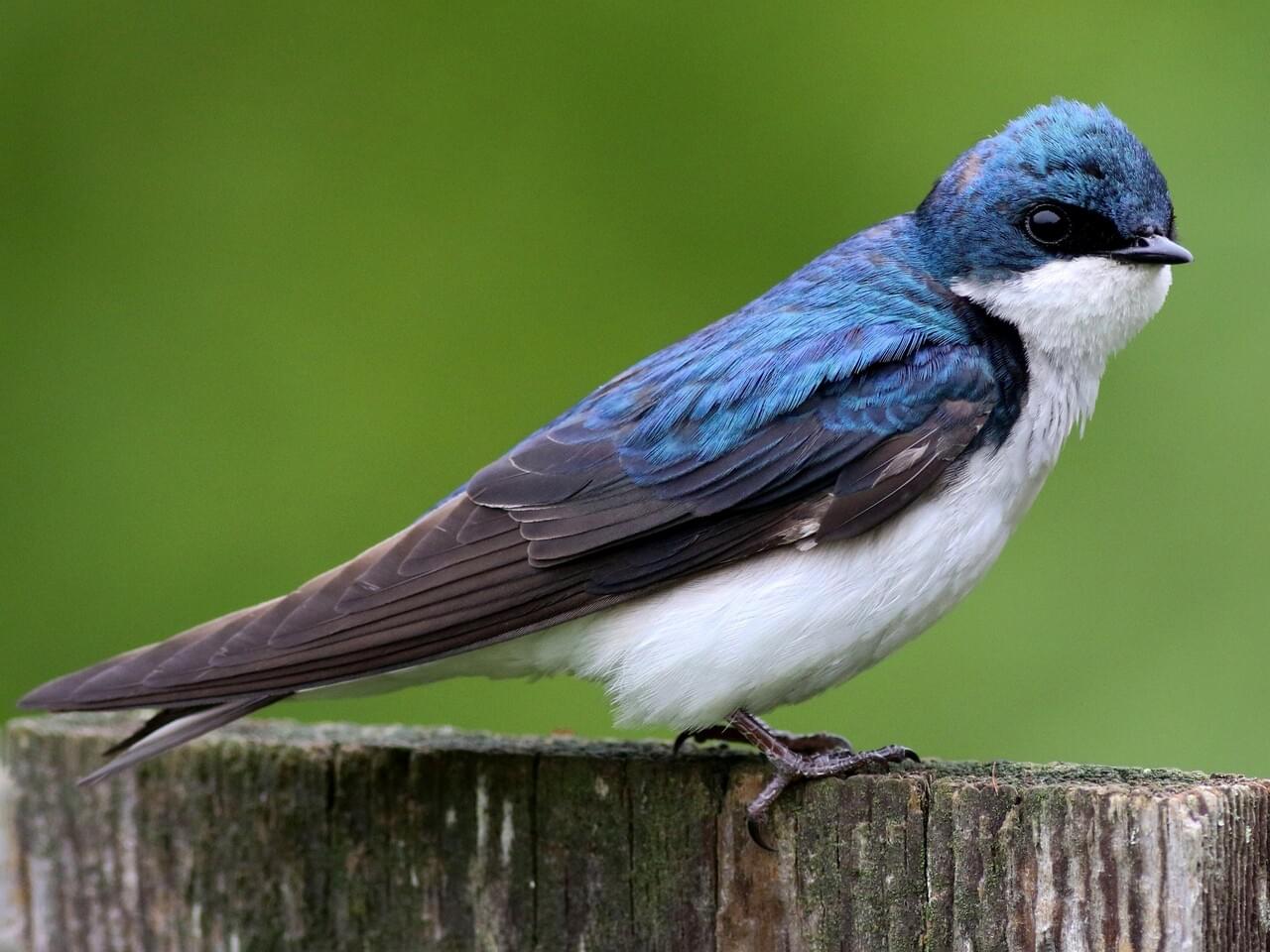
Adult male and after second-year (born two or more years ago) female tree swallows show no sexual dimorphism (sexual dimorphism is when genders of the same species show differences other than reproductively), especially from a distance. Both have that iconic and beautiful shimmery blue plumage. Juveniles can look a lot like females younger than second-year; however, unlike the females, there’s no hint of colour aside from brown in their dorsal (back) feathers (Stutchbury and Robertson 1987).
Size is also fairly consistent between male and female tree swallows, with a wingspan measuring around a standard ruler (30 cm) on the smaller side, or a standard knitting needle (35 cm) on the larger. Their body is the size of an average pen or pencil (12 cm-15 cm), and their weight is light to allow flight and fast maneuvering; on average, they weigh around a tablespoon of honey (20 g) (Cornell Lab c2026).
AS THE CROW FLIES…. OR THE TREE SWALLOW. WHERE DO THEY LIVE?
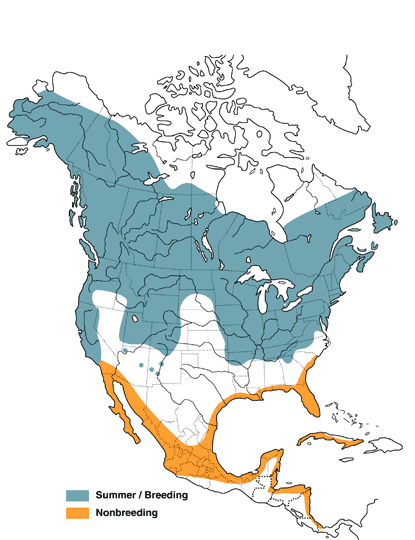
Unsurprisingly, spring and summer is the breeding season of tree swallows, ranging from Alaska, across most of Canada, and covering around half of the United States. Cavities, man-made (i.e. nest boxes) or natural (i.e. woodpecker hollows no longer in use, burrows, tree stumps), are where tree swallows will nest (Tree Swallow… 2019). They’re unable to make their own “hidey-holes,” which is why they rely so much on old ones from other sources.
Breeding grounds are favoured when they’re around some sort of wetland— marsh, pond, swamp, lake — but they will take up nests away from water if needed. The water is important for providing an all-you-can-eat insect service. Tree swallows are far from picky with their meals, eating flies, spiders, moths, even fish bones or shells (clamshells, eggshells) and everything in between (Cornell Lab c2026).
During the nonbreeding term, tree swallows migrate (potentially as early as July) south, around the southern United States or Mexico (Tree Swallow 2026a). They inhabit areas like their breeding grounds, minus any necessary burrows or deep pockets. Whenever they migrate, summer or winter, it’s in swarms. Often referred to as a “bird tornado”, they take the advice of “traveling in pairs” to the extreme.
FUN FACT!
Tree swallows will consume plant matter (bayberries, wax myrtle, seeds) if insect levels are low, usually around winter. Per year, approximately 20% of their diet is plants (Tree Swallow 2026a).
NO LONGER FLYING BLIND: TREE SWALLOW BEHAVIOUR
Tree swallows are one of the easiest species in North America to study in-detail, and it has to do with their faithful behaviour… to their nesting habits and boxes. Where partnering is concerned, variability is not uncommon. A tree swallow can have the same mate for multiple years, either being true blue, or having another mate close by. The nests are made almost entirely by the female and composed of grass. Other knick-knacks can be added to fill any open holes (ranging from aquatic plants to cigarette filters) (Cornell Lab c2026).
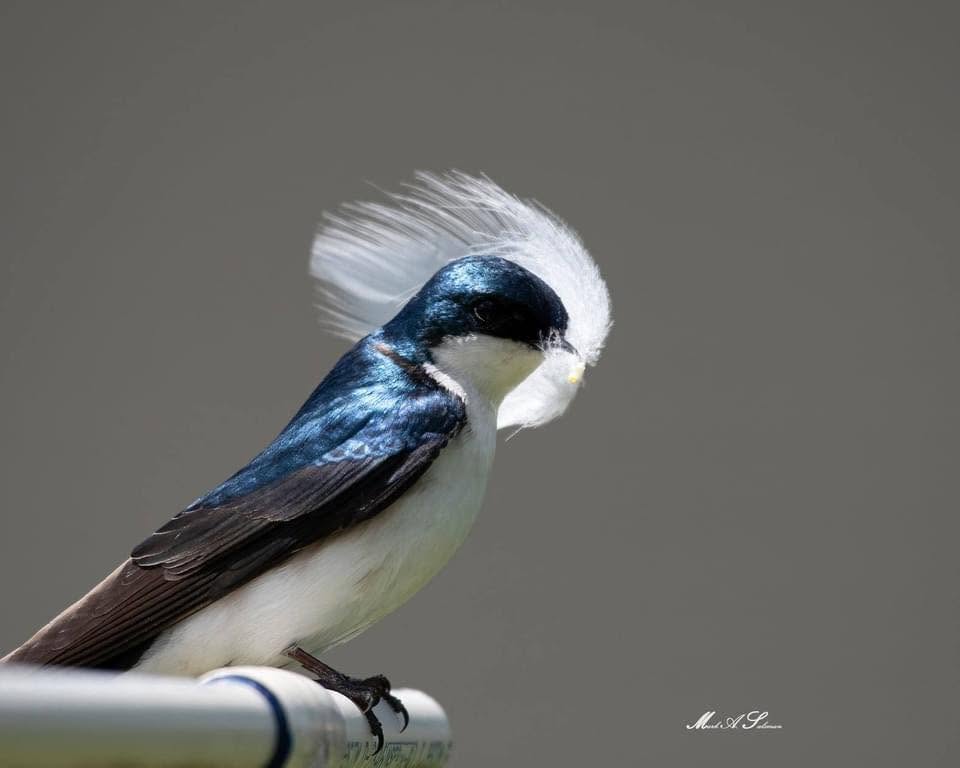
During nesting, they’ll line their nests with plumage, but playing with them sometimes takes priority. Tree swallows will nab feathers that have come loose, twisting and turning to show off their skills in the air. They’ll drop it, only to nosedive and catch it right before it hits the ground! On top of playing by themselves, they’ll dodge and weave around other tree swallows trying to steal the feather away (Tree swallow… 2026). It’s an excellent example of how social these birds are.
The interesting mannerisms don’t stop with feather romping. Bathing is achieved through skims and dips over bodies of water, drying off through flight (Cornell Lab c2026). Despite their socialness, in the heart of breeding season they become intensely territorial around the immediate nesting site. They talk in calls that sound liquidy, with high pitched chittering or tweeting; to come across in a more aggressive manner they may chatter harshly (Sibley 2016). To listen to these calls, watch the video below!
FUN FACT!
Tree swallows glide more than any other swallow (Cornell Lab c2026).
LEAVE NO STONE UNTURNED: RECENT RESEARCH
FEATHERING ONE’S NEST
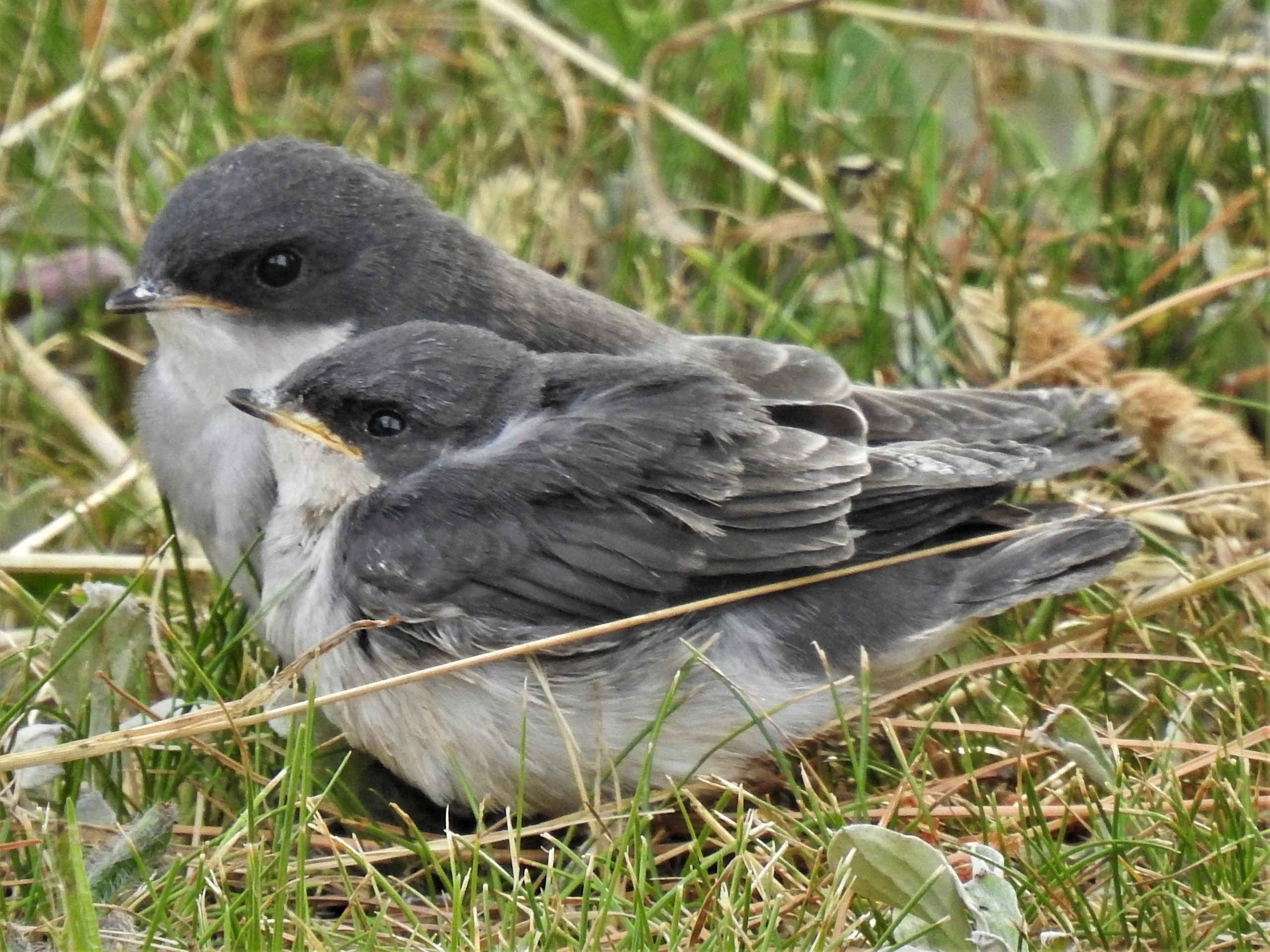
“The Fear of Feathers Hypothesis” is a hypothesis that was proposed regarding a birds motivation to add feathers to their nest; a reason they do so may be to insinuate to other birds the last resident was preyed on (Stanback 2024). Studies have given evidence to support this hypothesis with tree swallows: they’re easy to examine, given how reliably they choose where to nest. A recent study has also shown the opposite in the long-term, with no observable avoidance to these decorated cavities. It’s possibly used as an effective short-term strategy. Other birds may be deterred long enough for the swallow to return and protect their nest (Stanback 2024). More studies are needed to be sure.
Tree swallows are interesting in this feathery regard. They’re highly known to collect feathers (their own and others, as pre-mentioned) and recent research has shown they’re flexible with the feathers they take— examples include waterfowl, landfowl, pigeons and doves, cranes, gulls, birds of prey, owls, woodpeckers, and songbirds (Wolfe-Merritt et al. 2022).
Recent explorations into other purposes for lining their nests gives evidence for insulation and protection from external parasites (like mites or lice), both of which help fledglings grow into juveniles. When studies were done, and chicks weren’t given extra feathers in the nesting, their growth rates were lower and they had a noticeable increase in ectoparasites (Winkler 1993).
SEEING THE FOREST FOR THE TREES: LOOKING INTO TREE SWALLOW CONSERVATION
As of now, tree swallows are labeled a “least concern” (Cornell Lab c2026). They’re most hindered by the usual necessities — food and shelter (insects and available nesting cavities). Minor worry as they are, climate change research is still being done to examine how, or if, they’re being affected. Investigation into this relationship shows with increasing temperatures tree swallow breeding (first dates) are beginning earlier (Lombardo 2024). Earlier dates pose risks, including increasing time lags with food sources or young chicks being susceptible to cold snaps (deep drops in temperature; brief, but vicious) (Garrett 2022). Cold snaps are so dangerous because of their mortality rates, both by hypothermia and famine. Research on how this will continue to change and affect tree swallows is still in progress. It’s hard to find easy and simple ways to help; however, a fantastic way to make sure no swallow goes without a home is by putting up nest boxes.
A FOREGONE CONCLUSION
The next time you see a streak of blue in the air, accompanied with a forked tail, stop and take a look! There’s a good chance it’s a tree swallow. They’ll show off their remarkable gymnastics, and you can show off your knew-found knowledge to the people around you. There’s nothing not to love about these feathery blue missiles!

REFERENCES
Carson K. 2025. What’s this Bird? — American Birding Association (ABA). Facebook [Internet]. [accessed 2026 Nov 14]. Available from: https://share.google/ei6FRpS3n55AHQnGD.
Garrett DR, Lamoureux S, Paquette SR, Pelletier F, Garant D, Belisle M. 2022. Combined effects of cold snaps and agriculture on the growth rates of Tree Swallows (Tachycineta bicolor). Canadian Journal of Zoology. 100(10). https://doi-org.ezproxy.viu.ca/10.1139/cjz-2021-0210.
McCormick A. 2025. Bird of the Month: Tree Swallow. Eastside Audubon [Internet]. [cited 2026 Nov 14]. Available from: https://www.eastsideaudubon.org/corvid-crier/2025/6/tree-swallow.
Larry J. 2009. Tree Swallows Migrate North In Early Spring To Nest. The Birders Report [Internet]. [accessed 2026 Nov 14]. Available from: https://thebirdersreport.com/2009/04/28/tree-swallows-migrate-north-in-early-spring-to-nest/.
Lombardo MP, Wagner N, Laughlin JM, Otieno S, Rosendall L, Voetberg C, Hoban A. 2024. First egg dates of Tree Swallows (Tachycineta bicolor) nesting in boxes in west Michigan advanced with increasing spring temperatures between 1993 and 2018. Journal of Field Ornithology. 95(1). https://doi.org/10.5751/JFO-00434-950112.
Miller CR, Houtz JL, Mejia N, Morris NJ, Pipkin MA, Shankar A, Uehling JJ, Williamson JL, Vitousek MN. 2024. What Can Tree Swallows Teach Us About Biology. Frontiers for Young Minds [Internet]. [accessed 2026 Nov 14]. Available from: https://kids.frontiersin.org/articles/10.3389/frym.2024.1274157.
Salsman M. 2026. Wildlife World Photographers. Facebook [Internet]. [accessed 2026 Nov 17]. Available from: https://www.facebook.com/groups/wildlifeworldphotographers/posts/2839142529614710/.
Sibley DA. 2016. The Sibley field guide to birds of western North America. 2nd ed. New York (NY): Alfred A. Knopf. 308 p.
Stanback MT. 2024. Feathers in nest boxes do not prevent or delay nesting by Eastern Bluebirds (Sialia sialis), Tree Swallows (Tachycineta bicolor), or Carolina Chickadees (Poecile carolinensis). Journal of Field Ornithology. 95(4). https://journal.afonet.org/vol95/iss4/art3/JFO-2024-560.pdf.
Stutchbury and Robertson. 1987. Two Methods of Sexing Adult Tree Swallows Before They Begin Breeding. Journal of Field Ornithology. 58(2): 236-242. https://digitalcommons.usf.edu/cgi/viewcontent.cgi?article=1698&context=jfo.
The Cornell Lab of Ornithology: All About Birds. Tree Swallows [Internet] [accessed 2026 Nov 15]. Available from: https://www.allaboutbirds.org/guide/Tree_Swallow/lifehistory.
Tree Swallow. 2026a. Audubon [Internet]. [accessed 2026 Nov 14]. Available from: https://www.audubon.org/field-guide/bird/tree-swallow.
Tree Swallow. 2026b. Wikipedia [Internet]. [accessed 2026 Nov 17]. Available from: https://en.wikipedia.org/wiki/Tree_swallow.
Tree swallows and feathers. 2026. BirdNote [Internet]. [accessed 2026 Nov 15]. Available from: https://www.birdnote.org/podcasts/birdnote-daily/tree-swallows-and-feathers.
Tree swallow (tachycineta bicolor). 2019. Operation SPLASH (Stop Polluting, Littering and Save Harbors) [Internet]. [accessed 2026 Nov 14]. Available from: https://operationsplash.org/2019/08/04/tree-swallow-tachycineta-bicolor.
Violet-Green swallow. 2026. Wikipedia [Internet]. [accessed 2026 Nov 14]. Available from: https://en.wikipedia.org/w/index.php?title=Violet-green_swallow&oldid=1380710919.
Wandering Sole Images. 2013. Tree Swallow Singing [Internet]. [cited 2026 Nov 17]. Available from: https://youtu.be/-_TklvJC5aE?si=3dDb0VvdBOGltmmj.
Winkler DW. 1993. Use and Importance of Feathers as Nest Lining in Tree Swallows (Tachycineta bicolor). The Auk. 110(1): 29-36. https://digitalcommons.usf.edu/cgi/viewcontent.cgi?article=22454&context=auk.
Wolfe-Merritt CJ, Hartman LE, Barragan EM, Hellman BM, Pigott S, Rodriguez-Ferraro A, Tori WP. 2022. Identity and characteristics of feathers used as lining in Tree Swallow (Tachycineta bicolor) nests in Indiana and Ohio. The Wilson Journal of Ornithology. 134(3): 473-484. https://www.proquest.com/docview/2724350712?pq-origsite=summon&sourcetype=Scholarly%20Journals.
Love it!
I’ve definitely mistaken violet-green swallows and tree swallows before. The tree swallows’ social complexity was new to me as well. Thank you for bringing my attention to this underrated species!
They’re definitely easy to mix up (plus they move FAST), I know I have a couple times! It doesn’t help how tree swallows can reflect green and purple too! Definitely interesting and social birds, I’m glad I could bring some attention to them and could help with ID-ing them .
What a wonderfully woven tale! Thank you for the great read!
I have a question regarding their aerial “playing” behaviour with their dropped feathers. Do you know if this behaviour is particularly exhibited in younger birds or is it consistent throughout different ages? The concept of “play” in non-human animals is so interesting! This example makes me think of juvenile crows playing in the wind, or sledding off of roofs with plastic lids.
Of course, I’m so glad you liked it!
The behaviour is most often shown when nests are in the process of being built because that’s when they care about collecting feathers. So less of an age reason and more of a timing. It’s likely rooted in a more “logical” purpose (competition and showing off) but it’s still a very interesting tidbit that makes them unique and fun!
I love that fact about crows, especially the footage of them sledding. Their antics likely come from more of a true spontaneous bit of fun (unless it’s a way to impress the ladies with how far they can sled)!
Such a wonderful read I love it!!
Very interesting to learn more about tree swallows, thank you for giving us such a wonderful read about this incredible species.
I’m thrilled you enjoyed the read! Once breeding season is back around take a look for them! They’re truly incredible in the air and it’s cool to see them fly around : )
Wow I love how detailed this is. Written by a expert
Hi Emylia! This blog was such a fun read and your descriptive language throughout was amazing! I loved the addition of fun facts through the blog, it helped in breaking up the more dense information filled paragraphs but still helped in learning about the tree swallow!
Hey Isabella! Thanks for the comment and compliment : ). I’ve always found myself to be detailed when writing, so knowing that, the hope was some fun facts and pictures would break it up and i’m glad it did!
I think birds are fascinating and the tree swallow is no exception! I love being able to tell apart birds from their feathers and how best to identify them. This blog made it easy to learn about the tree swallow while also being a fun read, can’t wait for more.
It really gets more fascinating the more you learn! I’m glad it was an easy to understand and fun read!
What a beautiful way to write about these little guys! I was hooked the entire time. They’re so beautiful and playful, I might not have had a favourite bird before but I definitely have one now!!
Thank you so much for the read and comment! Happy to inspire more tree swallow fans : ).
Such a beautiful bird! If one were to go looking during the summer in a vancouver island wetland, how likely would they be to find a tree swallow?
Great question! The chances of finding a tree swallow would still be very likely if it’s summer in June. If you live by a marsh or lake you’ll probably see one! Once you get into July probability will slowly start to dwindle because of how early they can migrate south.