The Prelude: Reflections and Illuminations

By Morgan Campbell

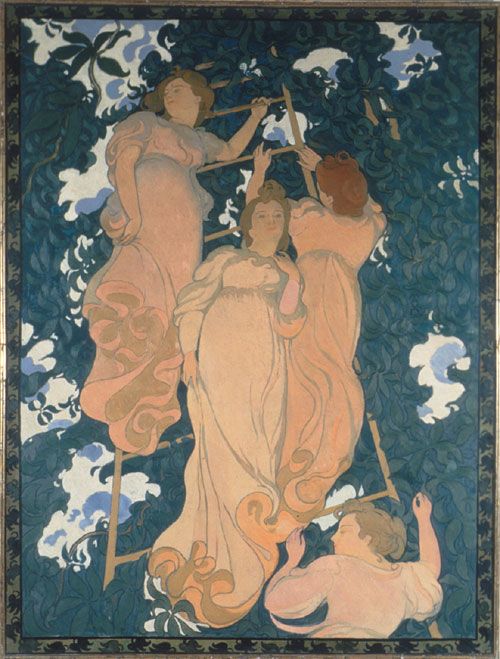
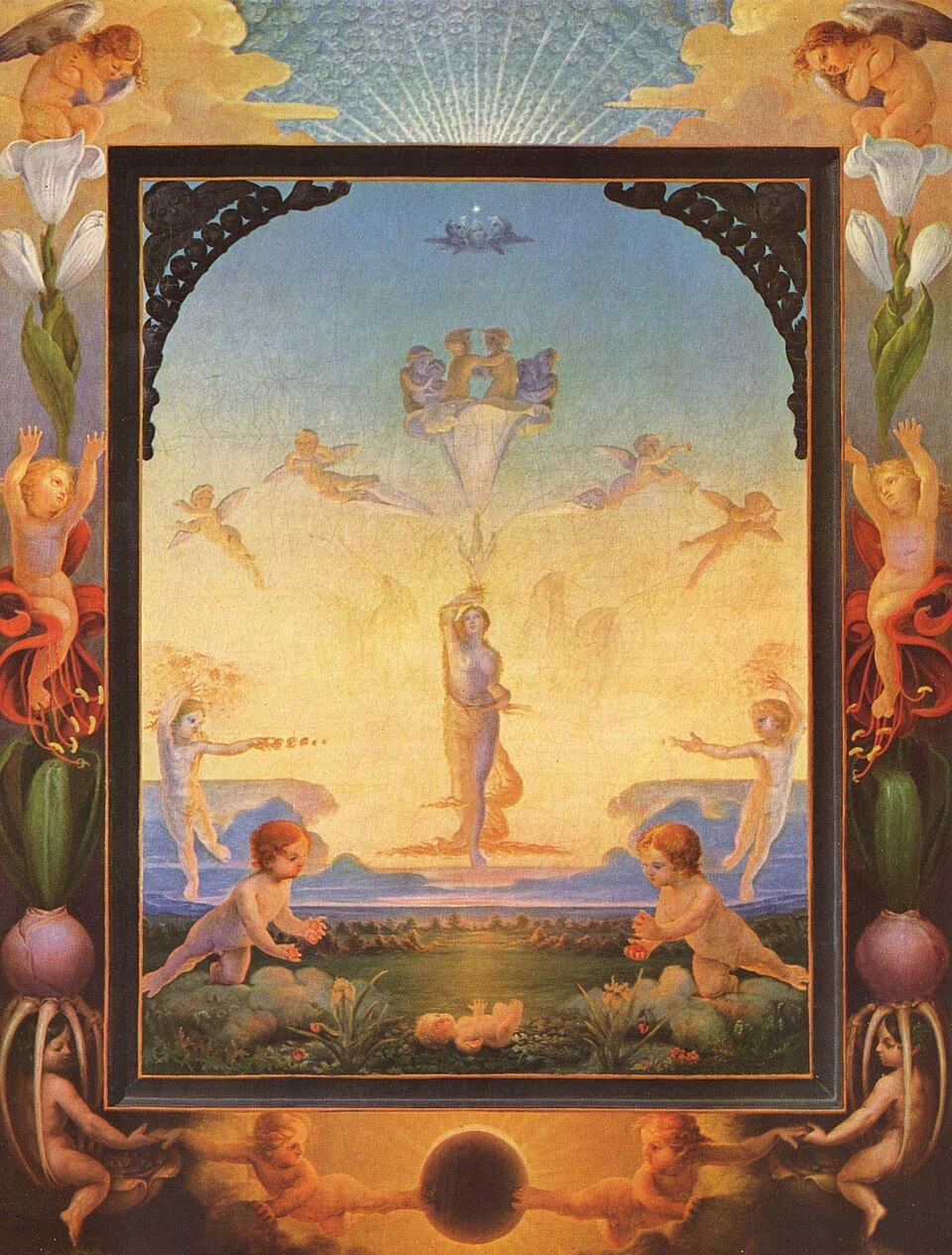
Philipp Otto Runge, The Morning, 1808

Literary critic M.H. Abrams suggests in his 1953 work The Mirror and the Lamp that the poets of Romanticism are understood not as “mirrors”, which are reflective of the world, but rather as “lamps”, which serve to illuminate the world. This essay seeks to define what, exactly, is meant by the use of these motifs (‘lamp’ and ‘mirror’) in their connection to Romanticism, and more specifically, how they may apply to Romantic poet William Wordsworth and his collection, The Prelude. Ultimately, this essay concludes that Wordsworth is not easily categorized as either distinctly mirror or lamp-like but may rather be understood as a combination of both. This analysis finds evidence of a deeper complexity in The Prelude, which deviates from the traditionally Romantic pursuit of pure self-inquiry and passion-centred expression. In his poem, Wordsworth conceives of a creative process that is centred around the imagination, a power which possesses a capacity to integrate both passion and reason. The speaker defines the imaginative power, further, as a form of collaboration with a creative source, allowing for an illuminative reflection of both the speaker’s internal world and external environment. Ultimately, Wordsworth’s poetic process is, uniquely, a type of reflection that is both mirror-like in its accurate portrayal of the world, and lamp-like insofar as it arises from self-inquiry and inward contemplation.  

Before applying these symbolic images (the lamp and the mirror) to Wordsworth, it is important to establish how they might be defined and applied in the context of Romantic poetry. In his lecture on Jean-Jacques Rousseau—a figure influential to both the Enlightenment and Romantic period—Dr. Mark Blackell described the Romantic ideal of the artist and the new vision of the modern self. For the Romantics, it was understood that within the individual lay a natural depth which, if plumbed, allowed for the self to “commune with some natural source as the wellspring of creativity” (Blackell, 00:08:58-00:09:14). The Romantics placed an emphasis on the individual, the inward state, and a particular value placed on the experience of emotion and passion. This movement came as a response to the Enlightenment, which valued reason over the emotions and placed epistemological value on rationalism—an affirmation that knowledge could be procured purely via contemplation of the mind and intellect. By this line of distinction, it makes sense for Abrams to refer generally to the Romantic poets as ‘lamps’—that within their individual being could be found an internal source of light, through which the creative act of poeticizing would be seen as a type of illumination. By contrast, the thinkers and writers of the Enlightenment, for the sake of this analysis, could be categorized as mirrors—reflecting the world as it is, through concise analysis and rigorous reasoning.

In many aspects, The Prelude illustrates an image of the Romantic artist: a journey of inward investigation as a means of gleaning wisdom and knowledge about the world. The speaker begins Book Two by affirming his intent of self-inquiry, stating that though much has been unvisited, he has nonetheless “endeavoured to retrace / My life through its first years” (II, 2-3). Later, in Book Eleven, in an effort to regain hope and clarity after a period of being periled by reason, the speaker reaffirms the mission of self-inquiry, “find your way / To the recesses of the soul!” (11-12) and proceeds to draw from his memories as a method of healing and self-renewal. This process of self-inquiry to self-illuminate appears lamp-like, as Abrams might suggest. Still, the speaker in The Prelude describes his personal experience of illumination with more complexity:

A plastic power

Abode with me, a forming hand, at times 

Rebellious, acting in a devious mood,

A local spirit of its own

…………………………

An auxiliar light

Came from my mind which on the setting sun 

Bestowed new splendor, (II, 381-384, 386-388)

Here, the speaker refers to a source of power which is both a “spirit of its own” and yet came from his mind—it comes to aid him, and yet it is also of him. The power is self-determined, and yet found within the depths of the individual. This phenomenon is echoed in Book Eleven:

I had felt

Too forcibly, too early in my life, Visitings of imaginative power

For this to last: I shook the habit off  (XI, 251-254)

Here, the speaker describes his encounters with imaginative power as visitings which produce a lasting and profound impact. It is a power which is foreign to him, and yet, cannot be forgotten or removed from his being. For Wordsworth, this luminous, creative power that is the imagination is the ultimate source of poetic power. This creative process, insofar as it is a kind of communion resulting in illumination, does seem to support Abrams’ thesis that categorizes the Romantic poets as ‘lamps’. However, for Wordsworth, this imaginative process is undeniably also a type of reflection of the external world and reality itself. 

The Prelude centres around the speaker’s intense, lived experiences with the power of nature and his memories of the external world. In Book Two, Wordsworth offers a personal account of nature which places an emphasis on the sense-based, experiential elements of his encounters;

I felt the sentiment of Being spread

O’er all that moves, all that seemeth still, 

O’er all, that, lost beyond the reach of thought 

And human knowledge, to the human eye

Invisible, yet liveth in the heart, (II, 420-424)

In this passage, the speaker refers to the power of nature as something that can be felt, and that resides in the heart—it cannot be accessed with the physical eye or pure reasoning. This sense-based experience seems to align with the ideal of the Romantic artist. However, Wordsworth notes that this experience of nature is not a fictional, fanciful relationship but is an active communion, rooted in reality. The speaker claims of his relationship to nature: “I conversed / With things that really are” (II, 412-413). These poetic reflections are, as Wordsworth claims, true reflections of nature as it is. It is worth asking, then, why Abrams does not recognize these reflections of reality as being mirror-like. What might distinguish Wordsworth’s reflections of reality from, say, the mirror-like reflections of the Enlightenment thinkers that preceded him? 

In Book Eleven, the speaker makes a critique of the use of reason to project judgment onto reality:

Unworthily, disliking here, and there 

Liking, by rules of mimic art transferred

To things above all art. (XI, 153-155)

This passage outlines two of the speaker’s criticisms; the first is a criticism of the faculty of reason, which judges things as either likable or dislikable, secondly, the speaker is making an overarching critique of the rules of “mimic art”. This type of art is explained in Dr. Warren Heiti’s lecture as related to the “cult of the picturesque”: a cultural phenomenon wherein gallery goers were inspired by landscape artworks and proceeded to go into nature and attempt to recreate their experience by the use of mirrors (Heiti, 00:54:10-00:57:40). Wordsworth is critical of this “strong infection” (XI, 156) of the culture insofar as it failed to truly express the “spirit of the place” (XI, 163). It is plausible that Abrams, in his distinguishing of the lamp from the mirror, may have understood the concept “mimic art”, and forms of art that function similarly, to be categorized as a kind of mirroring, and that Wordsworth, being himself critical of this mimicry, must not be a mirror. Given all this, Abram’s theory potentially still stands: Wordsworth’s poetic process is self-inquiring, luminous, and lamp-like, and his own poetry critiques the flat reflections of nature rooted in pure reason and judgment. However, it is still worth investigating whether Abram’s distinctions are truly adequate in assessing the complexity of Wordsworth’s creative process. 

It is vital to note that despite his criticisms of reason, Wordsworth’s poetry is distinct from the tradition of Romantic poets insofar as he does not fully invert the reason-passion dyad for passion to ultimately preside over reason (Heiti, 00:04:20-00:05:30). He does not altogether seek the disposal of reason. In fact, his creative process relies on a synthesis of both reason and passion—but it relies on reason of a certain type. In Book Eleven, the speaker distinguishes two types of reason:

There comes a time when Reason, not the grand 

And simple Reason, but that humbler power 

Which carries on its no inglorious work

By logic and minute analysis (XI, 123-126)

In this passage, one type of reason is the humbler power, which analyzes through logic, and a second type of reason, referred to as “grand and simple”, is cited a few lines later as “the friend / Of truth” (XI, 135-136). The grand and simple reason does not make “distinctions” and “puny separations” (II, 222, 223) but, conversely, appears to unify, bring clarity, and exalt truth:

Of intellectual power, from stage to stage 

Advancing hand in hand with love and joy,

And of imagination teaching truth (XI, 45-47).

For Wordsworth, this fusion of the intellectual power of the mind with the passions of love and joy is the imagination at work—the process which allows for the speaker to both experience the sensations of nature and reflect cogently upon them. The imagination is, as the speaker states plainly, a teacher of truth. This creative process is articulated earlier in Book Two:

From Nature, and her overflowing soul

I had received so much that all my thoughts 

Were steeped in feeling. (II, 416-418)

The image of thought being steeped in feeling suggests, for the speaker, a necessity of both faculties working together. One is suffused in the other, and this is the direct effect of truly experiencing nature—in fact, the source of creative power is, here, nature herself. 
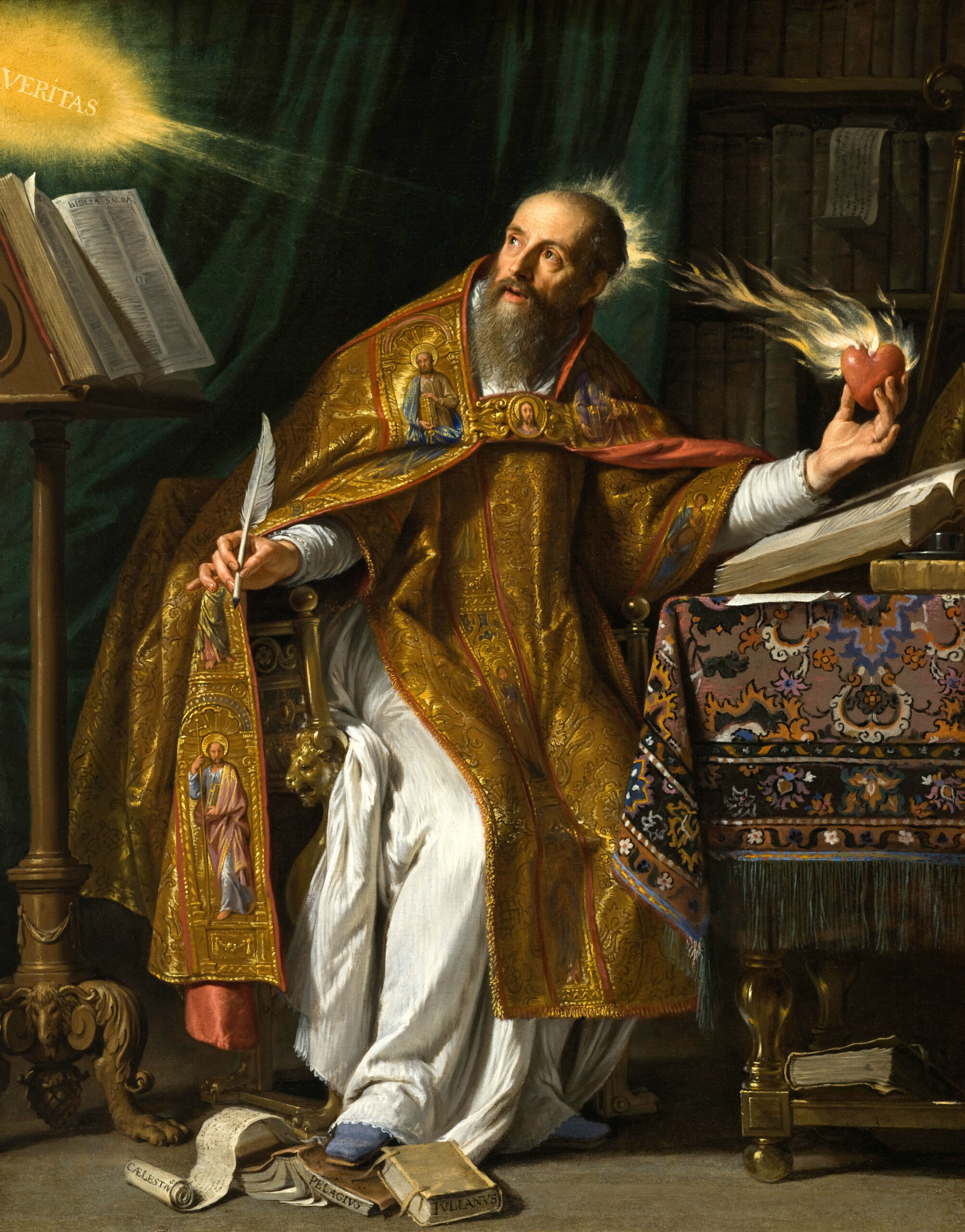
Saint Augustine

Still, it remains to be answered if this element of ‘steeping’, or the fusion of passion and reason, found in poetry, brings a challenge to Abram’s thesis. Perhaps, if we understand the work of mirroring to be a simple, plain reflection of the external world, then Wordsworth is not a mirror. However, one might argue that Wordsworth’s poetry does reflect the world in a way that truly captures the “spirit of the place” (XI, 163). He does this through integrating his experience of the world, allowing his thoughts and sensations to ‘steep’ over time, and ultimately by transmuting this experience into a piece of art. Furthermore, Wordsworth’s reflections have long found resonance with readers, suggesting that his poetry functions as a mirror of shared experience. In reflecting on The Prelude, I find it, personally, challenging to analyze the poetry—to dissect it with “logic and mute analysis” (XI, 126). Yet, there is a sense of resonance found in the work, an inscrutable sense of one’s own lived experience and memories of nature being activated and reflected in the work. The poetry serves, then, as both a mirror toour own experiences of the world and the powers of nature, as well as a source of illumination found within the poignancy of personal memories. 

Ultimately, it appears plausible that Wordsworth may symbolize a lamp, as Abrams suggests, insofar as a lamp is not a singular, solitary source of light in and of itself, but rather illuminates via its connection to a wider circuit of energy (for Wordsworth, this source being the power of imagination and of nature herself). Yet, as is argued, mirror-like qualities are also evident in The Prelude insofar as the speaker reflects on the world around him by presently experiencing nature as it is and communicating these sensations. What results in The Prelude is an artistic expression that is neither a distorted reflection, nor a flat mimicry, nor a pure, unexamined sensation. Rather The Prelude is an expression of a creative communion with the power of imagination and the profound forces of nature, wherein illumination and reflection are invariably intwined. 

Works Cited

Blackell, Mark. “Mark on Rousseau LBST 370 2026”, Video Lecture, 6 January 2026. Vancouver Island University. 

Heiti, Warren. “Warren’s Wordsworth Lecture Part 1”, Video Lecture, February 2026. Vancouver Island University.

Wordsworth, William, The Prelude, edited by Stephen Gill, Oxford University Press, 2010.
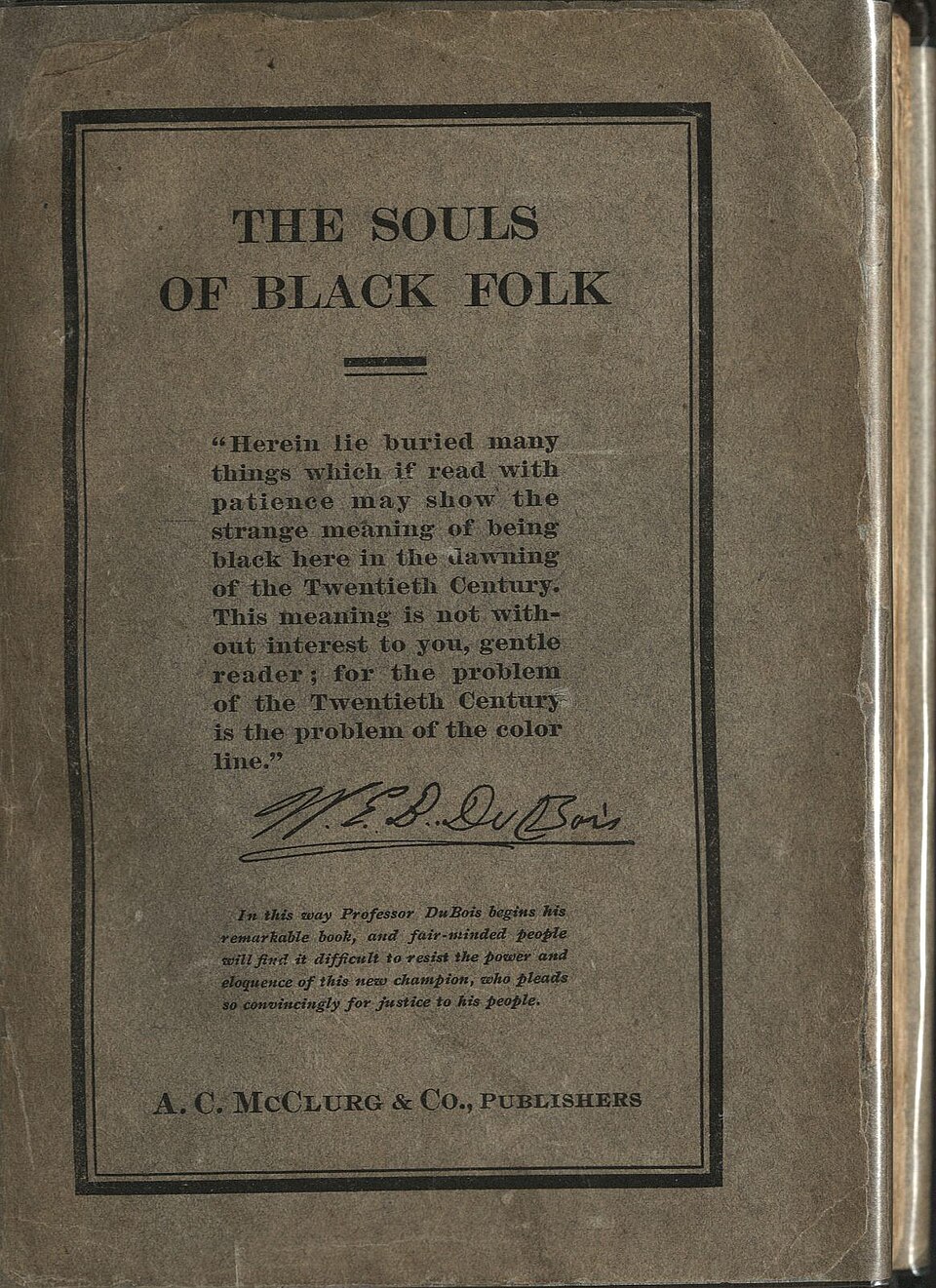
Veiled Sight and Seeing: The Self and the Other in W.E.B. DuBois’ The Souls of Black Folk

By Clio Roe-Leduc

The dust jacket cover of The Souls of Black Folk by W. E. B. Du Bois

The “veil” or “double consciousness” as described in DuBois’ seminal work The Souls of Black Folk is an expression of a rich and highly layered experience. What does it mean to be capable–to be forced into developing the capability—of double consciousness? In what ways does it affect people, and how was this effect enforced in the first place? This ‘double consciousness’ is at once a response to an imbalanced power relation which enables one to see the truth of that power relation, the result of a projection both real and unreal, a consequence of the “veil” of ignorance, and a barrier in the way of fully realizing true self-consciousness. Written in the American era of post-reconstructionist Jim Crow legislation and the context of the author’s experiences as a black man in a highly racially stratified society, DuBois’ conceptual framework is highly revealing of the spiritual and psychological violence of a systemically racist culture. In experiencing the consequences of the “veil,” from which emerges the phenomenon DuBois refers to as “double consciousness,” vision becomes visible in itself as implicated in the structures of oppression – and yet all this leads to the revelation of the “second sight,” which may allow the sight of the future which exists even beyond the veil. 

To articulate this specific internal experience, Dubois begins with the incident which, for the first time in his life, forces him rudely into confrontation and awareness of his distinction and difference from other children. In a moment “when the shadow swept across [him]” (7) and during an exchange among all the children who were freely mingling with one another, a girl—a newcomer—“refused [his] card—refused it peremptorily, with a glance” (8). The engagement, and possibilities that may emerge from that engagement, are rejected out of hand. Even among children, social engagement begins to require and imply a basic equality among peers–an equality which comes into conflict with a hierarchical social structure based on race. As this structure is a construction, it must therefore be policed, reinforced and enacted by the words of individual agents – through interactions even as small as this one. Therefore, the interaction, minor though it is, must be negative in both senses of the word. 

The peremptory refusal by an unknown newcomer is in one sense a negative experience for DuBois, because social rejection, whatever the reason, is naturally hurtful, especially for children. In another sense, it is negative in that the usual interaction does not exist. The experience is curtailed so severely that the harm is affected through an absence—the gap left behind when a small interaction (the exchange of cards) could have taken place, but when one player chooses simply not to engage. The otherwise unremarkable interplay of social life is disrupted by that refusal. Dialogue, like engagement, requires an interlocutor. As with respect to animist philosophies, certain modes of interaction are separated in classification by the simple requirement that all involved in the interaction have relational capacities. In other words, participants are capable not only of being related to, but also of responding by relating to in turn. A conversation needs both parties to be capable of acting as viable interlocutors, or it is, by definition, a monologue. Here, due to a misperception on the part of another child, DuBois is treated as a  person who is not allowed to act in the way that persons may–to enter into a dialogue as an equal, as a person who can respond, and who merits a response in return. 

The incident may have been short—but the impact on DuBois was profound. He experienced it as a revelation in understanding, meaningful not by itself in isolation, but through the connection with the psychosocial superstructures that became visible through the enactment of a racist hierarchy of white supremacist ideals. This gesture does not emerge from pure chance but is borne up out of a quagmire of entrenched social and spiritual disregard for the full personhood of black people, in accordance with that racist hierarchy. DuBois does not suggest that the act itself, or the girl, is in isolation responsible for the profound impact this moment had on him as a child. It is common enough that children may be cruel or careless to each other, amounting to no significant impact. The impact comes from the weight of what is made known to him at that moment. This is his first experience of seeing, through what he calls the “veil,” the presence of that racist hierarchy, and the difference which he now is aware of as separating him from the other children. 

It is significant that the denial of engagement is what precipitates this first awareness of this shadow. The girl has no true experience of him; therefore, the decision she makes is based on a judgement that considers only what she initially sees: the color of his skin, which she understands through a coding she has inherited from a biased social superstructure. That denial speaks to a judgment being made prior to any experience—the judgement must be made merely on the identification and racialization of DuBois as a black boy. In so doing, that judgement cordons off a bridge to the rest of the world, leaving him and those like him severely limited. However intelligent, capable, and emotive one might be, there will be no opportunities to show it to those who turn away their gaze, who do not wish to see. DuBois perceives, rightly, that this seemingly inconsequential stumbling block has far-reaching consequences. The path to the rest of the world, with all the “dazzling opportunities” (8) which he “longed for,” (8) is cut off at the first juncture—that of a willingness to engage as an equal with a racialized black boy. If one is blockaded at this initial moment, how is one supposed to progress at all?  

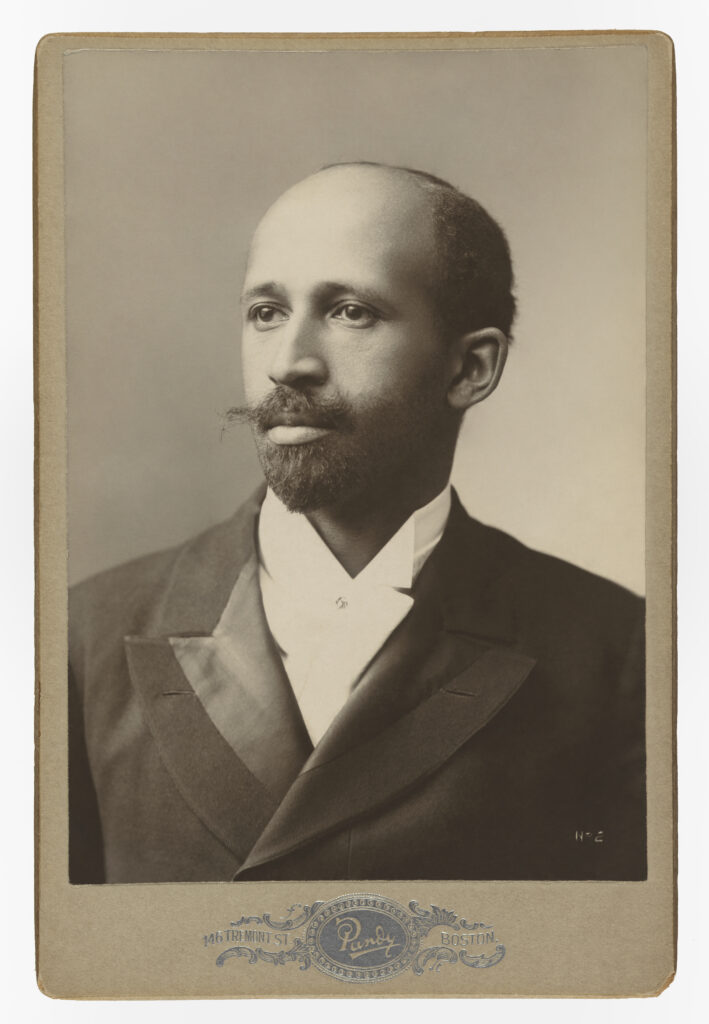
W.E.B. Du Bois by James E. Purdy, 1907

In DuBois’ words, the awareness “dawned upon [him] with a certain suddenness that [he] was different from the others; or like, mayhap, in heart and life and longing, but shut out from their world by a vast veil.” (8) It was not mere awareness that this imposed: by virtue of this awareness, he was made newly conscious—and newly self-conscious. However, this self-consciousness; this sense of how one exists in the world in relation to others, arrives through the eyes of a hostile “other.” The first “sight” one has of oneself is therefore inextricably linked to the veiled, misjudged, and hostile view of those ‘others’ through whom DuBois is made aware of himself. In an important sense the difference he locates is something that is external to himself. He is not different internally; “in heart and life and longing;” (8) to his peers, and yet a difference exists. It exists as it is attached to him, from outside, by a process of superimposition. The difference is not an internal flaw, but an external one—as emphasized by the brief glance upon which the girl based her judgment. There was no opportunity—no time—to judge based on anything but external features. The difference begins through a mistake in vision, which in turn creates a material outcome. The veil of ignorance distorts vision: instead of seeing what is there, one sees only what one expects to see. What the girl sees, when she looks (before she turns away) is the veil–she is not, in fact, seeing him at all. 

That veil of ignorance, however insubstantial, nonetheless has real repercussions. The perception of the difference is based on shaky foundations, and thus results in a flawed evaluation. However, the result of action taken because of that mistaken evaluation creates a very real division in the world—the misperception itself creates the difference. The misreading of reality recursively creates the reality it perceives, through enactments that are predicated on a faulty assumption. By acting as though an imagined difference is real, a difference is created. The discrimination itself is real. The lack of options is real. It has consequences in the world, by creating and maintaining the constraints on people living under this system. 

This is the root of the “double consciousness”: the misperception by privileged others has a force and a power to it, such that it overrides even one’s own self-consciousness. That an outside perspective can interfere and intrude on one’s sense of self is a facet of the violence inherent in systems of oppression which can be difficult to see clearly, or to articulate. The misperception, this veil which obscures the most fundamental aspects of one’s humanity, is then incorporated into the way that DuBois, and other black children like him, conceive of themselves. There emerges “this sense of always looking at one’s self through the eyes of others, of measuring one’s soul by the tape of a world that looks on in amused contempt and pity” (8). Sight and seeing are mechanistically central to understanding this experience—people are reliant on sight as a way of parsing the world before them, but mental constructs (such as prejudice) are incorporated inextricably into that process. Metaphorically, then, the sight of internal objects of perception are equally subject to interference by these associations, as in the “sight” and understanding of oneself. 

The lens through which one sees oneself, then, is that of the gaze of an external hostile party. However, that is not the only model and way of seeing. In fact, the “doubling” is a result of the fact that this veil, or lens, is not total. There emerges, inevitably, some awareness of oneself as “like […] in heart and life and longing,” (8) a degree of true perception of one’s own inner worth and capacity, however contested. To the extent that “the Negro is a sort of seventh son, born with a veil, and gifted with second-sight in this American world⁠,” (8) the second sight can be understood as a counterbalanced or compensatory kind of vision, emerging from the liminal and “doubled” position black Americans inhabit. Although double consciousness inhibits “true self-consciousness,” (8) it nonetheless enables a certain kind of awareness to emerge. Having intimate experience of the contradictions and absurdities of a racist paradigm renders it visible—much as the veil itself becomes visible to DuBois even as it comes to obscure him from himself. The degree to which these two contradictory views of oneself come into conflict produces the struggles of double consciousness. DuBois, with others like him, are forced to withstand the tensions of being at once “an American, a Negro; [with] two souls, two thoughts, two unreconciled strivings” (8).

From these two unreconciled strivings, a tension emerges which seems characteristically generative – one cannot help, with twinned souls and thoughts in one body, to be in a state of constant internal dialogue. Dialogue is a process through which interplay and intercourse produce change – in oneself or in the world. The second sight grants one a special lens through which to see the world revealed, with its illusions and pretenses made starkly apparent. This drives a perpetual motion outward, seeking to reconcile this internal and external dissonance. For DuBois, it is in search of education, in the “the longing to know,” (11) to see, with vision unclouded by any veil, that the possibility and hope of a resolution arises. “In those sombre forests of his striving his own soul rose before him, and he saw himself⁠—darkly as through a veil; and yet he saw in himself some faint revelation of his power, of his mission. He began to have a dim feeling that, to attain his place in the world, he must be himself, and not another” (11). This search itself is no small feat – and yet the circumstances which have made such an internal dissonance in the first instance have also produced a clarity of vision, a capacity for doubled understandings, which imply that one is beholden to that effortful change. If one is ever to reach a state of full self-actualization, attaining true self-consciousness requires a sea-change – not just in oneself, but also in the world. To hold the visions of a dual sight of one’s own worth and of the veil of ignorance may require no less. 

Works Consulted

DuBois, W. E. B. The Souls of Black Folk. Project Gutenberg, 1903/2021, https://www.gutenberg.org/ebooks/408?msg=welcome_stranger.

Liberalism’s Threat to Liberal Education: A Critical Analysis of Patrick J. Deneen’s Regime Change

By Henry Sipos

Patrick J. Deneen’s (2023) Regime Change: Towards a Postliberal Future is a criticism of modern-day liberal ideals of individualism and self-creation. Deneen argues that classical liberalism (conservatism), progressive liberalism, and Marxism are all progressive liberal ideologies that intentionally and institutionally set up a class of elites to be the vanguard of change. These ideologies all share the common goal of transforming human and social organizations to promote the individual freedom to pursue one’s own ends as they desire, free from the constraints of tradition. As Deneen correctly highlights, in pursuit of these ends, they uproot the ancient tradition of the common good that emphasizes stability, continuity, and predictability in favour of transformation. In this way, progress seeks to abandon ancient civic education’s natural conceptions of good and evil, leading to a polarized society without a moral compass to guide individuals’ lives. While Deneen highlights real problems in liberalism, his critique overlooks the potential value in progressive liberalism and misrepresents the new elites’ intentions. 

U.S. Capitol – oil painting by Allyn Cox – The Monroe Doctrine (1823), plus a quote from President Franklin D. Roosevelt (1940).

 Deneen argues that liberalism, due to its emphasis on individuals and their contractual relationship with other individuals, instead of creating greater equality and freedom for all, as promised, gives birth to a new form of despotism; the creation of a new class of elites, Deneen calls the managerial class. These elites encompass the educated class that exercises its power through non-governmental institutions. They operate in bureaucratic and managerial positions within quasi-governmental corporations such as universities, managerial institutions, the media, and the arts. As Deneen critiques, this new class views itself as the vanguard of progress and the conservative majority as the obstacle to achieving moral transformation. He argues that the managerial class participates in an act of self-deception, seeing themselves as the oppressed while upholding oppression through their authority over the powerless conservative majority. Iris Marion Young’s (1990) Five Faces of Oppression provides a framework to understand Deneen’s claim that the executive class misuses their privileged role, perpetuating powerlessness. Powerlessness is a form of oppression defined as, “a division structured by the social division of labour between professionals and non-professionals. Professionals are privileged in relation to non-professionals, by virtue of their positions in the division of labour and the status it carries. Non-professionals suffer a form of oppression in addition to exploitation” (Young 56). In other words, the managerial elites exercise power over the real oppressed, which Deneen defines as the “enculturated lower and working class” (Deneen 35), who have no power to wield authority themselves. Thus, the conservative majority, by virtue of their position, are situated to follow orders of the professional class. 

As Deneen sees, the executives are attempting to eliminate structural forms of oppression, which are upheld by the conservative majority, through enforcing ideological policies that influence people from the top down. According to Deneen, progressives mistakenly believe that they are fighting for freedom for all: however, by imposing their moral agenda, instead of freeing individuals, they encroach on the interactions and behaviours of the lower—and working-class people, thereby denying their traditional moral values. Deneen argues that in this process, progressives reject ancient conceptions of natural good and evil in favour of subjective morality. The liberal arts have a thick conception of universal human goods; they endorse a historically informed vision of human flourishing and specific universal intrinsic values forming the foundation of a life well-lived, rather than just a thin set of individual rights. As such, liberal arts are a threat to the progressive ideal of living as one pleases. This criticism seems to stand strong; by abandoning tradition as an obstacle to progress, progressives discard ancient wisdom, leaving humanity without a shared moral framework to guide behaviour. Deneen argues that progressives adopt John Stuart Mill’s (1859) harm principle described in On Liberty, as the standard for judging good and bad. Mill writes, “That the only purpose for which power can be rightfully exercised over any member of a civilized community, against his will, is to prevent harm to others. His own good, either physical or moral, is not a sufficient warrant” (Mill 25) This statement supports that an individual may do as they please as long as their actions do not harm others. This principle reduced morality to subjective judgment of harm, undermining the shared conception of the common good. Thus, while the managerial class may experience structural oppression, their exercise of power over the lower classes simultaneously positions them as oppressors. 

Although the executive class may use forceful avenues to achieve their objectives, they are not necessarily acting in bad faith. Deneen uncharitably positions the managerial elites as a tyrannical force that seeks to oppress through indoctrinating a certain agenda under the guise of progressive liberalism. He fails to grapple with the fact that some policies are in place to protect racial and sexual identities from real harm, not just hurt feelings. Deneen’s critique may be missing the value of progressive liberalism as defined by T. H. Green’s (1888) analysis of welfare liberalism in Liberal Legislation and Freedom of Contract where he writes:

When we speak of freedom as something to be highly prized, we mean a positive power or capacity of doing or enjoying something worth doing or enjoying, and that, too, something that we do or enjoy in common with others. We mean by it a power which each man exercises through the help or security given him by his fellowmen, and which he in turn helps to secure for them. (86)

In this passage, Green describes the aim of progressive liberalism as to secure positive liberty, which is the capacity to achieve one’s ends through cooperation and mutual security in society. Deneen fails to see potential value in the efforts of the executive elites to protect marginalized groups and foster a supportive collective society. While the methods of the professional elites may be invasive, there is valuable discourse to be had on where the rights of the oppressed end and begin. 

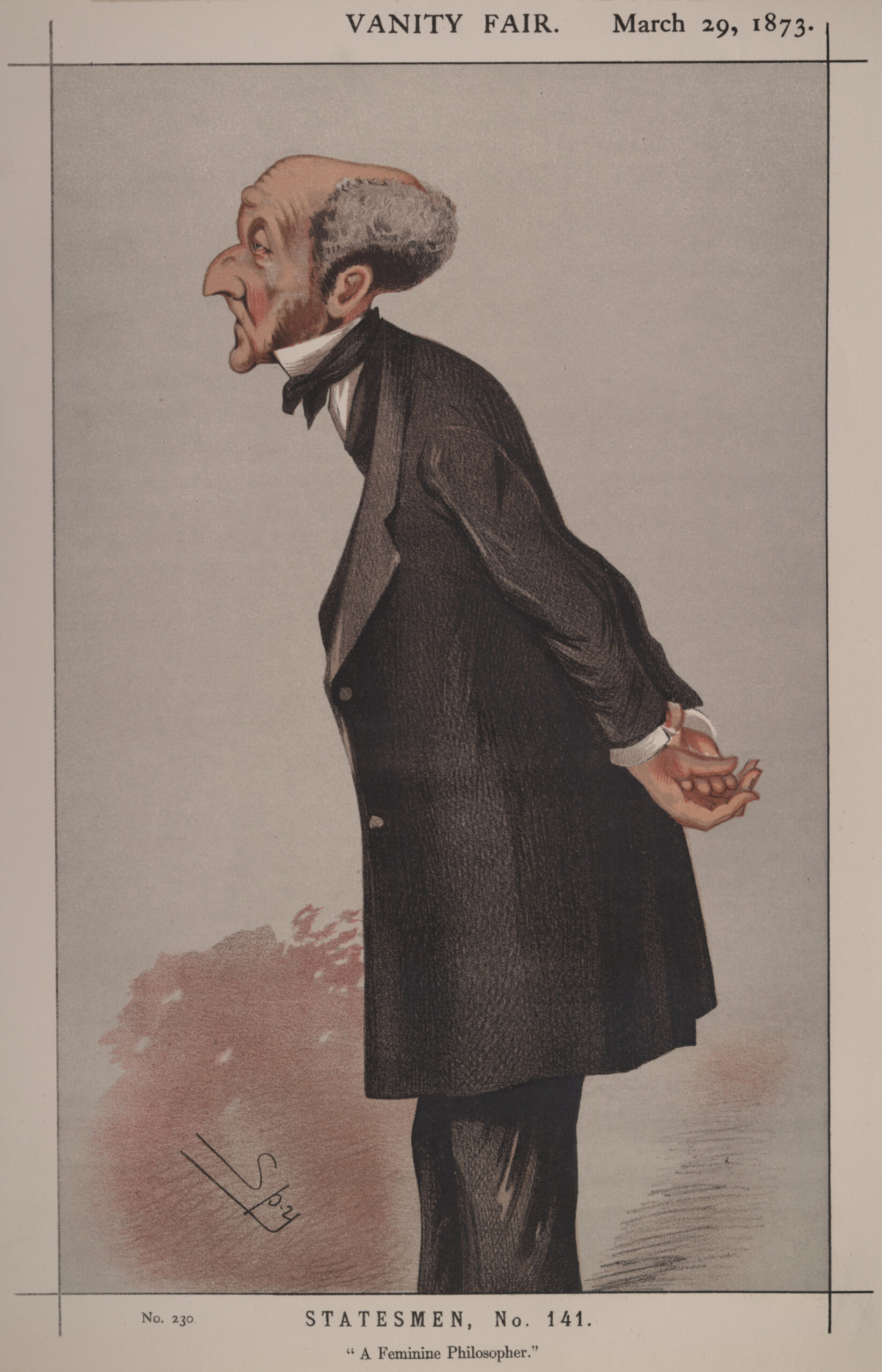
“A Feminine Philosopher”. Caricature of J.S Mill by Spy published in Vanity Fair in 1873.

Deneen proposes Aristopopulism as the solution for the problems in liberalism, calling for a return to ancient values that emphasize the common good, stability, and civic virtue. As Deneen articulates, “what is needed is a mixing of the high and the low, the few and the many, in which the few consciously take the role of aristoi—a class of people who through supporting and elevating the common good that undergirds human flourishing, are worthy of emulation and, in turn, elevates the lives, aspirations, and vision of ordinary people” (153). Deneen envisions a self-conscious elite that uplifts the enculturated majority and promotes human flourishing.  He claims populism as the foundation of Aristopopulism, as it emphasizes the appeal to the “common people.” However, populism is a loose concept that can be attached to various ideologies, including classical liberalism, progressive liberalism, and Marxism, which Deneen critiques. Nevertheless, this vision advocates for the return of a commonly shared moral framework rooted in ancient wisdom and habituation in virtue. By establishing a universal moral foundation inherited from the Western tradition, humans, regardless of their identity, can work towards a common good that emphasizes virtues like justice, honesty, courage, and generosity. 

While Deneen offers some valid critiques of liberalism, he is uncharitable to the positive motivations behind liberal ideologies. Deneen explains that classical liberalism, progressive liberalism, and Marxism all set up an elite as their vanguard to morally transform society. The intentions of these ideologies are not inherently in bad faith, however, in their efforts to protect racial and sexual identities, they reject the ancient conception of the good and embrace moral relativism based on Mill’s harm principle. Thus, they leave humanity without a shared moral compass to guide society. Deneen’s solution to this dilemma is a call for Aristopopulism, which sets up a self-conscious elite responsible for the majority’s flourishing. This vision establishes a universal moral framework rooted in the ancient wisdom of virtues like justice, honesty, and courage to achieve a common good. While Deneen presents valid criticism of liberalism’s discernment with virtue and soul craft, he also undermines the need for policies to protect racial and sexual minorities from real harm, not just hurt feelings. 

Work Consulted

Mill, J.S. On Liberty. Ryerson University Toronto, 1859.

Deneen, Patrick J. Regime Change: Toward a Postliberal Future. Sentinel, 2023. 

Green, T. H. ‘Liberal Legislation and Freedom of Contract.’ In Works, vol 3. Edited by. R. L. 

Nettleship; Longmans, Green, 1888, pp. 370-377. 

Young, Iris Marion. Justice and the Politics of Difference: Five Faces of Oppression. Princeton 

University Press, 1990.

If You Can’t Beat Her…: Reconsidering the Fortune’s Agency and the Limits of Virtù in Machiavelli’s The Prince

By Chiara Sedola

I therefore conclude that, since Fortune varies and men remain obstinate in their ways, men prosper when the two are in harmony and fail to prosper when they are not in accord. I certainly believe this: that it is better to be impetuous than cautious, because Fortune is a woman, and if you want to keep her under it is necessary to beat her and force her down. It is clear that she more often allows herself to be won over by impetuous men than by those who proceed coldly. And so, like a woman, Fortune is always the friend of young men, for they are less cautious, more ferocious, and command her with more audacity

Machiavelli

Machiavelli’s The Prince is often summarized as a guidebook on power – how to gain it, and, perhaps more importantly, how to keep it despite the vicissitudes of fortune. Fortune is a central theme in the text, but it is tricky to determine how, exactly, Machiavelli understands the concept. For most of the text, he seems to suggest that with enough foresight, preparation, and other virtues, a prince can always mitigate the damage and disorder of bad fortune; however, his final thoughts on the subject may undercut his argument. This paper will begin by establishing what Machiavelli generally means by the term fortune. From there, it will address two possible problems in Machiavelli’s argument for how princes should resist fortune, and follow with an exploration of fortune’s dynamic relationship with virtue. By examining the theme of fortune, this essay works towards the conclusion that, even if a ruler has cultivated his virtue to the best of human ability, fortune is ultimately the deciding factor of his success or failure. As a result, even perfect virtue is insufficient to protect political stability against the most destructive caprices of fortune. This conclusion follows not because, all other things being even, fortune is stronger than virtue, but because the virtue of even the best rulers is limited by human nature.

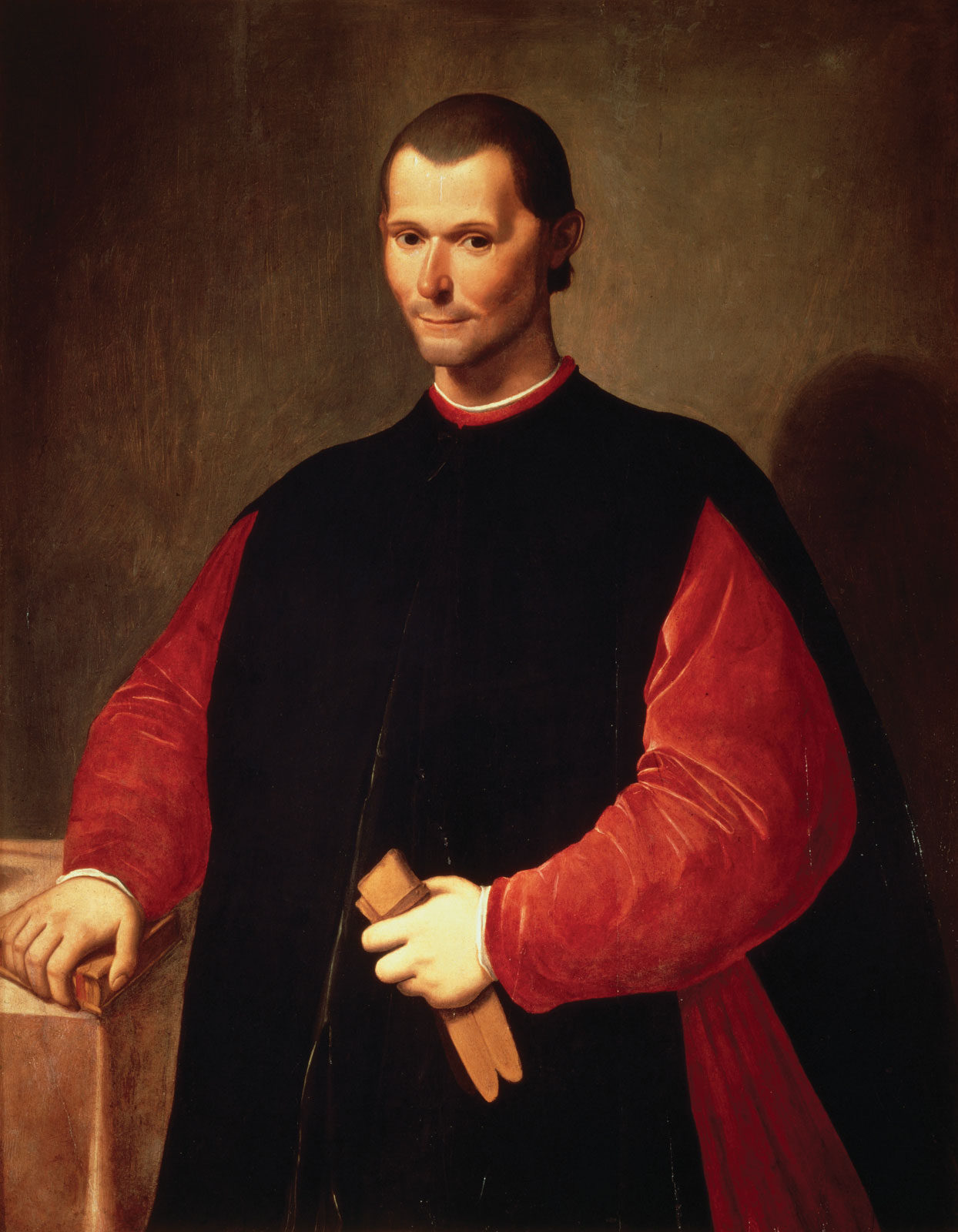
Portrait of Niccolò Machiavelli by Santi di Tito

Machiavelli conceptualizes fortune as random and ever-changing. For example, he writes that “time brings with it all things, and it can bring with it the good as well as the evil, and the evil as well as the good” (13). In other words, time does not guarantee progress towards a favourable endpoint, and so, contrary to “what is always on the lips of our wise men today,” a successful prince does not wait idly by to “reap the benefits of time” (12-3). On the contrary, there is no way of knowing whether there will be any benefits. The only certainty of time is the flux between good fortune and bad fortune. So, if a prince has good fortune now, the question is when his fortune will change, not whether it will change. Thus, fortune has no upward trend and is altogether unpredictable. 

As a result, a prince’s success and the security of his state are always at a certain level of risk from the vicissitudes of fortune; however, the risk can be mitigated through what Machiavelli calls “virtue.” But, before continuing with this discussion, some clarification is in order. First, the significance of virtue in the text could be an essay of its own, so for the scope of this essay, virtue will only be discussed concerning its relationship with fortune. Second, a working definition of virtue may be helpful since Machiavelli does not follow the usual understanding of the term. His sense of the word virtue is unconcerned with what is morally right. Instead, it is concerned with efficiency and efficacy in reaching a goal. Additionally, in contrast to fortune’s personification as a woman, virtue is gendered as masculine by Machiavelli. In short, a virtue is any characteristic of a ruler–including morally objectionable tactics such as dishonesty, cruelty, and murder–as long as it is conducive to the greater good of his principality. For “in order to maintain the state” an excellent prince “should not depart from the good if it is possible to do so, but he should know how to enter evil when forced by necessity” (61). Thus, political stability is worth whatever morally reprehensible tactics are necessary to secure it, even if only temporarily.

With the scope of the essay and a working definition of fortune in place, we can move on to the dynamic interaction between fortune and virtue–more specifically, how a prince’s virtue can be used to resist, if not control, fortune. In general, this process consists of two steps: foresight and preparation. Both stages deal with changes in fortune before they present themselves, perhaps because virtue can only defeat fortune before it has time to gain momentum. 

As for the first step in resisting fortune, foresight allows the prudent ruler to find weak spots in his state’s armour and that of his enemies. Because of fortune’s unpredictability, foresight is less about determining the most probable outcome and more about recognizing every potentiality for one’s rulership to go wrong as far in advance as possible. Machiavelli writes, “by recognizing evils in advance . . . they can be cured quickly; but when they are not recognized and are left to grow to such an extent that everyone recognizes them, there is no longer any remedy” (12). These problems are far easier to eliminate while they are only possibilities, especially because, if everyone can recognize the weakness, one’s enemies can see it too. 

As for the second step, preparation, Machiavelli also takes a blanket approach. Multiple times in the text, he advises that in everything they do, a prince should act in such a way that “no unforeseen event could arise . . . for which he did not have the remedy,” and so his people “will need the state and him at all times and in every circumstance” (37; 52). It is almost as if Machiavelli suggests that the best princes can have a backup plan for every turn of events and always channel fortune in their favour. However, if this is the case, it is an extreme response, and one might wonder how well this would fare for a ruler in real life or if it is even possible. This seems a fair critique for an author concerned with taking a realistic approach towards statecraft. To sum up Machiavelli’s advice, there are two general steps for the virtuous ruler to deal with fortune in advance of its catastrophes: foresight to assess weaknesses and preparation to correct those weaknesses before fortune, or one’s enemies, takes advantage of them.

It should be noted, however, that fortune and virtue are not always opposing forces, and both are required for a ruler’s success. For instance, in his discussion of those who rose to power through virtue, Machiavelli writes that, “[w]ithout that opportunity the strength of their spirit would have been exhausted, and without that strength, their opportunity would have come in vain” (21). In other words, even the princes who gained their principalities through virtue needed a bit of good fortune in the form of an initial opportunity to exercise it. 

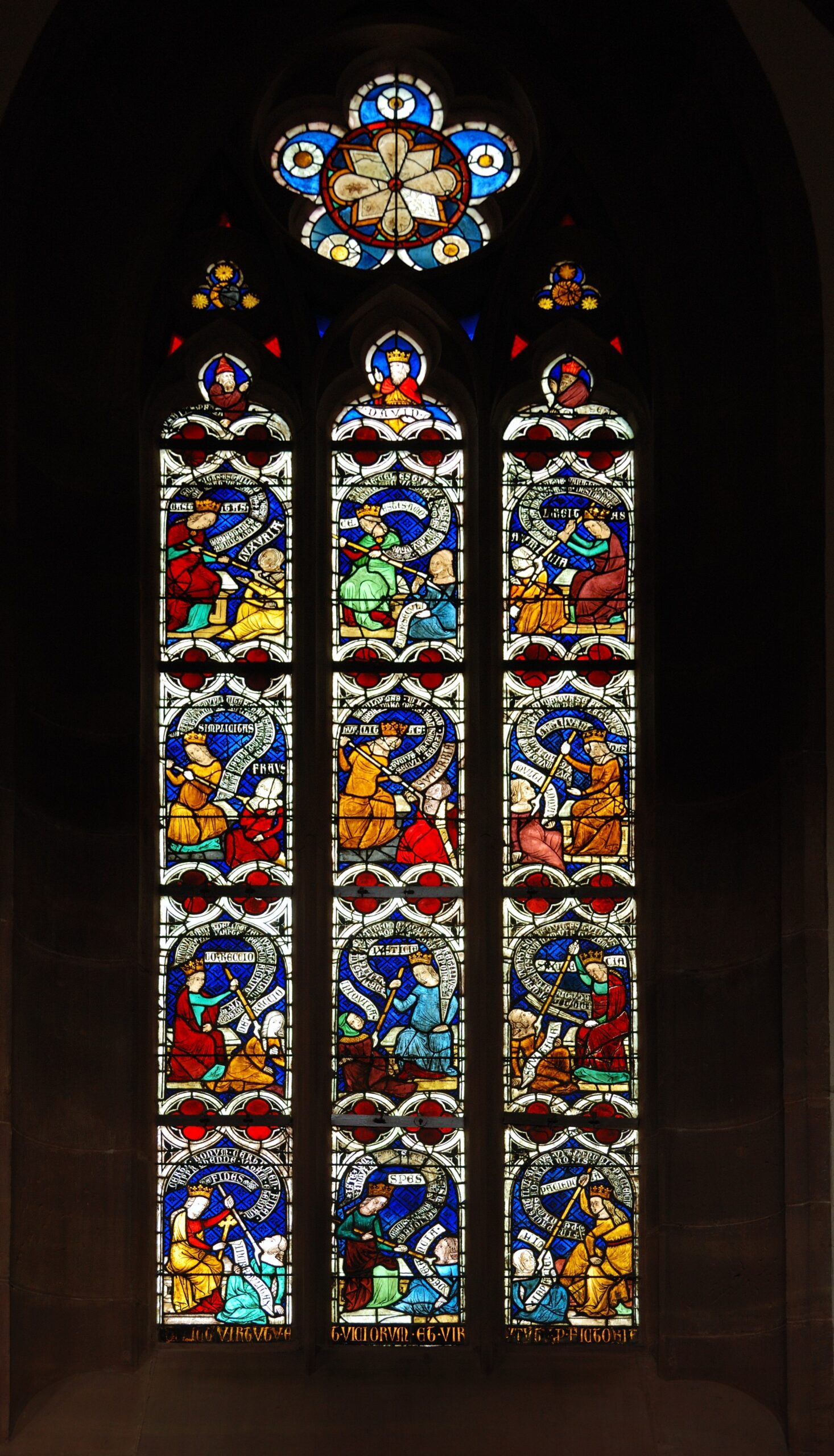
Virtues fighting vices, stained glass window (14th century) in the Niederhaslach Church

One may object and say that this is not a fair example because it is one where good fortune and virtue work together for a prince’s success. This is a fair point, but there are also examples of bad fortune and virtue working together for a prince’s benefit. For “without a doubt, princes become great when they overcome difficulties and obstacles imposed on them. And therefore, Fortune . . . creates enemies for him, and has them undertake enterprises against him so that he will have the chance to overcome them” (73-4). In this example, what we might consider bad fortune is transformed into good fortune through the prince’s virtue. Another way to think of fortune is as neutral until a prince fails or succeeds in his management of it through his virtue. In other words, whether fortune is good or bad is based on the outcome and remains undetermined until then. In any case, the relationship between fortune and virtue is a dynamic one—sometimes they are enemies, and other times they are friends, but either way, both interact to determine the success or failure of a prince and his state.

Thus far, the concept of fortune and the actions taken in response to it align with the common expectation: fortune encompasses all circumstances beyond human control, while virtue lies within the scope of human agency. In this way, fortune and virtue are the two forces working behind the outcome of a prince and his principality. However, major tensions, and, perhaps, contradictions in Machiavelli’s understanding of fortune’s relationship with virtue arise in Chapter 25. Machiavelli does not directly state whether virtue or fortune has the greater influence on history, but “in order not to wipe out our free will,” Machiavelli asserts that “Fortune is the arbiter of one half of our actions, but that she still leaves the control of the other half, or almost that, to us” (84; emphasis added). To be blunt, this is a weak defence of the power of virtue against fortune and of free will in general. As its final topic, this essay will look at two major tensions in Machiavelli’s conception of fortune and its relationship with virtue: the limitations of virtue by human nature, which, arguably, give fortune the last laugh, as well as why, considering the previous concern, a state should be cautious, but a ruler should be impetuous. 

The strange passage containing Machiavelli’s infamous image of fortune as a woman is where we will begin our analysis of Fortune’s personification. On the first reading, the treatment of fortune is simply misogynistic—it draws on imagery of violence against women and presents that as effective and even admirable; it relies on gender stereotypes by portraying femininity as something that needs to be subdued through violence; and it legitimizes coercion through force and aggression. However, with subsequent readings, it becomes far more complicated and suggests that fortune has more power than the violent virtue used against her. He writes, “It is better to be impetuous than cautious, because Fortune is a woman, and if you want to keep her under it is necessary to beat her and force her down” (87; emphasis added). This is not an imperative statement, but a declarative one, and it is unclear whether Machiavelli really thinks that it is possible to subjugate fortune. Continuing the previous quote: “It is clear that she more often allows herself to be won over by impetuous men than by those who proceed coldly” (87; emphasis added). If fortune is only won over when she consents to be, for that is the implication, then she is not conquered through force. Instead, she only yields when she uses her agency and chooses to do so. To be clear, the passage is still problematic, even with this reading. However, it would be a shame for what is of value and interest in the passage to be completely passed over if the reader’s initial offence leads to a hasty reading of the text instead of a well-examined one. In any case, this reading suggests that, ultimately, fortune is not at the mercy of virtue but vice versa.

A further limitation of virtue by fortune is found within the very nature of a prince, even the most successful ones. On this subject, Machiavelli writes, “[I] believe that the man who adapts his method of procedure to the nature of the times will prosper, and likewise, that the man who establishes his procedures out of tune with the times will come to grief” (85). Perhaps this is an additional reason why princes should not be encumbered with moral considerations – they would impair their adaptability to the times, which may call for moral behaviour, such as “patience,” or immoral behaviour, such as “violence,” indiscriminately (85). Whatever action the circumstances call for, the prince must act accordingly. Yet, despite how crucial adaptability is, “no man can adapt himself to this fact, both because he cannot deviate from that to which he is by nature inclined, and also because he cannot be persuaded to depart from a path after having always prospered by following it” (85-6; emphasis added). It is a thought-provoking idea that one’s capacity for self-cultivation is inherently unalterable. In addition, it is interesting that one’s success is the ultimate source of one’s downfall by calcifying flexibility. In the context of the text, the source of a prince’s ruin is not that he did not fully cultivate the virtue of adaptability, but that even this was not enough, since he cannot change his nature.

Perhaps it is because of this limit that a prince should be impetuous rather than cautious in his dealings with fortune. To clarify, impetuousness—acting boldly, aggressively, and without hesitation— is not inherently better than caution. In the example of Pope Julius II, although he was blessed with times necessitating an approach suited to his nature, he would have been brought to ruin just as swiftly as the cautious man if the opposite circumstances arose (86).  Although the author never provides an unvarnished, non-metaphorical explanation for why he believes with such certainty that “it is better to be impetuous than cautious,” perhaps it is because acting impetuously pushes the limits of virtue more than caution, or it pushes the limits of one’s enemy’s (87). Although admittedly somewhat beyond the scope of this essay, it is still worth mentioning another potential reason: Machiavelli values glory for a ruler, and glory rarely comes from being cautious. 

Yet, just before giving his views on the superiority of impetuousness, Machiavelli provides a compelling metaphor for the importance of being cautious and fortifying against fortune at the state level. How do we reconcile these two imperatives for a prince to be impetuous but for state to be cautious? In comparing fortune to a “destructive” and “enraged” river, he tells of how “everyone flees before it; everyone yields to its impetus, unable to oppose it in any way” (84). Further, fortune “shows her power where there is no well-ordered virtue to resist her, and therefore turns her impetus towards where she knows no dikes and dams have been constructed to hold her in” (84-5; emphasis added). Here, fortune’s agency takes on an intentionally malevolent character that we might contrast with her personification as a woman. It seems that there are different rules for fortune’s game at the level of the state and the level of the ruler. It does not seem that fortune can be won over in this case, so the only course of action is to be cautious and take precautions. What precautions, exactly? Given that Machiavelli is addressing fortune at the general state level, as in Italy’s failure to prepare compared to Germany, Spain, and France, perhaps the dikes and dams are state institutions, such as an autonomous military (85). In any case, fortune operates differently between the state and the prince, and so Machiavelli recommends distinct and, interestingly, opposing approaches.

Overall, if fortune sets her sights on a ruler’s destruction, there does not seem to be much remedy for virtue to offer, especially if human nature is predetermined to be resistant to adaptation. According to Machiavelli, fortune always has the advantage, although, in his personification, she may choose to stay her hand. Just as some rulers must face a no-win scenario, there are also those given challenges to rise above. Fortune is by nature unpredictable, but if it destroyed all of virtue’s order, there would be no need to write the text in the first place – there would be no states to govern. 

In closing, and for the sake of interest, I offer a highly speculative lens through which to read The Prince. In examining the theme, one cannot help but notice the similarities between Fortune and Machiavelli’s ideal prince. They are both unpredictable, unconstrained by morals, constantly searching for and exploiting weaknesses, and violent, among other characteristics. Even the words used to describe them are all but the same, like the “impetus” of fortune and the “impetuous” prince (84; 86). Thus, perhaps, in the eyes of Machiavelli, the most excellent and virtuous exemplar for an aspiring prince is fortune herself.

Work Cited

Machiavelli, Niccolò. The Prince. Translated by Peter Bondanella. Oxford World Classics, 2008.

Gendered Education and the Struggle for Virtue: A Wollstonecraftian Defense of Middlemarch’s Rosamond Vincy

By Ellisif Hannesson

In Middlemarch’s cosmos, thread-like social pressures dominate individuals and their actions. How each character responds to their environment differs, with some individuals motivated by egotistical desires, while others attempt to live virtuously through altruistic behaviour. Notably, George Eliot excels at creating nuanced psychological portraits, making it difficult to label any character as purely villainous. Rosamond Vincy is a complex character whose self-serving and sabotaging actions lead many readers to characterize her as a villain. Yet this characterization is overly simplistic, as it fails to contextualize Rosamond within Middlemarch’s social ecosystem. While Rosamond is ultimately morally accountable for her actions, it is necessary to recognize the constraints of Rosamond’s patriarchal upbringing to fully understand the limited agency that shaped her behaviour. Gender roles are one of the most pervasive pressures in Middlemarch, which remained firmly entrenched in the social fabric of Victorian England. The text serves as a narrative lens for examining gender roles, which were polemically challenged by figures like Mary Wollstonecraft. In A Vindication of the Rights of Woman, Wollstonecraft contends that the lack of rational education for women results in their deformation, a cycle sustained and reinforced by the suffocating structures of patriarchy. The uneducated and incompetent woman Wollstonecraft depicts is akin to Rosamond’s education at a finishing school, wherein she learns merely to perform gender roles. In this way, Wollstonecraft offers a framework for analyzing Rosamond’s character in a sympathetic light. Through this lens, Rosamond’s educational background and behaviour elucidate the tragedy of how gender roles deform women and take away their self-knowledge, ultimately making Rosamond more of a victim than a calculated villain.

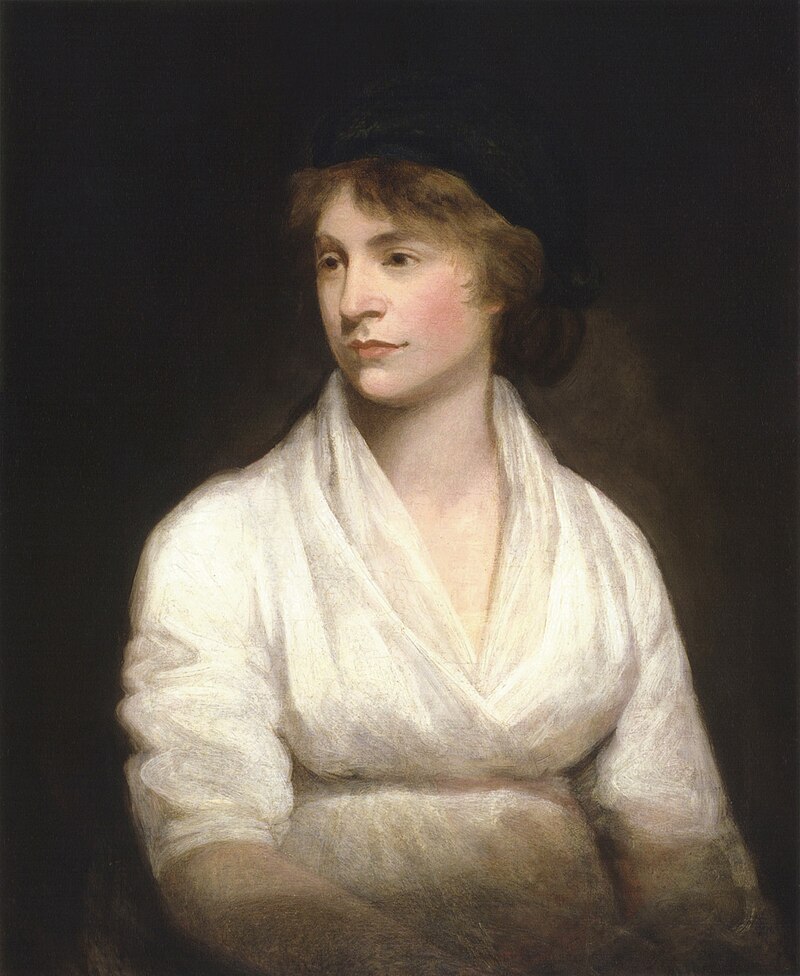
Mary Wollstonecraft, author of A Vindication of the Rights of Women

In A Vindication of the Rights of Woman, Mary Wollstonecraft critiques the prevailing system of female education in 18th-century society, arguing that it is a mechanism designed to sustain women’s subordination. While male education fostered rational thought, intellectual autonomy, and moral agency, female schooling was misdirected, emphasizing superficial accomplishments—music, drawing, etiquette, and ornamental knowledge—over critical reasoning. Thus, Wollstonecraft argues that the issue is not the lack of education but its distortion; the education women receive actively hinders their ability to develop reason, a faculty inherently part of their nature as rational beings endowed with souls. She further criticizes marriage as a structural mechanism reinforcing female economic and intellectual dependency, reducing them to ornamental roles and ensuring that “[women’s] time [is] sacrificed and their persons often legally prostituted” (41). Alternatively, Wollstonecraft envisions an education where women receive the same rigorous intellectual training as men, emphasizing logic, philosophy, history, and moral reflection. Such an education, she argues, is essential for developing virtue, which cannot be attained through passive instruction but must be shaped through rational inquiry and lived experience. “Knowledge of mankind,” Wollstonecraft asserts, “can be slowly obtained through experience,” and without intellectual cultivation, women are denied the ability to engage in moral reasoning (67). As Wollstonecraft makes clear, “to describe as virtuous anyone whose virtues don’t result from the exercise of his or her own reason is a farce” (14). This critique is exemplified in Middlemarch, where gender and education are central themes and struggles, framed within a lattice of social expectations that shape women’s roles.

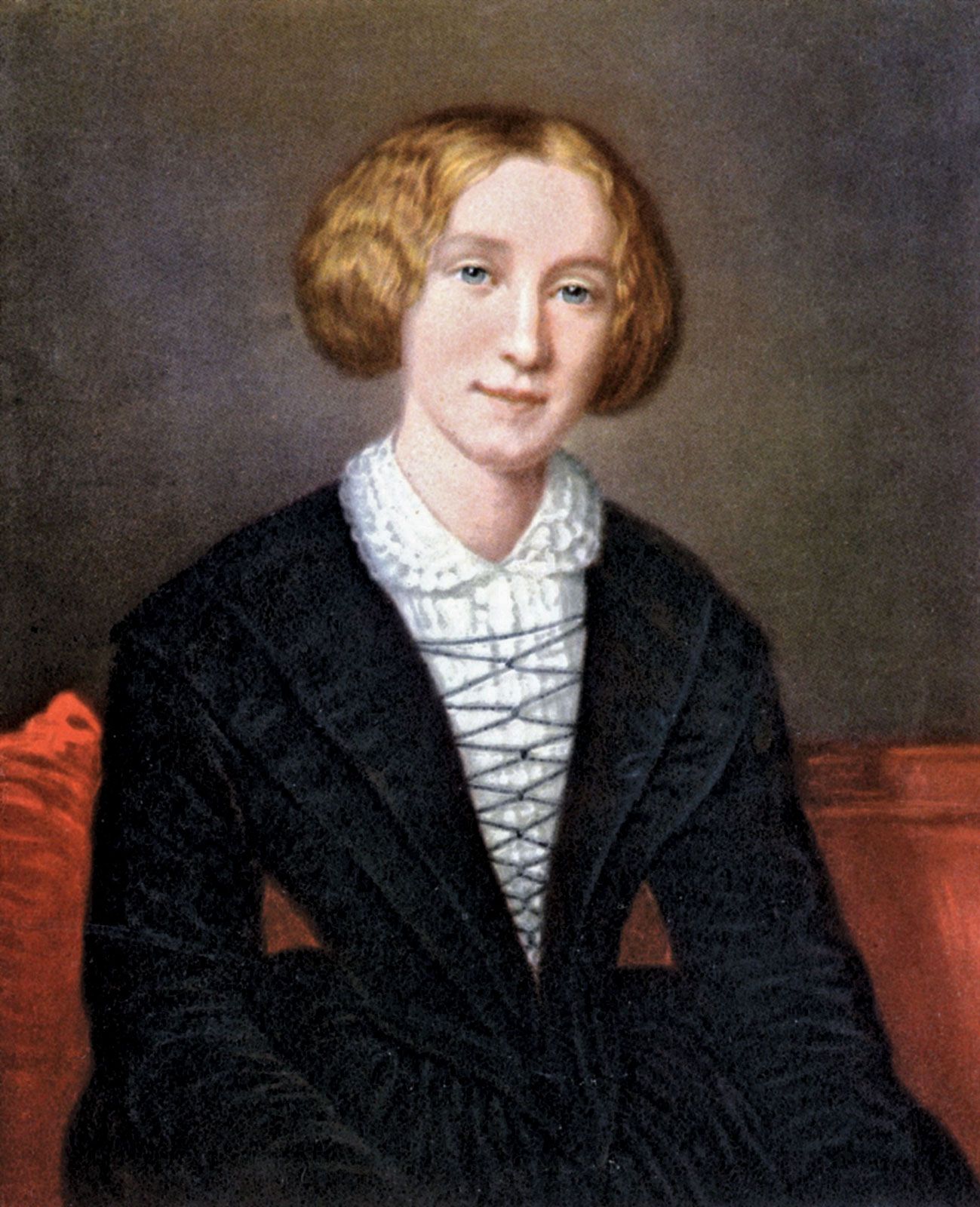
George Eliot, author of Middlemarch

This deprivation of adequate education emerges as a central form of oppression for women in Middlemarch. In Victorian England, societal norms imposed strict limitations on women’s access to rational schooling, and Eliot’s narrative vividly captures this restriction. Through the struggles of her central female characters, Eliot underscores the necessity for women to have access to genuine educational opportunities. Dorothea, for instance, is distinguished by her yearning for wisdom. However, Dorothea is unable to pursue this desire through formal education and instead turns to marriage as the only available avenue. Her decision to marry Mr. Casaubon can thus be seen as an attempt to fulfill her intellectual aspirations—though misguided. Had Dorothea had access to formal education, she would not have needed Casaubon to “liberate” her intellectually. Wollstonecraft criticizes this imperative, writing, “I recollect many women who, not led by degrees to proper studies … have indeed been overgrown children” (12). As Wollstonecraft further asserts, “women’s virtue must be comparable with men’s,” arguing that the perceived differences in intellectual ability between men and women do not arise from any inherent deficiency in women’s reasoning but rather from the unequal structure of their education (17). Rosamond exemplifies this critique, as her education—rooted in the performance of gender roles rather than genuine intellectual engagement—reveals how stunting female intellect inevitably undermines moral development, leaving both incomplete.

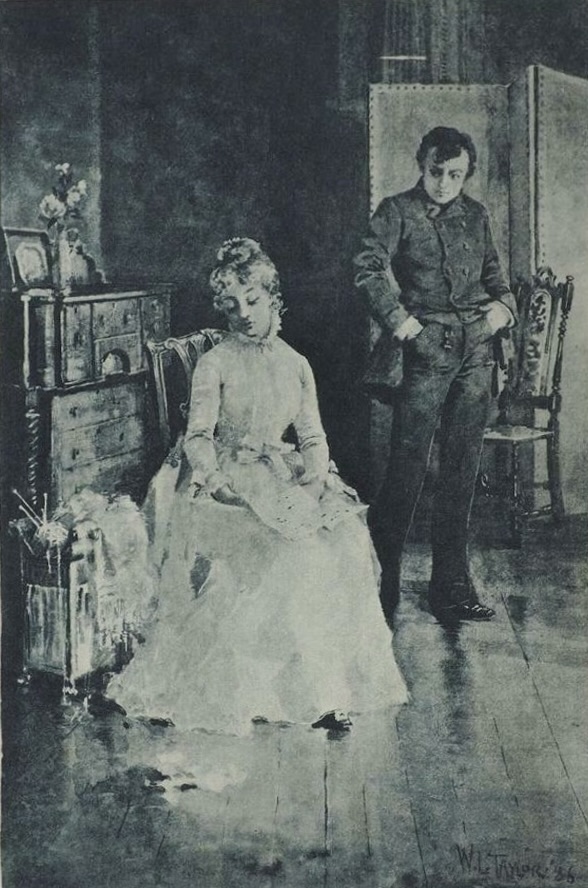
Rosamond’s formative education depicts the flawed educational model criticized by Wollstonecraft, as it fails to foster introspection or critical thinking, instead prioritizing the performance of gender roles. What distinguishes Rosamond from the other central female characters is that her educational background is explicitly highlighted early in the narrative, clearly contrasting the other women’s, such as Dorothea’s, more implicit or varied educational experiences. In her adolescence, Rosamond was praised as the flower of Mrs. Lemon’s school, where “the teaching included all that was demanded in the accomplished female” (Eliot 103). Rosamond’s education primarily consists of skills such as carriage etiquette, musical proficiency, and refined speech (Eliot 103). However, the practical utility of learning how to exit and enter carriages alone may be questioned in terms of its contribution to individual wisdom. Rosamond’s education fosters a myopic understanding of the world, training her to prioritize superficial charm over intellectual depth, thereby limiting her ability to navigate reality beyond societal expectations. This education mirrors Wollstonecraft’s critique on female education; when discussing men with her mother, Rosamond is told that “[a] woman must learn to put up with these things. You will be married someday” (Eliot 105). This instance illustrates not the moulding of Rosamond as an autonomous, critical-thinking individual, but rather the picture of a docile female whose life is centred around men. In absorbing this depiction of femininity, Rosamond adopts an inauthentic, performative persona that permeates her portrayal in Middlemarch, emphasized by the narrator’s recurring observation that she is “always having an audience in her own consciousness” (156).  Such language explicitly suggests that Rosamond constantly performs for an imagined gaze. Therefore, the contextualization of Rosamond’s education illustrates the general upbringing of women in Victorian England as they learned to perform femininity. 

            As a result of Rosamond’s constructed character, she fails to achieve any self-knowledge and wisdom to guide her in behaving virtuously. The implication of performing gender roles indicates an underlying falsity—Rosamond’s character is not naturally submissive and ornate. Her character feels wildly inauthentic, which is exacerbated by depictions such as: “Every nerve and muscle in Rosamond was adjusted to the consciousness that she was being looked at. She was by nature an actress of parts that entered into her physique: she even acted her own character, and so well, that she did not know it to be precisely her own” (Eliot 119). This evidence reveals why Rosamond is so unique in her struggle with gender roles compared to Mary or Dorothea; her intrinsic disposition is that of a performer. Yet Rosamond’s plight mirrors that of a method actor so consumed by her role that her true self fades, eclipsed entirely by the character she performs. Though Rosamond is hyper-aware of others and their perceptions of her, she was never taught the value of education insofar as it leads to wisdom and virtue. Consequently, Rosamond grapples with adopting this superimposed picture of femininity and dealing with her natural inclinations. Gender roles are depicted as the correct embodiment—seeing as Mrs. Lemmon taught her “all that as demanded in the accomplished female”—and Rosamond considers herself the perfect woman by these standards (Eliot 103). However, Rosamond’s tragedy is the underlying implication of her dissatisfaction. Though Rosamond had been conditioned to believe this was a fulfilling life for a woman, she ultimately ended up unhappy in her marriage by assuming these gender roles. The narrator notes Rosamond’s dissatisfaction: “Rosamond’s discontent in her marriage was due to the conditions of marriage itself, to its demand for self-suppression and tolerance” (Eliot 581). Thus, by nature, Rosamond desires to express her will and have power over herself, yet does not possess the ability to truly know herself and cultivate virtue.

The characters’ reception of Rosamond’s actions highlights both her socioeconomic disenfranchisement and the extent to which patriarchal norms have profoundly shaped her. Wollstonecraft understands that knowledge is fundamental to character, and without adequate universal access, women will never meet their potential to be thoughtful, virtuous individuals: “[w]ithout knowledge, there can be no morality! Ignorance is a frail basis for virtue” (43). This reading explains Rosamond’s villainous actions by stressing that she was never given the opportunity to receive an education that nurtures her rational capacities. While it is crucial to recognize Rosamond’s accountability for her actions, it is pertinent to acknowledge the gendered dimensions inherent in her transgressions. Rosamond is undoubtedly responsible for her behaviour; however, her culpability is complicated by her ignorance and an apparent lack of moral grounding.

Rosamond’s actions demonstrate how her limited education shapes her behaviour. Take, for example, what could be considered her most reprehensible act: appealing to Lydgate’s uncle Godwin for financial assistance, a move that directly contravenes Lydgate’s wishes and provokes his intense anger at her subversive and self-serving behaviour. Rosamond’s decision is not merely an act of defiance but a manifestation of her deeply ingrained belief that personal charm and social maneuvering—not integrity, sacrifice, or hard work—are the proper means of securing stability. In doing so, she reduces marriage to a performance, in which material comfort and the avoidance of unpleasant realities take precedence over genuine commitment and shared responsibility. Godwin, too, is upset, yet notably, he addresses the letter back to Lydgate rather than Rosamond and instructs him not to “set your wife to write to me when you have anything to ask” (Eliot 520). Although Rosamond’s actions stem from a genuine desire to alleviate Lydgate’s financial burdens to acquire material possessions, this incident underscores the inequitable treatment she endures due to her gender. The dynamic between Godwin, Lydgate, and Rosamond reveals a layered conflict, but the gendered dimension is key: Rosamond’s voice and agency are dismissed precisely because she is a woman, making her intentions invisible and her efforts meaningless. In a society that prizes female submission, the ideal woman possesses neither voice nor agency. While Rosamond may have undermined Lydgate’s prospects for securing a future loan, the adjudication of her actions must be considered in light of her upbringing and circumstances. Therefore, the portrayal of Rosamond as an unalloyed embodiment of cold, calculated villainy is overly simplistic and fails to account for the constellated social and personal factors that shape her behaviour.

Rosamond’s final interaction with Dorothea reinforces the argument that her patriarchal education has fundamentally distorted her character to be self-serving, while emphasizing the transformative potential of a more substantive, less superficial education. Interpreting Rosamond as a product of her upbringing, influenced by her mother’s gossipy demeanour and societal gender norms, elucidates her momentary transcendence in the novel’s conclusion. This episode occurs in the final chapters of Middlemarch when Rosamond and Dorothea have a brief but pivotal interaction that contrasts their differing experiences of womanhood. Dorothea is a woman who achieves virtue by striving for knowledge; despite her endeavours, she still feels “that there was always something better which she might have done if she had only been better and known better” (Eliot 575-576). In this way, even Dorothea is not adequately educated to feel fully virtuous. Rosamond’s previous education had merely taught her how to perform gender roles; therefore, she was missing an education that goes beyond appearances. At this poignant moment between the women, readers receive the first and only authentic picture of Rosamond, as the narrator notes: “Rosamond, taken hold of by an emotion stronger than her own—hurried along in a new movement which gave all things some new, awful, undefined aspect—could find no words, but involuntarily, she put her lips to Dorothea’s forehead” (Eliot 612). The climactic interaction between the women crystallizes the notion that had Rosamond been afforded a genuine education grounded in substantive knowledge rather than superficial accomplishments, she might have had the opportunity to cultivate virtue.

 A critic of Rosamond might counter this claim, suggesting that throughout the novel, she has consistently performed her actions with calculated intention, and this final scene is no exception—the narrator, too, subtly hints at such a reading. However, the previous portrayals of Rosamond’s actions were marked by a sense of performative artifice, suggesting that she is acutely conscious of her own manipulation. In stark contrast, the language in this pivotal scene evokes a sense of novelty and involuntariness, indicating a shift in Rosamond’s behaviour. Rosamond no longer calculates her appearance or outward conformity; rather, she appears to be focused on embodying virtue in a truer sense, learning empathy from Dorothea’s example in a manner that seems to transcend mere mimicry. Even if this moment is fleeting and does not fundamentally alter her character, it highlights the potential for moral growth within Rosamond—something that she has largely been unable to access due to her deformed education. This brief encounter suggests that, despite the limitations of her upbringing, Rosamond has a capacity for virtue, even if it cannot be sustained without a more substantial shift in her intellectual and moral development. While one moment of virtue does not equate to lasting change, the interaction underscores the possibility of empathy and moral transformation. Similarly, it is hardly surprising that Rosamond’s character arc remains stagnant: as Wollstonecraft argues, virtue demands ongoing engagement with knowledge and lived experience, and one brief albeit powerful instance cannot correct her deformities. Thus, while her character arc may not fully transcend her confines, this moment serves to illuminate the latent potential within Rosamond—a potential that her education has long suppressed.

            Though Rosamond may present as villainous, her actions are deeply connected to her upbringing and education as a woman, which prioritized the performance of gender roles over imparting any substantive knowledge beyond superficial matters. In this way, Rosamond is the inevitable outcome of this patriarchal model of education that has eroded her potential. Wollstonecraft’s A Vindication of the Rights of Woman offers a lens for understanding Rosamond’s deformed character. Wollstonecraft’s polemic posits that limitations imposed on women’s education hinder their capacity to evolve into virtuous, independent individuals. Despite Rosamond’s compliance with the expectations of her education, which sought to mould her into the model of accomplished femininity, her innate strength of will could not be entirely concealed. Consequently, Rosamond finds herself grappling with an inner conflict, uncertain of how to reconcile the discord within her soul and lacking guidance on how to address it. Perhaps the most unsettling part of Rosamond’s story is not her flaws, but the silent system that forged them—forcing us to ask how many more like her are condemned before they even begin. While Rosamond’s actions are undeniably shaped by the rigid constraints of her upbringing, her accountability for her moral failings cannot be dismissed. Ultimately, in understanding the tragic limitations of her education, we are left not with a simple villain, but a victim of a system that deforms both self and virtue, caught between the performance of a role and the silent yearning for a self she was never allowed to find.

Works Consulted

Eliot, George. Middlemarch. Edited by Gregory Maertz, Broadview Press, Ontario, 2018.

Wollstonecraft, Mary. A Vindication of the Rights of Woman with Strictures on Political and Moral Subjects. Edited by Johnathan Bennett, EarlyModernTexts, 2017, https://www.earlymoderntexts.com/assets/pdfs/wollstonecraft1792.pdf.

The Erotic-Educational Relationship: An Infinite Fall and Ascent

By Heather Sakaki

“Rather, nature rightly understood might turn out to be a suggestive teacher.”

– Leon Kass, The Hungry Soul

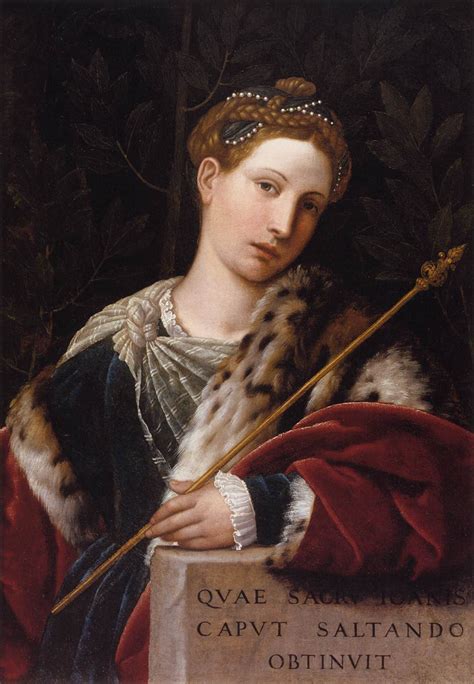
Tullia d’Aragonia, author of Dialogue on the Infinity of Love

In The Hungry Soul, Dr. Leon Kass accentuates the neediness of the human form and portrays it as an empty chamber in need of filling. This vacancy, he says, is caused by the potential that exists within us, “including our capacity for self-development, growth, self-maintenance, self-healing, and reproduction” (Kass 60). In The Symposium, Socrates attempts to reconcile this need and views this capacity as more of a deficiency in need of completion. He believes that it is this sense of incompleteness that motivates our natural pursuit of satisfaction and pleasure and that deeper feelings such as love and desire are often intertwined with this pursuit. The reason for this is “desire and love are directed at what [we] don’t have, what isn’t there, and what we need” (Plato 35, 200e), which means that the loved (which in this context is referring to the one who is adored) embodies qualities that the lover (the one who adores the loved) longs to possess, such as goodness and wisdom. In Dialogue on the Infinity of Love, author Tullia d’Aragona refers to this type of connection as “honest love” because the transformation of oneself into the object of one’s love is the principal aim (90). However, she argues that this kind of love is generated by both reason and desire because although the transformation is taking place on a spiritual level, the lover will still yearn for a bodily union “in order to effect a total identification with [their] beloved” (d’Aragona 90). Not only does this suggest that desire does indeed play at least a secondary role in the merging of these two forms, but also that there is a transformation process within her theory that needs to be explained. The erotic-educational relationship outlined in The Symposium can lend support in this matter. Plato’s portrayal of the teacher/pupil alliance is generated by both hunger and reason, and, similarly, d’Aragona’s vision of love is moved by the pressure and intensity of two converging forms that are diametric in quality. By rooting d’Aragona’s dialogue in Plato’s theory of the erotic-educational relationship as well as Kass’s more contemporary explanation deepening the meaning of the educational relationship and that which propels it.   

Diotima’s Ascent

In The Symposium, one of Plato’s main characters, Diotima, explores this transformation in her speech praising Eros and describes it as an ascension toward a higher understanding of beauty. For this process to be successful, however, the pupil in need of the knowledge of beauty must follow a logical path that requires the guidance of an educator who will assist them through successive stages of understanding. The pupil begins with a narrow conception of beauty based solely on what is visible. The guide then helps their pupil realize that “the beauty of any one body is closely related to that of another . . . and that it is very foolish not to regard the beauty of all bodies as one and the same” (Plato 48, 210a-210c). Once the pupil has grasped this rudimentary concept, they will be able to sense the shallowness of their former desire for one specific body type and learn to discern general examples of beauty from specific ones. Diotima says that since this lesson will lead the pupil to value minds more highly than bodies, they will be inspired to seek wise partners to mate with intellectually so that they may give birth to higher discourse. In the final stage, the guide must lead their pupil toward forms of knowledge and help them to see the beauty in these forms. If successful, this stage will instill a lifelong love of knowledge in the pupil, who will desire to give birth to many beautiful discussions, thoughts, and even “true virtue” (Plato 48, 210c-210d). Although Diotima’s theory is valuable insofar as it illustrates the role of reason in the pupil’s inner transformation, it does not explain the role that desire plays in this educational relationship or the more primal instincts powering it.

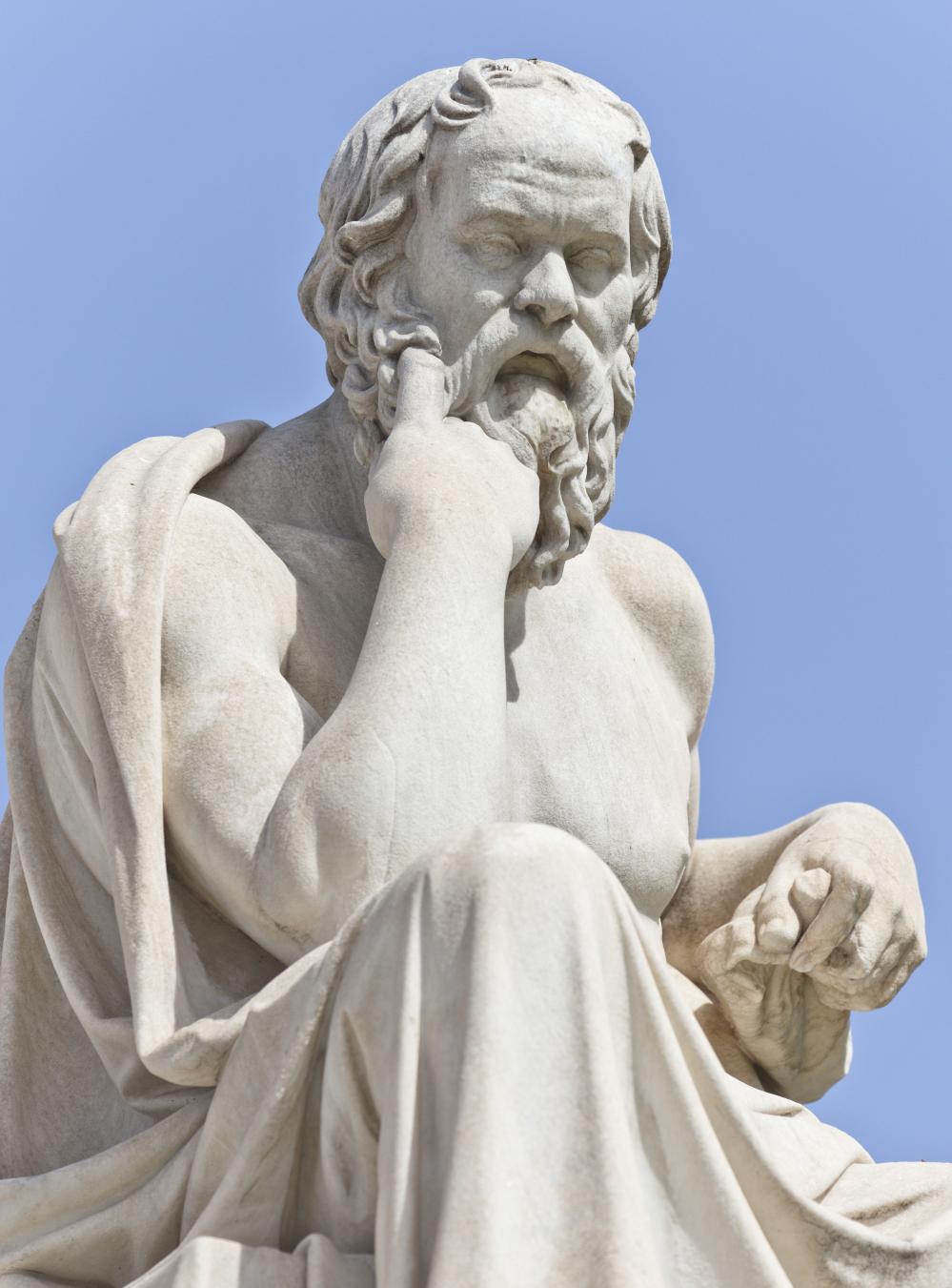
Socrates

Socrates helps us to identify some of these urges through his examination of the nature of love in The Symposium, helping us to detect the eroticism fueling educational relationships. To do this, he focuses our attention, first, on the lover (pupil), emphasizing the levels of need at play, and argues that “desire is directed at something you need and that if you don’t need something you don’t desire it” (Plato 34, 200a-200b). By including the concept of “desire” in his premise, Socrates is acknowledging the bodily hunger that is also driving this quest for knowledge and the Good, which helps us to rationalize the “corporeal union” desired by lovers within d’Aragona’s theory. Given the fact that corporeal fusion is literally impossible, if the main goal of the pupil (the lover) is to transform themselves into one who has already experienced the ascent (the educator/loved one), then an unfulfilled craving to somehow ingest the loved one (metaphorically speaking) will persist in the lover. Since penetration, either physical or spiritual, is one way to merge two human bodies, the hungry/deficient soul will feel an intense need to engage in these kinds of intercourse with the soul that best embodies the things it senses it lacks. Within d’Aragona’s model, the object of one’s love is best understood as a sort of experienced educator who possesses truths the pupil is searching for. Christopher Gill, in his introductory notes on The Symposium, thinks that this type of intense, emotional partnership is most likely to charge the erotic drive that can keep the transformative quality alive in educational relationships (xxxv). Here, the “transformative quality” that Gill alludes to is the spiritual transformation of the lover (xxxv). Moreover, within these parameters, we can understand the lover’s journey as both a fall (into love) and an ascent (toward the truth), which may better communicate the diametric and often poetic nature of love.

Leon Kass, author of The Hungry Soul

In The Hungry Soul, Kass examines the roots of this love and the tensions that have arisen as a result of our heightened powers as a species. He says that although our tremendous cognitive capacity is largely an outgrowth of our upright posture, it is still wise to regard ourselves as animals when making inquiries into our nature as a species (Kass 75). He says that by incorporating knowledge of our primitive form into our debates about human nature, we can more honestly consider the part that fear, hunger, thirst, and lust play in our actions and how these instincts impact our more “civilized” experiences and relationships (Kass 77). Kass believes that it is, above all, the self-awareness of our capacity for development that leads to our intrinsic yearning for “both need and independence, for mutuality and separation, for engagement and detachment, for commonality and distinctiveness, [and] for harmony and opposition” (77). Other animal species are not experiencing this tension because their desires are not accompanied by the same degree of self-awareness and thus awareness of what one lacks. Since human beings are aware of their capacity for intellectual growth, they are thus drawn to partners who present an intellectual challenge for them.

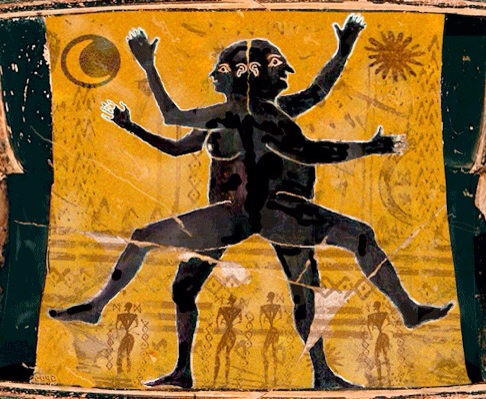
In Ficino’s commentary on The Symposium, love is described as a combination of a certain “poverty and plenty” because lovers “partly have and have not what they seek” (191). This definition of love supports d’Aragona’s theory because it reflects love’s overall goal of attaining the wholeness referenced in the conclusion of her dialogue while acknowledging the separate identity and configuration of each part. Moreover, since Ficino acknowledges what the lover “partly has,” he is recognizing a level of sameness often found in lovers that many theories neglect, mostly because it is too complicated to theorize. In The Symposium, Plato’s character, Aristophanes, also believes that many people have failed to explain the power of Love (Eros) and says:

Our human race can only achieve happiness if love reaches its conclusion and each of us finds [their] loved one and restores [their] original nature. If this is the ideal, under present circumstances what comes closest to it must be the best: that is to find a loved one who naturally fits your own character. If we want to praise the god who is responsible for this, we would rightly praise Love…he lead[s] us towards what is naturally close to us. (Plato 26, 193c-193d)

When Aristophanes refers to our “original nature” in this quote, he is referring to a conjoined condition that he believes our species originated from before we were “cut in half like flatfish” (Plato 24, 191d). Because of this, he says, human beings have within them an intrinsic desire for each other to “heal [this] wound in human nature” (Plato 24, 191d). Not only does this theory align with Ficino’s argument, but it also supports d’Aragona’s initial definition of love, which is “a desire to enjoy with union what is truly beautiful or what seems beautiful to the lover” (69). Her distinction between “what is truly beautiful” and “what seems to be beautiful” invites us to contemplate the relative quality of love and the question of whether “the Good” must remain, at least in part, subjective.

Inquiry into past theories about love reveals that the quest for wisdom remains an honourable and worthy pursuit. Rather than denying the carnal urges associated with teacher/pupil partnerships, Socrates instead celebrates the eroticism that is tangled up with the desire for learning and knowing and the positions he has enjoyed in educational bonding. For Socrates, logos (reasoned speech)between two healthy souls is a kind of spiritual penetration that can bring intellectual fulfillment during these sessions of intercourse and uses dialogue to demonstrate the role of rhetoric in reproduction. Ancient philosophical dialogues on love are important texts to remember because they contain forgotten knowledge of the forms that can help us develop more complete theories on the topics that enhance the experience of our academic ascension and move us closer toward the light. If “falling into” our loved one is the only thing that may hurt us in this pursuit, let us be courageous enough to embark on the educational journey anyway to see just how high it may take us.

Works Consulted

d’Aragona, Tullia. Dialogue on the Infinity of Love. Edited and Translated by Rinaldina Russell and Bruce Merry. The University of Chicago Press, pp. 69-90.

Ficino, Marsillo. “Sixth Speech.” Commentary on Plato’s Symposium, translated by Sears Reynolds Jayne, University of Missouri, 1944, p. 191.

Kass, Leon. The Hungry Soul: Eating and the Perfecting of our Nature. Toronto, Free Press, 1994.

Plato. The Symposium. Translated by Christopher Gill, Penguin Books, 1999.  

Mystical: From the Standpoint of Pathlessness

By Kush Sachdeva

In this essay, I aim to show that the mystical path is not a journey but a surrender to the present moment where one does not stray from the mystical. This union transcends thought and desire, revealing the boundless simplicity beyond all inquiry. James Atkinson’s work, The Mystical in Wittgenstein’s Early Writings, and his lectures inspired this idea. Rather than building on Atkinson’s work, this essay provides a gateway to the simplicity of the mystical in Pseudo-Dionysius’s work, additionally showing the simplicity of the mystical found in Wittgenstein’s early works.

Cataphatic and Apophatic Approaches and Their Limits

            In theology, the cataphatic method of inquiry makes positive claims about God; meanwhile, the apophatic method is the negation of attributes of God. A positive claim is: “God is omniscient,” and a negation is “God is not limited by time or space.” These claims are about God, though the chasm of apophatic exhaustion does not convey what is beyond nullification. In other words, removing all that “God is not” does not tell us what God is. For instance, an eye does not describe the sound of a cloud bursting. Similarly, the experience of all other sounds does not explain the sound of a cloud bursting. Pseudo-Dionysius presents this idea in his conception of “God as every sensation, thought, and the maxim of reason” (1040D). God transcends sensation and reason, is beyond thought and sense, and yet embodies them. The idea here is the presence and attention of what happens to be; that is to say, God is not limited to intellectual activity like a cataphatic, apophatic, or any manner of inquiry but rather is present in both–intellectual and unmediated experience. Although the apophatic method aims to reveal aspects of God that exceed human conceptualization through negation, it reaffirms dualism by indicating that neither affirmation nor negation can wholly capture the mystical essence. Pseudo-Dionysius notes that God is not a being among beings but rather the source of being itself, affirming that God is not in a position in the space of empirical understanding but in the expanse of the undefiled now (1065).

Paradox of Apophatic Affirmation

Pseudo-Dionysius the Areopagite, Greek author, Christian theologian and Neoplatonic philosopher

            The apophatic method unintentionally affirms through negation, revealing the limitations of positional understanding. For instance, stating that God is not X still places God in relation to X, echoing Pseudo-Dionysius’s assertion that the supreme cause of every conceptual thing is not itself conceptual, suggesting that causes reveal aspects of the supreme cause, but they never encapsulate it fully (1033D). The supreme cause is not merely the primary or final cause, nor is it an amalgamation of all causes, a negation of observable causes, or a sum of causal relations—though it is present in all these. If one attempts to grasp the supreme cause through a higher-order, meta-causal perspective, this understanding will reflect the supreme cause but fail to encompass it entirely. Even if a meta-meta-causal understanding emerged, it would again point to the supreme cause without capturing its essence. This recursive pursuit highlights that the supreme cause transcends while encompassing all causes, ultimately negating as a limited means of inquiry carries an implicit affirmation.

Resolution of Paradox

            Consider two definitions: (a) absence of a fourth boundary, negation of curves, denial of excess edges, does not conform to anything beyond its points, and (b) a triangle. The former (a) presents negative boundaries, and the latter (b) represents positive boundaries, raising a critical question: do different ways of inquiry provide a unique insight into the mystical? Pseudo-Dionysius would respond to this by mentioning that “all that is said of God is by necessity inadequate,” highlighting the challenge of understanding mystical attributes through language; this is further reflected in his contention that “It is in the abandonment of all that we find the path to the Divine” (553C, 593A). To look beyond both ways of thinking and approaching the mystical, one needs to tap into the heart of the hearts; in this moment of reaching the deepest, darkest part of experience, one recognizes the mystical as “preeminently simple and absolute nature, free of every limitation,” where every boundary falls short (1048B). The mystical moment transcends inquiry itself, making any method of approach a barrier rather than a guide. He goes as far as to claim that the intimate experience lies beyond all desire; desires are rooted in the expectation of a future, usually better than what happens to be now; by looking beyond desire, one is essentially forced to be fully present in the now (588A).

Mystical Surrender

            The mystical does not emerge through surrender to the ineffable—an encounter that abandons reason while remaining intimately present. This surrender unfolds in the simplicity of the infinite moment where known and not known coexist. All potential states exist simultaneously, where experiencer and experience are inseparable, undivided by thought or perception. This resonates with the idea that one is not merely in the universe but is the universe experiencing itself; in this immediate now, distinctions dissolve, an ineffable state of epistemic-ontological ambivalence reveals, where the thinking self and the flux of experience are no longer seen as separate. This surrender represents experience unfolding from the centre to the edge and the edge enfolding to the centre; ultimately, the centre becomes the edge, and the edge disappears into its origin. By resonating with this, a new being emerges, seeking to be present in the fullness of God’s absence, embracing the present hitherto neglected, wandering in the new world that reveals itself in the infinite tapestry of the abyss of what happens to be, for him all things find their completion in the mystical, even as they seem to vanish into nothingness (1089A). This surrender reveals that one does not merely surrender to the now but abandons what is not present; here, the essence of the mystical is a negative effort, requiring one to stand still and not lean in.

Mystical Awareness

Ludwig Wittgenstein, author of Tractatus. 1922.

            From the standpoint of mystical surrender, a different realization of knowing emerges—expression. Wittgenstein remarks in the Tractatus Logico-Philosophicus, “It is not how things are in the world that is mystical, but that it exists” 6.44. Following this, imagine analyzing musical notes and the orchestra, the true wonder of the symphony lies in the fact that it is mystical, realizing that the world exists, not necessarily why it works or what happens in it, but that it is. Mystical awareness eludes a concise description. For example, the question, “What is it about the symphony that you like?” cannot be answered without a form or manner of descriptions that reduce the experience to a concept that claims to express the symphony and what one likes about it. In proposition 6.522, Wittgenstein mentions, “There are, indeed, things that cannot be put into words. They make themselves manifest. They are what is mystical.” This idea can be understood through a fishing metaphor.

            Imagine a fisher on a small boat on the ocean, fishing with a line. The boat represents the inquirer, the line represents intention, and the ocean is the vast unknown—the space of truth and understanding. As one casts the line into the water, it descends through layers of the ocean, metaphorically reaching toward the depths of knowledge, where the foundation of understanding lies hidden. The ocean is boundless, cradling mysteries that one can never fully comprehend, while the line, simple and linear, seeks to grasp what is unknowable in its limited capacity. As the line sinks deeper, it only experiences tension—the sense of movement, resistance, and occasional moments when something is caught, perhaps a brief glimpse of meaning or understanding. But the line, like the inquirer, cannot grasp the fullness of the ocean. It cannot understand the vastness of the waters nor the fullness of what is happening around it. In moments of doubt, the line wonders: What if there is nothing at the end of it? What if the waters are empty, and the boat drifts aimlessly? If there is no resistance or pull, what is its purpose? Can it continue fishing without a catch, or does it lose meaning? The line becomes a paradox—a simple thread stretching between the boat and the ocean, linking the finite with the infinite, the known with the unknown. It neither fully understands the ocean nor comprehends the depths it is connected to. Yet, it carries on, perhaps finding its truth not in control but in surrendering to the mystery of the unknown, acknowledging its limitations and continuing the search without ever fully grasping what it seeks.

Pathlessness

            Pseudo-Dionysius shows that in experiencing the mystical, one does not seek inquiry while immersed in the fullness of unmediated presence beyond sensory or intellectual apprehension. In surrendering to the mystical, what can be said and the ineffable converge in the now, not disappearing but simply being. In this subtle interplay of grasping abandonment and abandoning graspable, the mystical does not become clearer; it simply is. To say otherwise—to claim that one must do certain things or climb hierarchies to attain mystical experience—seems conventionally true. However, anything that is a complex conjunction of words points to the symbolism of the words, not the reality itself. Words create pictures and mental representations, while the mystical resonates in the simplicity of the now, beyond the formation of mental images. In this space where words say the most they can, Wittgenstein’s summation of Tractatus echoes: “What we cannot speak about we must pass over in silence” (7.0). The mystical, ever-present, reveals itself not through knowing, but in the silent space where inquiry dissolves. The mystical, like the supreme cause, is absent only insofar as one ignores its presence, all the while one emerges in the present.

Conclusion

            Ultimately, the path to the mystical is no path. The mystical unfolds and enfolds in the idleness of what happens to be—where conceptual striving gives way to silent presence, and surrender opens the way to what is beyond thought and desire. The mystical moment is not an endpoint but an ongoing encounter with the infinite, where the seeker is not merely aware of the mystical but realizes the inseparable nature of the mystical’s unfolding presence. In this space, the mystical ceases to be a pursuit and becomes the fullness of being itself—an ever-deepening encounter with the boundless simplicity that rejects inquiry.

Works Cited

Atkinson, James. The Mystical in Wittgenstein’s Early Writings. Routledge, 2009.

Dionysius, Areopagite. Pseudo-Dionysius: The Complete Works. 2nd ed., Paulist Press, 1987.

Wittgenstein, Ludwig. Tractatus Logico-Philosophicus. 1st ed., Routledge, 1922.

Satire or Subjective Moralism? The Moral Message in Boccaccio’s Decameron

By Cala Annala

Giovanni Boccaccio, author of The Decameron

Boccaccio’s late-medieval masterpiece, The Decameron, presents one hundred stories that seem to reflect contradictory moral messages. The text, composed of ten stories told daily by ten narrators over ten days, includes tales depicting their characters engaging in depraved actions seemingly without consequences, while other stories present a clear moral message. This apparent contradiction prompts one to question whether the author is promoting an amoral approach to life in which morality is utterly subjective or is satirizing this approach with serious moral intent. This question may be answered through a close examination of the following: the framing of the setting in which the stories are told, the phrasing the author uses in both types of tales, and an analysis of the statements of intent in the text’s preface and conclusion. Such an analysis reveals that although Boccaccio’s satirical tales do seem to endorse a type of subjective morality, when examined closely, they reveal moral allegories that place them squarely within an ethical framework. Further, his emphasis on social order within the setting of the book can be interpreted as a testament to the importance of retaining a moral framework. As a result, one may conclude that although The Decameron is not intended to be a didactic work, it nonetheless retains a moral framework while satirizing the amoral lifestyle for entertainment.

How the text’s introduction frames the stories by describing the time, place, and circumstances of characters telling and listening to them suggests that it is not Boccaccio’s intent to promote an amoral lifestyle. The Decameron takes place in medieval Florence in 1348, the time of the Black Death, and centres around seven young ladies and three young men who decide to leave Florence and the chaos caused by the plague, escaping to a villa in the hills of Fiesole (6-7). The author emphasizes at length the calamitous and sordid state of Florence during the Black Death, stating that “the city was full of corpses,” and “people who died were cared for as we care for goats today” (12, 13). In particular, he underscores the breakdown of social order within the city at this time, where “out of sheer necessity, there arose among those who remained alive customs which were contrary to the established practices of the time,” such as “one citizen [avoiding] another” and “almost no one [caring] for his neighbor” (10-11). In travelling to the Fiesole countryside, the characters in this story are seeking respite from the chaos of Florence and attempting to rebuild a social structure within their small group. This interpretation is further evidenced by the group appointing a leader (a queen or a king) each day to rule them, stating that “when things lack order they cannot long endure” (21). Therefore, the fact that the characters seek to escape the breakdown of morals in Florence and create for themselves some semblance of a structured society suggests that the author is concerned with social order and morality, and his motive is not to promote a lifestyle lacking these vital components. 

Description
A Tale from the Decameron (1916) by John William Waterhouse

In analyzing the stories within this frame narrative, the first story on the first day provides an excellent example of a tale that appears to promote amorality through its exaggerated portrayal of unscrupulous behaviour, but upon closer inspection, presents this behaviour only for entertainment purposes to shock and thrill readers while quietly condemning it. For example, one of the stories revolves around Ser Cepparello, a notary who committed nearly every imaginable evil during his lifetime, including legal fraud, giving false testimony and false oaths, stirring up scandal, sowing discord, murdering, thieving, blaspheming God and the Church, and being “the most irascible man alive” (27). At the end of his life, Ser Cepparello remains unrepentant of his sins, yet succeeds in deceiving a priest into believing that he is “a holy man” deserving of “the greatest reverence and devotion” from the Church, and is venerated as a saint after his death (36-37). While it appears that Boccaccio is promoting an amoral lifestyle since Ser Cepparello’s amorality seems to be rewarded in this story, the author makes the following key statement towards the end of this story:  

“[Ser Cepparello] may have been blessed in the presence of God, since although his life was evil and sinful, he could have become so truly sorry at his last breath that God might well have had pity on him and received him into His kingdom . . .  but . . . I believe that he is, instead, in the hands of the Devil in Hell rather than in Paradise” (37).  

This passage indicates that while the author and reader cannot rule out the possibility that Ser Cepparello might be in heaven, it is far more likely that he is “in the hands of the devil” instead (i.e., hell). Thus, Boccaccio portrays the significant negative consequences of an amoral life here, making it clear to the careful reader that he is not advocating such a lifestyle. 

Likewise, the first story on the third day also portrays a character engaging in exceptionally amoral actions while subtly indicating this lifestyle’s true consequences and undesirability. This story centres around a character named Masetto da Lamporecchio who pretends to be a dumb mute to gain a position as a gardener at an abbey, where the nuns compete to lie with him. Boccaccio brazenly states that Masetto’s “labours were shared in such a way that he was able to perform them. In performing them, he generated a large number of little monks and nuns” (200). This scandalous behaviour seems to be rewarded in this tale, with Masetto “easily” returning home with “the money he had made” at the end of the story (200). However, Boccaccio highlights the true undesirable consequences of Masetto’s behaviour in the final lines of the story, which state that “Masetto returned home old and rich and a father, without ever having to bear the expense of bringing up his children” (200). When The Decameron was written, being a father was an honourable role and raising one’s children was an esteemed duty. Having left all his children with the nuns in the convent, Masetto deprives himself of this esteem and is left with no one to carry his name and no legacy on earth. The ultimate undesirable consequences of the nuns’ transgression of their vows are also highlighted by the author in the final lines of the story, which imply that the nuns will have to bear the consequences and shame of raising these “little monks and nuns” alone (200). Thus, at the end of this story, he makes it clear to the reader that both the nuns and Masetto will face the unpleasant and dishonourable consequences of their actions.  

The moral thread within the satirical amoral content of these stories is reinforced through the last story of The Decameron, the tenth story on the tenth day, which focuses on depicting the moral theme of reward that results from enduring hardship righteously. This story centres around a man named Gualtieri, the Marquis of Sanluzzo, who marries an extremely poor woman named Griselda. The exceedingly virtuous Griselda was an ideal wife for Gualtieri, being “pleasing, attractive, and well mannered… obedient and indulgent… [and] so gracious and kind to her husband’s subjects that there was no one more beloved or gladly honoured than she was” (790). Despite this fact, “a new thought entered [Gualtieri’s] mind: he wished to test her patience with a long trial and intolerable proofs,” and thus began inflicting great hardships upon Griselda (791). Over several years, he imposes increasingly harsh trials to test the quality of her character. He subsequently “[offends] her with harsh words,” orders a servant to send her daughter and son away under the guise of having them murdered, pretends to obtain a divorce order and sends her destitute back to her father’s house, and finally calls her back to his own home under the pretense of having her plan the wedding for him and a new wife—the last of these being like “a dagger in Griselda’s heart” (791-795).  

Description
Griselda is sent away as her husband remarries (1490) by the unnamed Master of the Story of Griselda

After Griselda undergoes all these trials while retaining her humility, obedience, and patience, “suffering with brave spirit the savage assaults of a hostile Fortune,” Gualtieri then takes her again as his wife, reunites her with their children, and they live “a long and happy life” together (798). To the average reader of this tale during Boccaccio’s time, this storyline would have been highly reminiscent of the depiction of the life of Job within the Bible, who, like Griselda, was rewarded greatly at the end of his lifetime because he remained humble and righteous, though he experienced great loss and hardship. Thus, the conclusion of the stories within The Decameron with Griselda’s moral allegory reinforces the principle that, despite their frequently bawdy content, the author incorporates a moral framework within his stories. 

Therefore, it is clear that Boccaccio’s purpose in The Decameron is not to promote amorality. If this is so, then why does he portray such instances of amoral behaviour in these stories? The answer to this question may be found in the text’s preface and conclusion, in which he makes it apparent that his purpose in creating this work is to provide women with an amusing form of entertainment that will divert their attention from the dreadful consequences of the plague in their present life, as well as serve as a “support and diversion for those ladies in love” (5). In the conclusion to this work, he states that he is “offering this work of [his] to idle ladies and no others… to those who read it to pass the time of day” (805). Thus, the scandalous behaviour presented in these stories is intended by Boccaccio simply to provide women with entertainment that will divert their attention from the hardships of daily life, and not to promote the literal carrying out of this behaviour. He further states that “these tales… may be harmful or useful depending on who the listener is” (803), indicating that although these stories are not intended to encourage the lascivious behaviour present within them, they nonetheless may be interpreted this way if the reader lacks insight into their true purpose. 

In conclusion, while Boccaccio’s Decameron ostensibly appears to be an endorsement of the amoral life, upon closer analysis, it is revealed that he satirizes this life for amusement while also reinforcing moral principles. This reinforcement of moral principles is evidenced by his emphasis on the importance of social order when framing the setting of the work. Further, even within the tales that seemingly portray the desirability of an amoral lifestyle, there are statements toward the end of these stories that shift them back into a moral framework and suggest the true undesirable consequences of the depicted behaviour. Therefore, although Boccaccio’s preface and conclusion indicate that his purpose for this work is to entertain and not to advocate for the morality of the character’s actions, he nonetheless clearly incorporates moral principles into the tales of The Decameron, demonstrating his excellence in tactfully satirizing amorality for entertainment purposes while still preserving a strong moral framework within the stories. 

Description
Scene of the Narration of the Decameron (1906) painted by Salvatore Postglione

Works Cited 

Boccaccio, Giovanni. The Decameron. Translated by Mark Musa and Peter Bondanella, Signet Classics, 2010. 

The Earth Earths: How Non-Humans Make Works Meaningful, Explored through Prehistoric Rock Art

By Emma Wright

Chauvet-Pont-d’Arc Cave

In The Origin of the Work of Art, Martin Heidegger claims that insofar as human beings make works like art, architectural structures (churches, temples, etc.), and tragedies, they allow for all things to be and to be meaningful. Humans are, therefore, an exclusive and fundamentally distinct group of beings. Heidegger says works have two essential features: “the setting up of a world and the setting forth of earth” (Heidegger 173). Works set up worlds because works are made to establish, enrich, or advance a way of life. This way of life is the world that any given group of historical people belong to, and this world is oriented around and consolidated by the works they make. Within the space that works make and worlds occupy, Heidegger thinks that all animals come alive for the first time. Animals belong to the earth, which “shows itself only when it remains undisclosed and unexplained” (Heidegger 172). This earthliness, or self-seclusion, of all animals is their essential feature, and it is only when animals are revealed by work within a world that they are noticed by humans and are, therefore, able to refuse to be known as any more than what they are immediately perceived to be. Without first being brought into the world, animals are merely unknown, and they flee from nothing. Yet—in CBC’s The Old Masters: Decoding Prehistoric Art with Jean Clottes, Clottes explains that the paintings in the Niaux Cave in the northern foothills of the Pyrenees and the Chauvet Cave in Vallon-Pont-d’Arc, Ardéche were made within a community that practiced shamanism (00:16:38-00:16:52). Because Clottes states that shamanism does not explain rock art directly, we cannot assume that cave painting was a shamanistic act. However, we can more broadly consider that the paintings were done by people who recognized the existence of non-anthropomorphic knowledge and power. While Heidegger thinks that works allow animals, and earthly beings more broadly (rocks, trees, etc.), to come alive and be what they are, in photos of prehistoric rock art like the Dabous Giraffes from 30,000 Years of Art, we see that animals and earth were first found meaningful and as a result, works were made. This means that work is not essential to set forth the earth, to make it manifest and meaningful, and thus that all things of the earth are not essentially self-secluding but exist objectively.

The first essential feature of the work is the setting up of a world. How does a work set up a world? Heidegger uses a Greek temple to illustrate his answer, “to erect means: to open the right in the sense of a guiding measure, a form in which what is essential gives guidance” (Heidegger, 169). But why is the setting up of a work an erecting that consecrates and praises? “Because the work, in its work-being, demands it” (Heidegger, 169). The ancient Greeks erected temples to harbour gods. These gods were essential to their culture. Hence, the temples were built piously, with devotion—what Heidegger calls a “consecrating-praising erection” (Heidegger, 171). Because of the temple’s importance, it “demands” to be built this way. The same piousness with which the temple is built is that which the temple consolidates in standing there: it is a place of great meaning for those whose world it belongs to, and they orient their way of life around it. It is because the temple is built for the sake of honouring the god who is essential to this particular world that the god can really exist within the temple. The temple itself “opens up a world and keeps it abidingly in force” (Heidegger, 171). It is not merely, as Heidegger points out, one fine day “added to what is already there,” nor is it a representation of what is essential, but is itself essential—the reason that this particular world can be the world that it is (Heidegger, 168). Without the temple, the god is lost, and the people lose their purpose, their culture, and their identity. In other words, the temple is not superfluous but holds great power. It “fits together and . . . gathers around itself the unity of those paths and relations in which birth and death, disaster and blessing, victory and disgrace, endurance and decline acquire the shape of destiny for human being. The all-governing expanse of this open relational context is the world of this historical people” (Heidegger, 167).

Description
Martin Heidegger, author of The Origin of the Work of Art.

The second essential feature of the work is the setting forth of earth. How does a work set forth earth? Firstly, Heidegger thinks that earth is set forth in relation to and only in relation to a world. Heidegger says that as the temple sets up a world, it “causes [the material] to come forth for the very first time and to come into the open region of the work’s world” (Heidegger, 171). This means that within the space that a work clears by resting upon earth, the material from which it is built first comes to be noticed—it is brought into a world of anthropogenic meaning. For example, stone from the earth constitutes the columns of the temple, and therefore, the stone is noticed in its anthropogenic purpose, the only purpose it can have. Moreover, the earthly things which surround the temple or enter into its space also come to be for the first time: “Standing there, the building holds its ground against the storm raging above it and so first makes the storm itself manifest in its violence. The lustre and gleam of the stone, though itself apparently glowing only by the grace of the sun, first brings to radiance the light of day, the breadth of the sky, the darkness of the night” (Heidegger, 167-168). Here Heidegger means to say that without the temple the storm is essentially non-existent. Only when the temple towers up into the atmosphere does the storm first rage insofar as the storm has something—something important to humans—to rage against. Therefore, it is thanks to the humans who make the temple that the storm can show itself. These earthly things—the storm and the sun—can be what they are because of human-made work, because they are within a world where humans encounter them and from which they can flee.

What does it mean for the earth to be an earth? Heidegger writes, “Earth is that which comes forth and shelters. Earth, irreducibly spontaneous, is effortless and untiring. Upon the earth and in it, historical man grounds his dwelling in the world . . . The work moves the earth itself into the open region of a world and keeps it there. The work lets the earth be an earth” (Heidegger, 171-172). The earth can only be an earth when it is brought forth into the space that a world occupies: the bulky, spontaneous support of the rock is brought forth, first showing itself to be bulky and spontaneous as it lies underneath the surface area of the temple (Heidegger, 167). Importantly, Heidegger says that the earth must be brought forth without attempt to penetrate, calculate, or analyze it: “The earth appears openly cleared as itself only when it is perceived and preserved as that which is essentially undisclosable, that which shrinks from every disclosure and constantly keeps itself closed up” (Heidegger, 172). All earthly things are essentially self-secluding. That is to say that even if a rock can be weighed, it is not this number which is at all part of its essential nature. Indeed, the obscurity of its spontaneous support is its essential nature. Heidegger thinks that all animals and other earthly things are metaphysically different from humans and are, therefore, always fleeing from human understanding. They do this in two ways: “a refusal or merely a dissembling” (Heidegger, 179). For example, the backdoor opens, and the deer who stand in the snowy clearing of the yard eating the winterberries freeze, perk their ears, and dash into the forest beyond. They refuse to be seen and, at the same time, identify “the beginning of the clearing of what is cleared” (Heidegger, 179). Dissemblance, on the other hand, is the thin layer of ice upon a pond in late December. The pond presents itself as a place for solid footing until an unlucky step submerges one’s leg in frigid waters. However, it is only when these beings are first brought into a human-occupied space that they can self-seclude since their existence relies on human perception: if no one steps upon the seemingly solid surface of the pond, then the pond does not dissemble. If the deer do not first stand within the clearing of the backyard, they cannot flee from it. The space in which the human encounters the pond and from which the deer flee is the world, and it is set up by the work which humans make.

Cave of Niaux

The artworks of one group of historical people—the prehistoric humans—show that Heidegger is wrong to claim that the earth requires a world to be what it is. While these artworks might have set up the world of these historical people, the earth did not become only in relation to this world because the artworks themselves were inspired by the earth. How could the work have set forth earth if earth inspired the setting up of work? Additionally, even if Heidegger thinks that “Tree and grass, eagle and bull, snake and cricket first enter into their distinctive shapes and thus come to appear as what they are” when work thrusts them into the world, because prehistoric humans noticed these beings prior to work and the world, it follows that “what they are” essentially is not self-secluding (Heidegger, 168). Heidegger writes, “Beings can be as beings only if they stand within and stand out within what is cleared in this clearing. Only this clearing grants and guarantees to us humans a passage to those beings that we ourselves are not, and access to the being that we ourselves are” (Heidegger, 178). But because animals appeared to prehistoric people before work was made, they appeared outside of any clearing. Since these beings appeared as themselves to humans without fleeing from any world, then their nature is not self-secluding. They are objectively meaningful rather than made meaningful by human-made work. For example, the stone is not merely meaningful because it constitutes the columns of the temple but is wholly meaningful in being stone, long before it is brought into the world and seen. And evidently, prehistoric artworks show that the natural reliefs of cave walls were found meaningful as they were, without human intervention.

Jan Zwicky, author of “Music”

One way in which these artworks show the objective being of earth is via their use of metaphor. In “Music,” Jan Zwicky writes, “Metaphors are rhetorical strategies in the service of ontological truth. A metaphor points to resonance among the internal structural relations that make one thing what it is and those that make another thing what it is” (Zwicky, 119). While Heidegger’s ontological theory posits that all beings are only in relation to human perception, Zwicky suggests that metaphors point to relationships which are mind-independent and so, by consequence, being that is mind-independent. Making metaphors requires being attentive to a given thing so that one may come to know what makes it what it is. Then, one can express the resonances one perceives among different things, among the “internal structural relations” of those things (Zwicky, 119). When a metaphor succeeds in “heightening our awareness of the echoes between things [and] our awareness of the things themselves,” it is because it says something true about the way that a thing is; for example, meeting Marea was catching a throw rope seconds before the waterfall or, the moss is a pillow wrapped in fresh linen (Zwicky, 119). Without meeting this dog, Marea, or myself, one knows a reality of our relationship. Without ever laying upon this bed of moss, one has. While Zwicky writes of metaphors as linguistic expressions, I do not think she would disagree that using natural reliefs on cave walls to create animals suggests resonance perception: a bison licking its flank is attended to; the peculiar form of the wall is attended to; and their structures resonate. In Dabous Giraffes, the narrowing surface of the rock face resonates with the giraffe’s elongated neck. When two converging lines painted on the cave wall are illuminated at a certain angle, and an ibex comes to life, we today stand before the wall and exclaim, “It’s an ibex!” by virtue of those two lines because prehistoric artists successfully perceived and expressed resonances among earthly things. If Zwicky is right, then this perception and expression depend on the intrinsic, mind-independent truth about the way that beings are, and here, again, earth is shown to be independent of a human world. These metaphors are expressed through images rather than utterances; nonetheless, making them requires great attention and imagination.

Description
Dabous Giraffes

How these artworks were made also shows us that earth is objectively meaningful. Clottes explains that while many more paintings could have been made, it was important to the artists that the paintings were fitted to natural reliefs and cracks so that the animals on the walls could truly come alive. The fact that this was important to the artists is not hypothetical, Clottes explains, but evident because of the way they used the walls. The artworks do not bring forth the reliefs as Heidegger would argue; but in fact, the reliefs bring forth the artworks. Thus, much like the animals themselves, the cave walls appeared and were meaningful before work was made. Clottes also explains that in the Chauvet Cave, there is a small hole which infrequently leaks water but is impressive when it does, and surrounding it is a multiplicity of paintings—no coincidence, he says. Here, again, earth—a cave wall leaking water—was noticed, was found meaningful, and inspired artwork. Similar to the use of natural reliefs, in the Dabous Giraffes, we see the sunlight cast itself upon the engraved rock face and make prominent the giraffes’ spots as each one is encircled in its shadow. The editors write, “Each giraffe is engraved into a gently sloping rock face, the choice of location possibly a deliberate attempt to capture the slanting rays of the sun.” While Heidegger thinks that the work “first brings to radiance the light of day,” these historical people first found radiant the light of day and then used it to illuminate their artworks (Heidegger, 167-168). Indeed, the earth allows the artworks to be what they are. This is not only true sensuously—the way that the natural reliefs make the animals come alive and the sunlight paints the giraffes’ spots—but cognitively: all things of the earth make the artworks meaningful. Without their existence, these artworks would have never come to be. Therefore, it is shown to be impossible that human-made work sets forth earth, and it might be argued that, actually, it is earth which sets forth work.

Description
Chauvet-Pont-d’Arc Cave

Works Cited

Altamira Bison. Phaidon Editors, eds. 30,000 Years of Art, Phaidon Press, 2019, p. 15.

Heidegger, Martin. “The Origin of the Work of Art” (selection). Translated by Albert Hofstadter.

“The Old Masters: Decoding Prehistoric Art with Jean Clottes.” CBCnews, CBC/Radio Canada, https://www.cbc.ca/listen/live-radio/1-23-ideas/clip/15772888-the-old l.12-masters-decoding-pre-historic-art-with-jean-clottes.

Zwicky, Jan. “Music.” Aesthetics. Edited by Warren Heiti. Vancouver Island University, 2021, pp. 118-119.

St. Thomas in Birmingham Jail: Aquinas’ Natural Law and the Ethics of M.L.K.

By Tyler Lynch

The actions of Martin Luther King, Jr. in his campaign against segregation had as their wellspring a Judeo-Christian tradition of nonviolence and justice that stretches from the Old Testament through to Christian philosophers of the medieval period. In particular, the natural law philosophy of St. Thomas Aquinas that provides a major framework for King’s ethical thought, and his justification of the Civil Rights Movement. This essay examines the thought of Dr. Martin Luther King, especially in his Letter From Birmingham Jail, in comparison to and contrast with the thought of Thomas Aquinas, with focus on his Treatise on Law. Tracing this lineage is crucially important to understanding King’s views on human rights and justice. Indeed, without considering King’s spiritual heritage it is difficult, if not impossible, to understand the moral framework of the Civil Rights Movement at all.

            Perhaps the most accessible introduction to the ethical convictions of King lie in his Letter From Birmingham Jail, drafted in 1963 while King was confined in the eponymous Alabama jail. Written as a response to a letter published by eight white clergymen      who denounced King’s work as “unwise and untimely,” King delivered, under trying circumstances, a work of exceptional lucidity and moral force (King). The letter is a justification not only of the foundations and principles of the American Civil Rights Movement, but a timeless articulation of the struggle of all oppressed people and a vindication of the “yearning for freedom” (King).

In response to the charge that he and his cohorts showed a “willingness to break laws,” King marshalled the philosophy of classic Christian thinkers like Augustine and Aquinas in rebuttal (King). King concedes that it is an apparent paradox and a “legitimate concern” that the civil rights movement advocates adhering to some laws and breaking others. However, he responds that “there are two types of laws: just and unjust.” With this quotation, King has already formulated his argument in the terms of Thomas Aquinas before Aquinas is even mentioned in the next sentence. Aquinas agrees as to the the inherent just or unjust nature of “laws framed by man” in the Treatise on Law, Q.96, Art.4, c.o.. King proceeds to make another fundamentally Thomistic argument: that it is morally and legally right to obey just laws, while “one has a moral responsibility to disobey unjust laws.” Aquinas is again in concordance, arguing that unjust laws are “not binding in conscience” (ST I-II, Q.96, Art.4, c.o.). King has extended this logically from the realm of conscience into the practical sphere.

The pressing question, for both Aquinas and King, is how to differentiate between a just law and an unjust one. King proceeds to answer this question “in the terms of St. Thomas Aquinas,” although he was already using Thomistic language. Thus it is to a closer examination of those terms that we should turn to next.

            Aquinas distinguishes between four types of law in his Treatise on Law, written in the 13th Century as part of his magnum opusof theology and philosophy, the Summa Theologica. The four types are eternal law, natural law, human law, and divine law. Eternal law is the rational ordering principle of the natural universe, ultimately emanating from God. It is the “Supreme reason” that “implies order” into created things through rational principles (ST I-II, Q.1, Art.1; a.d.3).  The eternal law “must be called eternal” because its source, God, “is not subject to time”, and it is a law because it predictably governs all of existence (ST I-II, Q.1, Art.1, c.o.). Indeed, Aquinas would argue that the universe itself is only rational because it is superintended by the rational principles of the eternal law, which draws all things to their “proper act and end” (ST I-II, Q.91, Art.2, c.o.).

            Natural law is an extension of the eternal law, encompassing those elements of it that govern the actions of free, rational beings. For Aquinas, “the natural law is nothing else than the rational creature’s participation in the eternal law” (ST I-II, Q.91, Art.2, a.d.1). The rational participation is important because, as Aquinas says,  participation in the eternal law is essentially to law in itself insofar as that participation is rational and intellectual in character (ST I-II, Q.91, Art.2, a.d.3). Aquinas quotes the New Testament to define natural law as something inherently knowable by all, which all human beings have consciousness of. It is the universal, objective standard by which we know “what is good and what is evil” (ST I-II, Q.91, Art.2, c.o.).

            Human law is rooted in natural law, but extends it to the temporal and the specific. Natural law may be interwoven with the fabric of our being, inclining us to what is good, but it does not specifically dictate proper action in every frame of human action. Thus, human law is necessary to establish the “general rules and measures of all things relating to human conduct” (ST I-II, Q.91, Art.3, a.d.2). It concerns the “particular determination of certain matters” and as such, does not have the universal quality of eternal or natural law (ST I-II, Q.91, Art.3, c.o.). Aquinas fully accepts that human law would result in “different and contrary laws” across time and culture to facilitate different modes of being in the world (ST I-II, Q.91, Art.4, c.o.). It is human law that is referred to when Aquinas and King state that laws can be just or unjust.

            Divine law is not directly referenced in the Letter from Birmingham Jail, but should not be ignored in a discussion of Thomistic natural law philosophy. Divine law is that which concerns the human soul beyond its rational elements, and is not solely discernible by natural reason. “Man is ordained to an end of eternal happiness,” says Aquinas, “which is inproportionate to his natural faculty” (ST I-II, Q.93, Art.4, c.o.). It is divine law that concerns this end. Where reason falls short, where the “uncertainty of human judgement” confuses, where “man is not competent to judge,” the transcendent Divine law steps in, pulling man to his predestined end of eternal happiness and working to “forbid all evil deeds” and ensure that objective good is rewarded (ST I-II, Q.93, Art.4, c.o.). While there is a clear continuum from eternal law, which orders the universe, to natural law, which governs good and evil out of the eternal law, to human law, which extends natural into specific situations, divine law is in a class of its own. It is not entirely rationally explicable, as it “is given by God […] in a yet higher way” (ST I-II, Q.93, Art.4, c.o.; a.d.2). Its purpose is also not the simple avoidance of evil and the pursuit of good, but salvation and eternal union with God. With this framework in place, it is possible to understand the argument made by Aquinas and King as to what constitutes an unjust law.

            King defines an unjust law using Aquinas’s formulation as “a human law that is not rooted in eternal law and natural law,” but this is rather vague. It is rather simple for a law to be rooted in natural law, as long as it fits with the central precept of that law: “that good is to be done and pursued, and evil is to be avoided” (ST I-II, Q.94, Art.2, c.o.). This first precept is very broad, and does not detail which things are good and which are evil. Martin Luther King then makes four arguments in an attempt to show that segregation laws do not bring about good or avoid evil, and are thus not based in natural law, making them unjust on Thomistic terms.

King’s first argument is not especially Thomistic. King’s argument is that “any law that degrades human personality is unjust” (King). This claim is never made by Aquinas in the Treatise on Law, and is more ideologically concordant with the theology of Martin Buber and Paul Tillich, quoted by King to show that segregation “distorts the soul and damages the personality” (King). However, this argument is not wholly alien to the language of the Treatise. Aquinas speaks of “the last end of human life” as “bliss or happiness,” and writes that the natural law aids in “preserving human life, and of warding off its obstacles” (ST I-II, Q.90, Art.2, c.o.; Q.94, Art.2, c.o.). Segregation law clearly inhibits the pursuit of happiness and has no effect in preserving life or alleviating its difficulties. It is not hard to see on Thomistic terms that through degrading the human condition, segregation law degrades the personality as well, which is Divinely-directed towards happiness. While this argument is not explicitly Thomistic, it is roughly compatible with his philosophy.

King is in more Thomistic territory when he writes that “an unjust law is a code that a numerical or power majority group compels a minority group to obey but does not make binding on itself” (King). This is deeply unjust for Aquinas, who rallies a host of quotes in opposition to the attitude. “Whatever law a man makes for another, he should keep himself,” he writes (ST I-II, Q.96, Art.5, a.d.3). Aquinas quotes Jesus in condemnation of those that “bind heavy burdens and lay them on men’s shoulders, but with a finger of their own they will not move them,” a phrase all the more pertinent when seen in context of the emancipation of African-Americans from slavery and segregation (ST I-II, Q.96, Art.5, a.d.3). Here King and Aquinas are in direct agreement.

King next argues against illegitimately-made laws, taking his argument from Aquinas. King writes that “a law is unjust if it is inflicted on a minority that, as a result of being denied the right to vote, had no part in enacting or devising the law” (King). Aquinas rejects any law not made by and for the people, saying that “the making of a law belongs either to the whole people or to a public personage who has care of the whole people” (ST I-II, Q.90, Art.3, c.o.). There is no room for infliction of laws on minorities at all. “Coercive power is vested in the whole people or in some public personage,” Aquinas repeats (ST I-II, Q.90, Art.3, a.d.3).

Finally, King argues that a law can be “just on its face and unjust in its application” (King). King references his charge of “parading without a permit” as an example of a reasonable law being used oppressively. Aquinas is sensitive to the same problem, and is utterly opposed to the interpretation of law contrary to the common good. “If a case arise wherein the observance of that law would be harmful to the common good,” he writes, “it should not be observed” (ST I-II, Q.96, Art.6, c.o.). Aquinas cites the example of a city whose gates are barred by law, and the injustice of maintaining that law if it would mean the deaths of citizens outside the walls (ST I-II, Q.96, Art.6, c.o.). Aquinas and King are in essential agreement as to what constitutes an unjust law under natural law philosophy.

            However, the two thinkers differ significantly on the value of civil disobedience, with Aquinas being far less eager to advocate social disturbance. He values order and forbearance to a degree that King would, most likely, find deeply disappointing. While Aquinas concedes that unjust laws must not be followed, he qualifies this by giving possible exception “in order to avoid scandal or disturbance” (ST I-II, Q.96, Art.4, c.o.). A man is not bound to obey a law that “inflict unjust hurt on its subjects,” but only provided “he avoid giving scandal or inflicting a more grievous hurt.” Absent in the Treatise on Law is any sense of the need to “arouse the conscience of the community,” something King states is borne from “highest respect for the law” (King).

           King was emphatically opposed to acting out of fear of scandal, something Aquinas takes quite seriously. Aquinas sounds a good deal like the “white moderate” whom King rebuked as the “great stumbling block in [the Negro’s] stride toward freedom.” The white moderate, says King, “is more devoted to ‘order’ than to justice; [and] prefers a negative peace which is the absence of tension to a positive peace which is the presence of justice.” Whereas it is imprudent to place Aquinas squarely on the side of order rather than justice, social stability is far more dear to Aquinas’s heart than King’s. King would never be resigned to tolerance of an unjust status quo by any means— he believed the erasure of unjust laws “must be demanded by the oppressed” and would occur no other way (King). He saw no other choice for African-Americans but to “openly, lovingly” disobey the segregation laws that oppress them and willingly accept the consequences (King). Aquinas’s concern for social order is not to be found in the Letter from Birmingham Jail.

           This difference comes down, in large part, to Aquinas’s conviction of the inherent divine sanction of power and order—a conviction Martin Luther King seems to lack. Aquinas believed there was something unsettling and potentially anarchical in disobeying laws—even unjust ones  —laid down by authority, because authority is Divinely sanctioned. Aquinas quotes the Letter to the Romans to justify this, stating that “all human power is from God,” and anyone that “resisteth the power. . . resisteth the ordinance of God” (ST I-II, Q.96, Art.4, a.d.1, quoting Rm 13:1.2). King, however, is adamant in his Letter that “law and order exist for the purpose of establishing justice.” One wonders whether, for Aquinas, law and order are something closer to goods in themselves.

For all this, the positions of Thomas Aquinas and M.L.K. are not so very disparate. Despite his concern with order and avoidance of scandal, Aquinas never denies that unjust laws are not laws binding in conscience, and in this regard stands fundamentally with King. King himself shows a certain respect for civil order too, stating that he is not an anarchist and does not “advocate evading or defying the law” (King). “One who breaks an unjust law must do so openly, lovingly, and with a willingness to accept the penalty,” he wrote. King’s willingness to accept the penalties of breaking unjust laws (in his case, imprisonment for protesting without a permit) elevates him about the mere disturbers of the peace that Aquinas is so fearful of.

The looming presence of St. Thomas Aquinas in the Letter from Birmingham Jail would not have been lost on the eight churchmen to whom King wrote. For the controversial Baptist preacher to utilize the philosophy of the perhaps most eminent theologian and philosopher in Western Christianity to buttress his campaign of civil disobedience was an effective rhetorical technique, and bolsters King’s credibility by basing his arguments in terms the clergymen would understand. Martin Luther King is highly effective in giving credence to his arguments through highly pertinent appeals to authority, from the Biblical in St. Paul, the modern in Paul Tillich, to the secular in Thomas Jefferson. The influence of Thomas Aquinas on M.L.K. is no mere rhetorical device. Indeed, it is difficult to fathom King’s justification of direct action and civil disobedience having the same weight and philosophical rigour, were it not for his deep and abiding understanding of the natural law theory of Thomas Aquinas. We find the Treatise on Law has gained an unexpected legacy. Despite being no progressivist himself, Aquinas lay down in the Treatise on Law an enduring and robust defense of justice that would become one of the moral cornerstones of the Civil Rights Movement in America.

Works Cited

Aquinas, St. Thomas. “Treatise on Law.” Sophia Project. http://www.sophia-project.org/uploads/1/3/9/5/13955288/aquinas_law.pdf. Accessed 17 Nov, 2018

King, Jr., Martin Luther. “Letter from a Birmingham Jail.” University of Pennsylvania. https://www.africa.upenn.edu/Articles_Gen/Letter_Birmingham.html. Accessed 17 Nov, 2018

“Statement and Response: King in Birmingham.” Trinity International University. https://moodle.tiu.edu/pluginfile.php/57183/mod_resource/content/1/StatementAndResponseKingBirmingham1.pdf. Accessed 16 Nov, 2018