By Clio Roe-Leduc
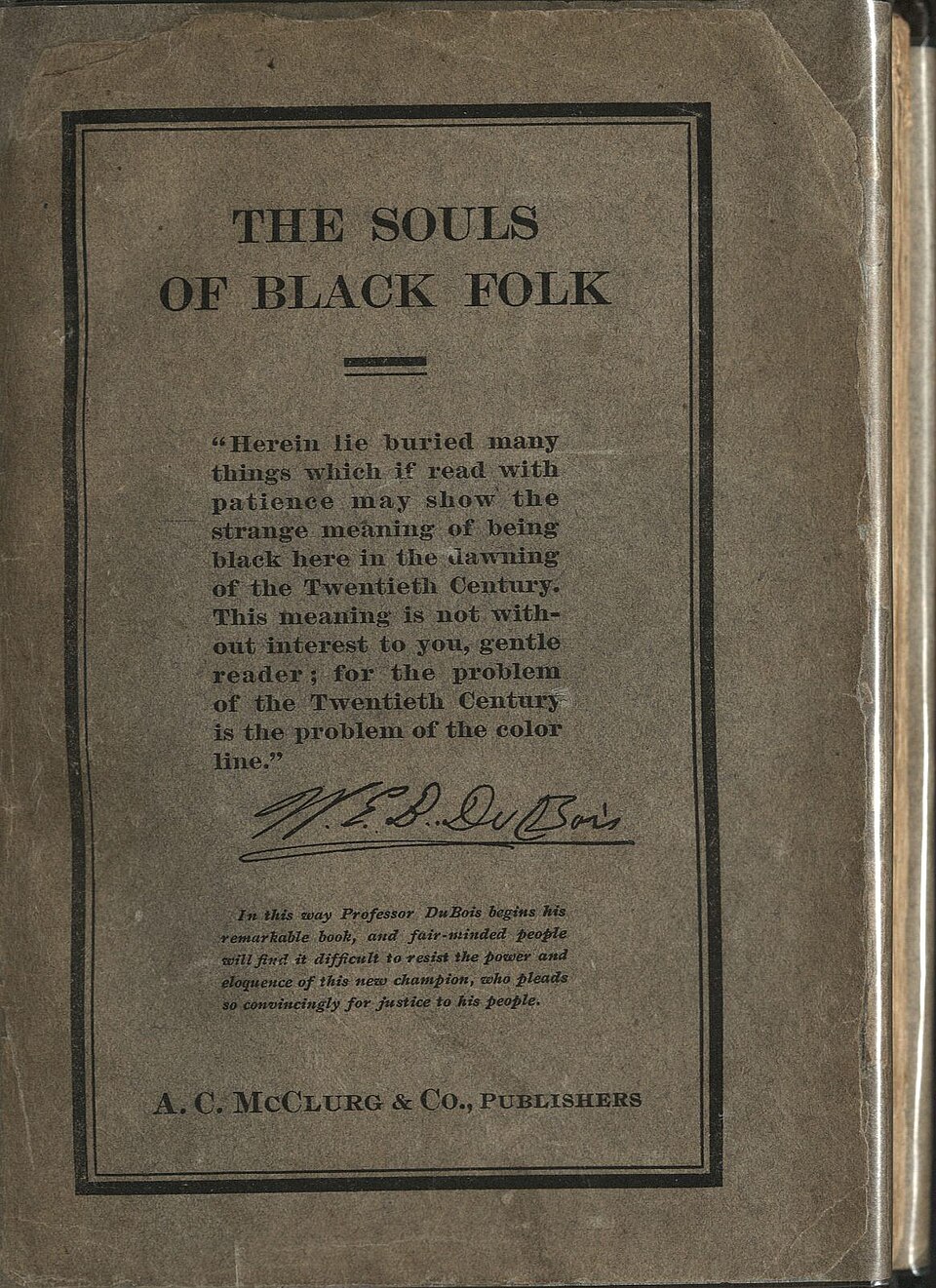
The “veil” or “double consciousness” as described in DuBois’ seminal work The Souls of Black Folk is an expression of a rich and highly layered experience. What does it mean to be capable–to be forced into developing the capability—of double consciousness? In what ways does it affect people, and how was this effect enforced in the first place? This ‘double consciousness’ is at once a response to an imbalanced power relation which enables one to see the truth of that power relation, the result of a projection both real and unreal, a consequence of the “veil” of ignorance, and a barrier in the way of fully realizing true self-consciousness. Written in the American era of post-reconstructionist Jim Crow legislation and the context of the author’s experiences as a black man in a highly racially stratified society, DuBois’ conceptual framework is highly revealing of the spiritual and psychological violence of a systemically racist culture. In experiencing the consequences of the “veil,” from which emerges the phenomenon DuBois refers to as “double consciousness,” vision becomes visible in itself as implicated in the structures of oppression – and yet all this leads to the revelation of the “second sight,” which may allow the sight of the future which exists even beyond the veil.
To articulate this specific internal experience, Dubois begins with the incident which, for the first time in his life, forces him rudely into confrontation and awareness of his distinction and difference from other children. In a moment “when the shadow swept across [him]” (7) and during an exchange among all the children who were freely mingling with one another, a girl—a newcomer—“refused [his] card—refused it peremptorily, with a glance” (8). The engagement, and possibilities that may emerge from that engagement, are rejected out of hand. Even among children, social engagement begins to require and imply a basic equality among peers–an equality which comes into conflict with a hierarchical social structure based on race. As this structure is a construction, it must therefore be policed, reinforced and enacted by the words of individual agents – through interactions even as small as this one. Therefore, the interaction, minor though it is, must be negative in both senses of the word.
The peremptory refusal by an unknown newcomer is in one sense a negative experience for DuBois, because social rejection, whatever the reason, is naturally hurtful, especially for children. In another sense, it is negative in that the usual interaction does not exist. The experience is curtailed so severely that the harm is affected through an absence—the gap left behind when a small interaction (the exchange of cards) could have taken place, but when one player chooses simply not to engage. The otherwise unremarkable interplay of social life is disrupted by that refusal. Dialogue, like engagement, requires an interlocutor. As with respect to animist philosophies, certain modes of interaction are separated in classification by the simple requirement that all involved in the interaction have relational capacities. In other words, participants are capable not only of being related to, but also of responding by relating to in turn. A conversation needs both parties to be capable of acting as viable interlocutors, or it is, by definition, a monologue. Here, due to a misperception on the part of another child, DuBois is treated as a person who is not allowed to act in the way that persons may–to enter into a dialogue as an equal, as a person who can respond, and who merits a response in return.
The incident may have been short—but the impact on DuBois was profound. He experienced it as a revelation in understanding, meaningful not by itself in isolation, but through the connection with the psychosocial superstructures that became visible through the enactment of a racist hierarchy of white supremacist ideals. This gesture does not emerge from pure chance but is borne up out of a quagmire of entrenched social and spiritual disregard for the full personhood of black people, in accordance with that racist hierarchy. DuBois does not suggest that the act itself, or the girl, is in isolation responsible for the profound impact this moment had on him as a child. It is common enough that children may be cruel or careless to each other, amounting to no significant impact. The impact comes from the weight of what is made known to him at that moment. This is his first experience of seeing, through what he calls the “veil,” the presence of that racist hierarchy, and the difference which he now is aware of as separating him from the other children.
It is significant that the denial of engagement is what precipitates this first awareness of this shadow. The girl has no true experience of him; therefore, the decision she makes is based on a judgement that considers only what she initially sees: the color of his skin, which she understands through a coding she has inherited from a biased social superstructure. That denial speaks to a judgment being made prior to any experience—the judgement must be made merely on the identification and racialization of DuBois as a black boy. In so doing, that judgement cordons off a bridge to the rest of the world, leaving him and those like him severely limited. However intelligent, capable, and emotive one might be, there will be no opportunities to show it to those who turn away their gaze, who do not wish to see. DuBois perceives, rightly, that this seemingly inconsequential stumbling block has far-reaching consequences. The path to the rest of the world, with all the “dazzling opportunities” (8) which he “longed for,” (8) is cut off at the first juncture—that of a willingness to engage as an equal with a racialized black boy. If one is blockaded at this initial moment, how is one supposed to progress at all?
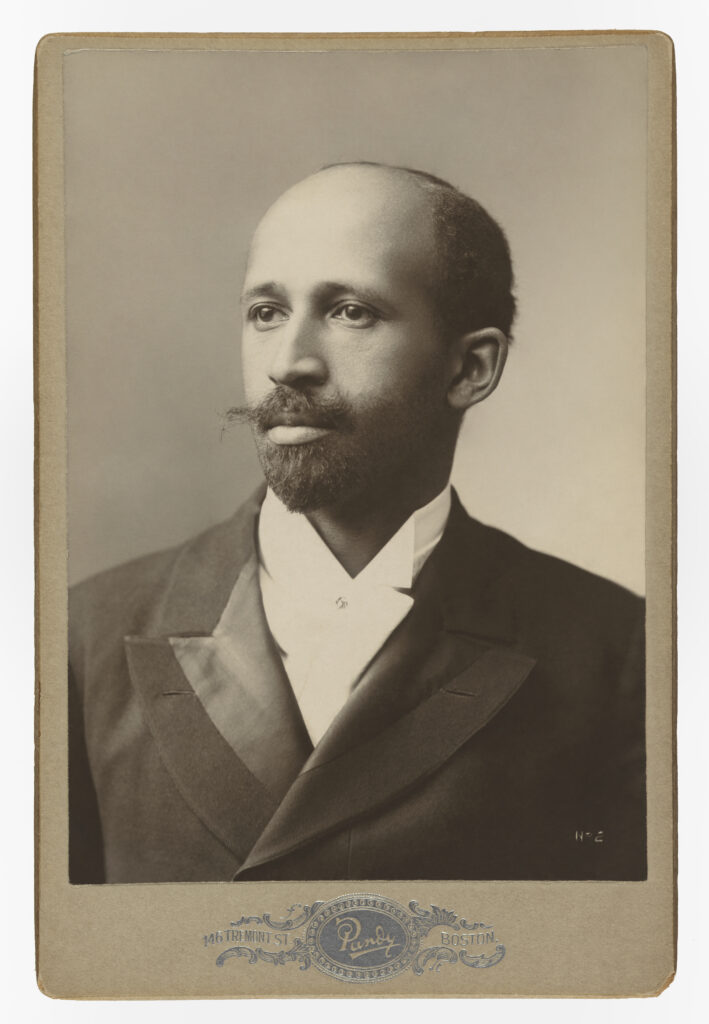
In DuBois’ words, the awareness “dawned upon [him] with a certain suddenness that [he] was different from the others; or like, mayhap, in heart and life and longing, but shut out from their world by a vast veil.” (8) It was not mere awareness that this imposed: by virtue of this awareness, he was made newly conscious—and newly self-conscious. However, this self-consciousness; this sense of how one exists in the world in relation to others, arrives through the eyes of a hostile “other.” The first “sight” one has of oneself is therefore inextricably linked to the veiled, misjudged, and hostile view of those ‘others’ through whom DuBois is made aware of himself. In an important sense the difference he locates is something that is external to himself. He is not different internally; “in heart and life and longing;” (8) to his peers, and yet a difference exists. It exists as it is attached to him, from outside, by a process of superimposition. The difference is not an internal flaw, but an external one—as emphasized by the brief glance upon which the girl based her judgment. There was no opportunity—no time—to judge based on anything but external features. The difference begins through a mistake in vision, which in turn creates a material outcome. The veil of ignorance distorts vision: instead of seeing what is there, one sees only what one expects to see. What the girl sees, when she looks (before she turns away) is the veil–she is not, in fact, seeing him at all.
That veil of ignorance, however insubstantial, nonetheless has real repercussions. The perception of the difference is based on shaky foundations, and thus results in a flawed evaluation. However, the result of action taken because of that mistaken evaluation creates a very real division in the world—the misperception itself creates the difference. The misreading of reality recursively creates the reality it perceives, through enactments that are predicated on a faulty assumption. By acting as though an imagined difference is real, a difference is created. The discrimination itself is real. The lack of options is real. It has consequences in the world, by creating and maintaining the constraints on people living under this system.
This is the root of the “double consciousness”: the misperception by privileged others has a force and a power to it, such that it overrides even one’s own self-consciousness. That an outside perspective can interfere and intrude on one’s sense of self is a facet of the violence inherent in systems of oppression which can be difficult to see clearly, or to articulate. The misperception, this veil which obscures the most fundamental aspects of one’s humanity, is then incorporated into the way that DuBois, and other black children like him, conceive of themselves. There emerges “this sense of always looking at one’s self through the eyes of others, of measuring one’s soul by the tape of a world that looks on in amused contempt and pity” (8). Sight and seeing are mechanistically central to understanding this experience—people are reliant on sight as a way of parsing the world before them, but mental constructs (such as prejudice) are incorporated inextricably into that process. Metaphorically, then, the sight of internal objects of perception are equally subject to interference by these associations, as in the “sight” and understanding of oneself.
The lens through which one sees oneself, then, is that of the gaze of an external hostile party. However, that is not the only model and way of seeing. In fact, the “doubling” is a result of the fact that this veil, or lens, is not total. There emerges, inevitably, some awareness of oneself as “like […] in heart and life and longing,” (8) a degree of true perception of one’s own inner worth and capacity, however contested. To the extent that “the Negro is a sort of seventh son, born with a veil, and gifted with second-sight in this American world,” (8) the second sight can be understood as a counterbalanced or compensatory kind of vision, emerging from the liminal and “doubled” position black Americans inhabit. Although double consciousness inhibits “true self-consciousness,” (8) it nonetheless enables a certain kind of awareness to emerge. Having intimate experience of the contradictions and absurdities of a racist paradigm renders it visible—much as the veil itself becomes visible to DuBois even as it comes to obscure him from himself. The degree to which these two contradictory views of oneself come into conflict produces the struggles of double consciousness. DuBois, with others like him, are forced to withstand the tensions of being at once “an American, a Negro; [with] two souls, two thoughts, two unreconciled strivings” (8).
From these two unreconciled strivings, a tension emerges which seems characteristically generative – one cannot help, with twinned souls and thoughts in one body, to be in a state of constant internal dialogue. Dialogue is a process through which interplay and intercourse produce change – in oneself or in the world. The second sight grants one a special lens through which to see the world revealed, with its illusions and pretenses made starkly apparent. This drives a perpetual motion outward, seeking to reconcile this internal and external dissonance. For DuBois, it is in search of education, in the “the longing to know,” (11) to see, with vision unclouded by any veil, that the possibility and hope of a resolution arises. “In those sombre forests of his striving his own soul rose before him, and he saw himself—darkly as through a veil; and yet he saw in himself some faint revelation of his power, of his mission. He began to have a dim feeling that, to attain his place in the world, he must be himself, and not another” (11). This search itself is no small feat – and yet the circumstances which have made such an internal dissonance in the first instance have also produced a clarity of vision, a capacity for doubled understandings, which imply that one is beholden to that effortful change. If one is ever to reach a state of full self-actualization, attaining true self-consciousness requires a sea-change – not just in oneself, but also in the world. To hold the visions of a dual sight of one’s own worth and of the veil of ignorance may require no less.
Works Consulted
DuBois, W. E. B. The Souls of Black Folk. Project Gutenberg, 1903/2021, https://www.gutenberg.org/ebooks/408?msg=welcome_stranger.