By Morgan Campbell
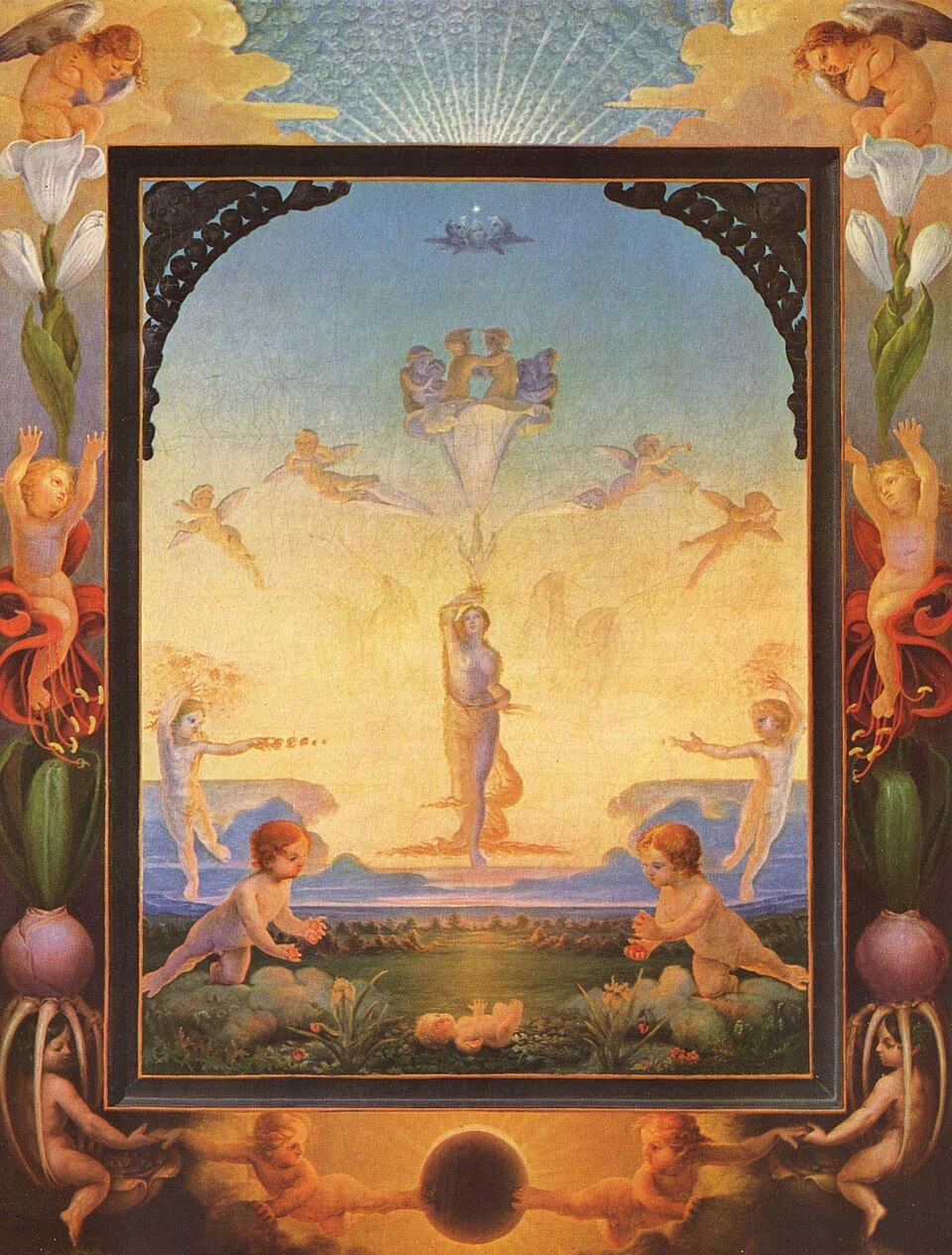
Literary critic M.H. Abrams suggests in his 1953 work The Mirror and the Lamp that the poets of Romanticism are understood not as “mirrors”, which are reflective of the world, but rather as “lamps”, which serve to illuminate the world. This essay seeks to define what, exactly, is meant by the use of these motifs (‘lamp’ and ‘mirror’) in their connection to Romanticism, and more specifically, how they may apply to Romantic poet William Wordsworth and his collection, The Prelude. Ultimately, this essay concludes that Wordsworth is not easily categorized as either distinctly mirror or lamp-like but may rather be understood as a combination of both. This analysis finds evidence of a deeper complexity in The Prelude, which deviates from the traditionally Romantic pursuit of pure self-inquiry and passion-centred expression. In his poem, Wordsworth conceives of a creative process that is centred around the imagination, a power which possesses a capacity to integrate both passion and reason. The speaker defines the imaginative power, further, as a form of collaboration with a creative source, allowing for an illuminative reflection of both the speaker’s internal world and external environment. Ultimately, Wordsworth’s poetic process is, uniquely, a type of reflection that is both mirror-like in its accurate portrayal of the world, and lamp-like insofar as it arises from self-inquiry and inward contemplation.
Before applying these symbolic images (the lamp and the mirror) to Wordsworth, it is important to establish how they might be defined and applied in the context of Romantic poetry. In his lecture on Jean-Jacques Rousseau—a figure influential to both the Enlightenment and Romantic period—Dr. Mark Blackell described the Romantic ideal of the artist and the new vision of the modern self. For the Romantics, it was understood that within the individual lay a natural depth which, if plumbed, allowed for the self to “commune with some natural source as the wellspring of creativity” (Blackell, 00:08:58-00:09:14). The Romantics placed an emphasis on the individual, the inward state, and a particular value placed on the experience of emotion and passion. This movement came as a response to the Enlightenment, which valued reason over the emotions and placed epistemological value on rationalism—an affirmation that knowledge could be procured purely via contemplation of the mind and intellect. By this line of distinction, it makes sense for Abrams to refer generally to the Romantic poets as ‘lamps’—that within their individual being could be found an internal source of light, through which the creative act of poeticizing would be seen as a type of illumination. By contrast, the thinkers and writers of the Enlightenment, for the sake of this analysis, could be categorized as mirrors—reflecting the world as it is, through concise analysis and rigorous reasoning.
In many aspects, The Prelude illustrates an image of the Romantic artist: a journey of inward investigation as a means of gleaning wisdom and knowledge about the world. The speaker begins Book Two by affirming his intent of self-inquiry, stating that though much has been unvisited, he has nonetheless “endeavoured to retrace / My life through its first years” (II, 2-3). Later, in Book Eleven, in an effort to regain hope and clarity after a period of being periled by reason, the speaker reaffirms the mission of self-inquiry, “find your way / To the recesses of the soul!” (11-12) and proceeds to draw from his memories as a method of healing and self-renewal. This process of self-inquiry to self-illuminate appears lamp-like, as Abrams might suggest. Still, the speaker in The Prelude describes his personal experience of illumination with more complexity:
A plastic power
Abode with me, a forming hand, at times
Rebellious, acting in a devious mood,
A local spirit of its own
…………………………
An auxiliar light
Came from my mind which on the setting sun
Bestowed new splendor, (II, 381-384, 386-388)
Here, the speaker refers to a source of power which is both a “spirit of its own” and yet came from his mind—it comes to aid him, and yet it is also of him. The power is self-determined, and yet found within the depths of the individual. This phenomenon is echoed in Book Eleven:
I had felt
Too forcibly, too early in my life, Visitings of imaginative power
For this to last: I shook the habit off (XI, 251-254)
Here, the speaker describes his encounters with imaginative power as visitings which produce a lasting and profound impact. It is a power which is foreign to him, and yet, cannot be forgotten or removed from his being. For Wordsworth, this luminous, creative power that is the imagination is the ultimate source of poetic power. This creative process, insofar as it is a kind of communion resulting in illumination, does seem to support Abrams’ thesis that categorizes the Romantic poets as ‘lamps’. However, for Wordsworth, this imaginative process is undeniably also a type of reflection of the external world and reality itself.
The Prelude centres around the speaker’s intense, lived experiences with the power of nature and his memories of the external world. In Book Two, Wordsworth offers a personal account of nature which places an emphasis on the sense-based, experiential elements of his encounters;
I felt the sentiment of Being spread
O’er all that moves, all that seemeth still,
O’er all, that, lost beyond the reach of thought
And human knowledge, to the human eye
Invisible, yet liveth in the heart, (II, 420-424)
In this passage, the speaker refers to the power of nature as something that can be felt, and that resides in the heart—it cannot be accessed with the physical eye or pure reasoning. This sense-based experience seems to align with the ideal of the Romantic artist. However, Wordsworth notes that this experience of nature is not a fictional, fanciful relationship but is an active communion, rooted in reality. The speaker claims of his relationship to nature: “I conversed / With things that really are” (II, 412-413). These poetic reflections are, as Wordsworth claims, true reflections of nature as it is. It is worth asking, then, why Abrams does not recognize these reflections of reality as being mirror-like. What might distinguish Wordsworth’s reflections of reality from, say, the mirror-like reflections of the Enlightenment thinkers that preceded him?
In Book Eleven, the speaker makes a critique of the use of reason to project judgment onto reality:
Unworthily, disliking here, and there
Liking, by rules of mimic art transferred
To things above all art. (XI, 153-155)
This passage outlines two of the speaker’s criticisms; the first is a criticism of the faculty of reason, which judges things as either likable or dislikable, secondly, the speaker is making an overarching critique of the rules of “mimic art”. This type of art is explained in Dr. Warren Heiti’s lecture as related to the “cult of the picturesque”: a cultural phenomenon wherein gallery goers were inspired by landscape artworks and proceeded to go into nature and attempt to recreate their experience by the use of mirrors (Heiti, 00:54:10-00:57:40). Wordsworth is critical of this “strong infection” (XI, 156) of the culture insofar as it failed to truly express the “spirit of the place” (XI, 163). It is plausible that Abrams, in his distinguishing of the lamp from the mirror, may have understood the concept “mimic art”, and forms of art that function similarly, to be categorized as a kind of mirroring, and that Wordsworth, being himself critical of this mimicry, must not be a mirror. Given all this, Abram’s theory potentially still stands: Wordsworth’s poetic process is self-inquiring, luminous, and lamp-like, and his own poetry critiques the flat reflections of nature rooted in pure reason and judgment. However, it is still worth investigating whether Abram’s distinctions are truly adequate in assessing the complexity of Wordsworth’s creative process.
It is vital to note that despite his criticisms of reason, Wordsworth’s poetry is distinct from the tradition of Romantic poets insofar as he does not fully invert the reason-passion dyad for passion to ultimately preside over reason (Heiti, 00:04:20-00:05:30). He does not altogether seek the disposal of reason. In fact, his creative process relies on a synthesis of both reason and passion—but it relies on reason of a certain type. In Book Eleven, the speaker distinguishes two types of reason:
There comes a time when Reason, not the grand
And simple Reason, but that humbler power
Which carries on its no inglorious work
By logic and minute analysis (XI, 123-126)
In this passage, one type of reason is the humbler power, which analyzes through logic, and a second type of reason, referred to as “grand and simple”, is cited a few lines later as “the friend / Of truth” (XI, 135-136). The grand and simple reason does not make “distinctions” and “puny separations” (II, 222, 223) but, conversely, appears to unify, bring clarity, and exalt truth:
Of intellectual power, from stage to stage
Advancing hand in hand with love and joy,
And of imagination teaching truth (XI, 45-47).
For Wordsworth, this fusion of the intellectual power of the mind with the passions of love and joy is the imagination at work—the process which allows for the speaker to both experience the sensations of nature and reflect cogently upon them. The imagination is, as the speaker states plainly, a teacher of truth. This creative process is articulated earlier in Book Two:
From Nature, and her overflowing soul
I had received so much that all my thoughts
Were steeped in feeling. (II, 416-418)
The image of thought being steeped in feeling suggests, for the speaker, a necessity of both faculties working together. One is suffused in the other, and this is the direct effect of truly experiencing nature—in fact, the source of creative power is, here, nature herself.
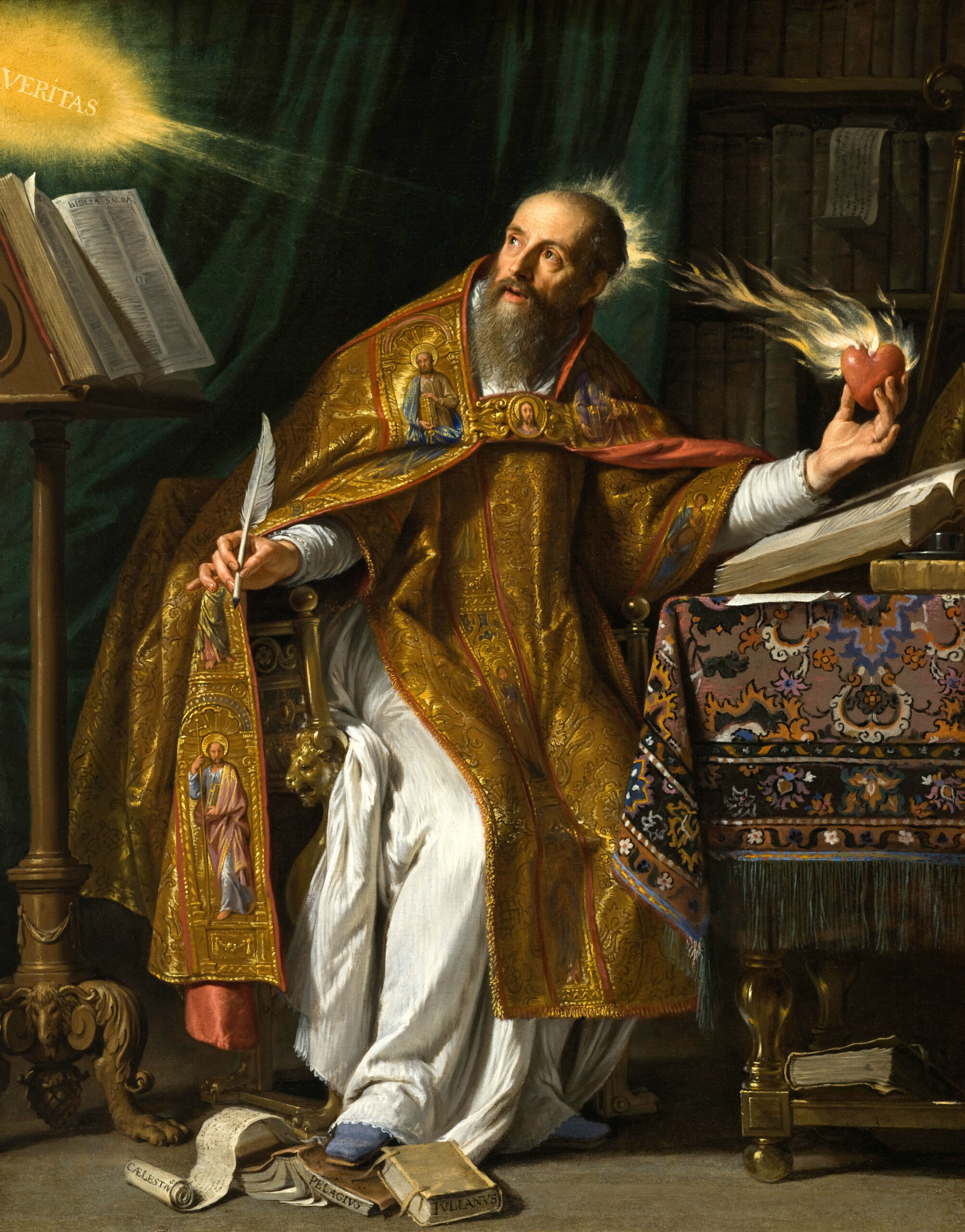
Still, it remains to be answered if this element of ‘steeping’, or the fusion of passion and reason, found in poetry, brings a challenge to Abram’s thesis. Perhaps, if we understand the work of mirroring to be a simple, plain reflection of the external world, then Wordsworth is not a mirror. However, one might argue that Wordsworth’s poetry does reflect the world in a way that truly captures the “spirit of the place” (XI, 163). He does this through integrating his experience of the world, allowing his thoughts and sensations to ‘steep’ over time, and ultimately by transmuting this experience into a piece of art. Furthermore, Wordsworth’s reflections have long found resonance with readers, suggesting that his poetry functions as a mirror of shared experience. In reflecting on The Prelude, I find it, personally, challenging to analyze the poetry—to dissect it with “logic and mute analysis” (XI, 126). Yet, there is a sense of resonance found in the work, an inscrutable sense of one’s own lived experience and memories of nature being activated and reflected in the work. The poetry serves, then, as both a mirror toour own experiences of the world and the powers of nature, as well as a source of illumination found within the poignancy of personal memories.
Ultimately, it appears plausible that Wordsworth may symbolize a lamp, as Abrams suggests, insofar as a lamp is not a singular, solitary source of light in and of itself, but rather illuminates via its connection to a wider circuit of energy (for Wordsworth, this source being the power of imagination and of nature herself). Yet, as is argued, mirror-like qualities are also evident in The Prelude insofar as the speaker reflects on the world around him by presently experiencing nature as it is and communicating these sensations. What results in The Prelude is an artistic expression that is neither a distorted reflection, nor a flat mimicry, nor a pure, unexamined sensation. Rather The Prelude is an expression of a creative communion with the power of imagination and the profound forces of nature, wherein illumination and reflection are invariably intwined.
Works Cited
Blackell, Mark. “Mark on Rousseau LBST 370 2026”, Video Lecture, 6 January 2026. Vancouver Island University.
Heiti, Warren. “Warren’s Wordsworth Lecture Part 1”, Video Lecture, February 2026. Vancouver Island University.
Wordsworth, William, The Prelude, edited by Stephen Gill, Oxford University Press, 2010.