By Chiara Sedola
I therefore conclude that, since Fortune varies and men remain obstinate in their ways, men prosper when the two are in harmony and fail to prosper when they are not in accord. I certainly believe this: that it is better to be impetuous than cautious, because Fortune is a woman, and if you want to keep her under it is necessary to beat her and force her down. It is clear that she more often allows herself to be won over by impetuous men than by those who proceed coldly. And so, like a woman, Fortune is always the friend of young men, for they are less cautious, more ferocious, and command her with more audacity
—Machiavelli
Machiavelli’s The Prince is often summarized as a guidebook on power – how to gain it, and, perhaps more importantly, how to keep it despite the vicissitudes of fortune. Fortune is a central theme in the text, but it is tricky to determine how, exactly, Machiavelli understands the concept. For most of the text, he seems to suggest that with enough foresight, preparation, and other virtues, a prince can always mitigate the damage and disorder of bad fortune; however, his final thoughts on the subject may undercut his argument. This paper will begin by establishing what Machiavelli generally means by the term fortune. From there, it will address two possible problems in Machiavelli’s argument for how princes should resist fortune, and follow with an exploration of fortune’s dynamic relationship with virtue. By examining the theme of fortune, this essay works towards the conclusion that, even if a ruler has cultivated his virtue to the best of human ability, fortune is ultimately the deciding factor of his success or failure. As a result, even perfect virtue is insufficient to protect political stability against the most destructive caprices of fortune. This conclusion follows not because, all other things being even, fortune is stronger than virtue, but because the virtue of even the best rulers is limited by human nature.
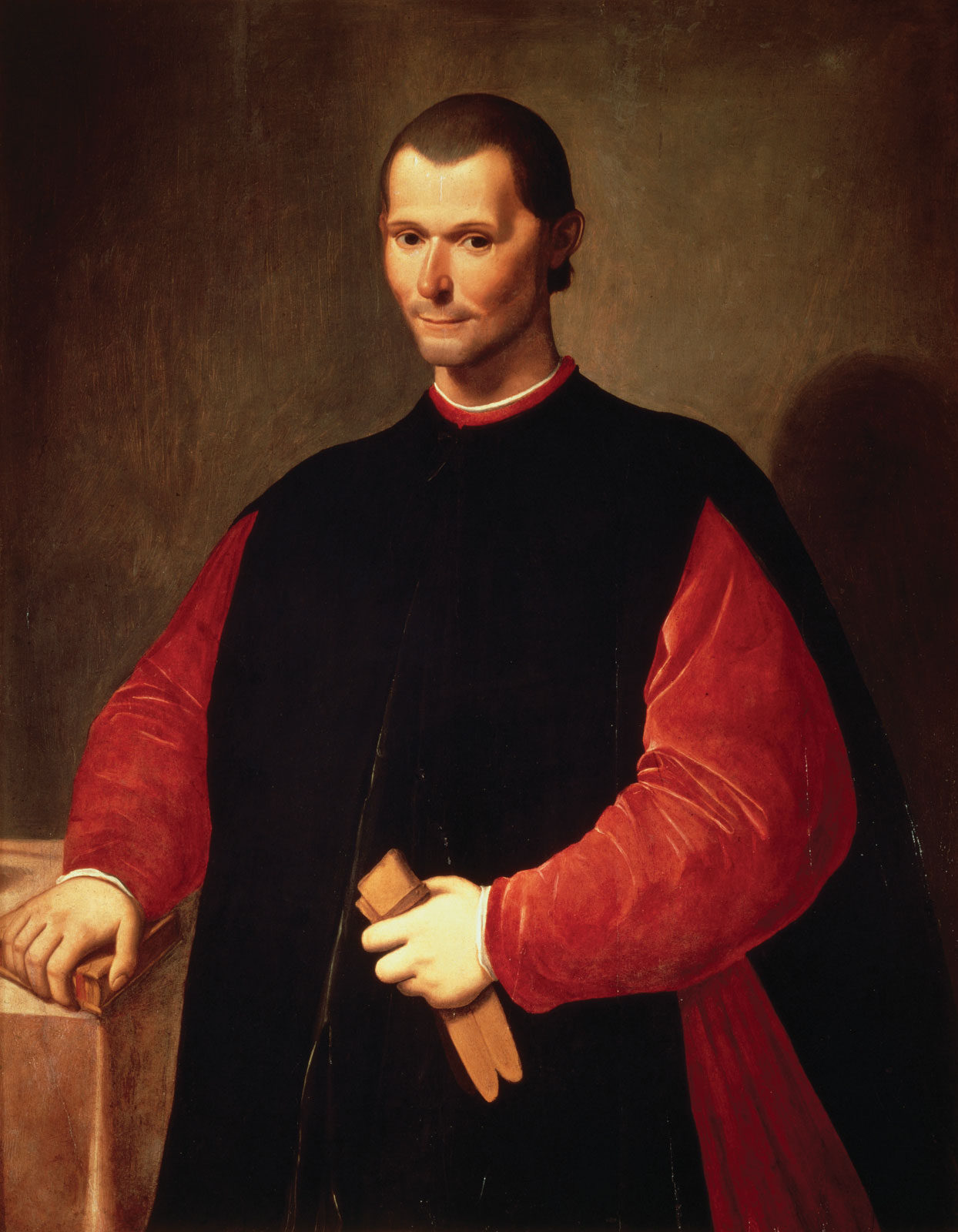
Machiavelli conceptualizes fortune as random and ever-changing. For example, he writes that “time brings with it all things, and it can bring with it the good as well as the evil, and the evil as well as the good” (13). In other words, time does not guarantee progress towards a favourable endpoint, and so, contrary to “what is always on the lips of our wise men today,” a successful prince does not wait idly by to “reap the benefits of time” (12-3). On the contrary, there is no way of knowing whether there will be any benefits. The only certainty of time is the flux between good fortune and bad fortune. So, if a prince has good fortune now, the question is when his fortune will change, not whether it will change. Thus, fortune has no upward trend and is altogether unpredictable.
As a result, a prince’s success and the security of his state are always at a certain level of risk from the vicissitudes of fortune; however, the risk can be mitigated through what Machiavelli calls “virtue.” But, before continuing with this discussion, some clarification is in order. First, the significance of virtue in the text could be an essay of its own, so for the scope of this essay, virtue will only be discussed concerning its relationship with fortune. Second, a working definition of virtue may be helpful since Machiavelli does not follow the usual understanding of the term. His sense of the word virtue is unconcerned with what is morally right. Instead, it is concerned with efficiency and efficacy in reaching a goal. Additionally, in contrast to fortune’s personification as a woman, virtue is gendered as masculine by Machiavelli. In short, a virtue is any characteristic of a ruler–including morally objectionable tactics such as dishonesty, cruelty, and murder–as long as it is conducive to the greater good of his principality. For “in order to maintain the state” an excellent prince “should not depart from the good if it is possible to do so, but he should know how to enter evil when forced by necessity” (61). Thus, political stability is worth whatever morally reprehensible tactics are necessary to secure it, even if only temporarily.
With the scope of the essay and a working definition of fortune in place, we can move on to the dynamic interaction between fortune and virtue–more specifically, how a prince’s virtue can be used to resist, if not control, fortune. In general, this process consists of two steps: foresight and preparation. Both stages deal with changes in fortune before they present themselves, perhaps because virtue can only defeat fortune before it has time to gain momentum.
As for the first step in resisting fortune, foresight allows the prudent ruler to find weak spots in his state’s armour and that of his enemies. Because of fortune’s unpredictability, foresight is less about determining the most probable outcome and more about recognizing every potentiality for one’s rulership to go wrong as far in advance as possible. Machiavelli writes, “by recognizing evils in advance . . . they can be cured quickly; but when they are not recognized and are left to grow to such an extent that everyone recognizes them, there is no longer any remedy” (12). These problems are far easier to eliminate while they are only possibilities, especially because, if everyone can recognize the weakness, one’s enemies can see it too.
As for the second step, preparation, Machiavelli also takes a blanket approach. Multiple times in the text, he advises that in everything they do, a prince should act in such a way that “no unforeseen event could arise . . . for which he did not have the remedy,” and so his people “will need the state and him at all times and in every circumstance” (37; 52). It is almost as if Machiavelli suggests that the best princes can have a backup plan for every turn of events and always channel fortune in their favour. However, if this is the case, it is an extreme response, and one might wonder how well this would fare for a ruler in real life or if it is even possible. This seems a fair critique for an author concerned with taking a realistic approach towards statecraft. To sum up Machiavelli’s advice, there are two general steps for the virtuous ruler to deal with fortune in advance of its catastrophes: foresight to assess weaknesses and preparation to correct those weaknesses before fortune, or one’s enemies, takes advantage of them.
It should be noted, however, that fortune and virtue are not always opposing forces, and both are required for a ruler’s success. For instance, in his discussion of those who rose to power through virtue, Machiavelli writes that, “[w]ithout that opportunity the strength of their spirit would have been exhausted, and without that strength, their opportunity would have come in vain” (21). In other words, even the princes who gained their principalities through virtue needed a bit of good fortune in the form of an initial opportunity to exercise it.

One may object and say that this is not a fair example because it is one where good fortune and virtue work together for a prince’s success. This is a fair point, but there are also examples of bad fortune and virtue working together for a prince’s benefit. For “without a doubt, princes become great when they overcome difficulties and obstacles imposed on them. And therefore, Fortune . . . creates enemies for him, and has them undertake enterprises against him so that he will have the chance to overcome them” (73-4). In this example, what we might consider bad fortune is transformed into good fortune through the prince’s virtue. Another way to think of fortune is as neutral until a prince fails or succeeds in his management of it through his virtue. In other words, whether fortune is good or bad is based on the outcome and remains undetermined until then. In any case, the relationship between fortune and virtue is a dynamic one—sometimes they are enemies, and other times they are friends, but either way, both interact to determine the success or failure of a prince and his state.
Thus far, the concept of fortune and the actions taken in response to it align with the common expectation: fortune encompasses all circumstances beyond human control, while virtue lies within the scope of human agency. In this way, fortune and virtue are the two forces working behind the outcome of a prince and his principality. However, major tensions, and, perhaps, contradictions in Machiavelli’s understanding of fortune’s relationship with virtue arise in Chapter 25. Machiavelli does not directly state whether virtue or fortune has the greater influence on history, but “in order not to wipe out our free will,” Machiavelli asserts that “Fortune is the arbiter of one half of our actions, but that she still leaves the control of the other half, or almost that, to us” (84; emphasis added). To be blunt, this is a weak defence of the power of virtue against fortune and of free will in general. As its final topic, this essay will look at two major tensions in Machiavelli’s conception of fortune and its relationship with virtue: the limitations of virtue by human nature, which, arguably, give fortune the last laugh, as well as why, considering the previous concern, a state should be cautious, but a ruler should be impetuous.
The strange passage containing Machiavelli’s infamous image of fortune as a woman is where we will begin our analysis of Fortune’s personification. On the first reading, the treatment of fortune is simply misogynistic—it draws on imagery of violence against women and presents that as effective and even admirable; it relies on gender stereotypes by portraying femininity as something that needs to be subdued through violence; and it legitimizes coercion through force and aggression. However, with subsequent readings, it becomes far more complicated and suggests that fortune has more power than the violent virtue used against her. He writes, “It is better to be impetuous than cautious, because Fortune is a woman, and if you want to keep her under it is necessary to beat her and force her down” (87; emphasis added). This is not an imperative statement, but a declarative one, and it is unclear whether Machiavelli really thinks that it is possible to subjugate fortune. Continuing the previous quote: “It is clear that she more often allows herself to be won over by impetuous men than by those who proceed coldly” (87; emphasis added). If fortune is only won over when she consents to be, for that is the implication, then she is not conquered through force. Instead, she only yields when she uses her agency and chooses to do so. To be clear, the passage is still problematic, even with this reading. However, it would be a shame for what is of value and interest in the passage to be completely passed over if the reader’s initial offence leads to a hasty reading of the text instead of a well-examined one. In any case, this reading suggests that, ultimately, fortune is not at the mercy of virtue but vice versa.
A further limitation of virtue by fortune is found within the very nature of a prince, even the most successful ones. On this subject, Machiavelli writes, “[I] believe that the man who adapts his method of procedure to the nature of the times will prosper, and likewise, that the man who establishes his procedures out of tune with the times will come to grief” (85). Perhaps this is an additional reason why princes should not be encumbered with moral considerations – they would impair their adaptability to the times, which may call for moral behaviour, such as “patience,” or immoral behaviour, such as “violence,” indiscriminately (85). Whatever action the circumstances call for, the prince must act accordingly. Yet, despite how crucial adaptability is, “no man can adapt himself to this fact, both because he cannot deviate from that to which he is by nature inclined, and also because he cannot be persuaded to depart from a path after having always prospered by following it” (85-6; emphasis added). It is a thought-provoking idea that one’s capacity for self-cultivation is inherently unalterable. In addition, it is interesting that one’s success is the ultimate source of one’s downfall by calcifying flexibility. In the context of the text, the source of a prince’s ruin is not that he did not fully cultivate the virtue of adaptability, but that even this was not enough, since he cannot change his nature.
Perhaps it is because of this limit that a prince should be impetuous rather than cautious in his dealings with fortune. To clarify, impetuousness—acting boldly, aggressively, and without hesitation— is not inherently better than caution. In the example of Pope Julius II, although he was blessed with times necessitating an approach suited to his nature, he would have been brought to ruin just as swiftly as the cautious man if the opposite circumstances arose (86). Although the author never provides an unvarnished, non-metaphorical explanation for why he believes with such certainty that “it is better to be impetuous than cautious,” perhaps it is because acting impetuously pushes the limits of virtue more than caution, or it pushes the limits of one’s enemy’s (87). Although admittedly somewhat beyond the scope of this essay, it is still worth mentioning another potential reason: Machiavelli values glory for a ruler, and glory rarely comes from being cautious.
Yet, just before giving his views on the superiority of impetuousness, Machiavelli provides a compelling metaphor for the importance of being cautious and fortifying against fortune at the state level. How do we reconcile these two imperatives for a prince to be impetuous but for state to be cautious? In comparing fortune to a “destructive” and “enraged” river, he tells of how “everyone flees before it; everyone yields to its impetus, unable to oppose it in any way” (84). Further, fortune “shows her power where there is no well-ordered virtue to resist her, and therefore turns her impetus towards where she knows no dikes and dams have been constructed to hold her in” (84-5; emphasis added). Here, fortune’s agency takes on an intentionally malevolent character that we might contrast with her personification as a woman. It seems that there are different rules for fortune’s game at the level of the state and the level of the ruler. It does not seem that fortune can be won over in this case, so the only course of action is to be cautious and take precautions. What precautions, exactly? Given that Machiavelli is addressing fortune at the general state level, as in Italy’s failure to prepare compared to Germany, Spain, and France, perhaps the dikes and dams are state institutions, such as an autonomous military (85). In any case, fortune operates differently between the state and the prince, and so Machiavelli recommends distinct and, interestingly, opposing approaches.
Overall, if fortune sets her sights on a ruler’s destruction, there does not seem to be much remedy for virtue to offer, especially if human nature is predetermined to be resistant to adaptation. According to Machiavelli, fortune always has the advantage, although, in his personification, she may choose to stay her hand. Just as some rulers must face a no-win scenario, there are also those given challenges to rise above. Fortune is by nature unpredictable, but if it destroyed all of virtue’s order, there would be no need to write the text in the first place – there would be no states to govern.
In closing, and for the sake of interest, I offer a highly speculative lens through which to read The Prince. In examining the theme, one cannot help but notice the similarities between Fortune and Machiavelli’s ideal prince. They are both unpredictable, unconstrained by morals, constantly searching for and exploiting weaknesses, and violent, among other characteristics. Even the words used to describe them are all but the same, like the “impetus” of fortune and the “impetuous” prince (84; 86). Thus, perhaps, in the eyes of Machiavelli, the most excellent and virtuous exemplar for an aspiring prince is fortune herself.
Work Cited
Machiavelli, Niccolò. The Prince. Translated by Peter Bondanella. Oxford World Classics, 2008.